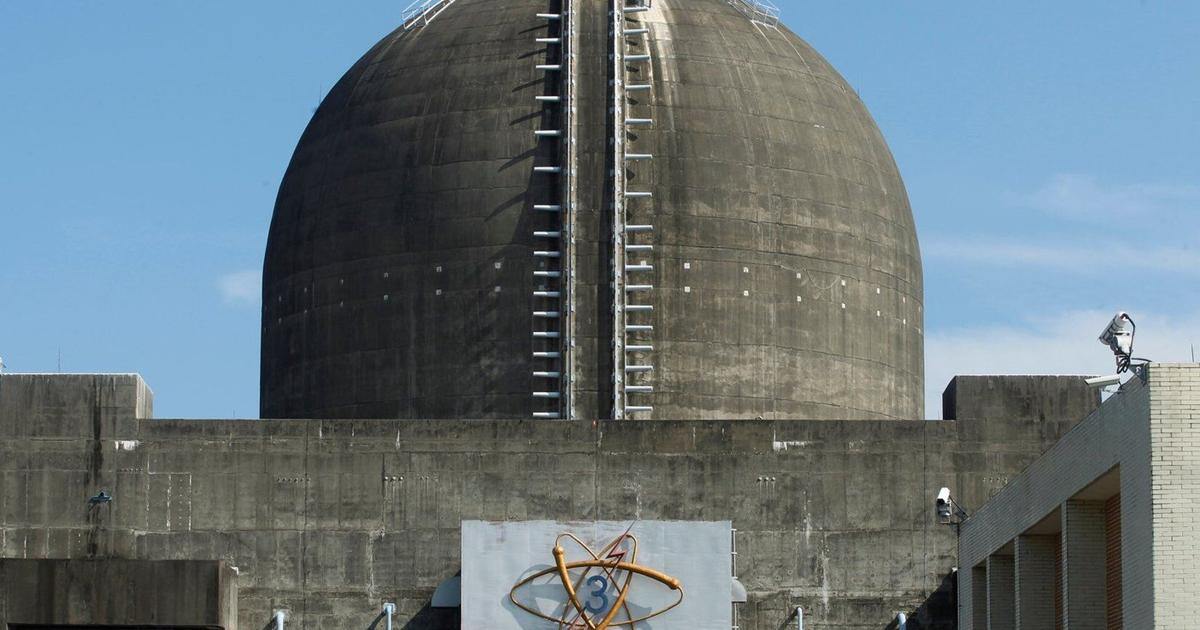
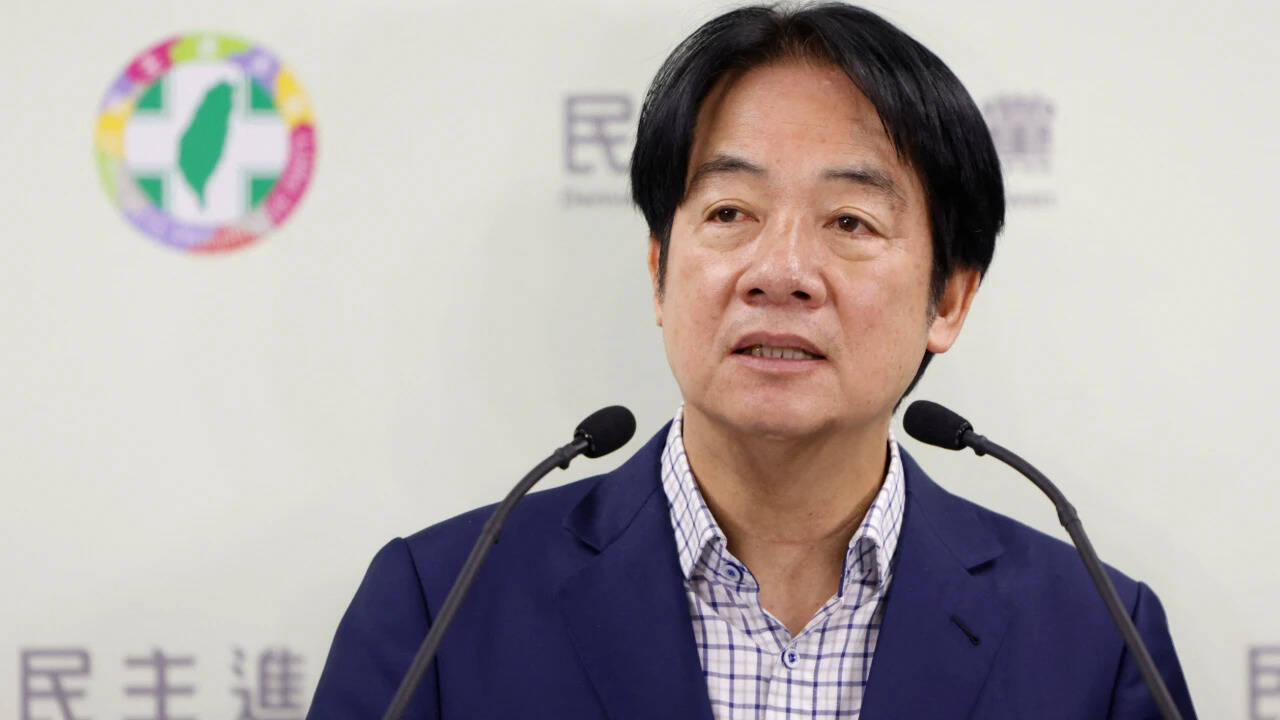
Photo via The Hindu

Taiwan votes to end 'nuclear-free homeland' policy; reopen door to nuclear power use

Read the original at The Hindu ↗
Cite

AP. (2026, November 29). Taiwan votes to end 'nuclear-free homeland' policy; reopen door to nuclear power use. The Hindu. https://www.thehindu.com/news/international/taiwan-votes-to-end-nuclear-free-homeland-policy-reopen-door-to-nuclear-power-use/article71756990.ece

Dated from the outlet's own feed. Check the original for its byline.

The Hindu · collected 2026-11-29 · by AP

Quick Summary

On November 28, 2026, Taiwan voters approved a referendum initiated by the Opposition Nationalist Party (KMT) to end the island's "nuclear-free homeland" policy, which phased out nuclear power plants. The referendum, which passed with support from the KMT and their coalition partner, the Taiwan People's Party, aims to boost the economy and support industries like AI and semiconductors by ensuring a stable power supply. However, the ruling Democratic Progressive Party's cabinet emphasized that nuclear energy would only be reconsidered if safety, waste management solutions, and social consensus were assured.
Written by AI on 2026-11-29, from this article's own text only (the story summary below draws on all the coverage).
See how they differ ↓

AI analysis

Story summary

Voters in Taiwan overwhelmingly supported a referendum on November 28, 2026, to abandon the country’s “nuclear-free homeland” policy, which required the phase-out of nuclear energy. The referendum, initiated by the opposition Kuomintang (KMT) and held alongside local elections, received 61.99% of the valid votes, with a turnout of 62.79%. A total of 7,434,677 voters supported the proposal compared to 4,557,768 who opposed it. This decision, which surpasses the required threshold of one-quarter of Taiwan’s eligible electorate, now gives the government a mandate to reconsider the use of nuclear power. While the referendum does not automatically mean an immediate return to nuclear power, the KMT argues that it could provide a stable and low-carbon electricity supply for Taiwan’s rapidly expanding semiconductor and AI industries, whose energy demands are increasing significantly.

Written for “Taiwan Votes on Nuclear Power” on 2026-11-29, grounded in this article and the 3 other(s) covering the same event.
Why this leaning score
The article's own words the score was based on. Each is quoted verbatim and was checked against the article text before being stored, so you can find it in the original.
Reading Leans right (beta estimate) Confidence high 1 quote(s) discarded as not found in the article
Leaning: leans right for article 188206 (high confidence, 1 verified quote) · logged 2026-11-29

How they differ

4 outlets covered “Taiwan Votes on Nuclear Power”.

What each outlet says

One AI summary per outlet of its latest article on this story, written from that article alone and checked against it. Open the article for the outlet's own words.

The HinduThis outlet29 Nov

On November 28, 2026, Taiwan voters approved a referendum initiated by the Opposition Nationalist Party (KMT) to end the island's "nuclear-free homeland" policy, which phased out nuclear power plants. The referendum, which passed with support from the KMT and their coalition partner, the Taiwan People's Party, aims to boost the economy and support industries like AI and semiconductors by ensuring a stable power…

Taiwan votes to end 'nuclear-free homeland' policy; reopen door to nuclear power use (this article)
Al Jazeera27 Nov

Taiwan is holding a referendum on whether to revive its nuclear power industry during local elections on Saturday. This vote comes after the country shut down its last operational reactor 18 months ago. The opposition Kuomintang (KMT) and the Taiwan People’s Party (TPP) support the referendum, while the ruling Democratic Progressive Party (DPP) opposes it, citing safety concerns and environmental commitments. The…

Will Taiwan vote to revive nuclear power – and why does that matter for AI? →
Times of India29 Nov

Taiwanese voters approved a referendum to reconsider the use of nuclear power, reversing the ruling Democratic Progressive Party’s “nuclear-free homeland” policy. The referendum, initiated by the opposition Kuomintang, received 61.99% of the vote, with 7,434,677 voters in favor compared to 4,557,768 against. While the result provides a political mandate to explore nuclear power, it does not guarantee an immediate…

Taiwan referendum backs return to nuclear power, overturns decades-old energy policy →

Where they agree and split

The full story: what happened, how it changed, and all 4 articles →

Compared with similar articles

This article reads leans right and hedges 24% of its claims. Each row says how that neighbour differs.
Toronto Star
Hedges 0 of 2 claims Outlet record 64/100
Times of India
Hedges 5 of 29 claims Outlet record 58/100
Al Jazeera
Hedges 9 of 87 claims Outlet record 60/100

Story

Taiwan Votes on Nuclear Power
Politics · 4 article(s) covering the same event. Compare every outlet's account →
How this article was measured signals, leaning charts, publisher record, byline, topics and claims

Signals How these are calculated →

Claims extracted
17
sentences that state something as happening or true
Uncertain
24%
4 of 17 hedged ("reportedly", "may", "according to")
Leaning
Leans right
of the writing, not the subject · beta estimate
Publisher signals
72/100
The Hindu's corrections and hedging, across everything collected from it. Not a measure of accuracy.
Outlets on this story
4
Politics
Same framing elsewhere
1
articles that frame the event the way this one does
Analyzed 2026-11-29 · how these are computed

How this is being covered How these are calculated →

Article leaning vs. publisher reliability
Source leaning vs. consistency

Publisher

The Hindu · 1673 article(s) · 3 correction(s) detected
Running correction rate · 3 correction(s)

Who wrote this

AP
285 article(s) here · 1 carrying a prediction
Millions of Spaniards on Sunday (November 29, 2026) are voting in a national election dominated by concerns over housing affordability, which could provide an opening for the far right to enter the national government for the first time in Spain's post-dictatorship democracy.
A majority of Taiwan residents who voted in Saturday's (November 28, 2026) local elections chose to abandon a policy that phased out the island's nuclear power plants, a change that the Opposition Nationalist Party has said will boost the economy.
Over eight hours overnight, 123 Ukrainian drones were shot down on the approach to Moscow, mayor Sergei Sobyanin reported on Saturday morning.
“I could walk in and say, 'I don't like you!' and then we have the same problem that we have with Mr. Zelenskyy and Mr. Putin,” he said.
Pakistan is set to host talks with Saudi Arabia and Turkiye on Friday (November 27, 2026) under a trilateral defence pact that treats an attack on any member as an attack on all three, two security officials said.
Two people were rescued from their cars in New York City due to flooding, according to Mayor Zohran Mamdani.
The Presidential vote will be held after a student movement defeated Mr. Vucic's right-wing Serbian Progressive Party in an early Parliamentary ballot on October 25.
The McDonnell Douglas MD-11 was coming from Memphis, and flights will be resuming shortly, according to the Federal Aviation Administration.
Mr. Trump also claimed he could revive diplomacy with Mr. Kim at any time by restarting the exchange of letters they maintained during his first term, although he acknowledged that the two leaders had not corresponded “recently.”
Macy’s 100th Thanksgiving Day Parade will also be a first: Organisers made an unprecedented decision to postpone the event to Saturday (November 28, 2026) because of bad weather.
Wire or desk byline, not an individual reporter.
Also by AP
Nothing else under this byline is closely related to this article, so these are simply their most recent.
All 285 articles by AP →

Topics

KMT Kuomintang Taiwan the Nationalist Party the Opposition Nationalist Party

Subjects

KMT ORG · 8× Taiwan GPE · 8× Cheng Li-wun PERSON · 1× DPP ORG · 1× Democratic Progressive Party ORG · 1× Kuomintang ORG · 1× Lai Ching-te PERSON · 1× Tsai Ing-wen PERSON · 1× the Nationalist Party ORG · 1× the Opposition Nationalist Party ORG · 1×

Narrative

A majority of Taiwan residents who voted in Saturday's (November 28, 2026) local elections chose to abandon a policy that phased out the island's nuclear power plants, a change that the Opposition Nationalist Party has said will boost the economy.
framing: mixed · carried by 1 article(s) · first seen 2026-11-29
A majority of Taiwan residents who voted in Saturday's (November 28, 2026) local elections chose to abandon a policy that phased out the island's nuclear power plants, a change that the Opposition Nationalist Party has said will boost the economy.

Claims (17 extracted, 4 hedged)

A majority of Taiwan residents who voted in Saturday's (November 28, 2026) local elections chose to abandon a policy that phased out the island's nuclear power plants, a change that the Opposition Nationalist Party has said will boost the economy. asserted
Party → vote → economy
The referendum question initiated by the Nationalist Party, called the Kuomintang or KMT, asked voters if they wanted to scrap a policy called “nuclear-free homeland,” which required the island to phase out nuclear energy. asserted
which → initiate → energy
The island stopped operating its last operating nuclear power plant in 2025, although it is being refurbished and could restart in two years. uncertain
it → stop → years
Nuclear power is not legally banned in Taiwan, but instead guided by government policy. asserted
power → ban → policy
The referendum abolishes the policy and gives the government under the ruling Democratic Progressive Party a political mandate to address the issue. asserted
referendum → abolish → issue
But it does not mean any plants will be built or restarted. asserted
plants → mean → ?
Taiwan President Lai Ching-te previously said he would not rule out the use of nuclear energy in Taiwan's energy choices, differing with his predecessor Tsai Ing-wen and the history of the DPP, which has long opposed the nuclear industry. asserted
which → say → industry
KMT head Cheng Li-wun cited the results of the referendum on Saturday night and said Taiwan must “restart nuclear energy as quickly as possible,” according to Taiwan's semiofficial Central News Agency. uncertain
Taiwan → cite → Agency
The KMT has historically supported the use of nuclear power. asserted
KMT → support → power
The KMT raised the referendum and passed it with the help of its coalition partner, the Taiwan People's Party. asserted
KMT → raise → partner
The KMT framed the referendum as a direct link to Taiwan's economy and the artificial intelligence industry, saying the party wants to ensure a stable power supply to meet the electricity demands of the AI and semiconductor industries. asserted
party → frame → industries
Taiwan's Cabinet, the Executive Yuan, said its members will respect the vote results, but emphasised that nuclear energy could only start under three conditions. uncertain
energy → say → conditions
“Nuclear safety must be assured, a solution for nuclear waste must be in place, and there must be social consensus,” Executive Yuan spokesperson Michelle Lee said in a statement Saturday night. asserted
Lee → assure → statement
Experts worry there was little public discussion about the issue on the campaign trail. asserted
Experts → worry → trail
“I really didn't see people talk about this, except for when the Legislature initially raised this,” said Wei-hao Huang, a political science professor at National Sun Yat-sen University, who said the vote results suggested it was driven by KMT voters. uncertain
it → see → voters
“I barely saw it, even in the KMT slogans or flyers during the campaign period.” asserted
I → see → period
“The KMT wanted to use this issue to mobilise their voters to raise the local election's voter turnout,” he added. asserted
he → want → turnout
Give feedback · no sign-in needed

No sign-in needed for now. Your note is sent without a name, so it cannot be answered.

History Support