GOP Congress tries in final days of majority to get permitting reform bill to Trump, Dems resistant
asserted
Congress → try → Dems
There’s a firm consensus in Congress that America’s permitting system needs to be reformed.
asserted
system → ’ → Congress
But Democrats are divided on whether to pass the measure now or wait until next year.
asserted
Democrats → divide → year
House Speaker Mike Johnson is vowing to use essentially any legislative means possible to get a Senate-passed, bipartisan permitting reform bill to President Donald Trump's desk before he and fellow Republicans lose their congressional majority now in just a matter of weeks.
asserted
he → vow → weeks
But Democrats in the lower chamber appear to have other plans, withholding votes for passage so they can pass one more to their liking.
asserted
they → appear → liking
Earlier this month, the Senate passed the permitting-reform package, and the House is expected to take up the bill after it returns from Thanksgiving recess.
asserted
it → pass → recess
There’s little disagreement that the U.S. permitting system needs to be reformed, and President Donald Trump has signaled he intends to sign the bill should it reach his desk.
asserted
it → ’ → desk
The Senate's 2026 Bipartisan American Affordability and Jobs Act, was introduced at the end of September.
asserted
Act → introduce → September
The bill aims to speed up federal reviews for energy and infrastructure projects, with changes to the National Environmental Policy Act (NEPA), the Endangered Species Act, Clean Water Act provisions, tribal consultation and judicial review limits.
asserted
bill → aim → Act
Projects that could move faster would include transmission lines, all types of power plants, pipelines and data centers.
uncertain
that → move → plants
Johnson, of Louisiana, told Politico last week that he intends to try to pass the bill under suspension, an expedited procedure that requires a two-thirds majority and doesn’t allow for amendments.
asserted
that → tell → amendments
Should that fail, he said, he would use a regular-rules process for a simple majority.
asserted
he → fail → majority
In a letter sent earlier this week, Johnson urged members of his Republican caucus who didn’t win reelection to continue to show up for votes in the remainder of their term.
asserted
who → send → term
"As the historic 119th Congress comes to an end, it is our responsibility now to finish as strong as we started," Johnson wrote.
asserted
Johnson → come → end
Republican South Dakota Rep. Dusty Johnson, who did not seek reelection, has given the bill a clear public endorsement.
asserted
who → seek → endorsement
If we want lower taxes, lower energy bills, better roads and bridges, we have to right-size our regulatory approach.
asserted
we → want → approach
BAAJA does that while protecting property rights and forcing data centers to pay their fair share,” the South Dakota representative said in a statement.
asserted
representative → do → statement
But Democrats are debating whether to pass the reform bill this year in a lame-duck session or wait until next year when its control of the House might allow it to pass something more Democrats can agree on.
uncertain
Democrats → debate → something
While the bill would make it easier for renewable energy projects to get built, as well as the transmission lines they need to connect to the grid, there is considerable opposition in the lower chamber from pro-conservation advocates.
asserted
they → make → advocates
A spokesperson for House Democratic leader Hakeem Jeffries, who is set to become speaker in January, told Politico that Jeffries supports permitting reform, but the bill “falls short in several areas.”
asserted
bill → set → areas
Jeffries objects to the way in which it handles NEPA reform and the failure to adequately protect tribal sovereignty,” the spokesman said.
asserted
spokesman → object → sovereignty
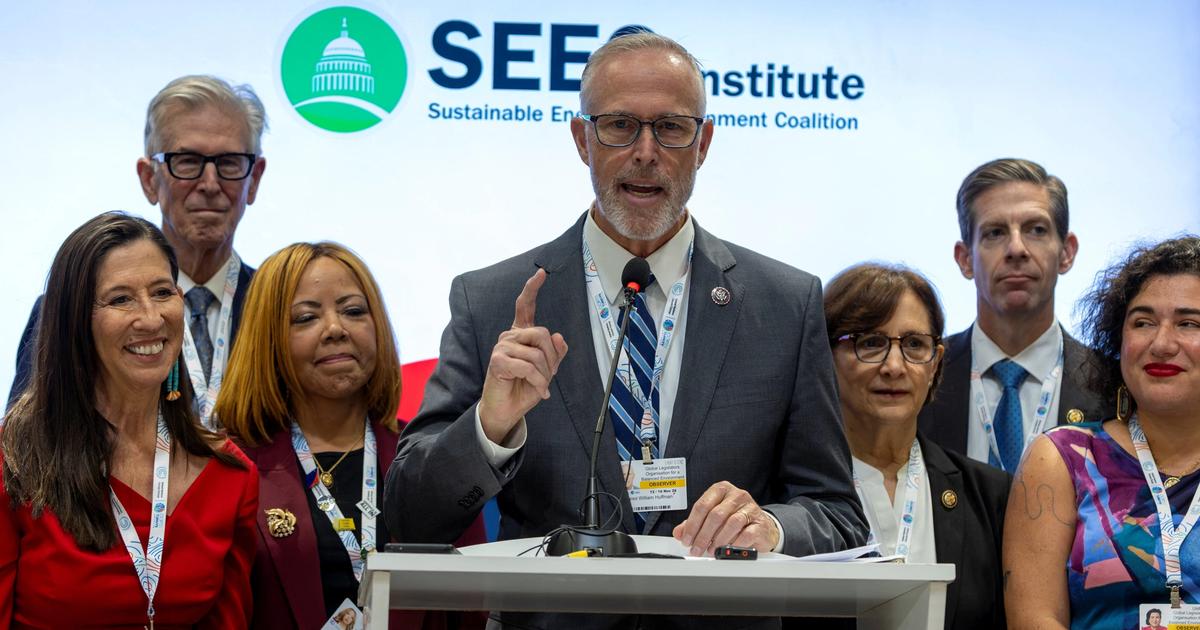
California Rep. Jared Huffman, the top Democrat on the House Natural Resources Committee, who will likely chair the committee next year, said in a statement that he’s supportive of streamlining the “clean energy buildout,” but the bill would reduce input from states, tribes and impacted communities.
asserted
bill → chair → states
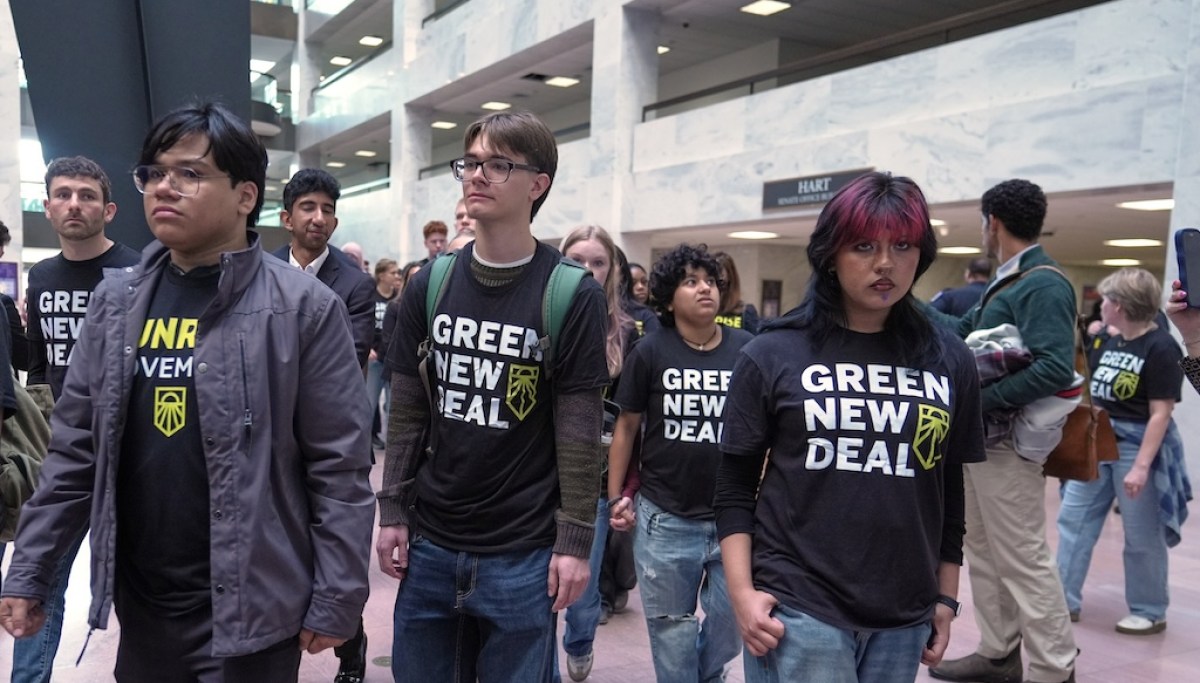
Following the bill’s passage in the Senate, Rep. Adelita Grijalva, D-Arizona, spoke at a rally outside the U.S. Capitol in opposition to the bill.
“Just one week after voters resoundingly rejected the Trump agenda, Congress should not be rushing to pass a bill that gives him even more unilateral authority to bypass our laws,” Grijalva said.
asserted
Grijalva → follow → laws
Rep. Mike Levin, D-Calif., said in a statement the bill would modernize the electric grid and accelerate clean energy, but he cannot support it as it’s written due to risks to California water protections, endangered-species science, tribal rights and permanent fossil-fuel approvals.
asserted
it → say → protections
Still, the bill has some Democratic supporters.
asserted
bill → have → supporters
The New Democrat Coalition Leadership issued a statement earlier this month endorsing the bill as a means to bring down costs, which was a key concern driving voters to shift left in the midterms.
asserted
which → issue → midterms
“These reforms move the legislation in the right direction toward lower costs for the American people, and will make it easier and cheaper to quickly build the transmission and energy generation our country needs,” the coalition said.
asserted
coalition → move → generation
California Rep. Scott Peters, chair of the coalition’s environment/climate working group, told the Times of San Diego that BAAJA is “a really good bill as it is.”
With less than 40 days remaining in the 119th Congress, the bill’s chances of passing will be on a tight schedule when lawmakers return from Thanksgiving recess.
asserted
lawmakers → tell → recess

 The Aporia