Prediction market companies tout themselves as a place where anyone can make a quick buck.
asserted
anyone → tout → buck
Don't bet on it, recent data suggests.
uncertain
data → bet → it
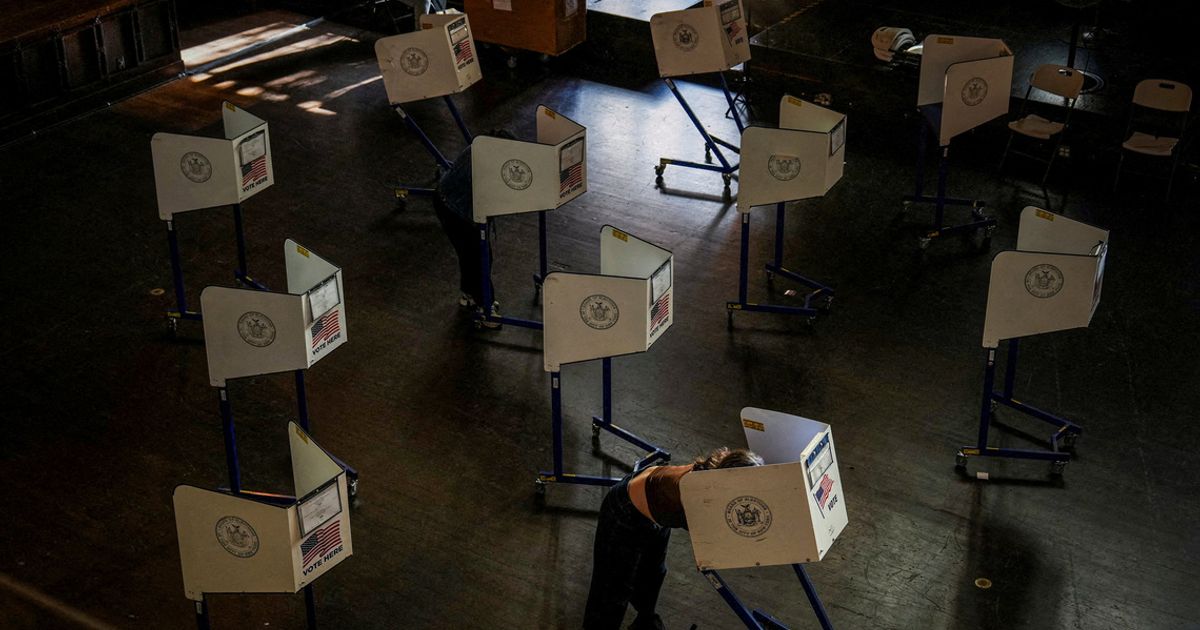
Take the U.S. midterm elections, which generated ample business for prediction market platforms as users wagered on who would win congressional races nationwide.
asserted
who → take → races
And a few people did, in fact, clean up — very few.
asserted
people → clean → fact
On Polymarket, the top 1% of accounts took home 91% of the profits from midterm bets, totaling roughly $23 million, according to research this week from the Anti-Corruption Data Collective (ACDC), a nonprofit advocacy group focused on corporate and financial corruption.
uncertain
% → take → corruption
The bottom 99% of traders lost a total of $15 million.
asserted
% → lose → million
Of the nearly 82,000 accounts that the group analyzed, more than half lost money on Polymarket's midterm-focused markets.
asserted
half → analyze → markets
"At a time [when] affordability was a major issue at the ballot box, average traders handed over their cash to an elite few, including many professional and automated traders," ACDC said in its study.
asserted
ACDC → hand → study
According to Polymarket, 95% of the markets on its platform accurately predicted the outcome of this year's midterm elections.
uncertain
% → accord → elections
"Prediction markets have become an important source of real-time election information as they bring together the knowledge and insights of informed participants to show the public how likely different outcomes are," a Polymarket spokesperson said in an email to CBS News.
asserted
spokesperson → become → News
"Polymarket continues to be a destination for timely, accurate information that anyone can follow as events unfold, whether they trade or not.
asserted
they → continue → that
According to the Pew Research Center, Polymarket and rival prediction market Kalshi hosted a combined 34,000 contracts related to the midterms, up from 2,300 in 2024.
uncertain
Polymarket → accord → 2024
The midterms generated $2.7 billion in trading volume on the platforms, compared with $8.5 billion during the 2024 presidential and congressional elections, Pew found.
asserted
Pew → generate → elections
Other recent data point to the challenge of winning money on prediction markets.
asserted
data → point → markets
Findings released by the New York City Council on Tuesday show that, from Jan. 1 to Aug. 11, New York City residents who traded on Kalshi lost a total of $17.6 million.
asserted
who → release → million
So-called institutional traders on the platform won $210 million over the same period.
asserted
traders → call → period
On Wall Street, institutional investors generally refer to financial firms, market makers and other pros who invest money on behalf of their clients.
asserted
who → refer → clients
In Kalshi's case, it also encapsulates retail traders, solo forecasters and two-person teams that use LLCs for tax or business purposes, according to Elisabeth Diana, a spokesperson for the prediction market.
uncertain
that → encapsulate → market
"Most winning traders [are] labeled as 'institutional' even though they are often 'individuals'," she said in an email, adding, "These are not Wall Street institutions."
asserted
These → win → email
Diana also said that, as in other financial markets, a trader's skill level matters.
asserted
level → say → markets
"Traders who get better at forecasting can earn more, and their trades make the market more efficient," she said.
asserted
she → get → more
"Individuals do worse day trading on the stock markets than professionals.
asserted
Individuals → do → professionals
The only difference here is that prediction markets give more people an opportunity to be a 'professional'."
asserted
markets → give → opportunity
 The Aporia