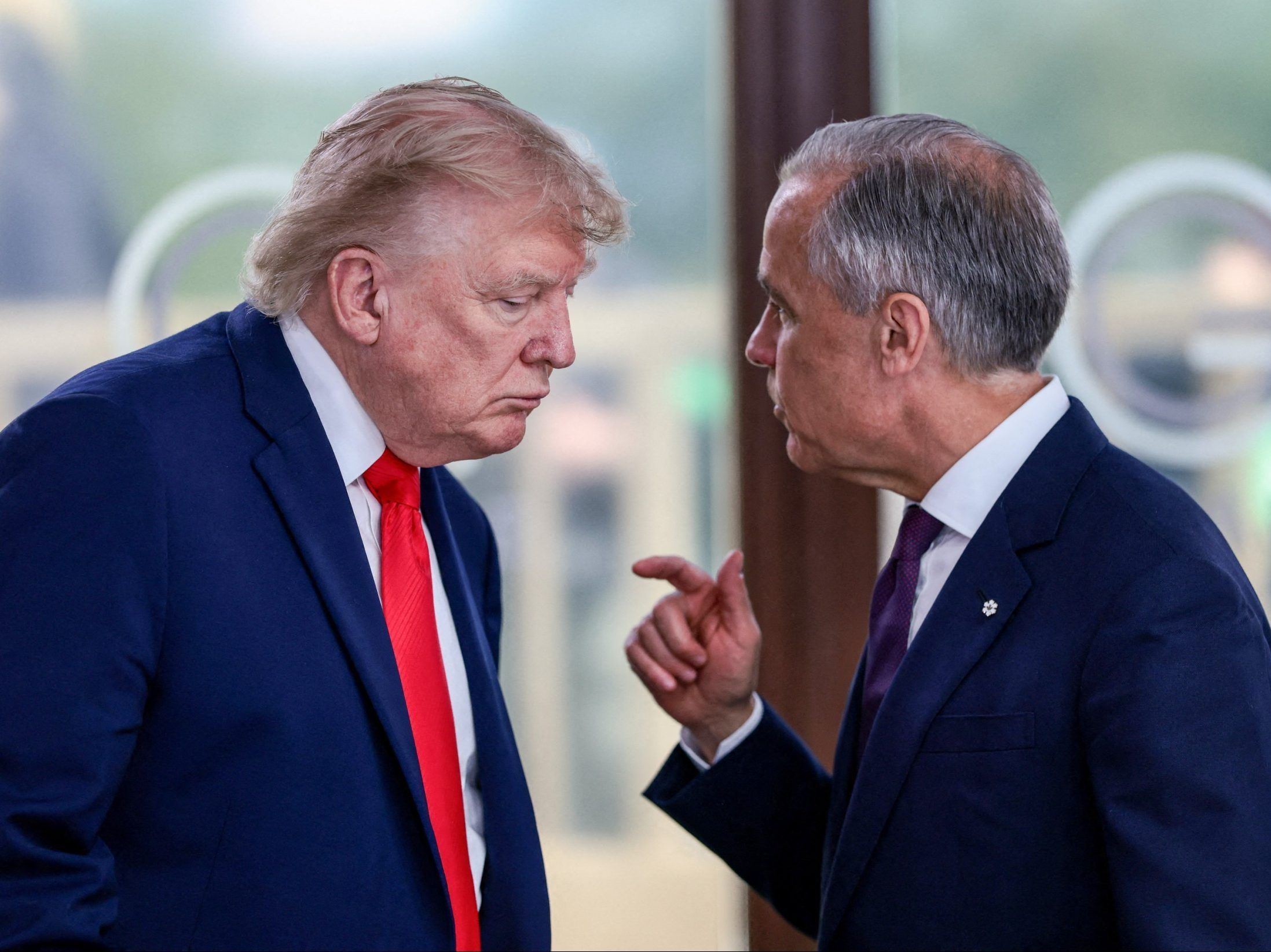
Photo via Global News

U.S. wants to accommodate Canada on sectoral tariffs, Trump trade czar says

Read the original at Global News ↗
Cite

Rana, U. (2026, November 25). U.S. wants to accommodate Canada on sectoral tariffs, Trump trade czar says. Global News. https://globalnews.ca/news/12165941/us-accommodate-canada-sectoral-tariffs-trump/

Dated from the outlet's own feed. Check the original for its byline.

Global News · collected 2026-11-25 · by Uday Rana

Quick Summary

U.S. Trade Representative Jamieson Greer stated that the U.S. is aiming to reach a trade deal with Canada that would "accommodate" Canada on tariffs in steel, aluminum, and automobile sectors. Talks have intensified since the U.S. midterms, where Democrats criticized President Trump's trade policies, particularly the 25% tariffs imposed under Section 232, which the Bank of Canada warned are harming the Canadian economy. Greer acknowledged the resurgence of manufacturing in the U.S. and said the president seeks to maintain this advantage while also finding a way to benefit Canada.
Written by AI on 2026-11-25, from this article's own text only (the story summary below draws on all the coverage).
See how they differ ↓

AI analysis

Story summary

U.S. Trade Representative Jamieson Greer has stated that the United States is looking to accommodate Canada in North American trade talks regarding sectors like automobiles and steel, despite ongoing sticking points. Speaking on CNBC, Greer acknowledged the need for a final deal that benefits the U.S. but also includes provisions to accommodate Canada. Talks between the U.S. and Canada have intensified this month following the U.S. midterms, with Greer noting that tariffs on steel, aluminum, and autos remain key issues. In August, President Donald Trump had threatened to double existing tariffs to 50% starting January 1, 2027, but Greer indicated a more flexible stance now. The Bank of Canada had previously warned that existing 25% tariffs were adversely affecting the Canadian economy.

Written for “U.S. Wants to Accommodate Canada On Tariffs” on 2026-11-26, grounded in this article and the 1 other(s) covering the same event.

How they differ

2 outlets covered “U.S. Wants to Accommodate Canada On Tariffs”.

What each outlet says

One AI summary per outlet of its latest article on this story, written from that article alone and checked against it. Open the article for the outlet's own words.

Global NewsThis outlet25 Nov

U.S. Trade Representative Jamieson Greer stated that the U.S. is aiming to reach a trade deal with Canada that would "accommodate" Canada on tariffs in steel, aluminum, and automobile sectors. Talks have intensified since the U.S. midterms, where Democrats criticized President Trump's trade policies, particularly the 25% tariffs imposed under Section 232, which the Bank of Canada warned are harming the Canadian…

U.S. wants to accommodate Canada on sectoral tariffs, Trump trade czar says (this article)
Toronto Star25 Nov

U.S. Trade Representative Jamieson Greer stated on CNBC that while President Trump's trade policies aim to benefit the U.S. in sectors like automobiles and steel, there will be accommodations for Canada in any final North American trade deal. Greer mentioned ongoing negotiations with Canada and expressed concern over some of Prime Minister Mark Carney’s trade agreements with China, particularly regarding tariff…

Trump's trade czar says he's looking to accommodate Canada on some sectoral tariffs →

Compared with similar articles

This article reads leans left and hedges 4% of its claims. Each row says how that neighbour differs.
Toronto Star
Leans left Hedges 0 of 9 claims Outlet record 65/100
TIME
Leans strongly left further left than this Hedges 12 of 69 claims Outlet record 60/100
“The articles describe different aspects of ongoing trade negotiations between Canada and the U.S., not the same specific incident or meeting.”
CBC News
Hedges 3 of 20 claims Outlet record 70/100
“The articles describe related developments in trade negotiations between the U.S. and Canada but do not appear to be reporting on the exact same specific meeting or announcement.”
Toronto Sun
Leans right further right than this Hedges 1 of 11 claims Outlet record 96/100
“The articles discuss related negotiations between the U.S. and Canada on sectoral tariffs but do not describe the same specific incident or occurrence.”
CBC News
Hedges 0 of 8 claims Outlet record 70/100
“The articles discuss different aspects of the ongoing trade talks, with Article A focusing on Canada's relationship with China and Article B specifically mentioning sectoral tariffs and key sticking points in the negotiations.”
Washington Examiner
Hedges 1 of 7 claims Outlet record 66/100
“The articles discuss different aspects of trade negotiations and policies between Canada and the U.S., not the same specific incident or occurrence.”
The Dispatch
Hedges 6 of 40 claims Outlet record 61/100
“Both articles discuss ongoing trade negotiations between the U.S. and Canada, but they focus on different aspects and do not describe the same specific incident or outcome.”
Toronto Star
Centre further right than this Hedges 0 of 2 claims Outlet record 65/100
“While both articles discuss ongoing trade negotiations between the U.S. and Canada, they describe different aspects and stages of the talks, indicating separate reporting dates and focuses.”
Global News
Hedges 5 of 18 claims Outlet record 63/100
“Article A reports Premier Ford's stance on a trade deal with the US, while Article B discusses the U.S. Trade Representative's comments about accommodating Canada in sectoral tariffs. They are related but describe different specific events.”
Toronto Sun
Hedges 4 of 22 claims Outlet record 96/100
“The articles discuss different stages of ongoing trade negotiations between Canada and the U.S., rather than the same specific event.”

Story

U.S. Wants to Accommodate Canada On Tariffs
Politics · 2 article(s) covering the same event. See how they differ ↑
How this article was measured signals, leaning charts, publisher record, byline, topics and claims

Signals How these are calculated →

Claims extracted
24
sentences that state something as happening or true
Uncertain
4%
1 of 24 hedged ("reportedly", "may", "according to")
Leaning
Leans left
of the writing, not the subject · beta estimate
Publisher signals
63/100
Global News's corrections and hedging, across everything collected from it. Not a measure of accuracy.
Outlets on this story
2
Politics
Same framing elsewhere
1
articles that frame the event the way this one does
Analyzed 2026-11-25 · how these are computed

How this is being covered How these are calculated →

Article leaning vs. publisher reliability
Source leaning vs. consistency

Publisher

Global News · 3773 article(s) · 13 correction(s) detected
Running correction rate · 13 correction(s)

Who wrote this

Uday Rana
56 article(s) here · 1 carrying a prediction
There is a “very rare but serious” risk that consumers using GLP-1 drugs such as semaglutide may experience vision loss, Health Canada is warning.
In August, shortly after trade talks broke down between Ottawa and Washington, U.S. President Donald Trump said the U.S. would double these tariffs to 50 per cent starting Jan. 1, 2027.
“My officials will be meeting with the union Unifor, along with Stellantis and the government of Ontario.
Canadians are being flooded with Black Friday flyers in their mailboxes and inboxes this week ahead of the holiday shopping season, but most consumers may be about to reach for their credit cards.
“Before someone starts missing their mortgage payments, they may already have fallen behind on credit cards, car loans or other commitments as they try to keep a roof over their heads,” Harris said.
“Hopefully, we can choose from the best features available to create a really beautiful new facility that students and staff will feel both safe and comfortable in for the long term in Tumbler Ridge,” Anderson said.
“The leaders discussed the work underway to reach a mutually beneficial trade agreement that would create good jobs, boost affordability, and fully respect Canada’s languages, culture, and sovereignty.
More than a quarter of Canadians, apparently, who would rather open an envelope full of cash instead, a new survey shows.
Industry Minister Melanie Joly and Ontario Premier Doug Ford are set to announce new supports for Canada’s auto manufacturing sector, which is reeling from U.S. President Donald Trump’s tariffs.
There may soon be a second GLP-1 weight-loss pill option in Canada: competitor Novo Nordisk’s Wegovy pill, which is still awaiting Health Canada approval.
Also by Uday Rana
Nothing else under this byline is closely related to this article, so these are simply their most recent.
All 56 articles by Uday Rana →

Topics

Canada North American Ottawa U.S. Washington

Subjects

Canada GPE · 11× U.S. GPE · 10× Greer PERSON · 6× Trump PERSON · 6× Canadian NORP · 3× North American NORP · 3× the United States GPE · 3× Mark Carney PERSON · 2× Ottawa GPE · 2× Washington GPE · 2×

Narrative

- Nova Scotia launches Support Our Troops licence plate benefiting military charity - Nova Scotia pulls amusement ride’s licence after 5 children hurt at Christmas event Both sides have renewed their efforts this month after Trump’s Republican Party received a drubbing in the U.S. midterms elections, which saw several Democratic candidates blame Trump’s trade war on Canada for the high cost of living. “We’re trying to manage North American trade in auto steel and aluminum.
framing: assertive · carried by 1 article(s) · first seen 2026-11-25
In August, shortly after trade talks broke down between Ottawa and Washington, U.S. President Donald Trump said the U.S. would double these tariffs to 50 per cent starting Jan. 1, 2027.

Claims (24 extracted, 1 hedged)

Washington is looking to strike a trade deal that “accommodates” Canada in North American steel, aluminum and automobile sectors, U.S. Trade Representative Jamieson Greer said Wednesday. asserted
Greer → look → sectors
Trade talks between the two nations picked up this month, with Greer saying negotiations are resting on a few key sectoral sticking points. “It really comes down to some sticking points, which we’ve talked about before. asserted
we → pick → which
These are things like autos, steel, aluminum, et cetera,” he said in an interview with American news network CNBC. asserted
he → say → CNBC
These three sectors, along with lumber, are subject to steep 25 per cent tariffs imposed under Section 232 of the U.S. Trade Expansion Act. asserted
sectors → impose → Act
In August, shortly after trade talks broke down between Ottawa and Washington, U.S. President Donald Trump said the U.S. would double these tariffs to 50 per cent starting Jan. 1, 2027. asserted
U.S. → break → Jan.
The Bank of Canada warned in April that sectoral tariffs are already “adversely affecting the Canadian economy.” asserted
tariffs → warn → economy
The U.S. had seen a “resurgence” in steel, aluminum and auto manufacturing and Trump wanted to maintain America’s advantage, Greer said in his interview on Wednesday. asserted
Greer → see → Wednesday
“We’re seeing a lot of resurgence in autos and steel. asserted
We → see → autos
So the president wants to be careful about any potential modifications on that front, including with Canada,” he said. asserted
he → want → Canada
Trump, however, was open to a deal that “accommodates” Canada, Greer said. asserted
Greer → accommodate → Canada
“We want to make sure that North American trade in these products is beneficial for the United States, obviously. asserted
trade → want → States
There will have to be something that accommodates Canada as well, if there’s a change that’s made,” he added. asserted
he → have → Canada
Trade talks collapsed between Canada and the United States in August after Ottawa walked away from the negotiating table in response to last-minute terms that Prime Minister Mark Carney said the U.S. demanded, including restrictions on Canada entering into new trade deals with other countries. asserted
Canada → collapse → countries
In another interview last week, Greer said Canada and the U.S. were “fairly close” to finalising a trade deal. asserted
Canada → say → deal
“We’ve made a lot of progress. asserted
We → make → progress
I think we’re fairly close on finding a landing zone,” Greer told Fox News in an interview Sunday. asserted
Greer → think → interview
The new Quebec college of physicians president wants to reform the code of ethics - Canada-U.S. defence spat heightens as Pentagon prepared to ‘up the ante’ asserted
Pentagon → want → ante
- Nova Scotia launches Support Our Troops licence plate benefiting military charity - Nova Scotia pulls amusement ride’s licence after 5 children hurt at Christmas event Both sides have renewed their efforts this month after Trump’s Republican Party received a drubbing in the U.S. midterms elections, which saw several Democratic candidates blame Trump’s trade war on Canada for the high cost of living. “We’re trying to manage North American trade in auto steel and aluminum. asserted
We → launch → steel
We’re still having constructive conversations with our Canadian counterparts,” Greer said. asserted
Greer → have → counterparts
“The leaders discussed the work underway to reach a mutually beneficial trade agreement that would create good jobs, boost affordability, and fully respect Canada’s languages, culture, and sovereignty. asserted
that → discuss → languages
They agreed to continue the work and to stay in close contact,” Carney’s office said in a statement. asserted
office → agree → statement
Canada’s chief trade negotiator, Janice Charette, told a federal advisory committee that “multiple trade issues” remain outstanding with the United States and are preventing a deal, several sources who were briefed by the federal government have told Global News. asserted
who → tell → News
The biggest issue still outstanding is the 25 per cent U.S. tariff on Canadian automobiles, according to sources in the meeting. uncertain
issue → accord → meeting
Negotiations around auto tariffs were a core reason trade talks between the Carney government and Trump administration fell apart in August. asserted
talks → fall → August
Give feedback · no sign-in needed

No sign-in needed for now. Your note is sent without a name, so it cannot be answered.

History Support