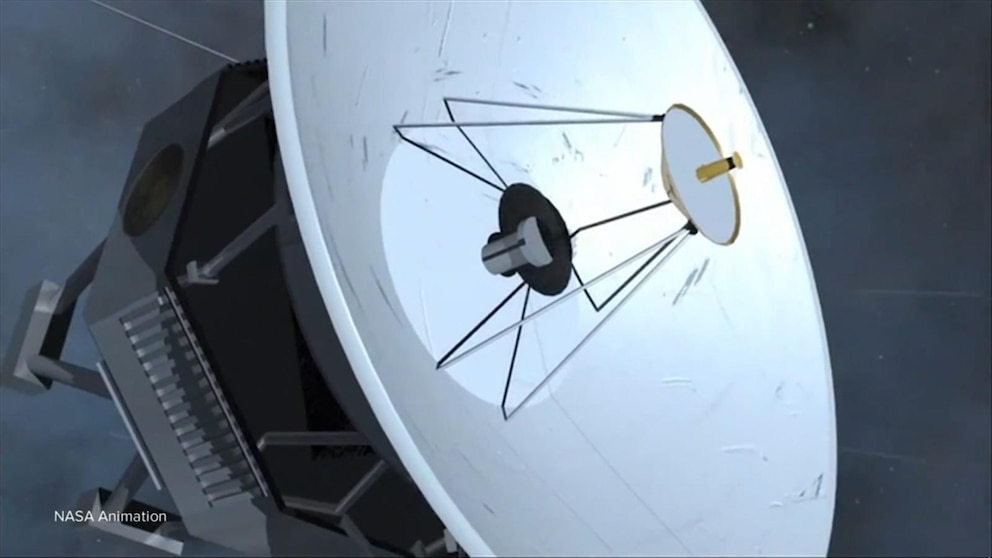
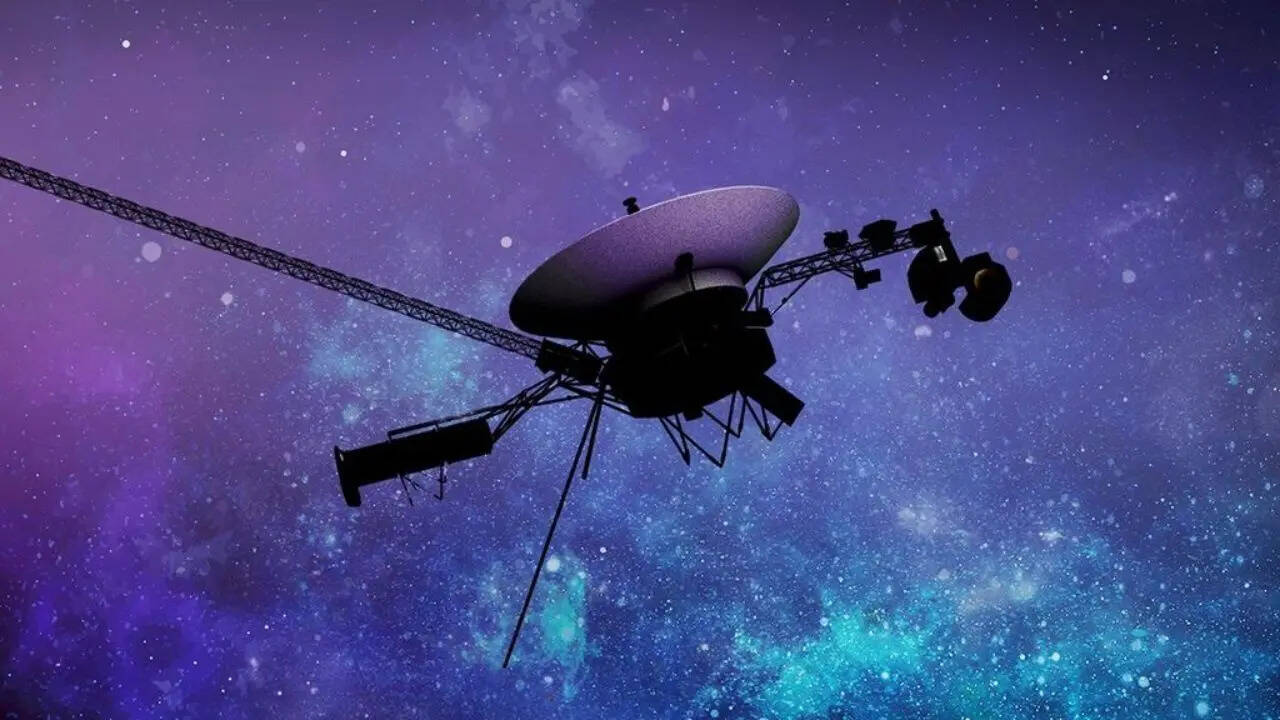
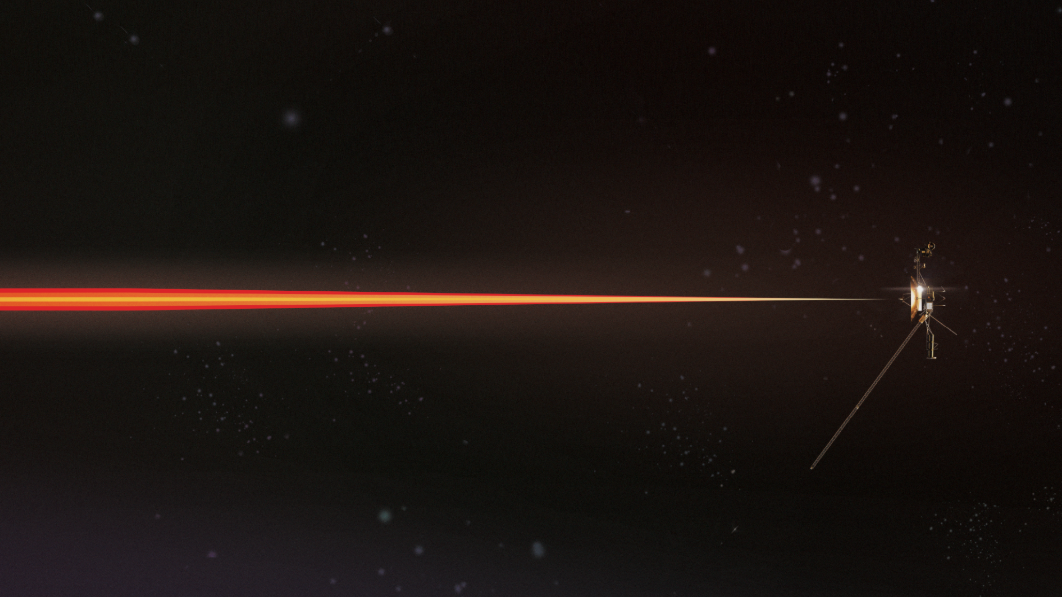
America’s legendary space probe has officially gone farther than anything humans have ever built: one full light-day from home.
asserted
humans → go → home
NASA’s Voyager 1 crossed the mark at 5:16 a.m. Eastern on November 18, putting it about 16.1 billion miles from Earth.
asserted
Voyager → cross → Earth
At that distance, a radio command traveling at the speed of light needs a full day to reach the craft, and any reply needs another day to return.
asserted
reply → travel → day
Voyager 1 stopped sending home any science or engineering data on November 14, four days before the milestone, and as of Tuesday, NASA said the problem was still unresolved.
asserted
problem → stop → Tuesday
Engineers know the probe is alive.
asserted
probe → know → ?
A giant Deep Space Network dish in Canberra, Australia, is still picking up its basic radio tone, which means the spacecraft is still pointed at Earth and its transmitter works.
asserted
transmitter → pick → Earth
What’s missing is everything that tone is supposed to carry.
asserted
tone → miss → ?
NASA suspects the onboard computer that gathers readings from the instruments and packages them for transmission.
asserted
that → suspect → transmission
Voyager 1 had a similar computer problem in 2023, and the team is using that fix as a playbook.
asserted
team → have → playbook
With two-day round trips for every message, though, NASA warns that diagnosing it could take weeks or longer.
uncertain
diagnosing → warn → weeks
The silence didn’t stop the celebration.
asserted
silence → stop → celebration
Because the probe coasts at a steady speed on a well-mapped path, NASA confirmed it had reached the milestone using its radio tone and decades of trajectory math, and toasted the feat on November 19.
asserted
it → coast → November
“It’s never happened before, and it may never happen again,” mission manager Kareem Badaruddin told CNN.
uncertain
Badaruddin → happen → CNN
In October, the probe went completely silent for roughly 48 hours before coming back on its own, leaving engineers scrambling for an explanation.
asserted
probe → go → explanation
NASA is now checking whether the two glitches are connected.
asserted
glitches → check → ?
Launched in September 1977 to fly past Jupiter and Saturn, Voyager 1 was designed to last about five years.
asserted
Voyager → launch → years
Instead, it has run for 49 years, became the most distant human-made object in 1998, and was pushed out of the sun’s protective bubble into interstellar space in 2012.
asserted
it → run → 2012
Keeping it alive has required heavy rationing.
asserted
Keeping → keep → rationing
Its plutonium-fueled power source, which put out 470 watts at launch, loses about 4 watts every year and is now down to roughly 210.
asserted
which → fuel → 210
In September, engineers pulled off a high-stakes maneuver they nicknamed the “Big Bang.”
asserted
they → pull → maneuver
They swapped three power-hungry devices for three thriftier ones in one move, saving about 10 watts, which works out to roughly two and a half more years of operation.
asserted
which → swap → operation
Badaruddin compared it to pulling a rabbit out of a hat.
asserted
Badaruddin → compare → hat
For now, Voyager 1 is drifting toward a star called Gliese 445.
asserted
Voyager → drift → star
It will pass within about 1.7 light-years of the star in roughly 40,000 years.
asserted
It → pass → years
It carries the Golden Record, a gold-plated disk loaded with greetings in 55 languages, music, and sounds from Earth, in case anyone out there finds it.
asserted
anyone → carry → it
Its twin, Voyager 2, is on track to reach the same one-light-day mark in 2035, if it lasts that long.
asserted
it → reach → 2035
 The Aporia