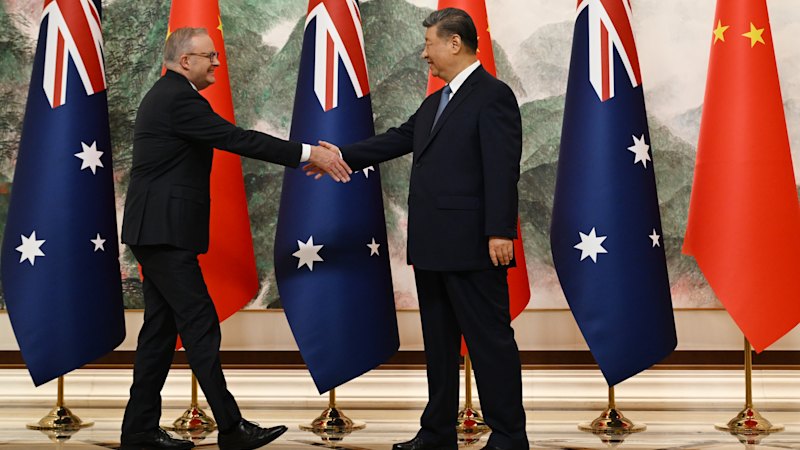
Photo via The Sydney Morning Herald

Blame politicians, not migrants, for housing crisis: Parkinson

Read the original at The Sydney Morning Herald ↗
Cite

Wright, S., & Chrysanthos, N. (2026, November 24). Blame politicians, not migrants, for housing crisis: Parkinson. The Sydney Morning Herald. https://www.smh.com.au/politics/federal/blame-politicians-not-migrants-for-housing-crisis-parkinson-20261124-p61gru.html?ref=rss&utm_medium=rss&utm_source=rss_feed

Dated from the outlet's own feed. Check the original for its byline.

The Sydney Morning Herald · collected 2026-11-24 · by Shane Wright, Natassia Chrysanthos

Quick Summary

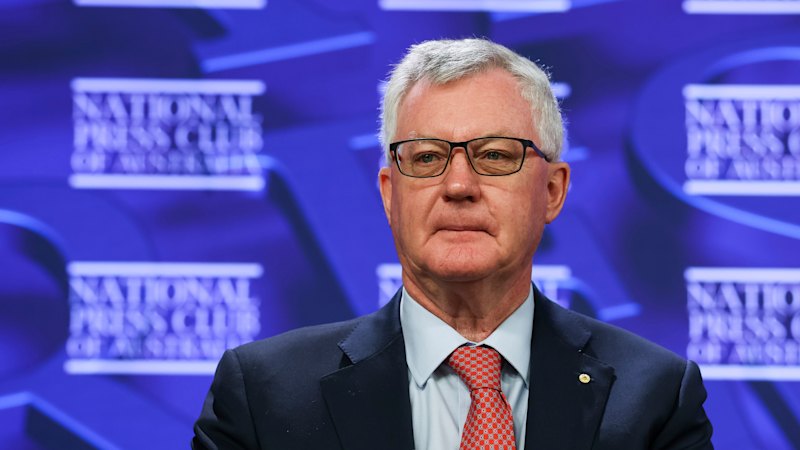
Martin Parkinson, a former Treasury official, argues in a speech that politicians, not migrants, are responsible for Australia’s housing crisis. He criticizes political parties for offering vague plans to reduce migration numbers without addressing underlying issues such as infrastructure planning and productivity. Parkinson, who will speak at Macquarie University in Sydney, asserts that simply cutting migration numbers won’t restore public confidence in the program. The article highlights the lack of detailed costings and potential economic impacts associated with proposed migration reduction plans by various political parties.
Written by AI on 2026-11-24, from this article's own text only (the story summary below draws on all the coverage).

AI analysis

Story summary

In a speech on Wednesday, Martin Parkinson, the former Treasury and prime minister's department head and current Macquarie University chancellor, argued that migrants are not responsible for Australia's housing crisis. Parkinson, author of a key federal government migration review, blamed politicians for failing to address self-imposed supply constraints in housing. He noted that Australia’s migration program has become a temporary labor supply, largely driven by international education, while infrastructure and services have lagged behind. Parkinson warned that blunt cuts to migration numbers will not restore public confidence in the immigration program and stressed the need for better planning and explanation of the purpose of migration. This intervention comes as political parties offer competing solutions to the housing crisis.

Written for “Blame Politicians For Housing Crisis” on 2026-11-26, grounded in this article and the 0 other(s) covering the same event.

Compared with similar articles

Nothing to compare against. No article is close enough to this one for the pipeline to have linked or judged the pair.

Story

Blame Politicians For Housing Crisis
Politics · 1 article(s) covering the same event.
How this article was measured signals, leaning charts, publisher record, byline, topics and claims

Signals How these are calculated →

Claims extracted
28
sentences that state something as happening or true
Uncertain
4%
1 of 28 hedged ("reportedly", "may", "according to")
Leaning
Leans strongly left
of the writing, not the subject · beta estimate
Publisher signals
61/100
The Sydney Morning Herald's corrections and hedging, across everything collected from it. Not a measure of accuracy.
Outlets on this story
1
Politics
Same framing elsewhere
1
articles that frame the event the way this one does
Analyzed 2026-11-24 · how these are computed

How this is being covered How these are calculated →

Article leaning vs. publisher reliability
Source leaning vs. consistency

Publisher

The Sydney Morning Herald · 8282 article(s) · 19 correction(s) detected
Running correction rate · 19 correction(s)

Who wrote this

Shane Wright
37 article(s) here · 1 carrying a prediction
For instance, in August, inflation would have fallen but for that month’s huge spike in oil.
BDO chief economist Anders Magnusson said while the overall results were above what had been forecast by the Reserve Bank, it was still unlikely interest rates would be pushed up at the RBA’s December meeting.
2026-11-25 · assertive framing · Inflation hits highest level since start of Iran war
In a speech on Wednesday, the current Macquarie University chancellor will argue the nation’s migration program has become a system of temporary labour supply, driven most by international education, while planning for infrastructure and services has failed to keep up.
The Reserve Bank could be forced into cutting interest rates by the middle of next year to salvage the jobs market, one of the nation’s biggest lenders has predicted, amid warnings that state governments face their own financial reckoning as they run up $1 trillion of debt.
In an address to parliament, Chalmers argued the country would avoid a recession as the budget bottom line deteriorates, even as the government prepares to deliver “budget-sized” spending cuts in its looming mid-year fiscal update. And he has revealed that key indicators of government spending and tax collection to gross domestic product will be pushed higher because the economy is smaller than expected.
Victoria’s net debt, forecast by Treasury to reach $197 billion by 2029-30, is the highest of all state and territories.
Australia’s wholesale power prices would be up to 50 per cent higher if the country had embraced coal, gas or nuclear power rather than renewables and batteries, a leading economist has declared while arguing the nation had been “de-risked” from the full cost of the surge in fossil fuel prices.
Treasurer Jim Chalmers is promising a “Goldilocks” mid-year budget update that will be focused on savings large enough ease inflation pressures but which will not hurt the overall economy.
The Greens could get in the way of Treasurer Jim Chalmers’ plans to overhaul capital gains tax by the end of the year, backing an inquiry into a separate proposal from independent MP Allegra Spender.
The CEOs of two of the nation’s largest banks have backed cuts in government spending to bring down inflation and make housing more affordable amid warnings the AI building boom could push up the cost of suburban homes as they compete for electricians and plumbers.
Also by Shane Wright
Chalmers cannot spin a silver lining out of this grim story
2026-11-25 · The Sydney Morning Herald
Inflation hits highest level since start of Iran war
2026-11-25 · The Sydney Morning Herald
RBA could start rate cuts by June as economy deteriorates
2026-11-24 · The Sydney Morning Herald
Nothing else under this byline is closely related to this article, so these are simply their most recent.
All 37 articles by Shane Wright →
Natassia Chrysanthos
33 article(s) here · 1 carrying a prediction
In a speech on Wednesday, the current Macquarie University chancellor will argue the nation’s migration program has become a system of temporary labour supply, driven most by international education, while planning for infrastructure and services has failed to keep up.
“Chris Bowen should have known that, and then he would have spared Australians the expense of $150 million for an exercise, which became a vanity project for him.
The prime minister will soon finish his 11-day international tour with a final stop in Beijing to meet Chinese Premier Li Qiang and hold a roundtable with Australian business executives.
The meeting will mark the first time in history the leaders of the US, China and Russia sit down for face-to-face talks.
The world’s eyes are on Trump this week as he blitzes through Asia, where he will hold a historic meeting with China and Russia in his first international tour since the bruising midterm elections.
United States President Donald Trump has landed in the Philippines and will meet Prime Minister Anthony Albanese for his first stop in a diplomatic blitz through Asia following the bruising midterm elections.
Regional employers crying out for backpackers to fill pubs and cafes are set to win a reprieve on Tuesday, when Home Affairs Minister Tony Burke is expected to wind back a proposed crackdown on working holidaymakers.
“How can it possibly be acceptable for Anthony Albanese, the leader of a democratic country which has stood alongside Ukraine for nearly five years, to willingly take part in a photograph with the man responsible for this war?
Under the deal, 35 restaurants are set to come to Australia in the next five years, a $60 million investment that should create about 900 jobs.
Australia will ramp up its investment in drones and other defence measures in a pact with the Philippines to protect important trade routes and increase maritime surveillance as Beijing extends its reach over the South China Sea.
Also by Natassia Chrysanthos
Nothing else under this byline is closely related to this article, so these are simply their most recent.
All 33 articles by Natassia Chrysanthos →

Topics

Australia Coalition Labor Macquarie University Treasury

Subjects

Parkinson PERSON · 7× Coalition ORG · 3× Labor ORG · 3× Australia GPE · 2× Macquarie University ORG · 2× Australian NORP · 1× Martin Parkinson PERSON · 1× One Nation ORG · 1× Sydney GPE · 1× Treasury ORG · 1×

Narrative

“The crisis has deep roots in a decade or more of too little building, restrictive planning, rising construction costs and a shortage of tradespeople,” he will say. “Australia’s inability to address self-imposed supply constraints is the root cause of the build-up in excess demand.” Parkinson, who served both Coalition and Labor governments in senior positions, will argue politicians have failed to be upfront with voters about the many issues contributing to the housing crisis. “And nobody in authority would level with them that these were the consequences of persistent policy failure on housing, infrastructure planning, and a quarter-century of productivity-damaging policies at Commonwealth and state level, irrespective of who was in power,” he will argue.
framing: assertive · carried by 1 article(s) · first seen 2026-11-24
In a speech on Wednesday, the current Macquarie University chancellor will argue the nation’s migration program has become a system of temporary labour supply, driven most by international education, while planning for infrastructure and services has failed to keep up.
2026-11-24 · The Sydney Morning Herald
Blame politicians, not migrants, for housing crisis: Parkinson · assertive framing

Claims (28 extracted, 1 hedged)

The author of a key federal government migration review says migrants are not to blame for Australia’s housing crisis and has warned that blunt cuts to numbers won’t restore public confidence in the country’s immigration program. asserted
cuts → say → program
Martin Parkinson, who formerly ran Treasury and the prime minister’s department, instead lays blame with politicians of all stripes, who have not been honest with voters about their own planning failures and productivity-damaging policies. asserted
who → run → failures
In a speech on Wednesday, the current Macquarie University chancellor will argue the nation’s migration program has become a system of temporary labour supply, driven most by international education, while planning for infrastructure and services has failed to keep up. asserted
planning → argue → infrastructure
“The result is a loss of social licence which cutting numbers alone will not restore,” he will say in a speech at Macquarie University in Sydney. asserted
he → cut → Sydney
“[It] is not that migration has failed. asserted
migration → fail → ?
It is that we have lost sight of what migration was for. asserted
migration → lose → what
And once you lose sight of the purpose, you lose the ability to plan for it, to explain it, and in the end, to defend it.” asserted
you → lose → it
Parkinson’s pointed intervention comes as Labor, the Coalition and One Nation offer competing plans for lowering net overseas migration as Australian voters express record levels of dissatisfaction with the current intake, which adds about 300,000 people to the population a year. asserted
which → come → population
But Parkinson will argue that there were holes in each party’s platform, which were largely uncosted or have unreleased costs, and primarily driven by arbitrary cuts rather than a detailed explanation for visa numbers, which jobs or regions would be forfeited, and how housing and services would improve as a result. asserted
housing → argue → result
“A target that cannot answer those questions is nothing more than a slogan,” he will say. asserted
he → answer → slogan
“But here is what troubles me most. asserted
what → trouble → me
We do not really know what any of these proposals would cost. asserted
any → know → proposals
Not one of the three has published enough detail to tell us. asserted
one → publish → us
These decisions have wide and deep economic and budget impacts, yet we are being asked to make them in the dark. asserted
we → have → dark
The closest approximation comes from Parliamentary Budget Office modelling, Parkinson will say. asserted
Parkinson → come → modelling
According to this masthead’s use of PBO forecasting tools, One Nation’s plans for three years of negative migration would drive up national debt by an extra $275 billion. uncertain
plans → accord → billion
The Coalition says its plans to cut numbers to 100,000 for two years would be budget neutral, but it hasn’t released the costings. asserted
it → say → costings
Meanwhile, Labor’s rush to drive down net migration to 225,000 was followed by a backdown on its backpacker policy. asserted
rush → drive → policy
“We are now repeating the original error. asserted
We → repeat → error
We are setting numbers without a purpose, from the other direction. asserted
We → set → direction
If we cut by decree … we will lose the benefits and we will not have fixed the system,” Parkinson will argue. asserted
Parkinson → cut → system
Parkinson will also be the latest public figure to throw support behind a national migration summit that would bring together government, business, unions, settlement organisations and economists to shape a long-term vision based on evidence, to build confidence in the community. asserted
that → throw → community
Net overseas migration surged after the pandemic, reaching a record 550,000 in late 2023. asserted
migration → surge → 2023
This coincided with the largest jump in property prices in 30 years and a surge in rents. asserted
This → coincide → rents
Parkinson will argue that while migration had an impact on the property market, it was not the driving cause for the nation’s housing “crisis”. asserted
it → argue → crisis
“The crisis has deep roots in a decade or more of too little building, restrictive planning, rising construction costs and a shortage of tradespeople,” he will say. “Australia’s inability to address self-imposed supply constraints is the root cause of the build-up in excess demand.” Parkinson, who served both Coalition and Labor governments in senior positions, will argue politicians have failed to be upfront with voters about the many issues contributing to the housing crisis. “And nobody in authority would level with them that these were the consequences of persistent policy failure on housing, infrastructure planning, and a quarter-century of productivity-damaging policies at Commonwealth and state level, irrespective of who was in power,” he will argue. asserted
he → have → power
“So the public saw rising numbers of migrants and conflated those issues, urged on by some of the same myopic politicians who had contributed to these failures.” Cut through the noise of federal politics with news, views and expert analysis. asserted
who → see → news
Subscribers can sign up to our weekly Inside Politics newsletter. asserted
Subscribers → sign → newsletter

Give feedback · no sign-in needed

No sign-in needed for now. Your note is sent without a name, so it cannot be answered.

History Support