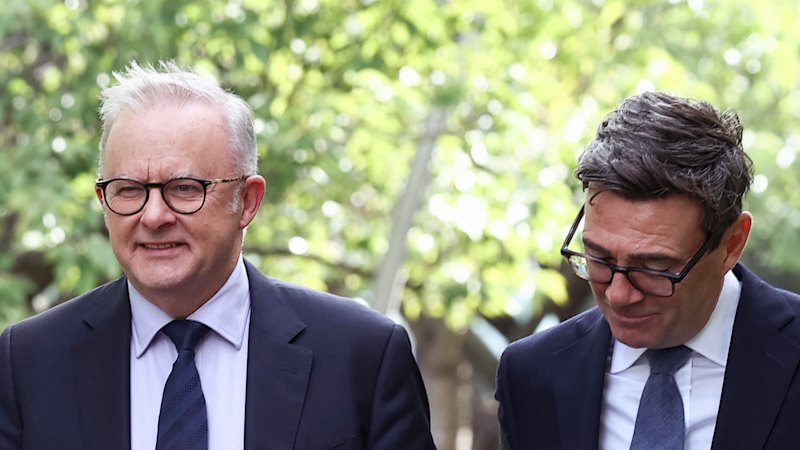
Photo via The Sydney Morning Herald

RBA could start rate cuts by June as economy deteriorates

Read the original at The Sydney Morning Herald ↗
Cite

Wright, S., & Sakkal, P. (2026, November 24). RBA could start rate cuts by June as economy deteriorates. The Sydney Morning Herald. https://www.smh.com.au/politics/federal/rba-could-start-rate-cuts-by-june-as-economy-deteriorates-20261124-p61grs.html?ref=rss&utm_medium=rss&utm_source=rss_feed

Dated from the outlet's own feed. Check the original for its byline.

The Sydney Morning Herald · collected 2026-11-24 · by Shane Wright, Paul Sakkal

Quick Summary

ANZ predicts the Reserve Bank of Australia (RBA) may start cutting interest rates by June 2027 due to a weakening economy and job market. Treasurer Jim Chalmers warned of a grim economic outlook with inflation likely to remain high, unemployment above 5%, and larger budget deficits starting from 2027-28. The RBA recently raised the cash rate to 4.85%, an 18-year high, but ANZ's Adam Boyton expects the RBA to reverse course and cut rates to 4.35% by August 2027, citing factors like elevated oil prices and a slowdown in the property market.
Written by AI on 2026-11-24, from this article's own text only (the story summary below draws on all the coverage).

AI analysis

Story summary

The Reserve Bank of Australia (RBA) could start cutting interest rates by June 2027 due to a deteriorating economic outlook, according to a prediction by the ANZ, one of the nation’s largest banks. Treasurer Jim Chalmers recently warned of a grim economic situation with inflation likely to remain high and unemployment above 5%, leading to larger budget deficits from 2027-28. The ANZ's prediction comes as state governments face a financial crisis with accumulated debt of $1 trillion. Opposition Leader Angus Taylor claims the Coalition could regain power next year, citing the government's poor economic management. Treasurer Chalmers attributed the economic downturn to factors such as higher oil prices, the AI construction boom, and increased interest rates, which have all impacted the economy negatively.

Written for “RBA Rate Cuts Expected June” on 2026-11-26, grounded in this article and the 0 other(s) covering the same event.

Compared with similar articles

This article reads unscored and hedges 17% of its claims. Each row says how that neighbour differs.
Has the RBA gone too far? Different event
The Sydney Morning Herald
Leans strongly left Hedges 3 of 24 claims Outlet record 61/100
“The articles discuss different time periods and economic developments; Article A predicts future rate cuts, while Article B discusses recent economic issues and a specific jobs report.”
ABC News (AU)
Hedges 3 of 26 claims Outlet record 66/100
“The articles discuss different aspects of the economic situation and forecasts, with Article A focusing on Jim Chalmers' outlook and budget forecasts, while Article B focuses on the Reserve Bank's potential interest rate cuts predicted by ANZ.”
Daily Mail
Leans right Hedges 8 of 38 claims Outlet record 68/100
“The articles discuss different economic issues and actions by different government figures at distinct times.”
Daily Mail
Hedges 3 of 29 claims Outlet record 68/100
“The articles discuss different aspects of the economic situation and outlook in Australia, with Article A focusing on Treasurer Jim Chalmers' warning to Parliament and Article B on predictions about interest rate cuts by the Reserve Bank.”

Story

RBA Rate Cuts Expected June
Economy/Business · 1 article(s) covering the same event.
How this article was measured signals, leaning charts, publisher record, byline, topics and claims

Signals How these are calculated →

Claims extracted
36
sentences that state something as happening or true
Uncertain
17%
6 of 36 hedged ("reportedly", "may", "according to")
Leaning
not political
takes no side on a contested political question
Publisher signals
61/100
The Sydney Morning Herald's corrections and hedging, across everything collected from it. Not a measure of accuracy.
Outlets on this story
1
Economy/Business
Same framing elsewhere
1
articles that frame the event the way this one does
Analyzed 2026-11-24 · how these are computed

How this is being covered How these are calculated →

Article leaning vs. publisher reliability
Source leaning vs. consistency

Publisher

The Sydney Morning Herald · 8282 article(s) · 19 correction(s) detected
Running correction rate · 19 correction(s)

Who wrote this

Shane Wright
37 article(s) here · 1 carrying a prediction
For instance, in August, inflation would have fallen but for that month’s huge spike in oil.
BDO chief economist Anders Magnusson said while the overall results were above what had been forecast by the Reserve Bank, it was still unlikely interest rates would be pushed up at the RBA’s December meeting.
2026-11-25 · assertive framing · Inflation hits highest level since start of Iran war
In a speech on Wednesday, the current Macquarie University chancellor will argue the nation’s migration program has become a system of temporary labour supply, driven most by international education, while planning for infrastructure and services has failed to keep up.
The Reserve Bank could be forced into cutting interest rates by the middle of next year to salvage the jobs market, one of the nation’s biggest lenders has predicted, amid warnings that state governments face their own financial reckoning as they run up $1 trillion of debt.
In an address to parliament, Chalmers argued the country would avoid a recession as the budget bottom line deteriorates, even as the government prepares to deliver “budget-sized” spending cuts in its looming mid-year fiscal update. And he has revealed that key indicators of government spending and tax collection to gross domestic product will be pushed higher because the economy is smaller than expected.
Victoria’s net debt, forecast by Treasury to reach $197 billion by 2029-30, is the highest of all state and territories.
Australia’s wholesale power prices would be up to 50 per cent higher if the country had embraced coal, gas or nuclear power rather than renewables and batteries, a leading economist has declared while arguing the nation had been “de-risked” from the full cost of the surge in fossil fuel prices.
Treasurer Jim Chalmers is promising a “Goldilocks” mid-year budget update that will be focused on savings large enough ease inflation pressures but which will not hurt the overall economy.
The Greens could get in the way of Treasurer Jim Chalmers’ plans to overhaul capital gains tax by the end of the year, backing an inquiry into a separate proposal from independent MP Allegra Spender.
The CEOs of two of the nation’s largest banks have backed cuts in government spending to bring down inflation and make housing more affordable amid warnings the AI building boom could push up the cost of suburban homes as they compete for electricians and plumbers.
Also by Shane Wright
Chalmers cannot spin a silver lining out of this grim story
2026-11-25 · The Sydney Morning Herald
Inflation hits highest level since start of Iran war
2026-11-25 · The Sydney Morning Herald
Nothing else under this byline is closely related to this article, so these are simply their most recent.
All 37 articles by Shane Wright →
Paul Sakkal
43 article(s) here · 1 carrying a prediction
The Reserve Bank could be forced into cutting interest rates by the middle of next year to salvage the jobs market, one of the nation’s biggest lenders has predicted, amid warnings that state governments face their own financial reckoning as they run up $1 trillion of debt.
One Nation leader Pauline Hanson has wrongly claimed Donald Trump’s war in Iran has not contributed to inflation, while confirming her crackdown on parent visas could force more than 10,000 parents and grandparents out of the country.
2026-11-18 · assertive framing · Hanson stands doubles down on plan to deport grannies
Migrants would be barred from bringing parents to Australia and the refugee intake slashed by 90 per cent under One Nation’s latest hardline immigration plan, as Home Affairs Minister Tony Burke retreats from backpacker rules that regional businesses warned would trigger labour shortages.
Regional employers crying out for backpackers to fill pubs and cafes are set to win a reprieve on Tuesday, when Home Affairs Minister Tony Burke is expected to wind back a proposed crackdown on working holidaymakers.
Australia’s lucrative illicit tobacco market may finally be shrinking after years of rampant criminality including homicides and more than 300 firebombings that turned cigarette taxes into a frontline political issue.
But the RBA downgraded its outlook last month and predicted dwelling investment to fall about 2.5 per cent from late next year until 2029, casting doubt on Labor’s target of 1.2 million homes.
The Australian Federal Police is calling on parents and teachers to monitor teens for signs they could be on the brink of violence after the force foiled several mass-casualty terror plots, as its counter-terror commander issues an urgent warning about the surge in youth radicalisation.
Elevated spending on the bureaucracy was revealed hours before a Productivity Commission report was published, blaming more than a decade of excessive government regulation for dulling the economy’s “animal spirits”. Days after Reserve Bank governor Michele Bullock warned of a “new normal” of subpar growth, Wood said that even small improvements in productivity over the next decade would improve a workers’ income by $14,000.
High-level government sources said that in the run-up to the May budget and years past, Chalmers had often advocated for the lowest-cost option when proposals came to the cabinet’s expenditure review subcommittee.
Hawke argued that Canavan had no right to dictate the Liberal position and said voters could see the economic damage caused by the Trump administration’s stance on tariffs and trade. “If we don’t have our own identity on key economic issues, then the Nationals will dominate us and that will be at our expense electorally,” Hawke told his colleagues, according to sources in the room.
Also by Paul Sakkal
Hanson stands doubles down on plan to deport grannies
2026-11-18 · The Sydney Morning Herald
Nothing else under this byline is closely related to this article, so these are simply their most recent.
All 43 articles by Paul Sakkal →

Topics

ANZ Coalition RBA Reserve The Reserve Bank

Subjects

RBA ORG · 4× Coalition ORG · 3× Labor ORG · 3× ANZ ORG · 2× Reserve ORG · 2× The Reserve Bank ORG · 2× Adam Boyton PERSON · 1× Angus Taylor PERSON · 1× Australian NORP · 1× Jim Chalmers PERSON · 1×

Narrative

Pressure to curb inflation has pushed Labor away from one-off subsidies, such as electricity rebates, toward more targeted cost-of-living relief. Reprising its 2025 election playbook, and aiming to capitalise on a remaining area of strength against the Coalition as its overall polling position fades, Labor is planning to lean into its healthcare agenda next year.
framing: assertive · carried by 1 article(s) · first seen 2026-11-24
The Reserve Bank could be forced into cutting interest rates by the middle of next year to salvage the jobs market, one of the nation’s biggest lenders has predicted, amid warnings that state governments face their own financial reckoning as they run up $1 trillion of debt.
2026-11-24 · The Sydney Morning Herald
RBA could start rate cuts by June as economy deteriorates · assertive framing

Claims (36 extracted, 6 hedged)

The Reserve Bank could be forced into cutting interest rates by the middle of next year to salvage the jobs market, one of the nation’s biggest lenders has predicted, amid warnings that state governments face their own financial reckoning as they run up $1 trillion of debt. uncertain
they → force → debt
As Opposition Leader Angus Taylor declared the Coalition could return to power next year because the government had mismanaged the economy, the ANZ became the first major commercial bank to predict the RBA would have to reverse its aggressive monetary policy stance due to the deteriorating economic outlook. uncertain
RBA → declare → outlook
On Monday, Treasurer Jim Chalmers said his upcoming mid-year budget update would reveal a grim economic outlook with inflation likely to remain elevated until the second half of next year, unemployment above 5 per cent and larger budget deficits from 2027-28. asserted
update → say → 2027
He said a series of factors, including the spike in oil prices, the AI construction boom and higher interest rates were all weighing on the economy, which will be smaller than forecast in the May budget. uncertain
which → say → budget
Figures to be released on Wednesday are expected to show inflation in October jumping from 4.3 per cent to almost 5 per cent because of last month’s large jump in oil prices. asserted
inflation → release → prices
ANZ’s head of Australian economics, Adam Boyton, said it was clear the jobs market was weakening more than expected. asserted
market → say → economics
He said a higher unemployment rate plus the growing evidence of a slowdown across the property market, including signs that advertised rents are starting to fall, meant the RBA would likely start considering a rate cut by June. asserted
RBA → say → June
The Reserve on a 6-3 vote earlier this month lifted the cash rate to an 18-year high of 4.85 per cent. asserted
Reserve → lift → cent
“We are bringing forward our timing for the first RBA rate cut to June 2027. asserted
We → bring → June
We then expect a follow-up cut in August, taking the cash rate to 4.35 per cent. asserted
We → expect → cent
A further easing in early 2028 will bring the cash rate to 4.1 per cent,” he said. asserted
he → bring → cent
The smallest gap was five months between December 2001, when the RBA cut interest rates, to May the following year when it started to lift borrowing costs. uncertain
it → cut → costs
When the Reserve raised rates this month, it expected oil prices to average almost $US110 a barrel to December and then ease to $US95 a barrel. asserted
prices → raise → US95
But in a positive development for the global and domestic economy, oil has dropped by almost 24 per cent since late October. asserted
oil → drop → October
It fell below $US89 a barrel on Tuesday. asserted
It → fall → Tuesday
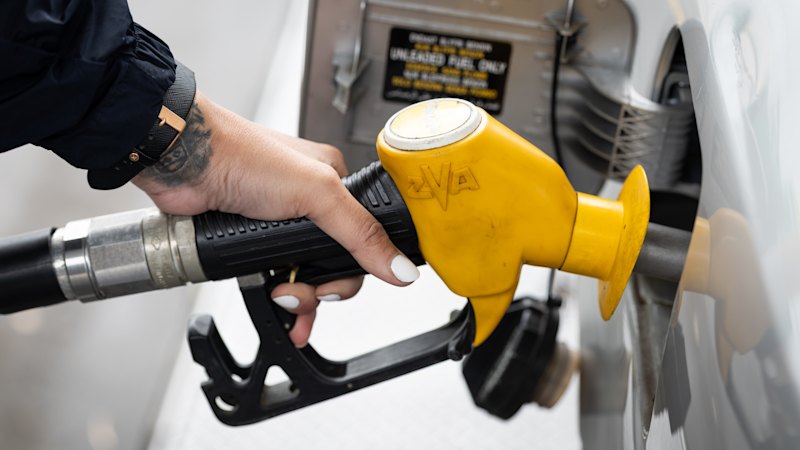
That is already feeding into petrol prices, with the average across the nation’s major capital cities falling from $2.40 a litre in late October to a two-month low of $2.05 a litre last week. asserted
average → feed → 2.05
On Tuesday, Prime Minister Anthony Albanese talked up Labor’s preparation for the next election in a caucus meeting, while the Liberal leader projected optimism to beat a government that is “on the rocks” and could head to the polls next year. uncertain
that → talk → polls
“Make no mistake about it, colleagues: we can win the next election,” Taylor told a partyroom meeting. asserted
Taylor → make → meeting
Chalmers has said in a bid to further reduce inflation pressures his budget update will include “budget-sized” savings, suggesting reductions worth billions of dollars. asserted
update → say → dollars
Pressure to curb inflation has pushed Labor away from one-off subsidies, such as electricity rebates, toward more targeted cost-of-living relief. Reprising its 2025 election playbook, and aiming to capitalise on a remaining area of strength against the Coalition as its overall polling position fades, Labor is planning to lean into its healthcare agenda next year. asserted
Labor → curb → agenda
Following Monday’s freeze of the $25 medicine co-payment, upcoming announcements are expected on lower specialist fees, boosted regional bulk-billing, and expanded roles for pharmacists and allied health workers. asserted
announcements → follow → pharmacists
“We’ve still got a big lead on the Coalition in health, so we will lean in next year,” one senior source said. asserted
source → get → health
In lifting interest rates, the Reserve Bank has noted the impact of federal and state government spending adding to demand across the economy which has helped fuel the nation’s inflationary pressures. asserted
which → lift → pressures
Analysis released by S&P Global on Tuesday said state government spending and debt would continue to grow. asserted
spending → release → Tuesday
By 2030, state debt is now expected to reach $980 billion, up almost a third from $739 billion today. asserted
debt → expect → billion
That surge in debt will push up the share of state budgets used to cover interest repayments. asserted
surge → push → repayments
Almost 10 per cent of Victoria’s budget will be spent on interest by the end of the decade, with every other state bar WA spending at least 6 per cent. asserted
state → spend → cent
The ramp-up in state spending is not being driven by NSW or Victoria where expenditure on major projects is expected to ease over coming years. asserted
expenditure → drive → years
S&P noted that states like South Australia and Queensland – under pressure over the Brisbane Olympics – are “enthusiastically” opening their purse strings. asserted
states → note → strings
On Tuesday, the Tasmanian government revealed the expected cost of its planned football stadium had increased by $100 million over the past 12 months to $1.23 billion. asserted
cost → reveal → billion
It had originally been expected to cost $715 million. asserted
It → expect → million
S&P Global lead analyst Martin Foo said the states were under growing financial pressure. asserted
states → say → pressure
“Australian state budgets are already stretched. asserted
budgets → stretch → ?
In 2027, housing prices and property-related tax revenue could fall even further, while swelling interest costs will heap on more pressure,” he said. uncertain
he → relate → pressure
“With collective debt heading towards $1 trillion by 2031, debt-servicing costs will steadily crowd out spending on public services and infrastructure.” Cut through the noise of federal politics with news, views and expert analysis. asserted
costs → head → news
Subscribers can sign up to our weekly Inside Politics newsletter. asserted
Subscribers → sign → newsletter

Give feedback · no sign-in needed

No sign-in needed for now. Your note is sent without a name, so it cannot be answered.

History Support