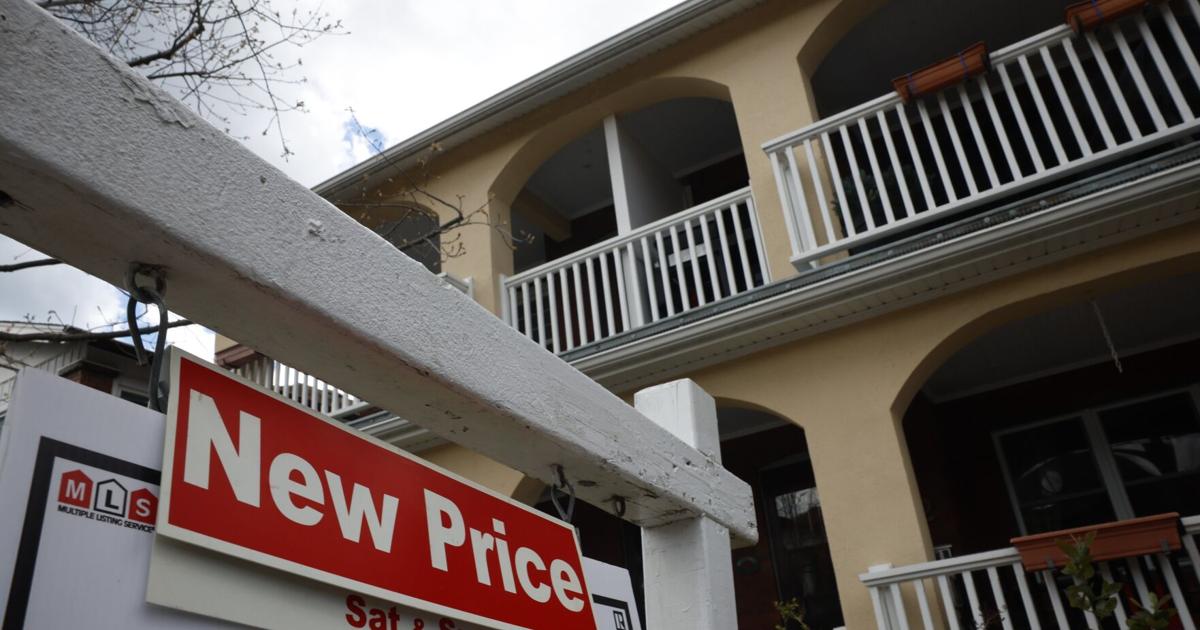
Equifax Canada data shows that rising interest rates and higher renewals may be adding to pressure for some homeowners
Equifax® Canada Market Pulse Quarterly Consumer Credit Trends and Insights
TORONTO, Nov. 24, 2026 (GLOBE NEWSWIRE) —
uncertain
rates → show → Trends
The Bank of Canada’s first interest rate increase since 2023 could affect nearly one in four Canadian mortgage holders, according to Equifax® Canada’s Q3 2026 Market Pulse Quarterly Consumer Credit Trends and Insights.
uncertain
increase → affect → Trends
The report also showed total Canadian consumer debt reached $2.74 trillion in Q3 2026, up 4.68 per cent year-over-year and 2.07 per cent from the previous quarter.
asserted
debt → show → year
In addition, mortgage delinquency continued to climb, reaching its highest level since reporting started 13 years ago.
asserted
reporting → continue → level
Rate Increases Reach Some Homeowners Straight Away
For those with variable payment, variable rate mortgages, and home equity lines of credit (HELOCs), a change in interest rates can have an immediate impact, while fixed-rate mortgage holders are largely protected until they renew.
asserted
they → reach → impact
Of the 9.1 million mortgage holders in Canada, approximately 1.4 million Canadians have a variable rate mortgage, with an additional 1.3 million consumers carrying a HELOC balance of over $50K. Every quarter-point hike adds roughly $860 million a year in interest on variable-rate mortgages and $419 million on HELOCs, impacting monthly payment levels for these individuals.
asserted
hike → have → individuals
“A rate increase does not have the same impact on every homeowner on the same day,” said Rebecca Oakes, Vice President of Advanced Analytics at Equifax Canada.
asserted
Oakes → have → Canada
“Variable-rate borrowers can feel the impact of a rate increase within weeks, while others may not experience the effect until they renew or refinance.
uncertain
they → feel → effect
With the Bank of Canada’s next interest rate decision scheduled for December 9, the group to watch are those homeowners with the least room to absorb another increase.
asserted
group → schedule → increase
”
Mortgage Delinquency Reaches 13-Year High
asserted
Delinquency → reach → High
The national 90+ day mortgage balance delinquency rate reached 0.32 per cent, up 31.1 per cent year-over-year and the highest recorded since Equifax began tracking the metric in 2013.
asserted
Equifax → reach → 2013
It marks the sixteenth consecutive quarterly increase, with Ontario and British Columbia homeowners accounting for 91 per cent of the annual growth in severely delinquent mortgage accounts.
asserted
homeowners → mark → accounts
“Mortgage delinquencies have been climbing for four years, and Ontario and B.C. continue to drive much of that increase,” said Oakes.
asserted
Oakes → climb → increase
“What’s particularly concerning is that the dollar value of delinquent mortgages is rising much faster than the actual number of delinquent mortgages.
asserted
value → ’ → mortgages
The data signals that borrowers with larger mortgages are increasingly struggling to keep up with their payments.
asserted
borrowers → signal → payments
The data shows that the strain is also spreading beyond mortgages.
asserted
strain → show → mortgages
Non-mortgage delinquency among mortgage holders rose 9.8 per cent year-over-year, while consumers without a mortgage experienced a 3.4 per cent improvement.
asserted
consumers → rise → improvement
Growing Risk of Negative Home Equity in Key Areas
asserted
Risk → grow → Areas
With home prices falling in some key markets, a growing number of homeowners are experiencing negative equity (where the amount owing is worth more than their property).
asserted
amount → fall → property
Ontario accounts for an estimated 70 per cent of mortgages in negative equity, representing five per cent of total mortgages in the province, compared with 1.85 per cent in British Columbia and 1.10 per cent in Quebec.
asserted
Ontario → account → Quebec
About 7.2 per cent of condominium mortgages are likely in negative equity, compared with 2.7 per cent of freehold house mortgages.
asserted
cent → compare → mortgages
For homeowners who bought in 2022, near the market peak, the rate of mortgages with negative equity risk rises to 8.4 per cent.
asserted
rate → buy → cent
In Ontario, approximately one in four mortgages held by younger consumers aged 26-35 years old are thought to now be in negative equity.
asserted
mortgages → hold → equity
“Negative equity is still relatively uncommon in Canada, but what stands out is how concentrated it has become,” said Oakes.
asserted
Oakes → stand → Canada
“It’s a particular type of property, bought in a particular window, in a particular province.
asserted
It → ’ → province
For most of these homeowners it isn’t an immediate problem as long as they can keep up with their payments.
asserted
they → keep → payments
The challenge comes if they need to sell or refinance.
asserted
they → come → ?
Data also shows that these same homeowners are also more likely to be behind on other credit, which leaves them with potentially fewer options.
asserted
which → show → options
On the Road, the Loan Now Outlasts the Car
Negative equity is far more widespread in auto lending than in mortgages.
asserted
equity → outlast → mortgages
As of September 2026, an estimated 40 per cent of auto loans that originated in the last four years are in negative equity meaning the borrower owes more than the vehicle is worth.
asserted
vehicle → estimate → more
54.6 per cent of auto loans now carry a term of 84 months or longer, and among used vehicles that share has doubled from 27 per cent in Q3 2019 to 49 per cent in Q3 2026.
asserted
share → carry → Q3
“Longer terms can help with making the monthly payment more affordable,” added Oakes.
asserted
Oakes → help → ?
“However, the trade-off can arrive later, when time passes and the car is worth less, plus you have to contend with interest.
asserted
you → arrive → interest
When it comes time to purchase the next vehicle, consumers often have to roll this shortfall into their next purchase rather than resolving it.”
asserted
consumers → come → it
National Credit Conditions Show a Growing Divide
asserted
Conditions → show → Divide
In the third quarter, the 90+ day non-mortgage delinquency rate measured by outstanding dollar balances eased to 1.71 per cent from 1.73 per cent year-over-year.
asserted
rate → measure → year
However, the delinquency rate measured by the number of accounts increased 3.04 per cent year-over-year to 1.83 per cent.
asserted
rate → measure → cent
The divergence suggests that while the share of outstanding debt has declined slightly, a greater proportion of credit accounts are falling behind.
uncertain
proportion → suggest → accounts
Ontario was the only province to record an annual increase in balance-based non-mortgage delinquency, rising 2.7 per cent.
asserted
Ontario → record → delinquency
Younger consumers (aged 18 to 25 years old) showed some improvement, with balance-based delinquency declining 10.1 per cent year-over-year.
asserted
delinquency → age → year
…and 18 more, not listed.

 The Aporia