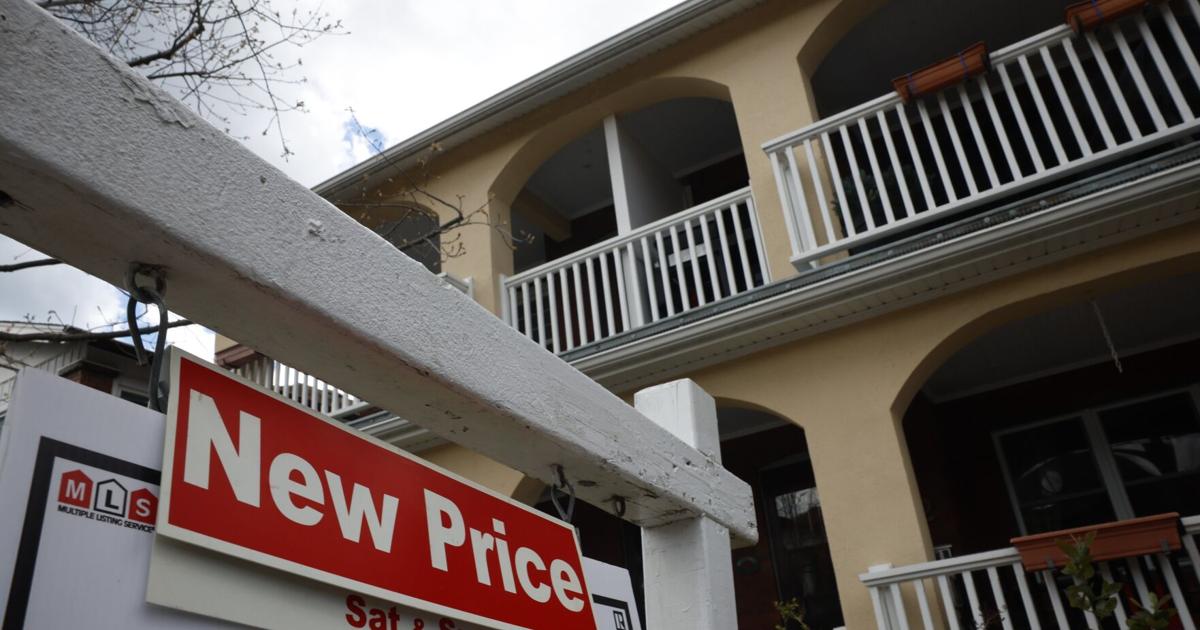
A new report suggests there’s growing stress among homeowners, with some struggling to keep up with monthly mortgage payments as interest rates rise again.
uncertain
rates → suggest → payments
Equifax Canada’s third-quarter consumer credit trends report says the national 90-plus day mortgage delinquency rate — defined as missed payments three months in a row — reached 0.32 per cent, the highest since the credit agency started tracking the metric in 2013.
asserted
agency → say → 2013
That’s up 31.1 per cent year-over-year, mainly pushed higher by missed mortgage payments in Ontario and British Columbia.
asserted
That → ’ → Ontario
“That’s the highest we’ve seen, particularly for Ontario.
asserted
we → ’ → Ontario
And it’s still going up,” said Rebecca Oakes, Equifax Canada’s vice-president of advanced analytics, said in an interview.
asserted
Oakes → go → interview
“That’s the biggest concern for us.”
asserted
That → ’ → us
The Equifax data echoes the findings of a recent a TD report, which showed Ontario’s mortgage arrears have nearly tripled from pre-pandemic levels to approach their 2008 financial crisis peak.
asserted
arrears → echo → peak
“This reflects elevated mortgage balances and greater sensitivity to borrowing costs,” wrote TD economist Maria Solovieva in the report published last week.
asserted
Solovieva → reflect → report
Growing pressure on households comes as the Bank of Canada raised its policy interest rate by a quarter of a percentage point to 2.5 per cent last month for the first time in more than three years, amid concerns that higher energy prices could spill into broader inflation.
uncertain
prices → grow → inflation
The move prompted the big banks to raise their prime rates, which is used to set interest rates on a range of loans including variable-rate mortgages.
asserted
which → prompt → mortgages
Equifax estimates about 1.4 million Canadians have a variable-rate mortgage out of a total 9.1 million homeowners.
asserted
Canadians → estimate → homeowners
Another 1.3 million consumers also have a home equity line of credit, or HELOC, balance of more than $50,000.
asserted
consumers → have → 50,000
Every quarter-point rate hike adds roughly $860 million a year in interest on variable-rate mortgages, the company estimates.
asserted
company → add → mortgages
Oakes suspects mortgage delinquencies will continue to rise in the coming months, depending on changes to interest rates.
asserted
delinquencies → suspect → rates
“If interest rates stay relatively flat from this point on, I’d expect to see it ease off in the middle of next year,” she said.
asserted
she → stay → year
- New act allows Alberta step in on natural gas pipelines — if private sector falls short
-
asserted
sector → allow → pipelines
Premier Ford won’t agree to trade deal without auto, steel and manufacturing approval
asserted
Ford → agree → approval
- ‘We are close,’ to deal with Canada, Trump’s trade representative says
- Quebec students consider general strike to protest affordability crisis
asserted
students → deal → crisis
But if more hikes come in, “it’s just going to put additional pressure.”
asserted
it → come → pressure
The central bank is expected to make its last rate decision of the year on Dec. 9.
asserted
bank → expect → Dec.
Financial market odds for a quarter-point rate hike was 63 per cent as of Monday afternoon, according to LSEG Data & Analytics.
uncertain
odds → accord → Data
Oakes said first-time homebuyers and younger Canadians may bear the brunt of rising rates because they tend to carry a higher-balance mortgage.
uncertain
they → say → mortgage
Still, she said mortgage delinquencies overall are less than one per cent.
asserted
delinquencies → say → ?
“It’s quite small, you know, from that standpoint, but of course it knocks on to other types of credit, like credit cards, auto loans,” Oakes said.
asserted
Oakes → ’ → cards
“That’s where those individuals miss the payments first rather than on the mortgage itself.”
asserted
individuals → ’ → mortgage
Credit card balances reached $136.2 billion in the third quarter, up 4.82 per cent from a year earlier, the Equifax data showed.
asserted
data → reach → quarter

 The Aporia