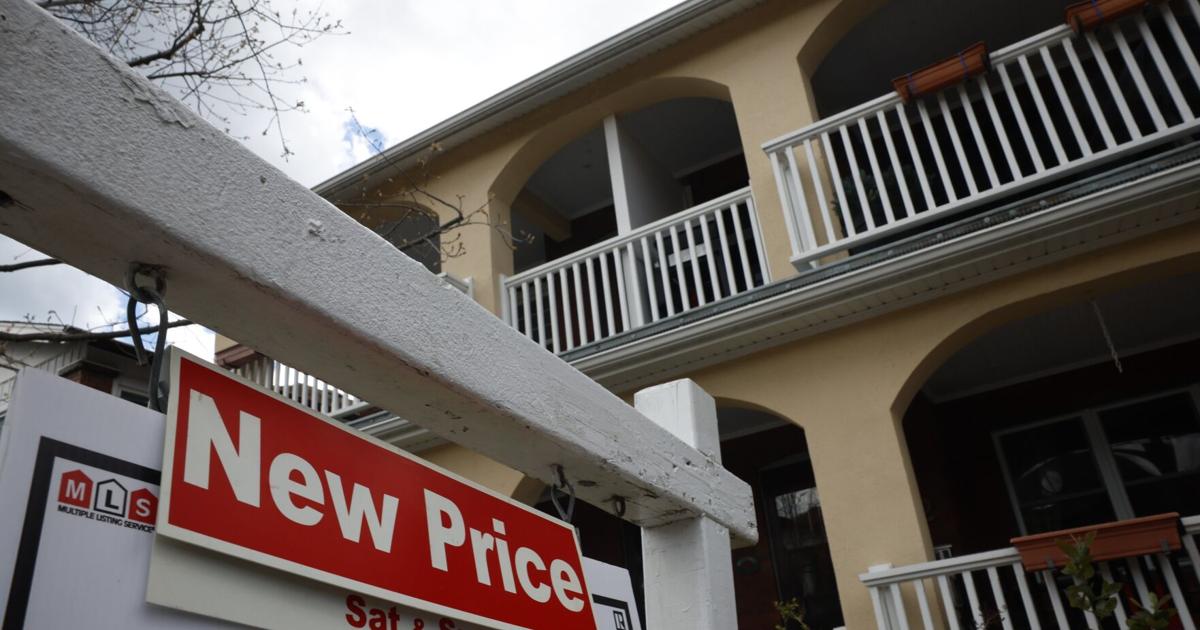
Photo via Toronto Star

Ontario mortgage arrears are approaching their 2008 peak, reports warn

Read the original at Toronto Star ↗
Cite

Vega, M. (2026, November 24). Ontario mortgage arrears are approaching their 2008 peak, reports warn. Toronto Star. https://www.thestar.com/real-estate/ontario-mortgage-arrears-are-approaching-their-2008-peak-reports-warn/article_f941bb47-e900-46ba-819e-b783b154685a.html

Dated from the outlet's own feed. Check the original for its byline.

Toronto Star · collected 2026-11-24 · by Manuela Vega

Quick Summary

Recent reports indicate Ontario’s mortgage arrears rate has nearly tripled to 0.34% this August, approaching the 2008 financial crisis peak of 0.43%, according to a TD Economics report. This trend is particularly acute in the Greater Toronto and Hamilton Area and Southwestern Ontario, with experts attributing the rise to higher interest rates, fluctuating housing prices, and economic pressures. The reports highlight that while the percentage of affected mortgages remains below 1%, those who bought homes near market peaks and experienced job loss or significant income reduction are most at risk.
Written by AI on 2026-11-24, from this article's own text only (the story summary below draws on all the coverage).

AI analysis

Story summary

Ontario’s mortgage delinquency rates are now the highest in Canada and are nearing their 2008 peak levels, according to recent reports. A TD Economics report from last week found that Ontario’s mortgage arrears rate has nearly tripled from 0.12% before the pandemic to 0.34% in August, approaching the 0.43% peak during the global financial crisis. The Canada Mortgage and Housing Corp. (CMHC) reported in October that mortgage pressure is particularly severe in the Greater Toronto and Hamilton Area and Southwestern Ontario, with arrears rates expected to continue rising until mid-2027. Experts attribute this trend to a combination of factors including tariffs affecting employment, volatile home prices in 2022, and higher interest rates, creating significant financial strain for homeowners.

Written for “Ontario Mortgage Arrears Increase” on 2026-11-25, grounded in this article and the 0 other(s) covering the same event.

Compared with similar articles

This article reads unscored and hedges 27% of its claims. Each row says how that neighbour differs.
Toronto Star
Hedges 4 of 23 claims Outlet record 65/100
“The articles discuss similar topics but focus on different reports and metrics, with Article A emphasizing Equifax's report on a national scale and Article B focusing on TD Economics and CMHC reports specific to Ontario.”
Toronto Star
Hedges 4 of 58 claims Outlet record 65/100
“The articles discuss mortgage delinquency rates in Ontario and Canada but refer to different reports and data sources, indicating they are not describing the same specific event.”
Global News
Hedges 4 of 26 claims Outlet record 63/100
“The articles discuss similar themes but reference different reports and timeframes, indicating they are not describing the exact same specific event.”
Global News
Hedges 3 of 20 claims Outlet record 63/100
“While both articles discuss mortgage delinquencies in Ontario, they reference different reports and specific statistics, indicating they are describing related but distinct findings.”
CBC News
Hedges 4 of 20 claims Outlet record 70/100
“The articles discuss similar topics of mortgage delinquency rates rising in Ontario, but they are from different sources (TD Economics vs. Equifax) and report on different specific metrics and time periods.”
Toronto Sun
Hedges 4 of 24 claims Outlet record 96/100
“The articles discuss mortgage arrears but cover different reports and metrics from different sources (TD Economics and CMHC vs. Equifax Canada), indicating they are describing separate analyses rather than the same specific incident.”

Story

Ontario Mortgage Arrears Increase
Economy/Business · 1 article(s) covering the same event.
How this article was measured signals, leaning charts, publisher record, byline, topics and claims

Signals How these are calculated →

Claims extracted
30
sentences that state something as happening or true
Uncertain
27%
8 of 30 hedged ("reportedly", "may", "according to")
Leaning
not political
takes no side on a contested political question
Publisher signals
65/100
Toronto Star's corrections and hedging, across everything collected from it. Not a measure of accuracy.
Outlets on this story
1
Economy/Business
Same framing elsewhere
1
articles that frame the event the way this one does
Analyzed 2026-11-24 · how these are computed

How this is being covered How these are calculated →

Article leaning vs. publisher reliability
Source leaning vs. consistency

Publisher

Toronto Star · 17752 article(s) · 33 correction(s) detected
Running correction rate · 33 correction(s)
2026-11-17
Correction
2026-10-26
Correction
2026-10-24
Correction
2026-10-07
Correction
2026-09-24
Correction

Who wrote this

Manuela Vega
5 article(s) here · 1 carrying a prediction
The report follows one from Canada Mortgage and Housing Corp. (CMHC) in October that found mortgage pressure was especially apparent in the Greater Toronto and Hamilton Area and Southwestern Ontario, and that Ontario mortgage arrears rates are expected to rise into mid-2027.
My mom tells me they left their professional careers, said goodbye to their large families and support systems, and packed what they could into suitcases.
Affiliated faculty at the school have taken on some of the city’s thorniest problems and the Star has presented their solutions to the two main contenders running to be mayor.
Tenants seem to be more influential than ever, successfully leading high-profile rent strikes, pushing back against provincial legislation that could have ended rent control, and advocating for meaningful policy changes at the municipal level, such as the one-year-old “renoviction” bylaw.
2026-10-10 · assertive framing · Why Toronto's next council could be decided by renters
The fund is meant to protect affordable homes from being bought by private owners that may seek higher rents, or lost to redevelopment or conversions.
Also by Manuela Vega
Nothing else under this byline is closely related to this article, so these are simply their most recent.

Topics

CMHC Canada Canada Mortgage and Housing Corp. Ontario TD Economics

Subjects

Ontario GPE · 3× Ab Iorwerth PERSON · 2× CMHC ORG · 2× Canada GPE · 2× Solovieva PERSON · 2× TD Economics ORG · 2× Canada Mortgage and Housing Corp. ORG · 1× Clay Jarvis PERSON · 1× Maria Solovieva PERSON · 1× the Greater Toronto and Hamilton Area GPE · 1×

Narrative

The report follows one from Canada Mortgage and Housing Corp. (CMHC) in October that found mortgage pressure was especially apparent in the Greater Toronto and Hamilton Area and Southwestern Ontario, and that Ontario mortgage arrears rates are expected to rise into mid-2027.
framing: mixed · carried by 1 article(s) · first seen 2026-11-24
The report follows one from Canada Mortgage and Housing Corp. (CMHC) in October that found mortgage pressure was especially apparent in the Greater Toronto and Hamilton Area and Southwestern Ontario, and that Ontario mortgage arrears rates are expected to rise into mid-2027.

Claims (30 extracted, 8 hedged)

Ontario’s mortgage delinquency rates are the highest in Canada and approaching their 2008 levels, two recent reports have found. asserted
reports → approach → levels
A TD Economics report published last week found Ontario’s mortgage arrears rate nearly tripled from 0.12 per cent pre-pandemic to 0.34 per cent this August, approaching the 0.43 per cent peak during the global financial crisis. asserted
rate → publish → crisis
The report follows one from Canada Mortgage and Housing Corp. (CMHC) in October that found mortgage pressure was especially apparent in the Greater Toronto and Hamilton Area and Southwestern Ontario, and that Ontario mortgage arrears rates are expected to rise into mid-2027. asserted
rates → follow → mid-2027
Experts say homebuyers typically exhaust their options before falling behind on mortgage payments, and the trend points to people struggling to keep up with the rising cost of living. asserted
trend → say → living
Both reports also credited the combination of tariffs’ effect on employment, the sharp 2022 rise and subsequent fall of home prices, and higher interest rates for the growth in mortgage arrears. asserted
reports → credit → arrears
“That creates the perfect storm,” said chartered financial analyst Maria Solovieva, who authored the TD report, “Canadian Consumers: Bending, Not Breaking.” asserted
who → create → report
Mortgage holders feeling the squeeze Interest rates may have affected homeowners at renewal most recently, said Clay Jarvis, mortgage expert with Ratehub.ca, but “compounding factors” have been weighing on consumers for years. uncertain
factors → feel → years
“As arrears have increased and rates have increased, so have everyday living costs,” he said. asserted
he → increase → ?
“So, homeowners who borrow to the hilt to get into their homes give themselves very little breathing room to handle a sudden increase in non-mortgage costs.” asserted
who → borrow → costs
Solovieva believes it’s important to put these calculations into perspective. asserted
it → believe → perspective
“We are talking about less than a percentage point of all mortgages,” she said. asserted
she → talk → mortgages
The most vulnerable buyers are likely those who purchased a home around the market peak and then saw their property values decline by about 25 per cent, she said, especially if they lost their job. asserted
they → purchase → job
“If you are in that situation, you have probably no equity left,” she said. asserted
she → have → equity
People who purchased property before or after the peak, however, may have more options for confronting pricey mortgage payments, such as asking the bank to extend amortization or refinancing. uncertain
who → purchase → amortization
CMHC’s deputy chief economist Aled ab Iorwerth said the issue points to a concerning national trend of growing household debt, however there’s not a “systemic challenge” facing banks. asserted
issue → say → banks
“The high level of household debt in Canada is making us vulnerable to these changes in interest rates,” he said. asserted
he → make → rates
Ab Iorwerth added mortgage holders losing their jobs likely drove the rise in delinquency, while others may have stopped paying auto loans, student loans, credit cards, and lines of credit before they missed a mortgage payment. uncertain
they → add → payment
“What may be happening is that interest rates have been creeping up, incomes have not been really growing, and so households have become progressively squeezed,” ab Iorwerth said. uncertain
Iorwerth → happen → ?
“They’re going through this process of one credit product at a time, and they’re now finding it very difficult to make ends meet and not paying their mortgage in full,” he explained. asserted
he → go → mortgage
Jarvis said borrowers who reach out to their lender sooner, rather than later, may have better luck navigating repayment challenges. uncertain
sooner → say → challenges
“If you’re proactive, you’re going to have more options,” he said. asserted
he → ’re → options
“If you wait until you’re already up to your neck in debt, that’s going to give you a lot less flexibility, and you might be facing less sympathy on the side of your lender.” uncertain
you → wait → lender
Missing mortgage payments could limit someone’s ability to access affordable credit and have a mental and emotional toll, he added. uncertain
he → miss → toll
Arrears rates could decline later in 2027 TD Economics’ Solovieva said she expects stronger economic growth and better employment conditions in 2027, which should then lead to fewer delinquencies. uncertain
which → decline → delinquencies
“We expect that mortgage arrears will also plateau around mid-2027, and then start to improve in the second half of 2027,” she said. asserted
she → expect → 2027
CMHC’s ab Iorwerth agrees. asserted
Iorwerth → agree → ?
The economy has been more resilient than expected in the face of “shocks,” and if it continues to perform “relatively strongly,” then arrears likely won’t increase much more, he said. asserted
he → expect → shocks
The CMHC report noted B.C. and Atlantic Canada are expected to see more moderate increases in mortgage arrears, while Alberta and Saskatchewan are expected to remain stable due to stronger economic conditions and higher energy prices. asserted
Alberta → note → conditions
“My view is very highly dependent on the state of the macroeconomy and what happens in terms of energy prices, trade policy, and so forth,” ab Iorwerth said. asserted
Iorwerth → happen → prices
“Obviously, at the moment, it’s a little bit difficult to call.” asserted
it → ’ → moment

Give feedback · no sign-in needed

No sign-in needed for now. Your note is sent without a name, so it cannot be answered.

History Support