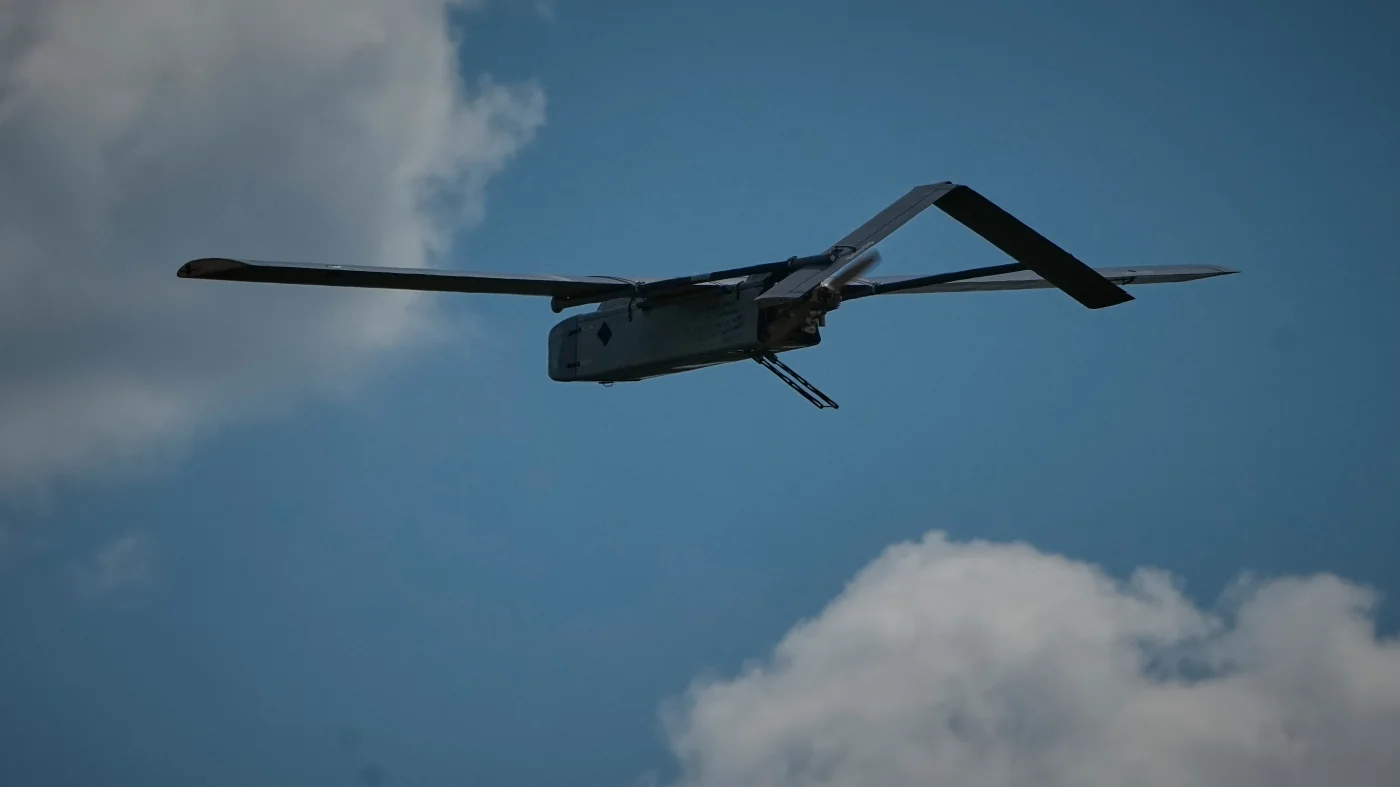
Photo via The Independent

Global efforts to control ‘killer robots’ blocked by US, Russia and Israel

Read the original at The Independent ↗
Cite

Kidwai, S. (2026, November 23). Global efforts to control ‘killer robots’ blocked by US, Russia and Israel. The Independent. https://www.independent.co.uk/news/world/killer-robots-un-us-israel-russia-autonomous-weapons-b3089947.html

Dated from the outlet's own feed. Check the original for its byline.

The Independent · collected 2026-11-23 · by Suha Kidwai

Quick Summary

At a convention in Geneva aimed at establishing legal controls over lethal autonomous weapons, efforts to create a formal United Nations treaty were thwarted by the United States, Russia, and Israel. As a result, the development of these weapons, known as "killer robots," will proceed without international regulation until at least 2028. The convention, involving 128 participating states, saw 98 nations and UN Secretary-General António Guterres advocate for urgent action, but consensus rules allowed the three countries to block any binding agreements. Critics argue that this delay poses significant risks to civilian safety as autonomous weapons are already being used in conflicts.
Written by AI on 2026-11-23, from this article's own text only (the story summary below draws on all the coverage).
See how they differ ↓

AI analysis

Story summary

The United Nations failed to establish legally binding rules to regulate the use of autonomous weapons, also known as "killer robots," at a conference in Geneva this week. Major arms producers like the United States and Russia, along with Israel, opposed the push for legally binding regulations, leading to a stalemate. Instead, countries agreed to spend the next two years developing proposals for regulations that could be optional, rather than mandatory. This means that the development of lethal autonomous weapons will continue unchecked until at least 2028. The Convention on Certain Conventional Weapons (CCW) met in Switzerland to discuss these issues, but no substantial agreement was reached due to the opposition from key nations.

Written for “UN Talks Stall On Killer Robots Regulations” on 2026-11-24, grounded in this article and the 25 other(s) covering the same event.

How they differ

11 outlets covered “UN Talks Stall On Killer Robots Regulations”.

What each outlet says

One AI summary per outlet of its latest article on this story, written from that article alone and checked against it. Open the article for the outlet's own words.

The IndependentThis outlet23 Nov

At a convention in Geneva aimed at establishing legal controls over lethal autonomous weapons, efforts to create a formal United Nations treaty were thwarted by the United States, Russia, and Israel. As a result, the development of these weapons, known as "killer robots," will proceed without international regulation until at least 2028. The convention, involving 128 participating states, saw 98 nations and UN…

Global efforts to control ‘killer robots’ blocked by US, Russia and Israel (this article)2 articles from The Independent on this story
The Straits Times21 Nov

At a UN meeting in Geneva ending on November 21, states agreed to further discussions on regulating weapons with autonomous capabilities, known as "killer robots," by 2028. While around 100 countries supported legally binding rules, opposition from major arms producers like the US and Russia led to a weaker agreement that does not guarantee such regulations will be legally binding. The talks, part of the Convention…

States agree to UN talks aiming to regulate 'killer robots' by 2028 →6 articles from The Straits Times on this story
Dawn21 Nov

At the United Nations’ Review Conference of the Convention on Conventional Weapons in Geneva, countries agreed after five days of negotiations to begin the process of creating an international agreement on lethal autonomous weapons systems, or “killer robots,” over the next two years. However, the decision was seen as insufficient by campaigners who had hoped for quicker and more definitive action, with many states…

Countries open path towards 'killer robots' pact →4 articles from Dawn on this story
NPR21 Nov

Diplomats at the United Nations in Geneva concluded a week of negotiations on regulating lethal autonomous weapons, also known as "killer robots," by agreeing to consider regulations over two years, which could be either legally binding or optional. Humanitarian organizations, including the International Committee of the Red Cross and the U.N. secretary-general, had called for the drafting of legally binding rules…

Killer robots: U.N. talks fall short of hopes for legally binding rules →3 articles from NPR on this story
CBC21 Nov

UN-backed talks on regulating AI in warfare concluded without a commitment to binding rules, as major military powers like the U.S. and Russia resisted such restrictions. The Convention on Certain Conventional Weapons meeting in Geneva saw over 100 countries participating, but the lack of consensus resulted in a softer agreement to elaborate on an accord by 2028. While some, including the UN Secretary General…

UN talks on AI in warfare end with no commitment to binding rules →2 articles from CBC on this story
Toronto Star21 Nov

At a U.N.-backed conference in Geneva, nations agreed to continue discussions on AI-powered killer robots and drones for two more years but failed to commit to firm rules as sought by the U.N. Secretary-General and activists. The week-long meeting concluded with an agreement to “elaborate” a potential accord by 2028, falling short of the binding regulations desired by many countries and human rights groups.

Nations at UN talks on AI killer robots agree to more talks but no firm commitment to rein them in →2 articles from Toronto Star on this story
Show 5 more outlets
The Hindu21 Nov

At a UN conference in Geneva ending November 21, 2026, states agreed to further discuss regulating autonomous weapons, or "killer robots," by 2028. However, despite support from about 100 countries, major arms producers like the U.S., Russia, and Israel blocked a legally binding agreement, leading to a weaker outcome that disappointed human rights groups. The meeting, part of the Convention on Certain Conventional…

States agree to UN talks aiming to regulate 'killer robots' by 2028 →2 articles from The Hindu on this story
Al Jazeera22 Nov

At a recent United Nations Convention on Certain Conventional Weapons (CCW) meeting in Switzerland, member states failed to agree on immediate regulations for autonomous weapon systems, commonly known as “killer robots.” Instead of adopting a legally binding treaty, they decided to work on elaborating potential regulations by 2028. Rights groups expressed disappointment with this outcome, highlighting concerns over…

Why have UN efforts to regulate ‘killer robots’ stalled? →2 articles from Al Jazeera on this story
The Guardian21 Nov

International talks at the UN’s Convention on Certain Conventional Weapons (CCW) in Geneva collapsed early in the morning after a week of negotiations failed to reach an agreement on a legally binding treaty to control autonomous weapons. The majority of participating states supported a binding treaty, but Russia's objections, alongside reluctance from other military powers like the US, led to the adoption of a…

International UN talks on controlling use of autonomous weapons collapse →
New York Post21 Nov

At a recent UN conference in Geneva, countries agreed to extend talks on AI-powered killer robots for two more years without setting binding rules, despite calls from UN Secretary-General António Guterres and activists for immediate action. The conference, which lasted a week, resulted in a vague commitment to possibly draft an accord by 2028 but fell short of concrete measures. Activists criticized major military…

Countries agree to extend UN talks on AI killer robots for two years in failure to set guardrails →
Mother Jones22 Nov

The United Nations failed to establish legally binding regulations for autonomous weapons during a conference in Geneva this week, despite calls from humanitarian organizations like the International Committee of the Red Cross to draft such rules within a year. Instead, countries agreed to spend two more years developing proposals that could be optional. The conference saw opposition from arms-producing nations like…

We Like War Too Much to Agree on Autonomous Weapon Regulations →

Where they agree and split

Agreed

Reported by outlets on both sides of the middle

On Friday, International Committee of the Red Cross president Mirjana Spoljaric said in a statement: “States must act to ensure the future of warfare is not handed over to machines.”

4 outlets
Show 1 more

Pope Leo XIV and many advocacy and humanitarian groups have framed the issue as an existential debate, urging quick action to rein in AI weapons before they become too commonplace to regulate easily.

4 outlets
The full story: what happened, how it changed, and all 26 articles →

Compared with similar articles

This article reads leans strongly left and hedges 0% of its claims. Each row says how that neighbour differs.
CBC News
Hedges 3 of 23 claims Outlet record 60/100
The Independent
Leans left further right than this Hedges 0 of 4 claims Outlet record 59/100
The Guardian
Leans strongly left Hedges 3 of 25 claims Outlet record 64/100
Al Jazeera
Leans strongly left Hedges 5 of 41 claims Outlet record 60/100
The Hindu
Leans left further right than this Hedges 1 of 12 claims Outlet record 78/100
Mother Jones
Leans strongly left Hedges 3 of 15 claims Outlet record 60/100
New York Post
Leans left further right than this Hedges 1 of 23 claims Outlet record 66/100
NPR
Leans left further right than this Hedges 5 of 33 claims Outlet record 60/100
“The articles describe different stages of the same negotiation process, with Article A focusing on the collapse of efforts to establish legally binding controls and Article B on an agreement to start discussing regulation options.”
Dawn
Leans strongly left Hedges 1 of 13 claims Outlet record 65/100
“The articles describe different outcomes of the same negotiations, with Article A stating agreement was reached to move towards a pact, while Article B claims efforts to establish legally binding controls collapsed due to objections from the US, Russia, and Israel.”
Al Jazeera
Leans left further right than this Hedges 0 of 16 claims Outlet record 60/100
“The articles describe different outcomes of the same conference: Article A reports an agreement to elaborate on rules by 2028, while Article B reports that efforts to establish legally binding controls were blocked by certain nations.”

Story

UN Talks Stall On Killer Robots Regulations
World · 26 article(s) covering the same event. Compare every outlet's account →
How this article was measured signals, leaning charts, publisher record, byline, topics and claims

Signals How these are calculated →

Claims extracted
19
sentences that state something as happening or true
Uncertain
0%
0 of 19 hedged ("reportedly", "may", "according to")
Leaning
Leans strongly left
of the writing, not the subject · beta estimate
Publisher signals
59/100
The Independent's corrections and hedging, across everything collected from it. Not a measure of accuracy.
Outlets on this story
26
World
Same framing elsewhere
1
articles that frame the event the way this one does
Analyzed 2026-11-23 · how these are computed

How this is being covered How these are calculated →

Article leaning vs. publisher reliability
Source leaning vs. consistency

Publisher

The Independent · 4903 article(s) · 10 correction(s) detected
Running correction rate · 10 correction(s)

Who wrote this

Suha Kidwai
49 article(s) here · 1 carrying a prediction
The technology - dubbed “killer robots” by critics - will now continue to be developed unchecked until 2028.
Benjamin Netanyahu has urged Donald Trump to launch new military strikes against Iran “as soon as possible”, according to reports, even as senior Israeli defence officials warn that such action could reignite war across the region.
United Nations relief chief Tom Fletcher has condemned the border delays as “collective punishment,” accusing governments of stalling while families endure freezing conditions. “Foreign ministers and partners have assured me of support, but also repeatedly said that progress would be hard until after Israeli elections,” Mr Fletcher said, referring to Israel’s inconclusive 27 October poll. “Now we’re told to wait for the formation of a government.
Mr Colby reportedly walked out of the room immediately after delivering his remarks, departing before Ukrainian defence minister Yevhenii Khmara could present a classified battlefield briefing.
Saboteurs crossing the frontier were expected to either be killed during the raid or left with forged documents linking them to Kyiv, sources said.
Trump later dialled into a parallel Coalition of the Willing summit in Berlin – attended by prime minister Andy Burnham and Ukrainian president Volodymyr Zelensky – where he reportedly urged European allies to stop funding Kyiv.
The response came after US Undersecretary of Defense for Policy Elbridge Colby questioned the effectiveness of Ukrainian strike deep inside Russia, warning that such attacks could strengthen Moscow’s resolve.
The far-right leader promised that hundreds of thousands of people would be able to leave work two to three years earlier than under Mr Macron’s legislation, which gradually lifts the minimum retirement age from 62 to 64.
The scale of any structural damage could not be independently verified, and officials in Kyiv have not yet publicly commented on the reported attack.
Also by Suha Kidwai
Nothing else under this byline is closely related to this article, so these are simply their most recent.
All 49 articles by Suha Kidwai →

Topics

Geneva ICRC Israel Lavender the United States

Subjects

the United States GPE · 3× ICRC ORG · 2× Israel GPE · 2× Moscow GPE · 2× Russia GPE · 2× Russian NORP · 2× António Guterres PERSON · 1× Geneva GPE · 1× United Nations ORG · 1× the International Committee of the Red Cross ORG · 1×

Narrative

Investigative probes and testimonies from Israeli intelligence sources revealed that Lavender processed mass surveillance data to generate tens of thousands of suspected militant targets, with human operators sometimes spending around 20 seconds reviewing an algorithmic recommendation before authorising a strike.
framing: assertive · carried by 1 article(s) · first seen 2026-11-23
The technology - dubbed “killer robots” by critics - will now continue to be developed unchecked until 2028.
2026-11-23 · The Independent
Global efforts to control ‘killer robots’ blocked by US, Russia and Israel · assertive framing

Claims (19 extracted, 0 hedged)

Efforts to establish legally binding controls over lethal autonomous weapons have collapsed in Geneva after the United States, Russia and Israel derailed calls for a formal United Nations treaty. asserted
States → establish → treaty
The technology - dubbed “killer robots” by critics - will now continue to be developed unchecked until 2028. asserted
technology → dub → 2028
During the Convention on Certain Conventional Weapons (CCW) , 98 countries – backed by UN secretary-general António Guterres and the International Committee of the Red Cross (ICRC) – pushed for an urgent mandate to negotiate legally binding prohibitions. asserted
countries → back → prohibitions
But under the CCW’s consensus rules, any state has the capacity to effectively veto any agreement. asserted
state → have → agreement
Throughout the sessions, Russian delegates raised repeated procedural objections, while Washington and Tel Aviv joined Moscow in blocking any commitment to legally binding restrictions. asserted
Washington → raise → restrictions
At the close of the week-long conference, the 128 participating states agreed only to “elaborate” on a possible framework by 2028 – leaving fundamental questions over autonomous warfare unresolved. asserted
states → participate → warfare
For critics, the diplomatic stalemate lays bare a glaring contradiction: the very states blocking international regulation are the ones deploying algorithmic warfare most aggressively on active battlefields across Europe and the Middle East. asserted
states → lay → Europe
Humanitarian monitors have warned that stalling until 2028 ignores how rapidly algorithmic warfare is already being deployed in live conflicts across the Middle East and Europe. asserted
warfare → warn → East
“Autonomous weapons technology, including AI in the targeting cycle, is being deployed on the battlefield – delaying the creation of a legally binding instrument puts civilians and humanity at risk,” said Nicole van Rooijen, executive director of Stop Killer Robots. asserted
Rooijen → include → Robots
The coalition, which represents more than 300 non-governmental organisations, has dismissed the final compromise as a “watered-down mandate” that “fails to chart a clear path towards a legally binding instrument.” asserted
that → represent → instrument
The ICRC similarly warned that states had missed a critical opportunity to preserve meaningful human control over the use of lethal force. asserted
states → warn → force
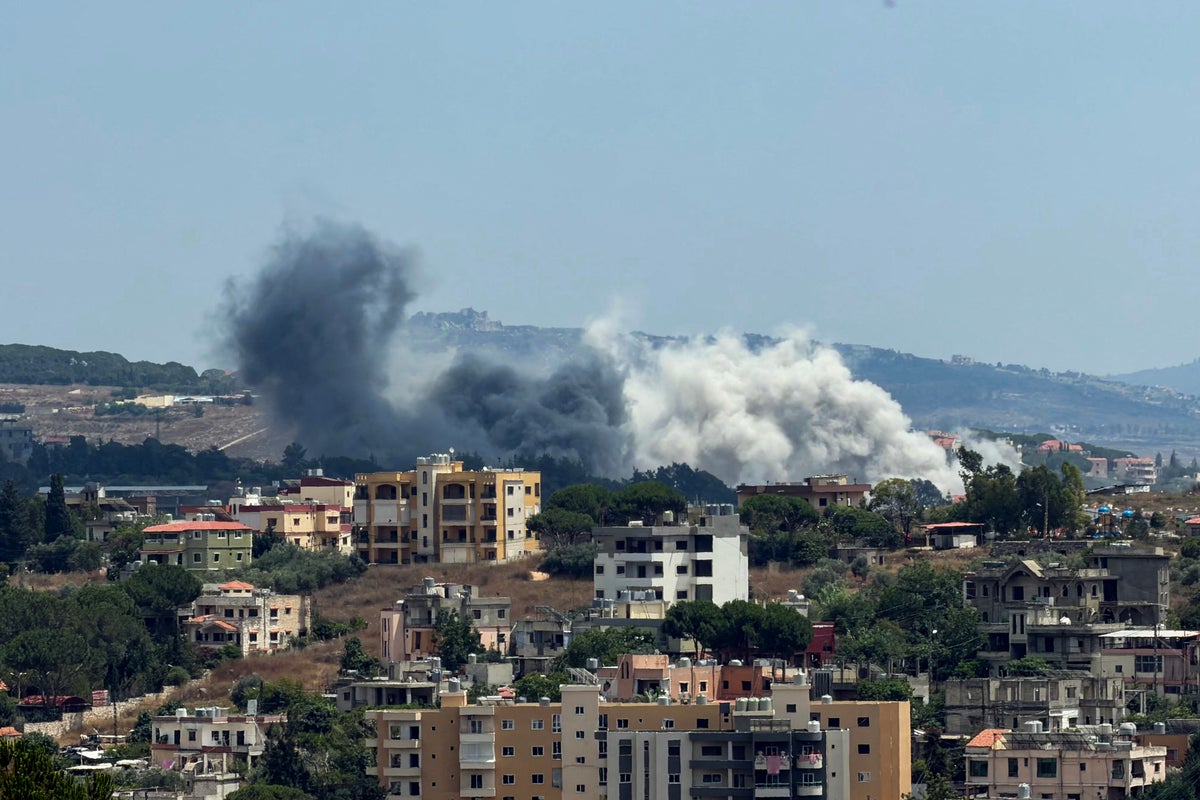
In Gaza, the Israel Defence Forces (IDF) has faced intense scrutiny from UN investigators and human rights groups over its deployment of AI-assisted targeting platforms – including Lavender and Where’s Daddy? – to automate strike decisions. asserted
Daddy → face → decisions
Investigative probes and testimonies from Israeli intelligence sources revealed that Lavender processed mass surveillance data to generate tens of thousands of suspected militant targets, with human operators sometimes spending around 20 seconds reviewing an algorithmic recommendation before authorising a strike. asserted
operators → reveal → strike
The United States The United States has similarly placed AI at the centre of its targeting operations. asserted
States → place → operations
The efficacy of the military’s AI-assisted targeting has come under intense scrutiny during the Iran campaign, including after a first-day US strike hit an elementary school in Minab housed in a former military complex, killing more than 160 people – mostly children. asserted
strike → assist → people
Earlier this year, a joint investigation published by Airwars and The Independent saw the US officially acknowledge its first civilian death in an AI-assisted theatre, where the Pentagon admitted it had “no way of knowing” whether the deadly strike in Iraq relied on AI. asserted
strike → publish → AI
This lack of transparency prompted critics to warn that the situation will only worsen as militaries deploy faster, increasingly autonomous weapons without binding international rules. asserted
militaries → prompt → rules
For Moscow, meanwhile, a ban on weapons capable of operating without a live human link would directly outlaw the next generation of drones it is fielding in Ukraine. asserted
it → operate → Ukraine
Russian forces have deployed increasingly autonomous loitering munitions – including upgraded Lancet variants – equipped with onboard computer-vision and terminal-guidance software capable of identifying, tracking and striking targets even after Ukrainian electronic jamming severs radio contact with an operator. asserted
jamming → deploy → operator
Give feedback · no sign-in needed

No sign-in needed for now. Your note is sent without a name, so it cannot be answered.

History Support