Photo via NPR

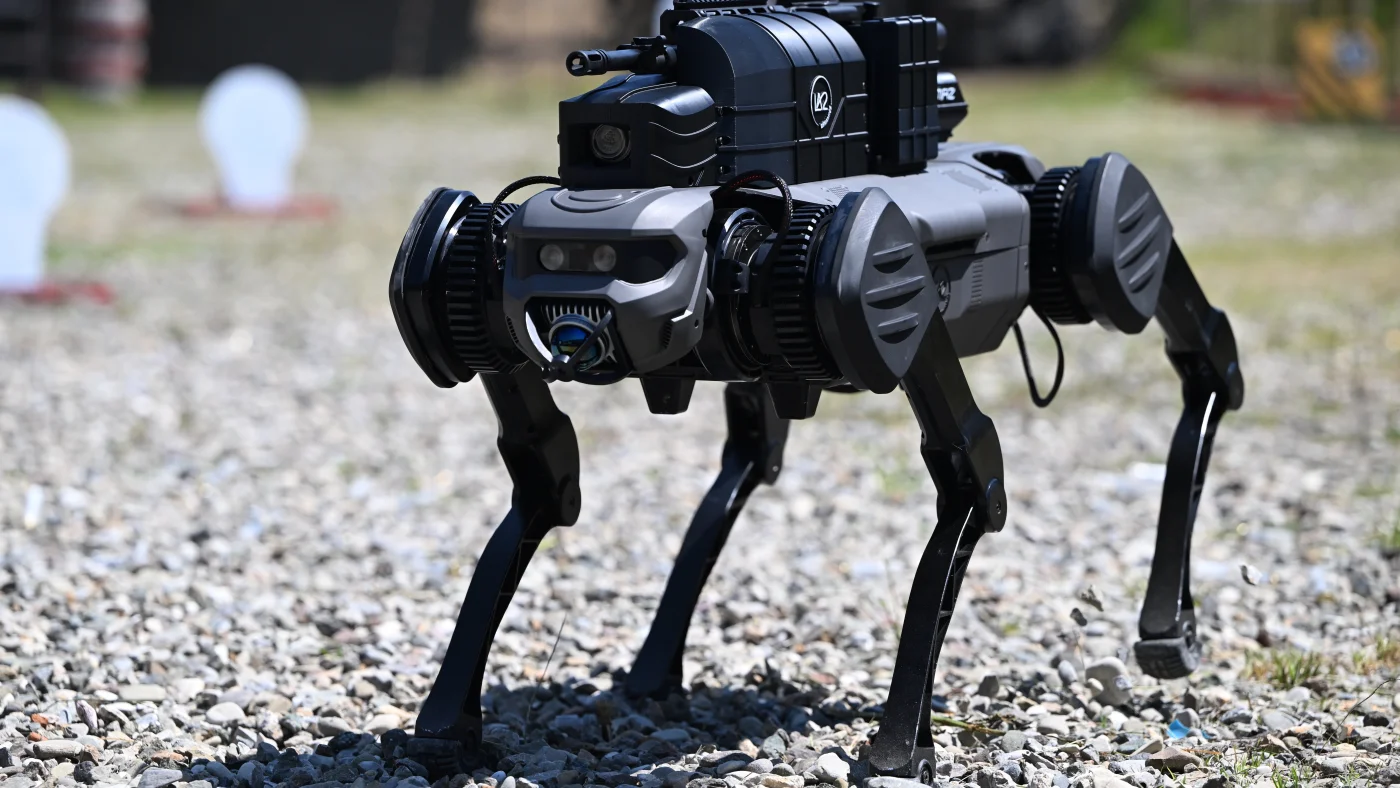
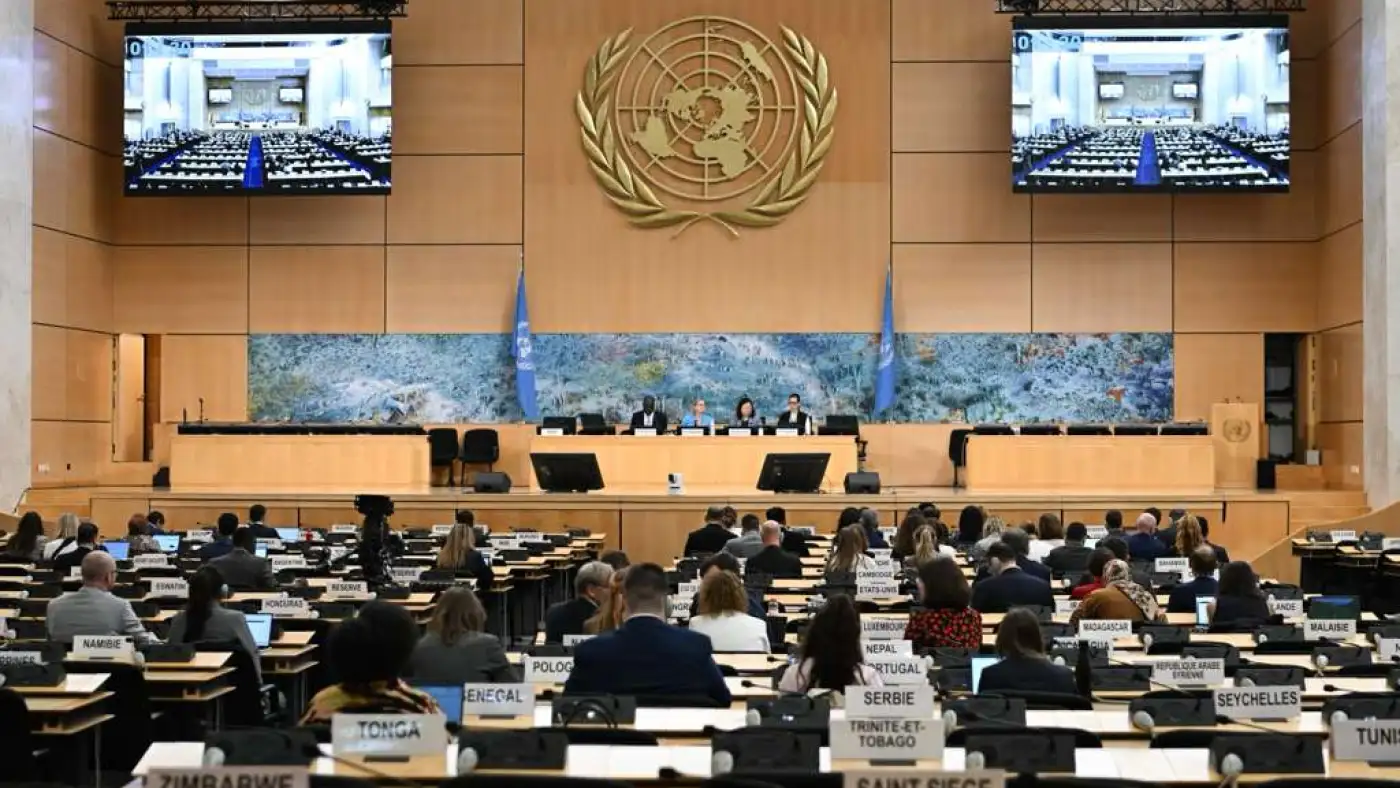
Killer robots: U.N. talks fall short of hopes for legally binding rules

Read the original at NPR ↗
Cite

Foulkes, I. (2026, November 21). Killer robots: U.N. talks fall short of hopes for legally binding rules. NPR. https://www.npr.org/2026/11/21/nx-s1-6047916/killer-robots-un-drones

Dated from the outlet's own feed. Check the original for its byline.

NPR · collected 2026-11-21 · by Imogen Foulkes

Quick Summary

Diplomats at the United Nations in Geneva concluded a week of negotiations on regulating lethal autonomous weapons, also known as "killer robots," by agreeing to consider regulations over two years, which could be either legally binding or optional. Humanitarian organizations, including the International Committee of the Red Cross and the U.N. secretary-general, had called for the drafting of legally binding rules within a year, citing concerns over the increasing use of semi-autonomous drones in conflicts like those in Ukraine, Sudan, and Gaza, where 80% of civilian deaths were attributed to drones this year. The compromise was criticized by campaigners as insufficient and potentially dangerous.
Written by AI on 2026-11-21, from this article's own text only (the story summary below draws on all the coverage).
See how they differ ↓

AI analysis

Story summary

At a United Nations conference in Geneva that concluded on November 21, 2026, 128 countries agreed to further discussions on regulating lethal autonomous weapons, known as "killer robots," but failed to commit to legally binding rules. Major arms-producing nations like the United States, Russia, and Israel opposed strict regulations, weakening the outcome. The agreement calls for elaborating on a potential accord by 2028, falling short of rights groups' hopes for immediate action. The conference, part of the Convention on Certain Conventional Weapons (CCW), addressed the ethical and legal implications of AI-powered weapons in warfare, which are set to revolutionize military tactics. Despite the majority of countries supporting work toward a new treaty, opposition from key arms producers left the future of AI weapon regulation uncertain.

Written for “Nations Talk Killer Robots Regulations” on 2026-11-21, grounded in this article and the 20 other(s) covering the same event.
Why this leaning score
The article's own words the score was based on. Each is quoted verbatim and was checked against the article text before being stored, so you can find it in the original.
Reading Leans left (beta estimate) Confidence high 3 quote(s) discarded as not found in the article
Leaning: leans left for article 169907 (high confidence, 1 verified quote) · logged 2026-11-21

How they differ

9 outlets covered “Nations Talk Killer Robots Regulations”.

What each outlet says

One AI summary per outlet of its latest article on this story, written from that article alone and checked against it. Open the article for the outlet's own words.

NPRThis outlet21 Nov

Diplomats at the United Nations in Geneva concluded a week of negotiations on regulating lethal autonomous weapons, also known as "killer robots," by agreeing to consider regulations over two years, which could be either legally binding or optional. Humanitarian organizations, including the International Committee of the Red Cross and the U.N. secretary-general, had called for the drafting of legally binding rules…

Killer robots: U.N. talks fall short of hopes for legally binding rules (this article)3 articles from NPR on this story
The Straits Times21 Nov

At a UN meeting in Geneva ending on November 21, states agreed to further discussions on regulating weapons with autonomous capabilities, known as "killer robots," by 2028. While around 100 countries supported legally binding rules, opposition from major arms producers like the US and Russia led to a weaker agreement that does not guarantee such regulations will be legally binding. The talks, part of the Convention…

States agree to UN talks aiming to regulate 'killer robots' by 2028 →6 articles from The Straits Times on this story
Dawn21 Nov

At the United Nations’ Review Conference of the Convention on Conventional Weapons in Geneva, countries agreed after five days of negotiations to begin the process of creating an international agreement on lethal autonomous weapons systems, or “killer robots,” over the next two years. However, the decision was seen as insufficient by campaigners who had hoped for quicker and more definitive action, with many states…

Countries open path towards 'killer robots' pact →4 articles from Dawn on this story
Toronto Star21 Nov

At a U.N.-backed conference in Geneva, nations agreed to continue discussions on AI-powered killer robots and drones for two more years but failed to commit to firm rules as sought by the U.N. Secretary-General and activists. The week-long meeting concluded with an agreement to “elaborate” a potential accord by 2028, falling short of the binding regulations desired by many countries and human rights groups.

Nations at UN talks on AI killer robots agree to more talks but no firm commitment to rein them in →2 articles from Toronto Star on this story
The Hindu21 Nov

At a UN conference in Geneva ending November 21, 2026, states agreed to further discuss regulating autonomous weapons, or "killer robots," by 2028. However, despite support from about 100 countries, major arms producers like the U.S., Russia, and Israel blocked a legally binding agreement, leading to a weaker outcome that disappointed human rights groups. The meeting, part of the Convention on Certain Conventional…

States agree to UN talks aiming to regulate 'killer robots' by 2028 →2 articles from The Hindu on this story
CBC16 Nov

Diplomats from over 100 countries, including Canada, the U.S., Russia, and China, will discuss autonomous weapons at a UN Convention on Certain Conventional Weapons meeting in Geneva this week. However, experts like Paul Lushenko from Cornell University predict that meaningful, binding regulations are unlikely due to concerns over losing military advantages. The U.S. and China notably declined to sign a February…

What will it take for the world's superpowers to agree on AI regulations in war? →
Show 3 more outlets
The Independent21 Nov

At a recent United Nations meeting on regulating autonomous weapons, also known as "killer robots," nearly 100 countries supported swift action to develop legally binding rules, but major arms producers like the US, Russia, and Israel resisted, leading to a weaker agreement. The talks concluded with a pledge to continue discussions for two more years, aiming to develop new regulations by 2028, though it remains…

States seek to develop new rules to regulate ‘killer robots’ by 2028 →
Al Jazeera21 Nov

At a United Nations conference in Geneva, 128 countries agreed to develop rules for lethal autonomous weapons, or “killer robots,” by 2028. The decision follows nearly 10 years of talks and comes after a push from nearly 100 nations for immediate legal regulations on the weapons, which faced opposition from key arms-producing nations like the United States, Russia, and Israel. The agreement uses the term…

Nations agree to ‘elaborate’ on rules for AI-run ‘killer robots’ by 2028 →
The Guardian21 Nov

International talks at the UN’s Convention on Certain Conventional Weapons (CCW) in Geneva collapsed early in the morning after a week of negotiations failed to reach an agreement on a legally binding treaty to control autonomous weapons. The majority of participating states supported a binding treaty, but Russia's objections, alongside reluctance from other military powers like the US, led to the adoption of a…

International UN talks on controlling use of autonomous weapons collapse →

Where they agree and split

The full story: what happened, how it changed, and all 21 articles →

Compared with similar articles

This article reads leans left and hedges 15% of its claims. Each row says how that neighbour differs.
The Straits Times
Hedges 0 of 5 claims Outlet record 64/100

Story

Nations Talk Killer Robots Regulations
Politics · 21 article(s) covering the same event. Compare every outlet's account →
How this article was measured signals, leaning charts, publisher record, byline, topics and claims

Signals How these are calculated →

Claims extracted
33
sentences that state something as happening or true
Uncertain
15%
5 of 33 hedged ("reportedly", "may", "according to")
Leaning
Leans left
of the writing, not the subject · beta estimate
Publisher signals
60/100
NPR's corrections and hedging, across everything collected from it. Not a measure of accuracy.
Outlets on this story
21
Politics
Same framing elsewhere
1
articles that frame the event the way this one does
Analyzed 2026-11-21 · how these are computed

How this is being covered How these are calculated →

Article leaning vs. publisher reliability
Source leaning vs. consistency

Publisher

NPR · 1384 article(s) · 5 correction(s) detected
Running correction rate · 5 correction(s)

Who wrote this

Imogen Foulkes
3 article(s) here · 1 carrying a prediction
After a week of negotiations that dragged on until the small hours of Saturday morning, a compromise emerged: countries would have two years to suggest regulations that could be legally binding, but could also be optional.
U.N. Secretary-General Antonio Guterres warned that allowing fully autonomous weapons to kill would be 'crossing a moral red line'.
Rights groups would like the U.N. to hold the review anyway, and take evidence about alleged violations in the U.S.
Also by Imogen Foulkes
Nothing else under this byline is closely related to this article, so these are simply their most recent.

Topics

GENEVA ICRC Russia U.N. the United Nations

Subjects

U.N. ORG · 4× ICRC ORG · 3× GENEVA GPE · 2× Russia GPE · 2× Gaza GPE · 1× Georgia Hinds PERSON · 1× Leo PERSON · 1× Sudan GPE · 1× Ukraine GPE · 1× the United Nations ORG · 1×

Narrative

Although most U.N. member states do agree there should be some controls over autonomous weapons, the compromise in Geneva means that, for the next two years at least, weapons that can use artificial intelligence to make life-and-death decisions will remain unregulated.
framing: assertive · carried by 1 article(s) · first seen 2026-11-21
After a week of negotiations that dragged on until the small hours of Saturday morning, a compromise emerged: countries would have two years to suggest regulations that could be legally binding, but could also be optional.

Claims (33 extracted, 5 hedged)

U.N. talks fall short of hopes for legally binding rules GENEVA — asserted
talks → fall → rules
Diplomats meeting at the United Nations in Geneva have agreed to start discussing options to regulate lethal autonomous weapons, often called "killer robots." asserted
Diplomats → meet → weapons
After a week of negotiations that dragged on until the small hours of Saturday morning, a compromise emerged: countries would have two years to suggest regulations that could be legally binding, but could also be optional. uncertain
that → drag → regulations
Bleary-eyed negotiators insisted the agreement was better than nothing and showed the U.N.'s disarmament process could still function. uncertain
process → insist → nothing
But for many humanitarian organizations and many countries, the deal falls far short of what they had hoped for. asserted
they → fall → what
Before the negotiations got underway, the International Committee of the Red Cross, the guardian of the Geneva Conventions, said it was urgent for legally binding rules to be drafted within a year. asserted
rules → get → year
That call was backed by the U.N. secretary-general and by Pope Leo. asserted
call → back → Leo
Their concerns stem from the kind of warfare we are now seeing. asserted
we → stem → warfare
In Ukraine, Sudan and Gaza, civilians are being killed by semi-autonomous drones. asserted
civilians → kill → drones
This year in Sudan, 80% of civilian deaths were caused by drones according to the U.N. Humans remain, albeit very remotely, in control for now, but humanitarian organizations fear we are on the verge of seeing artificial intelligence-assisted weapons make the decision to kill entirely on their own. uncertain
weapons → cause → own
Algorithms making life-and-death decisions "There is a fundamental ethical concern with having what are essentially these life-and-death decisions determined by programming, determined by an algorithm," said ICRC legal adviser Georgia Hinds. asserted
Hinds → make → algorithm
"That's not something that you can fix with better technology. asserted
you → fix → technology
That is a moral red line that we cannot cross. asserted
we → cross → that
No one went into the negotiations thinking they would be easy; some of the world's most powerful countries, among them the U.S., Russia and Israel, had already indicated their reluctance to agree to binding regulations. asserted
some → go → regulations
On day one, Russia delayed proceedings by objecting to the meeting's agenda. asserted
Russia → delay → agenda
Then the United States proposed a five-year window to discuss nonbinding, optional guidelines for autonomous weapons. asserted
States → propose → weapons
"They're just kicking the can down the road," said one frustrated delegate. asserted
delegate → kick → road
As the clock ticked on and the weekend approached, diplomats scrambled to get some kind of result from negotiations that had been billed as a last chance to regulate weapons whose technology and decision-making capabilities we may not even fully understand. uncertain
we → tick → technology
Finally, at 4:30 a.m. on Saturday morning, they emerged from the negotiating room to announce their compromise: no to a deal within a year, maybe to legally binding rules, or maybe not. asserted
they → emerge → rules
The ICRC immediately said it regretted the move and renewed its appeal for a binding treaty. asserted
it → say → treaty
Other campaigners were less polite, calling the deal "a real disappointment" and a "nothing burger." asserted
campaigners → call → deal
"I am concerned people will die because of this," added another. asserted
another → concern → this
A key worry is that, with two years to talk about possible rules that might only be optional, the technology will race ahead, uncontrolled. uncertain
technology → talk → rules
"We're likely to see the systems proliferate," said Anna Hehir, an expert in military AI governance at the Future of Life Institute. asserted
Hehir → see → Institute
There are autonomous weapons that are easy to purchase or even to create for all kinds of actors: individuals, nonstate actors, criminal groups. asserted
that → be → actors
There are also big questions about how our existing rules of war – the Geneva Conventions – can be upheld if those doing the killing are not humans, but machines. asserted
rules → be → war
"These rules are the bare minimum that militaries and states have developed and agreed to adhere to," said the ICRC's Hinds. asserted
Hinds → develop → that
"The commander remains responsible for making sure that the use of force is lawful. asserted
is → remain → force
The commander remains accountable. asserted
commander → remain → ?
You cannot hold a machine accountable for a violation of the law. asserted
machine → hold → law
But in the race to develop new weapons, no country wants to come second. asserted
country → develop → weapons
Although most U.N. member states do agree there should be some controls over autonomous weapons, the compromise in Geneva means that, for the next two years at least, weapons that can use artificial intelligence to make life-and-death decisions will remain unregulated. asserted
that → agree → decisions
Meanwhile, weapons technology is developing at pace, while diplomacy is struggling to keep up. asserted
diplomacy → develop → pace
Give feedback · no sign-in needed

No sign-in needed for now. Your note is sent without a name, so it cannot be answered.

History Support