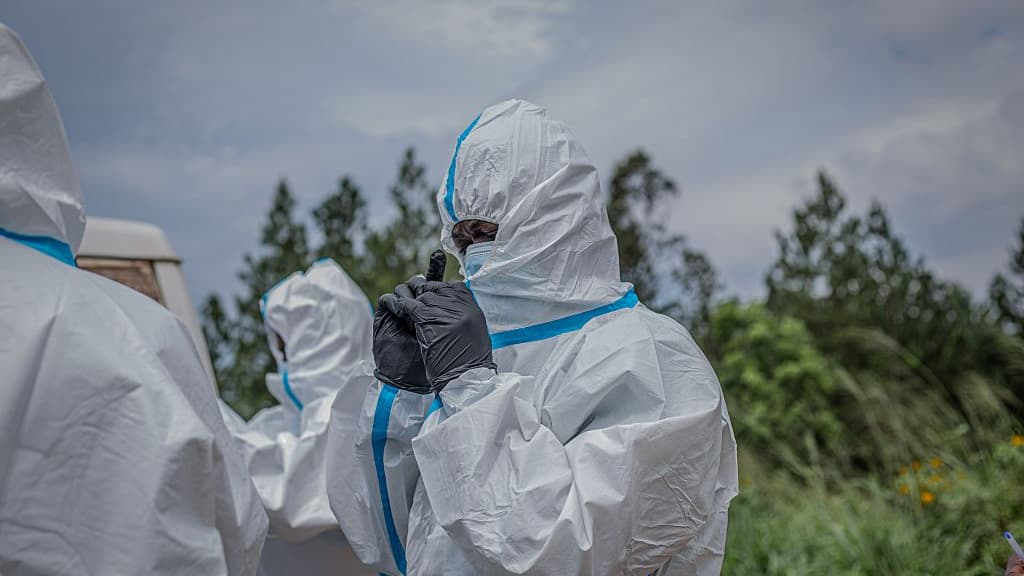
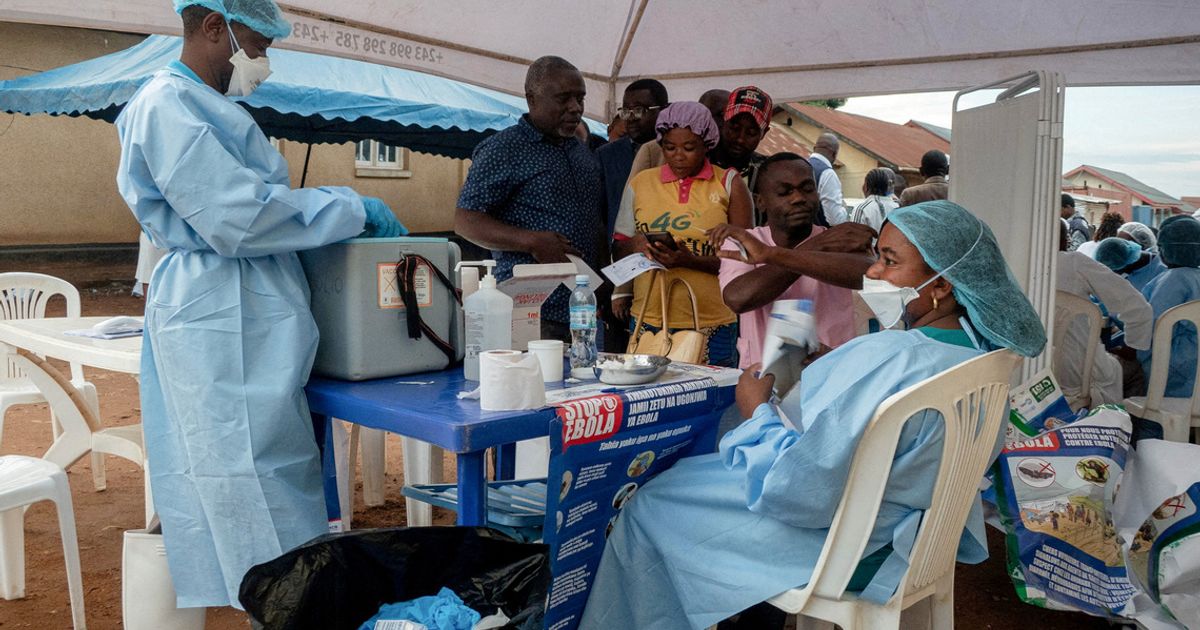
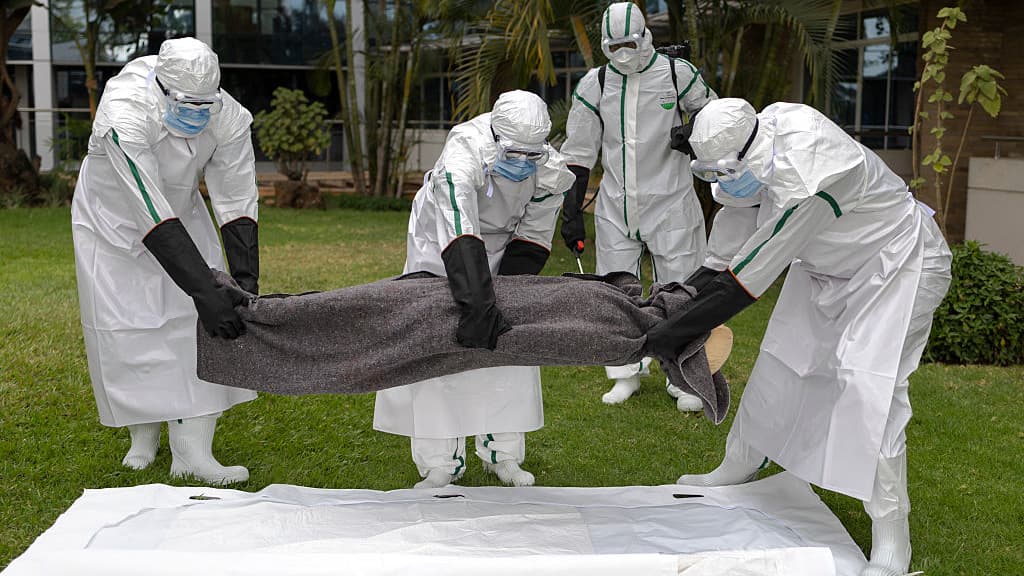
The ongoing Ebola outbreak centered in the Democratic Republic of Congo (DRC) is now the second largest on record.
asserted
outbreak → center → record
The virus has infected more than 11,000 people in five countries and has killed more than 5,700 people as of Nov. 20.
asserted
virus → infect → Nov.
Pardis Sabeti, a leader at the Broad Institute of MIT and Harvard who specializes in computational genetics and evolutionary biology, has tracked Ebola outbreaks for years.
asserted
who → specialize → years
In the largest Ebola outbreak on record, in West Africa from 2014 to 2016, she sequenced many of the viral samples from patients, which helped scientists understand how the virus was spreading.
asserted
virus → sequence → patients
Her lab continues to be involved in providing rapid genetic information when viruses strike.
asserted
viruses → continue → information
In a conversation with TIME, she explains why the current outbreak grew out of control so quickly—and what would need to change in order for us to finally get ahead of outbreaks like this.
asserted
us → explain → this
This interview has been condensed and edited for clarity.
asserted
interview → condense → clarity
Why is this Ebola outbreak so challenging to control?
asserted
outbreak → control → ?
In conflict zones like in the DRC, you have the dual problem of an increase in the threats and drivers of infectious-disease spread.
asserted
you → have → spread
You have movement, you have refugees, you have poor sanitation and a breakdown of the health care infrastructure.
asserted
you → have → infrastructure
You have a lot of things going on that are drivers of infectious disease, and it leads to the outbreak spiraling out of control.
asserted
outbreak → have → control
At the same time, you’ve taken away all of the surveillance, support, and infrastructure to be aware of infectious diseases spreading.
asserted
diseases → take → surveillance
That’s why we didn’t hear about this outbreak until it escalated way out of control.
asserted
it → ’ → control
That’s part of the reason it took so long to find out about this outbreak, because of all those breakdowns in this conflict zone—and why it’s so difficult to contain.
asserted
it → ’ → zone
It has a lot of things going against it.
asserted
It → have → it
We have global health funding slashed all around world—and from the U.S., in particular—which cut lots of programs directly in DRC.
asserted
which → have → DRC
There are also a lot of rogue groups circulating in the DRC and that makes it really hard for [health] teams to go in and do support.
asserted
teams → be → support
We’re getting into a situation where the driving risk factors are going up and making it impossible for anybody to work functionally [there] and making it very, very challenging to respond.
asserted
it → get → situation
Were you surprised that this outbreak was caused by a less common strain of Ebola, Bundibugyo?
asserted
outbreak → cause → Ebola
There are a lot of different versions of this virus that circulate.
asserted
that → be → virus
To me, I keep asking, Why do we not have a working diagnostic for all of the different variants of Ebola that we know could easily come about?
uncertain
we → keep → Ebola
They’re all related to each other, and once we know one version of the virus, we should be ready to detect every version of that virus that can cause outbreaks.
asserted
that → relate → outbreaks
It’s not like this version has never caused an outbreak.
asserted
version → ’ → outbreak
It’s not as common, but it has caused outbreaks in the past.
asserted
it → ’ → past
Why do we still chase outbreaks rather than get ahead of them?
asserted
we → chase → them
Ultimately, in my mind, it’s a challenge of funding and interest.
asserted
it → ’ → funding
Try as we might, we never get the kind of funding and support to know what is circulating and how we can do this better.
uncertain
we → try → this
The fact is that a lot of countries don’t want you to know they have outbreaks, because they’re afraid you won’t come to visit.
asserted
you → want → outbreaks
There are so many things driving us not to do what is sensible.
asserted
what → be → us
A colleague of mine did a survey that showed in 21 different countries with different cultures, it didn’t matter who you were: everyone hid when they were sick.
asserted
they → do → cultures
If that’s true, what are we even doing [in public health]?
asserted
we → ’ → health
Literally that’s the premise of what we are trying to do—think about transparency, getting diagnosed, and getting test results.
asserted
we → ’ → results
But most people don’t want to come to attention.
asserted
people → want → attention
That’s wild.
asserted
That → ’ → ?
How do we change that mentality?
asserted
we → change → mentality
We want to shift how people think about infectious diseases and why we are more afraid of each other than of a bug that could kill us.
uncertain
that → want → us
We just need a lot more outbreak education, in my mind.
asserted
We → need → mind
Operation Outbreak is an education and communications tool: a simulation of how an outbreak spreads, how we make choices about getting diagnosed, why you want to get vaccinated, and what risks we need to weigh.
asserted
we → spread → risks
We teach the basics of recognizing symptoms, how to understand prevalence of a disease, and fundamental epidemiology.
asserted
We → teach → disease
It was born from our obsession with Bluetooth-based contact tracing from the Ebola outbreak in 2015.
asserted
It → bear → 2015
…and 28 more, not listed.
 The Aporia