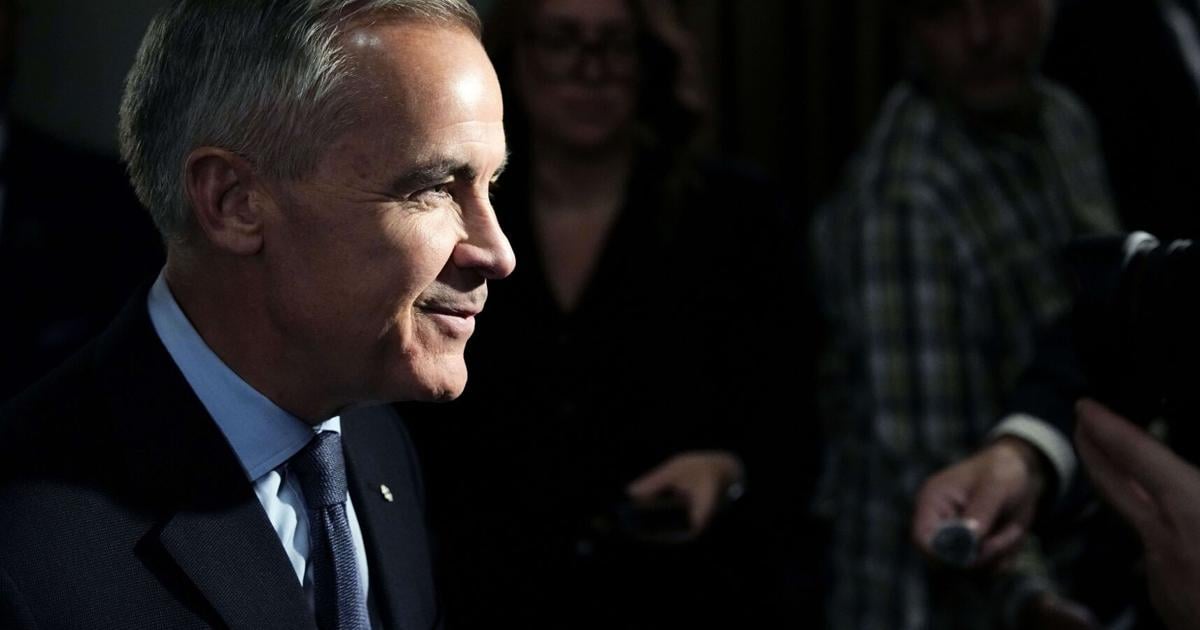
Photo via Toronto Star

Donald Trump's tariffs are dismantling Ontario's economy — one plant at a time

Read the original at Toronto Star ↗
Cite

Yaffe, B. (2026, November 23). Donald Trump's tariffs are dismantling Ontario's economy — one plant at a time. Toronto Star. https://www.thestar.com/opinion/contributors/trump-s-tariffs-are-dismantling-ontario-s-economy-one-plant-at-a-time/article_58dce6b9-d674-4ee3-86f3-eedadc40dab0.html

Dated from the outlet's own feed. Check the original for its byline.

Toronto Star · collected 2026-11-23 · by Barbara Yaffe

Quick Summary

The article reports that Ontario's economy is suffering significantly due to U.S. President Donald Trump's tariffs, with major job losses and plant closures in the auto sector. According to a Canadian Federation of Independent Business report, Ontario has been hit harder than any other province. The tariffs have led to an estimated $16.9 billion deficit in Ontario's fiscal projections for 2026-2027, compared to a previously forecasted $13.8 billion deficit. By 2029, if the tariffs continue, Ontario is expected to have 137,000 fewer jobs than under a no-tariff scenario.
Written by AI on 2026-11-24, from this article's own text only (the story summary below draws on all the coverage).

AI analysis

Story summary

Ontario's economy is suffering due to Donald Trump's tariffs, which have been in place for nearly two years. The province, heavily reliant on the U.S. market, has seen significant job losses and plant closures, with nearly 10% of jobs — about one million — linked to exports to the U.S. In 2025, 77% of Ontario’s exports were destined for the U.S., making the province particularly vulnerable to these tariffs. The Canadian Federation of Independent Business reports that Ontario has been more severely impacted than any other province by Trump's levies on steel, aluminum, lumber, and autos.

Written for “Donald Trump's Tariffs Impact Ontario Economy” on 2026-11-24, grounded in this article and the 0 other(s) covering the same event.

Compared with similar articles

This article reads leans strongly left and hedges 6% of its claims. Each row says how that neighbour differs.
The Globe and Mail
Hedges 0 of 2 claims Outlet record 51/100
“The articles discuss different issues: one focuses on Ontario's economic challenges due to Trump's tariffs, while the other addresses internal trade barriers between provinces.”
The Hub
Leans right further right than this Hedges 5 of 63 claims
“The articles discuss different aspects of the tariff situation between the U.S. and Canada, with Article A focusing on the economic impact in Ontario and Article B on the progress of tariff relief negotiations.”

Story

Donald Trump's Tariffs Impact Ontario Economy
Economy/Business · 1 article(s) covering the same event.
How this article was measured signals, leaning charts, publisher record, byline, topics and claims

Signals How these are calculated →

Claims extracted
35
sentences that state something as happening or true
Uncertain
6%
2 of 35 hedged ("reportedly", "may", "according to")
Leaning
Leans strongly left
of the writing, not the subject · beta estimate
Publisher signals
65/100
Toronto Star's corrections and hedging, across everything collected from it. Not a measure of accuracy.
Outlets on this story
1
Economy/Business
Same framing elsewhere
1
articles that frame the event the way this one does
Analyzed 2026-11-24 · how these are computed

How this is being covered How these are calculated →

Article leaning vs. publisher reliability
Source leaning vs. consistency

Publisher

Toronto Star · 17530 article(s) · 33 correction(s) detected
Running correction rate · 33 correction(s)
2026-11-17
Correction
2026-10-26
Correction
2026-10-24
Correction
2026-10-07
Correction
2026-09-24
Correction

Who wrote this

Barbara Yaffe
7 article(s) here · 1 carrying a prediction
Before the tariffs were announced in early 2025 no one could have imagined that a U.S. president would come along and launch a protectionist, self-interested, beggar-thy-neighbour strategy to snare jobs from a friend and long-standing ally.
Is this the time to push for a trade deal, or would Canada’s negotiating team be better off ragging the puck until January 2028 when, it is hoped, Trump will leave office?
It could get ugly.
The U.S. president insists Canada is now willing to give the U.S. whatever it wants.
Sands posits that Carney might even be moved soon to call an election in order to score a bigger majority government than he has now.
Trump has decided, the U.S. will sell Europe its weaponry, rather than donate it, as former president Joe Biden did.
2026-10-22 · assertive framing · What’s with Trump? Why would he hug the Russian bear?
Ontario is well positioned to insulate itself from potential geographical problems that would result from Alberta or Quebec opting to quit the federation; Canada’s most populous province does not have to fret about getting cut off from the rest of the country.
Also by Barbara Yaffe
Nothing else under this byline is closely related to this article, so these are simply their most recent.
All 7 articles by Barbara Yaffe →

Topics

Industry Ontarians Ontario U.S. the Canadian Federation of Independent Business

Subjects

Ontario GPE · 12× U.S. GPE · 6× Trump PERSON · 5× Canada GPE · 2× Ontarians NORP · 2× Ottawa ORG · 2× Stellantis ORG · 2× Donald Trump PERSON · 1× Industry ORG · 1× Melanie Joly PERSON · 1×

Narrative

Trump did exactly that, absurdly deploying the U.S. International Emergency Economic Powers Act to deal with a trade deficit and fentanyl, then the Tariff Act of 1930, responding to purported discrimination against the U.S.
framing: assertive · carried by 1 article(s) · first seen 2026-11-24
Before the tariffs were announced in early 2025 no one could have imagined that a U.S. president would come along and launch a protectionist, self-interested, beggar-thy-neighbour strategy to snare jobs from a friend and long-standing ally.

Claims (35 extracted, 2 hedged)

Ontarians have lived with U.S. President Donald Trump’s punitive tariffs for nearly two years now. asserted
Ontarians → live → years
The province has had to deal with a roller-coaster of announcements about job losses and plant closings, with a dejected looking federal Industry Minister Melanie Joly last week acknowledging: “I’m fed up.” asserted
I → have → losses
Premier Doug Ford has said: “We want zero tariffs off the U.S.” asserted
We → say → U.S.
And he attributed blame for Trump’s pummelling in the midterm elections to one thing: “It’s tariffs, stupid. asserted
It → attribute → thing
Meanwhile, a report from the Canadian Federation of Independent Business has determined, Ontario has been harder hit than any other province by Trump’s tariffs. asserted
Ontario → determine → tariffs
Trump has imposed sectoral levies on steel, aluminum, lumber, and autos. asserted
Trump → impose → steel
Ontario happens to be home to many such operations including nine major auto assembly plants, operated by five global automakers. asserted
Ontario → happen → automakers
Fully 77 per cent of Ontario’s exports in 2025 headed to the U.S. Nearly 10 per cent of jobs — close to one million — were linked to goods and service exports to the Americans. asserted
cent → head → Americans
Before the tariffs were announced in early 2025 no one could have imagined that a U.S. president would come along and launch a protectionist, self-interested, beggar-thy-neighbour strategy to snare jobs from a friend and long-standing ally. uncertain
president → announce → friend
Trump did exactly that, absurdly deploying the U.S. International Emergency Economic Powers Act to deal with a trade deficit and fentanyl, then the Tariff Act of 1930, responding to purported discrimination against the U.S. asserted
Trump → do → U.S.
He doesn’t appear inclined, even after the midterms, to reverse course. asserted
He → appear → course
This is a guy who renamed an Ontario lake in a fit of pique. asserted
who → rename → pique
Ontario’s Office of Financial Accountability forecasted in a 2025 report that the tariffs would have their biggest impact in southwest Ontario. asserted
tariffs → forecast → Ontario
In descending order of tariff damage, the office listed the following municipalities: Windsor, Guelph, Brantford, Kitchener-Cambridge-Waterloo, London, Barrie, Hamilton, Toronto plus eight others. asserted
office → descend → municipalities
So affected that the province’s fiscal projections for 2025 and 2026 have had to be adjusted to take into account the tariff havoc. asserted
projections → have → havoc
Ontario’s fall fiscal update, for example, revealed an anticipated $13.8 billion deficit for 2026-2027 will now come in at $16.9 billion. asserted
deficit → reveal → billion
And of course, Ontario has been spending large sums to help support workers affected by Trump’s bid to coax its enterprises stateside. asserted
Ontario → spend → enterprises
In October, Ontario and Ottawa announced an $8.7 billion “trade action plan” to help workers with tariff hardships. asserted
Ontario → announce → hardships
Under a no-tariff scenario Ontario’s GDP had been on track to grow in 2025 by 1.7 per cent. asserted
GDP → grow → cent
With the tariffs imposed, It grew by 1.3 per cent last year. asserted
It → impose → cent
Things got worse, however, in 2026, with growth estimated at 0.6 per cent. asserted
growth → get → cent
Tariffs are expected to result in some 68,000 fewer jobs in 2025 than would have been the case under free trade, 119,000 fewer jobs in 2026. asserted
Tariffs → expect → 2026
By 2029, if tariffs persist, Ontario will have 137,000 fewer jobs than had there been no tariffs. asserted
Ontario → persist → jobs
In fact, the province is experiencing a triple whammy — slower economic growth, lower employment and higher consumer prices. asserted
province → experience → whammy
Ontarians are facing higher inflation — between 0.2 and 0.3 per cent higher in 2025 and 2026 — stemming from higher import prices, tariff retaliation and a weaker Canadian dollar, among other things. asserted
Ontarians → face → things
Perhaps all of the above helps explain the political fury last week after Stellantis, which laid off about 2,000 workers when it idled its Brampton plant in 2023, was now up and selling the plant to Roshel. asserted
it → help → Roshel
It was the straw that broke the camel’s back. asserted
that → break → back
Mark Carney pledges Canada will reject any U.S. trade deal not compatible with a viable auto sector in this country. asserted
Canada → pledge → country
And if a deal is not feasible, Canada will engage other countries. asserted
Canada → engage → countries
For now, Ottawa and Ontario have signalled they’ll do whatever it takes to get justice for the Stellantis workers. asserted
it → signal → workers
That includes launching lawsuits against corporations that don’t stick to their job-related commitments. asserted
that → include → commitments
A smattering of good news lightened the load a bit last week as Honda Canada announced $166 million investment to upgrade its Alliston plant and Stelco recalled 175 of its laid-off Hamilton workers. asserted
Stelco → lighten → workers
But Canadian politicians are readying themselves for another battle. asserted
politicians → ready → battle
The Stellantis plant is “one of the most modern, efficient auto plants on the continent,” according to economist Jim Stanford. uncertain
plant → accord → Stanford
And the plant’s sale “would represent “the biggest single consequence from Donald Trump’s trade war against Canada.” asserted
sale → represent → Canada

Give feedback · no sign-in needed

No sign-in needed for now. Your note is sent without a name, so it cannot be answered.

History Support