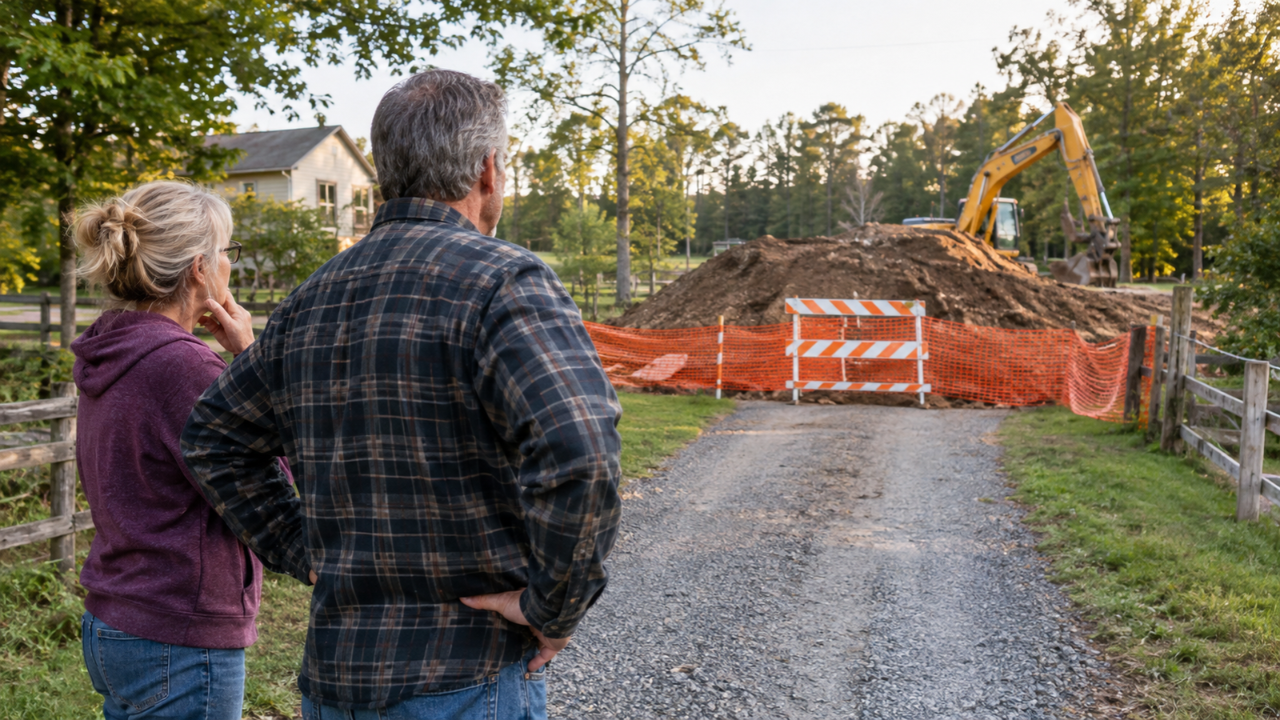
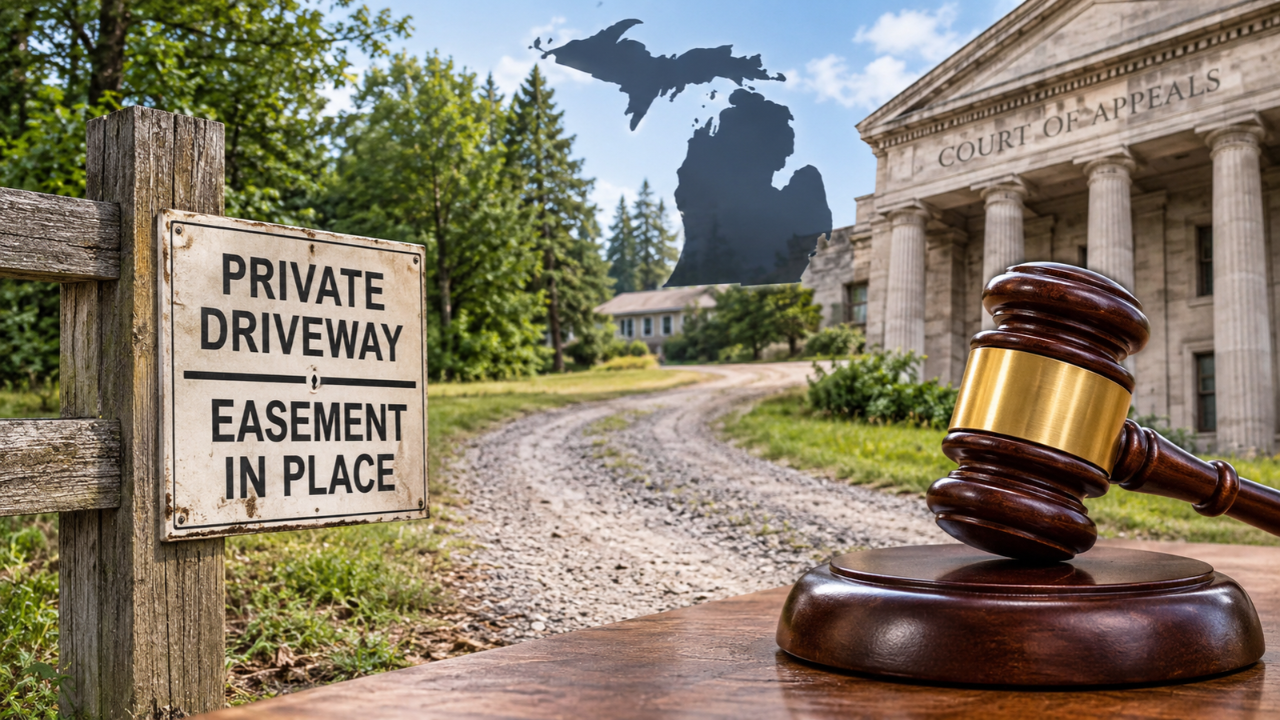
A driveway used by a family for decades became the centre of a property dispute after neighbouring relatives blocked access during construction work.
asserted
relatives → use → work
In Michigan, a family that had used a gravel driveway across relatives' land for 35 years took the matter to court after the route was obstructed.
asserted
route → use → court
The Michigan Court of Appeals eventually upheld a permanent easement, ruling that the neighbours had not established grounds to overturn a default judgment after failing to formally respond to the lawsuit.
asserted
neighbours → uphold → lawsuit
In a November 19, 2026, unpublished
opinion available on Justia, the Michigan Court of Appeals affirmed the lower court's decision in David Lee Shattuck v. Mark Shattuck.
asserted
Court → affirm → Shattuck
The appeals court found that the neighbours' participation in an earlier hearing about a preliminary injunction did not excuse their failure to answer the underlying complaint.
asserted
participation → find → complaint
How a 35-year driveway arrangement led to a dispute
The case involved adjoining properties owned by relatives.
asserted
case → lead → relatives
Mark and Michelle Shattuck owned one property, which also contained a gravel mine subject to federal regulations.
asserted
which → own → regulations
David Lee Shattuck and his family owned the neighbouring parcel.
asserted
Shattuck → own → parcel
According to the lawsuit, when the properties were purchased in 1987, the family began using a gravel driveway crossing Mark and Michelle's land to reach the main road.
uncertain
family → accord → road
They continued using the route for approximately 35 years.
asserted
They → continue → years
Although the family had another driveway connecting its property to the road, David maintained that the alternative route was unsafe.
asserted
route → have → road
The dispute escalated when construction work on the neighbouring property blocked the gravel driveway.
asserted
work → escalate → driveway
David filed a lawsuit seeking recognition of property rights, including a prescriptive easement or an easement by necessity.
asserted
David → file → necessity
He also requested a preliminary injunction to prevent further interference with access.
asserted
He → request → access
Why the neighbours were held in default
At an initial hearing, Mark appeared without a lawyer, while Michelle did not attend.
asserted
Michelle → hold → lawyer
Mark disputed the claim that the family's alternative driveway was unsafe and argued that it remained usable.
uncertain
it → dispute → claim
The trial court explained that the hearing concerned only the request for a preliminary injunction, not the underlying property claims.
uncertain
hearing → explain → injunction
It denied the injunction because the available evidence was insufficient to make an informed decision.
asserted
evidence → deny → decision
However, it directed Mark to maintain the existing situation and avoid further construction in the disputed area until the case was resolved.
asserted
case → direct → area
The court also discussed the outstanding deadline for the neighbours to file an answer to the complaint.
asserted
neighbours → discuss → complaint
Despite this, neither Mark nor Michelle formally responded to the lawsuit.
asserted
Mark → respond → lawsuit
At the plaintiff's request, the court clerk entered a default against them.
asserted
clerk → enter → them
David subsequently requested a default judgment.
asserted
David → request → judgment
Although the neighbours appeared at the hearing and explained that they believed the case was over because the preliminary injunction had been denied, the trial court granted a permanent easement and required them to maintain it.
asserted
court → appear → it
David later died, and his son, Corey May Shattuck, was substituted as the plaintiff.
uncertain
son → die → plaintiff
Why the appeals court upheld the permanent easement
asserted
upheld → uphold → easement
After obtaining legal representation, Mark and Michelle asked the trial court to set aside the default judgment.
asserted
Mark → obtain → judgment
They argued that Mark's participation in the earlier hearing showed that they had already defended the lawsuit.
asserted
they → argue → lawsuit
The trial court partially granted their motion because unresolved issues concerning damages remained, but refused to set aside the default on liability.
asserted
issues → grant → liability
The default judgment was therefore set aside, while the underlying default remained in place.
asserted
default → set → place
Mark and Michelle then appealed.
asserted
Mark → appeal → ?
The Michigan Court of Appeals examined Michigan Court Rule 2.612(C)(1)(f), which allows relief from a judgment for another reason justifying it.
asserted
which → examine → it
The rule requires a party seeking relief to establish extraordinary circumstances and show that setting aside the judgment is necessary to achieve justice.
asserted
setting → require → justice
The appeals court found that the neighbours had not met this requirement.
asserted
neighbours → find → requirement
It explained that Mark's appearance at the preliminary injunction hearing did not mean he had formally answered the underlying complaint.
asserted
he → explain → complaint
The judge had clearly distinguished the two proceedings and discussed the outstanding response deadline during the hearing.
asserted
judge → distinguish → hearing
The court also rejected their argument that they reasonably believed the entire case had ended.
asserted
case → reject → argument
The hearing transcript showed that the judge had instructed the plaintiff's lawyer to schedule further proceedings concerning the underlying lawsuit.
asserted
judge → show → lawsuit
Mark and Michelle additionally argued that the easement could expose them to obligations and potential fines under the federal Mine Safety and Health Act because their property contained a regulated gravel mine.
uncertain
property → argue → mine
However, the appeals court found that they had not adequately demonstrated why these potential consequences justified setting aside the judgment.
asserted
consequences → find → judgment
…and 2 more, not listed.
 The Aporia