Photo via Times of India

Michigan court upholds 35-year driveway easement after family access dispute

Read the original at Times of India ↗
Cite

TOI World Desk. (2026, November 23). Michigan court upholds 35-year driveway easement after family access dispute. Times of India. https://timesofindia.indiatimes.com/world/us/two-michigan-brothers-families-fought-over-a-gravel-driveway-used-for-35-years-after-construction-blocked-access-an-appeals-court-left-the-easement-intact-despite-the-other-side-saying-it-thought-the-case-was-over/articleshow/136093285.cms

Dated from the outlet's own feed. Check the original for its byline.

Times of India · collected 2026-11-23 · by TOI World Desk

Quick Summary

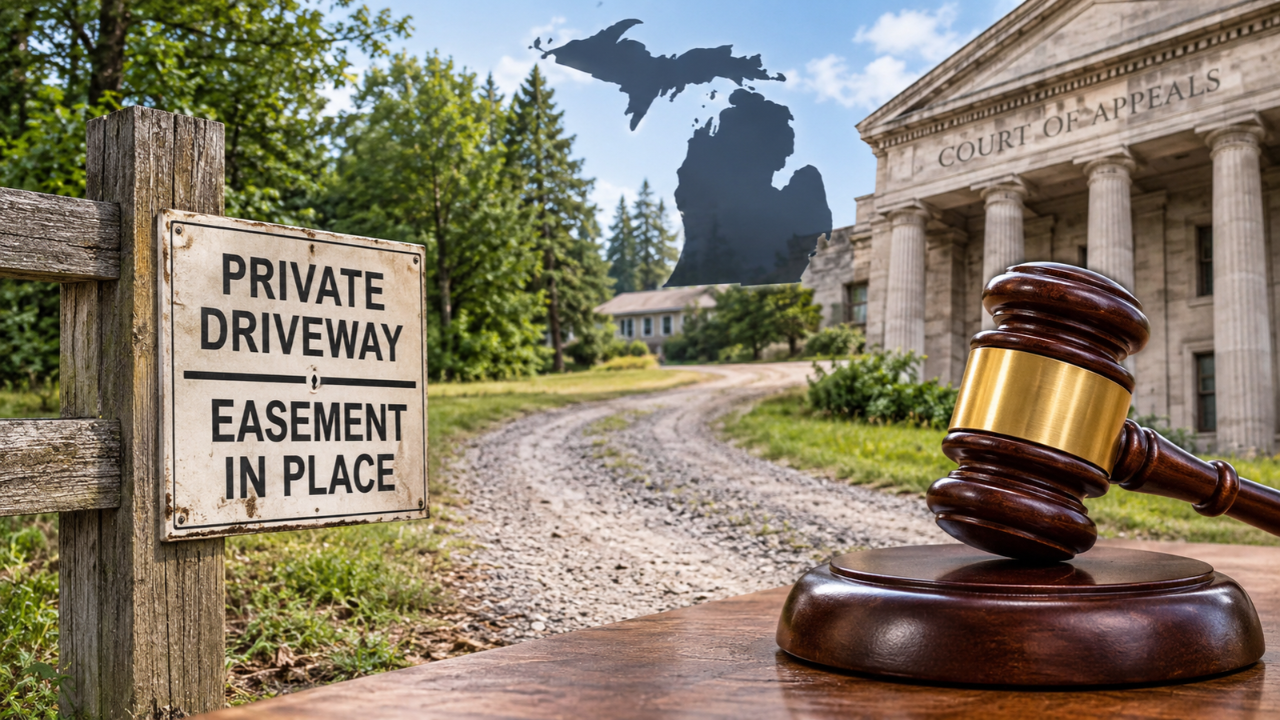
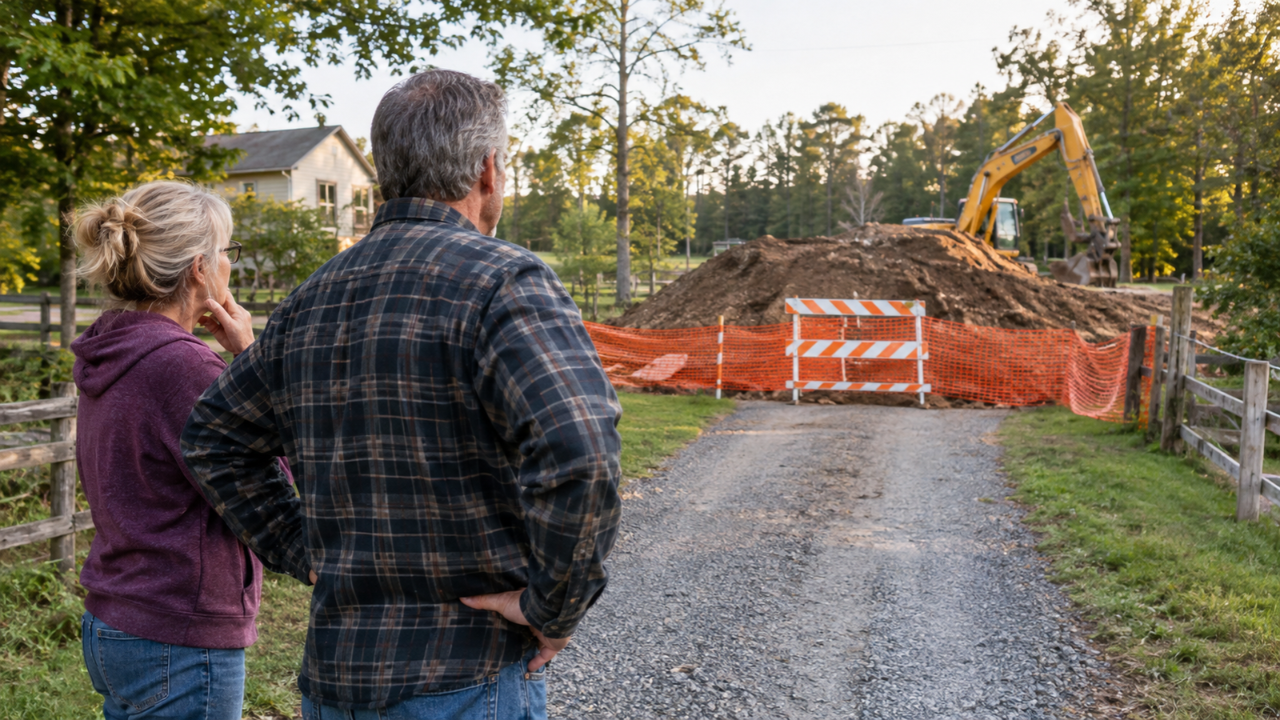
A Michigan court upheld a 35-year-old driveway easement in a dispute between two families over access to a gravel path connecting one property to the main road. The case, which began in 2026, involved David Shattuck seeking legal recognition of an existing route his family had used since 1987, while Mark and Michelle Shattuck blocked the driveway during construction work. The Michigan Court of Appeals affirmed the trial court’s decision to grant a permanent easement, rejecting Mark and Michelle’s argument that they believed the case was resolved when a preliminary injunction was denied.
Written by AI on 2026-11-23, from this article's own text only (the story summary below draws on all the coverage).

AI analysis

Story summary

In November 2026, the Michigan Court of Appeals upheld a permanent easement for a 35-year-old driveway dispute between relatives. David Lee Shattuck and his family had used a gravel driveway across Mark and Michelle Shattuck’s property for decades. The dispute arose when Mark and Michelle blocked access to the driveway during construction work. Despite participating in a previous hearing about a preliminary injunction, the neighbours did not formally respond to the underlying lawsuit, leading the trial court to grant the permanent easement. The appeals court ruled that the neighbours' involvement in the earlier hearing did not absolve them from formally answering the complaint, affirming the lower court's decision. The case highlights the importance of formal legal procedures in property disputes.

Written for “Michigan Court Upholds Easement” on 2026-11-23, grounded in this article and the 1 other(s) covering the same event.
Why this leaning score
This article does not take a side on a contested political question, so it has no leaning score. That is an answer rather than a gap: a match report or a rescue can be warmly or critically written without being left or right, and scoring it anyway is how approval of a subject gets recorded as a political position.
No political leaning scored for article 173756 · logged 2026-11-23

Compared with similar articles

This article reads unscored and hedges 18% of its claims. Each row says how that neighbour differs.
Times of India
Hedges 6 of 42 claims Outlet record 58/100

Story

Michigan Court Upholds Easement
Crime & Law · 2 article(s) covering the same event. See how they differ ↑
How this article was measured signals, leaning charts, publisher record, byline, topics and claims

Signals How these are calculated →

Claims extracted
44
sentences that state something as happening or true
Uncertain
18%
8 of 44 hedged ("reportedly", "may", "according to")
Leaning
not political
takes no side on a contested political question
Publisher signals
58/100
Times of India's corrections and hedging, across everything collected from it. Not a measure of accuracy.
Outlets on this story
2
Crime & Law
Same framing elsewhere
1
articles that frame the event the way this one does
Analyzed 2026-11-23 · how these are computed

How this is being covered How these are calculated →

Article leaning vs. publisher reliability
Source leaning vs. consistency

Publisher

Times of India · 5643 article(s) · 8 correction(s) detected
Running correction rate · 8 correction(s)

Who wrote this

TOI World Desk
1668 article(s) here · 1 carrying a prediction
David later died during the proceedings, and his son, Corey May Shattuck, was substituted as the plaintiff.
Contributors may also receive a tax deduction when they put money into the fund, subject to applicable rules.
The court cited concerns about her ability or willingness to pay the award later.
The money may not be paid immediately.
When she could not find suitable keepsakes, she decided to make her own.
Its designers wanted to create a lively neighbourhood destination that residents could enjoy throughout the year.
Mark Zuckerberg has joined the growing wave of Grand Theft Auto VI (GTA 6) memes, giving the internet an unexpected glimpse of what his version of the game might look like.
Recognising that the animal might be at risk, they passed the information on to the force's wildlife crime specialists.
The case has also raised questions about whether the affected couples will actually recover their money and receive the photographs they were promised.
Although he could not identify the snake, someone familiar with reptiles recognised it as an eastern brown snake and advised the family to seek immediate veterinary assistance.
Wire or desk byline, not an individual reporter.
Also by TOI World Desk
Nothing else under this byline is closely related to this article, so these are simply their most recent.
All 1668 articles by TOI World Desk →

Topics

Justia Michigan the Michigan Court of Appeals

Subjects

Mark PERSON · 7× David PERSON · 6× Michelle PERSON · 4× Corey May Shattuck PERSON · 1× David Shattuck PERSON · 1× Justia ORG · 1× Mark Shattuck PERSON · 1× Michelle Shattuck PERSON · 1× Michigan GPE · 1× the Michigan Court of Appeals ORG · 1×

Narrative

In an unpublished opinion dated November 19, 2026, available on Justia, the Michigan Court of Appeals upheld the trial court's order finalising the permanent easement, rejecting the defendants' request to overturn the underlying default.
framing: assertive · carried by 1 article(s) · first seen 2026-11-23
David later died during the proceedings, and his son, Corey May Shattuck, was substituted as the plaintiff.
2026-11-23 · Times of India
Michigan court upholds 35-year driveway easement after family access dispute · assertive framing

Claims (44 extracted, 8 hedged)

A gravel driveway used for decades became the centre of a family property dispute after construction work blocked access to a route connecting one household to the main road. asserted
work → use → road
What followed was a legal battle between two Michigan brothers' families, with one side seeking to preserve its long-standing access and the other arguing that it had believed the court proceedings were already over. asserted
proceedings → follow → access
In an unpublished opinion dated November 19, 2026, available on Justia, the Michigan Court of Appeals upheld the trial court's order finalising the permanent easement, rejecting the defendants' request to overturn the underlying default. asserted
Court → date → default
The appeals court rejected arguments by Mark Shattuck and his wife, Michelle, that the default judgment should be set aside because they believed they had prevailed when a judge initially denied a request for a preliminary injunction. asserted
judge → reject → injunction
David later died during the proceedings, and his son, Corey May Shattuck, was substituted as the plaintiff. uncertain
son → die → plaintiff
A driveway used since the properties were purchased in 1987 The dispute involved adjoining properties purchased by the families in 1987. asserted
dispute → use → 1987
According to the original plaintiff, David Shattuck, he had access to a gravel driveway crossing the neighbouring property to reach the main road. uncertain
he → accord → road
He claimed that his family had used the route for approximately 35 years before construction work obstructed it. asserted
work → claim → it
The neighbouring property, owned by Mark and Michelle Shattuck, also contained a gravel mine subject to federal regulations. asserted
property → own → regulations
Although David had another driveway leading to the main road, he argued that it was unsafe to use. asserted
it → have → road
After access to the gravel route was blocked, David filed a lawsuit seeking several forms of property-related relief. asserted
David → block → relief
His claims included adverse possession, acquiescence, quiet title and interference with an easement. uncertain
claims → include → easement
He also sought a declaration recognising either a prescriptive easement or an easement by necessity. asserted
He → seek → necessity
He requested a preliminary injunction to prevent further interference with the disputed route while the case proceeded. asserted
case → request → route
Why the defendants believed the case was over asserted
case → believe → ?
At the preliminary injunction hearing, Mark appeared without a lawyer, while Michelle did not attend. asserted
Michelle → appear → lawyer
Mark disputed the claim that the alternative driveway was unsafe and argued that David could still use it. uncertain
David → dispute → it
However, the trial court explained that the hearing was limited to the request for a preliminary injunction, rather than the underlying claims in the lawsuit. uncertain
hearing → explain → lawsuit
It also indicated that there would be another opportunity to address the complaint. asserted
It → indicate → complaint
The court eventually denied the preliminary injunction because there was insufficient information to make an informed decision. asserted
court → deny → decision
However, it directed Mark to maintain the existing situation and refrain from further work in the disputed area until the case was decided. asserted
case → direct → area
At the end of the hearing, the judge said, "that will conclude the matter". asserted
that → say → matter
Mark and Michelle later argued that they understood this statement to mean that the entire case had ended. asserted
case → argue → ?
However, the court had also discussed the fact that the defendants had not filed an answer to the complaint and that their deadline to do so had not yet expired. asserted
deadline → discuss → complaint
The judge further indicated that another hearing would be scheduled to address the underlying lawsuit. asserted
hearing → indicate → lawsuit
The defendants did not file an answer. asserted
defendants → file → answer
At David's request, the court clerk entered a default against them for failing to plead or otherwise defend the case. asserted
clerk → enter → case
The trial court subsequently entered a default judgment awarding David a permanent easement and requiring the defendants to maintain it. asserted
court → enter → it
Appeals court rejects request to undo the default asserted
court → reject → default
After obtaining legal representation, Mark and Michelle sought to have the default judgment set aside. asserted
judgment → obtain → representation
They argued that Mark's appearance at the preliminary injunction hearing and his objections to the claims meant that he had already defended the lawsuit. uncertain
he → argue → lawsuit
The trial court partially granted their request because certain questions concerning damages remained unresolved. asserted
questions → grant → damages
However, it refused to remove the underlying default relating to liability. asserted
it → refuse → liability
As a result, the court set aside the default judgment but left the underlying default on liability in place. asserted
court → set → place
The court later finalised the easement arrangements without changing that decision. asserted
court → finalise → decision
The Michigan Court of Appeals said it did not need to determine whether the clerk had correctly entered the default. asserted
clerk → say → default
Instead, it examined whether the defendants had established grounds for relief under Michigan Court Rule 2.612(C)(1)(f), which permits a judgment to be set aside for other reasons justifying relief. asserted
judgment → examine → relief
The rule requires extraordinary circumstances that make setting aside the judgment necessary to achieve justice. asserted
setting → require → justice
The appeals court found that Mark's participation in the preliminary injunction hearing did not, by itself, establish such circumstances. asserted
participation → find → circumstances
It also concluded that the judge's closing remarks could not reasonably be interpreted in isolation, given the discussion about the unanswered complaint and the need for further proceedings. uncertain
remarks → conclude → proceedings
…and 4 more, not listed.

Give feedback · no sign-in needed

No sign-in needed for now. Your note is sent without a name, so it cannot be answered.

History Support