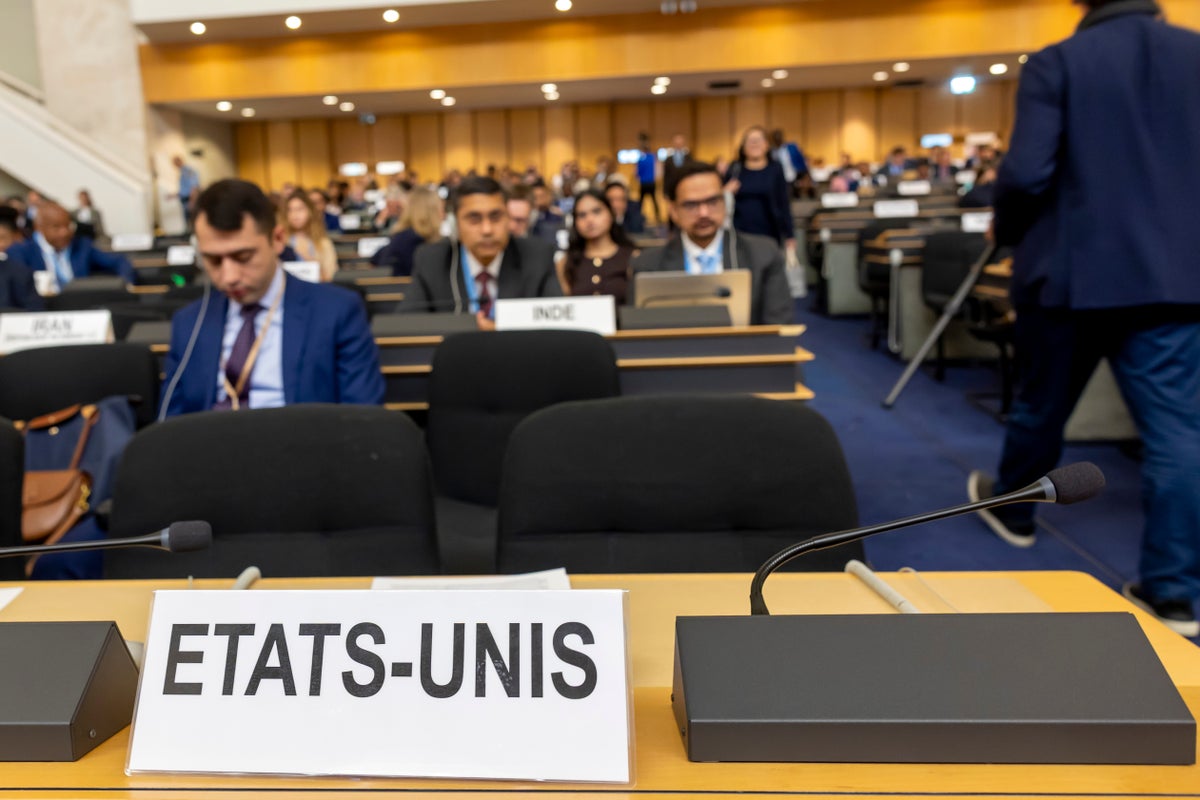
Photo via Toronto Star

Nations at UN talks on AI killer robots agree to more talks but no firm commitment to rein them in

Read the original at Toronto Star ↗
Cite

Keaten, J. (2026, November 21). Nations at UN talks on AI killer robots agree to more talks but no firm commitment to rein them in. Toronto Star. https://www.thestar.com/news/world/europe/nations-at-un-talks-on-ai-killer-robots-agree-to-more-talks-but-no-firm-commitment-to-rein-them-in/article_7aac264f-ff49-5aec-a51b-72547c6fb034.html

Dated from the outlet's own feed. Check the original for its byline.

Toronto Star · collected 2026-11-21 · by Jamey Keaten

Quick Summary

At a U.N.-backed conference in Geneva, nations agreed to continue discussions on AI-powered killer robots and drones for two more years but failed to commit to firm rules as sought by the U.N. Secretary-General and activists. The week-long meeting concluded with an agreement to “elaborate” a potential accord by 2028, falling short of the binding regulations desired by many countries and human rights groups.
Written by AI on 2026-11-21, from this article's own text only (the story summary below draws on all the coverage).
See how they differ ↓

AI analysis

Story summary

As of November 21, 2026, the United Nations-backed talks in Geneva collapsed without agreeing on a legally binding treaty to control the use of autonomous weapons. Despite an overwhelming majority of states supporting negotiations, Russian objections prevented the establishment of a negotiating mandate. The conference, part of the Convention on Certain Conventional Weapons, aimed to set rules for lethal autonomous weapons systems (LAWS) but ended in failure. Countries agreed to extend discussions for two more years, disappointing critics who saw this as a missed opportunity to address the dangers posed by AI-powered weapons, which have been discussed for 13 years. Major arms producers, including the United States and Russia, opposed binding rules, citing concerns over their abilities to develop advanced technology.

Written for “UN Talks on Killer Robots Extend Talks” on 2026-11-22, grounded in this article and the 23 other(s) covering the same event.

How they differ

10 outlets covered “UN Talks on Killer Robots Extend Talks”.

What each outlet says

One AI summary per outlet of its latest article on this story, written from that article alone and checked against it. Open the article for the outlet's own words.

Toronto StarThis outlet21 Nov

At a U.N.-backed conference in Geneva, nations agreed to continue discussions on AI-powered killer robots and drones for two more years but failed to commit to firm rules as sought by the U.N. Secretary-General and activists. The week-long meeting concluded with an agreement to “elaborate” a potential accord by 2028, falling short of the binding regulations desired by many countries and human rights groups.

Nations at UN talks on AI killer robots agree to more talks but no firm commitment to rein them in (this article)2 articles from Toronto Star on this story

The Straits Times21 Nov

At a UN meeting in Geneva ending on November 21, states agreed to further discussions on regulating weapons with autonomous capabilities, known as "killer robots," by 2028. While around 100 countries supported legally binding rules, opposition from major arms producers like the US and Russia led to a weaker agreement that does not guarantee such regulations will be legally binding. The talks, part of the Convention…

States agree to UN talks aiming to regulate 'killer robots' by 2028 →6 articles from The Straits Times on this story
Dawn21 Nov

At the United Nations’ Review Conference of the Convention on Conventional Weapons in Geneva, countries agreed after five days of negotiations to begin the process of creating an international agreement on lethal autonomous weapons systems, or “killer robots,” over the next two years. However, the decision was seen as insufficient by campaigners who had hoped for quicker and more definitive action, with many states…

Countries open path towards 'killer robots' pact →4 articles from Dawn on this story
NPR21 Nov

Diplomats at the United Nations in Geneva concluded a week of negotiations on regulating lethal autonomous weapons, also known as "killer robots," by agreeing to consider regulations over two years, which could be either legally binding or optional. Humanitarian organizations, including the International Committee of the Red Cross and the U.N. secretary-general, had called for the drafting of legally binding rules…

Killer robots: U.N. talks fall short of hopes for legally binding rules →3 articles from NPR on this story
CBC21 Nov

UN-backed talks on regulating AI in warfare concluded without a commitment to binding rules, as major military powers like the U.S. and Russia resisted such restrictions. The Convention on Certain Conventional Weapons meeting in Geneva saw over 100 countries participating, but the lack of consensus resulted in a softer agreement to elaborate on an accord by 2028. While some, including the UN Secretary General…

UN talks on AI in warfare end with no commitment to binding rules →2 articles from CBC on this story
The Hindu21 Nov

At a UN conference in Geneva ending November 21, 2026, states agreed to further discuss regulating autonomous weapons, or "killer robots," by 2028. However, despite support from about 100 countries, major arms producers like the U.S., Russia, and Israel blocked a legally binding agreement, leading to a weaker outcome that disappointed human rights groups. The meeting, part of the Convention on Certain Conventional…

States agree to UN talks aiming to regulate 'killer robots' by 2028 →2 articles from The Hindu on this story
Show 4 more outlets
Al Jazeera22 Nov

At a recent United Nations Convention on Certain Conventional Weapons (CCW) meeting in Switzerland, member states failed to agree on immediate regulations for autonomous weapon systems, commonly known as “killer robots.” Instead of adopting a legally binding treaty, they decided to work on elaborating potential regulations by 2028. Rights groups expressed disappointment with this outcome, highlighting concerns over…

Why have UN efforts to regulate ‘killer robots’ stalled? →2 articles from Al Jazeera on this story
The Independent21 Nov

At a recent United Nations meeting on regulating autonomous weapons, also known as "killer robots," nearly 100 countries supported swift action to develop legally binding rules, but major arms producers like the US, Russia, and Israel resisted, leading to a weaker agreement. The talks concluded with a pledge to continue discussions for two more years, aiming to develop new regulations by 2028, though it remains…

States seek to develop new rules to regulate ‘killer robots’ by 2028 →
The Guardian21 Nov

International talks at the UN’s Convention on Certain Conventional Weapons (CCW) in Geneva collapsed early in the morning after a week of negotiations failed to reach an agreement on a legally binding treaty to control autonomous weapons. The majority of participating states supported a binding treaty, but Russia's objections, alongside reluctance from other military powers like the US, led to the adoption of a…

International UN talks on controlling use of autonomous weapons collapse →
New York Post21 Nov

At a recent UN conference in Geneva, countries agreed to extend talks on AI-powered killer robots for two more years without setting binding rules, despite calls from UN Secretary-General António Guterres and activists for immediate action. The conference, which lasted a week, resulted in a vague commitment to possibly draft an accord by 2028 but fell short of concrete measures. Activists criticized major military…

Countries agree to extend UN talks on AI killer robots for two years in failure to set guardrails →

Where they agree and split

Agreed

Reported by outlets on both sides of the middle

On Friday, International Committee of the Red Cross president Mirjana Spoljaric said in a statement: “States must act to ensure the future of warfare is not handed over to machines.”

4 outlets
Show 1 more

The 128 member states of the Convention on Certain Conventional Weapons had been meeting since Monday as alarm grows over the use of lethal autonomous weapons systems in conflicts, including in Ukraine, Sudan and the Middle East.

4 outlets
The full story: what happened, how it changed, and all 24 articles →

Compared with similar articles

This article reads leans left and hedges 0% of its claims. Each row says how that neighbour differs.
NPR
Leans left Hedges 1 of 17 claims Outlet record 60/100
New York Post
Leans left Hedges 1 of 23 claims Outlet record 66/100
NPR
Leans left Hedges 5 of 33 claims Outlet record 60/100
Dawn
Leans strongly left further left than this Hedges 1 of 13 claims Outlet record 65/100
CBC News
Hedges 3 of 23 claims Outlet record 60/100
NPR
Leans strongly left further left than this Hedges 2 of 30 claims Outlet record 60/100
The Straits Times
Hedges 0 of 5 claims Outlet record 64/100
The Hindu
Leans left Hedges 1 of 12 claims Outlet record 78/100
Al Jazeera
Leans left Hedges 0 of 16 claims Outlet record 60/100
The Independent
Leans left Hedges 0 of 4 claims Outlet record 59/100

Story

UN Talks on Killer Robots Extend Talks
World · 24 article(s) covering the same event. Compare every outlet's account →
How this article was measured signals, leaning charts, publisher record, byline, topics and claims

Signals How these are calculated →

Claims extracted
3
sentences that state something as happening or true
Uncertain
0%
0 of 3 hedged ("reportedly", "may", "according to")
Leaning
Leans left
of the writing, not the subject · beta estimate
Publisher signals
65/100
Toronto Star's corrections and hedging, across everything collected from it. Not a measure of accuracy.
Outlets on this story
24
World
Same framing elsewhere
1
articles that frame the event the way this one does
Analyzed 2026-11-21 · how these are computed

How this is being covered How these are calculated →

Article leaning vs. publisher reliability
Source leaning vs. consistency

Publisher

Toronto Star · 16786 article(s) · 32 correction(s) detected
Running correction rate · 32 correction(s)
2026-11-17
Correction
2026-10-26
Correction
2026-10-24
Correction
2026-10-07
Correction
2026-09-24
Correction

Who wrote this

Jamey Keaten
11 article(s) here · 0 carrying a prediction
GENEVA (AP) — Killer robots and drones come up for a reckoning this week as government envoys rev up a discussion and could decide whether to launch negotiations toward setting rules for use of the deadly machines — or not.
The United States is expected to become the first country on Tuesday to refuse, in full, a scheduled examination of its human rights record by the U.N.'s top rights body since that body was created two decades ago.
The scheduled November 2025 review was pushed back until Tuesday in hopes that the U.S. government might change its mind.
Speaking to the AP by phone, Alexandre Coissac, IOM Chief of Mission in Djibouti, said others buried by fellow migrants will not be added to the official count until authorities can verify the bodies.
There have been questions and concerns about the death of the 28-year-old woman, identified in Russian media as Darya Shipilova, amid speculation she died of pneumonic plague and that her death may be connected pathogens she worked with at the Irkutsk Anti-Plague Research Institute of Siberia and the Far East.
Had it been approved, the mandate would have prohibited Switzerland from enforcing international punitive measures unless mandated by the UN.
Wadephul expressed openness to a better relationship but said it required a genuine willingness from Russia’s leadership to end the war in Ukraine, according to the official.
Also by Jamey Keaten
Nothing else under this byline is closely related to this article, so these are simply their most recent.
All 11 articles by Jamey Keaten →

Topics

GENEVA U.N. U.N.-backed

Subjects

GENEVA GPE · 2× U.N. ORG · 2× António Guterres PERSON · 1× U.N.-backed ORG · 1×

Narrative

Efforts to set firm rules on AI-powered killer robots and drones ran aground Saturday as U.N.-backed talks in Geneva produced a softened agreement to extend discussions for two more years.
framing: assertive · carried by 1 article(s) · first seen 2026-11-21

Claims (3 extracted, 0 hedged)

Efforts to set firm rules on AI-powered killer robots and drones ran aground Saturday as U.N.-backed talks in Geneva produced a softened agreement to extend discussions for two more years. asserted
talks → set → years
Scores of countries ended the week-long U.N. conference on weapons by agreeing to “elaborate” a possible accord on such lethal autonomous weapons systems by 2028. asserted
Scores → end → 2028
But they didn’t commit to binding rules sought by U.N. Secretary-General António Guterres, many countries, and activists. asserted
they → commit → Guterres
Give feedback · no sign-in needed

No sign-in needed for now. Your note is sent without a name, so it cannot be answered.

History Support