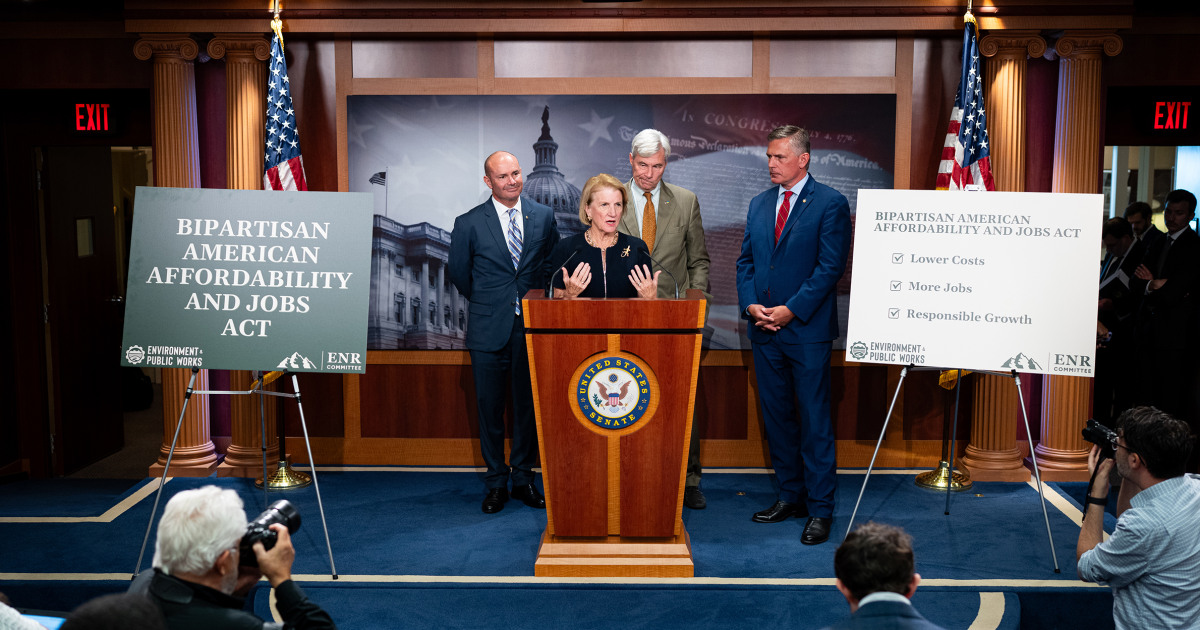
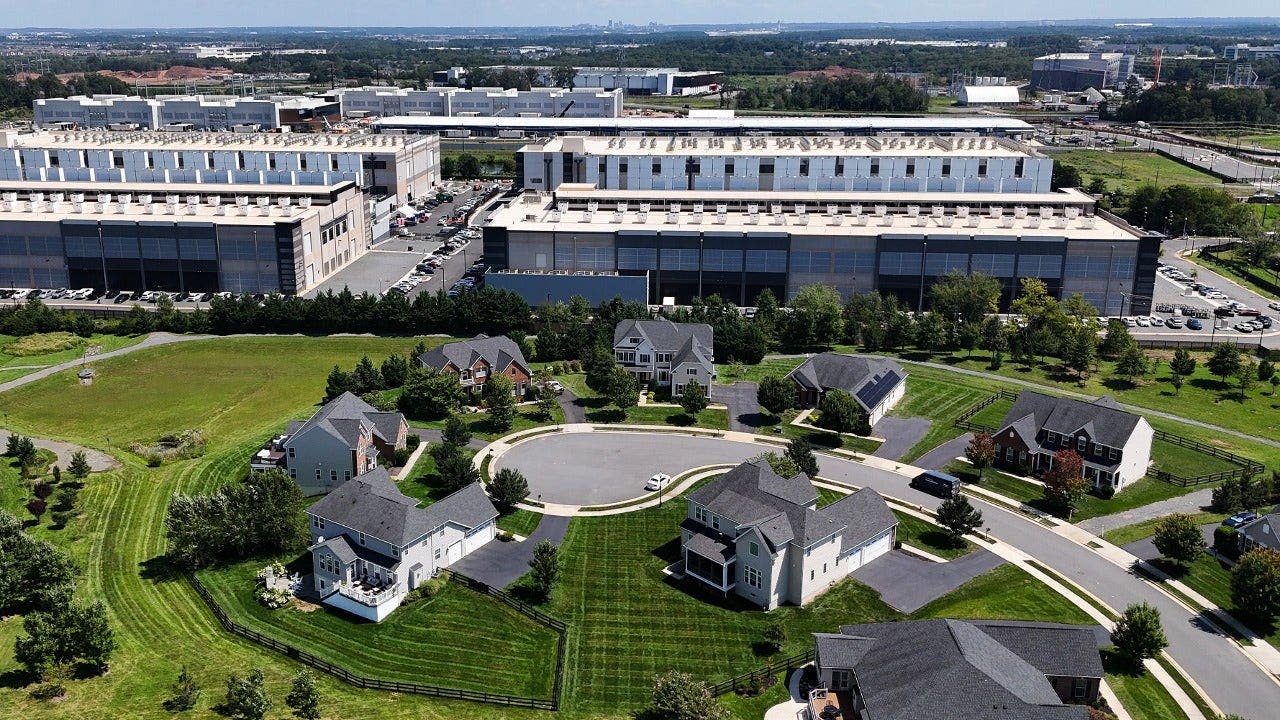
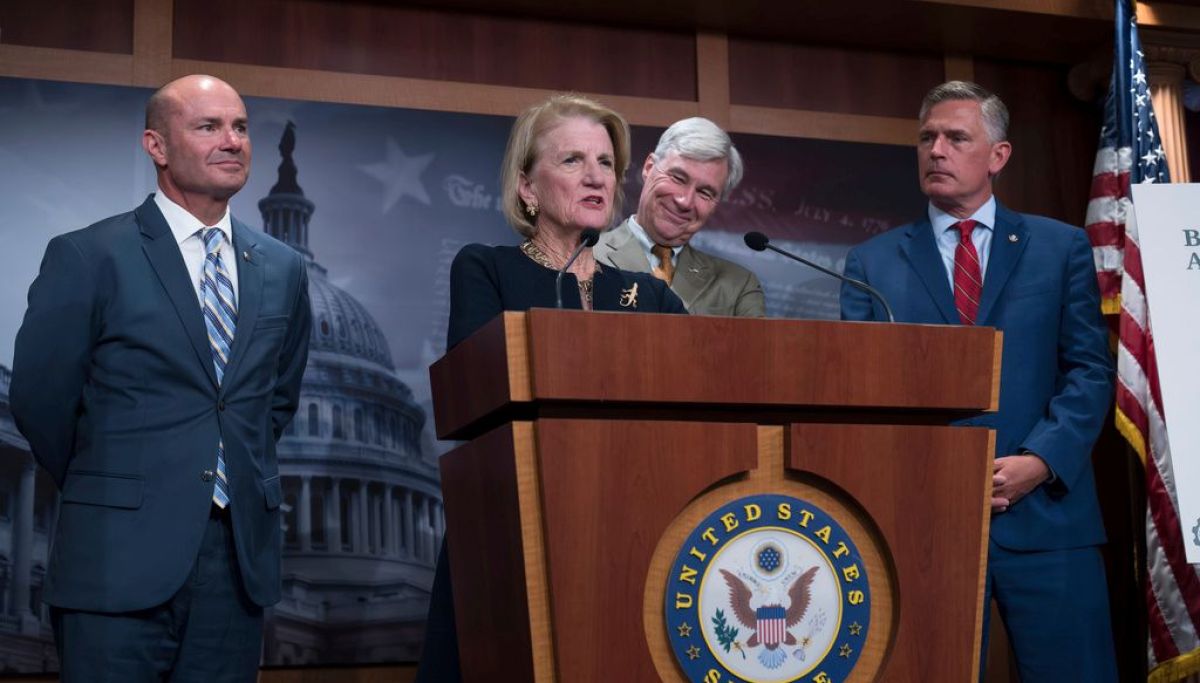
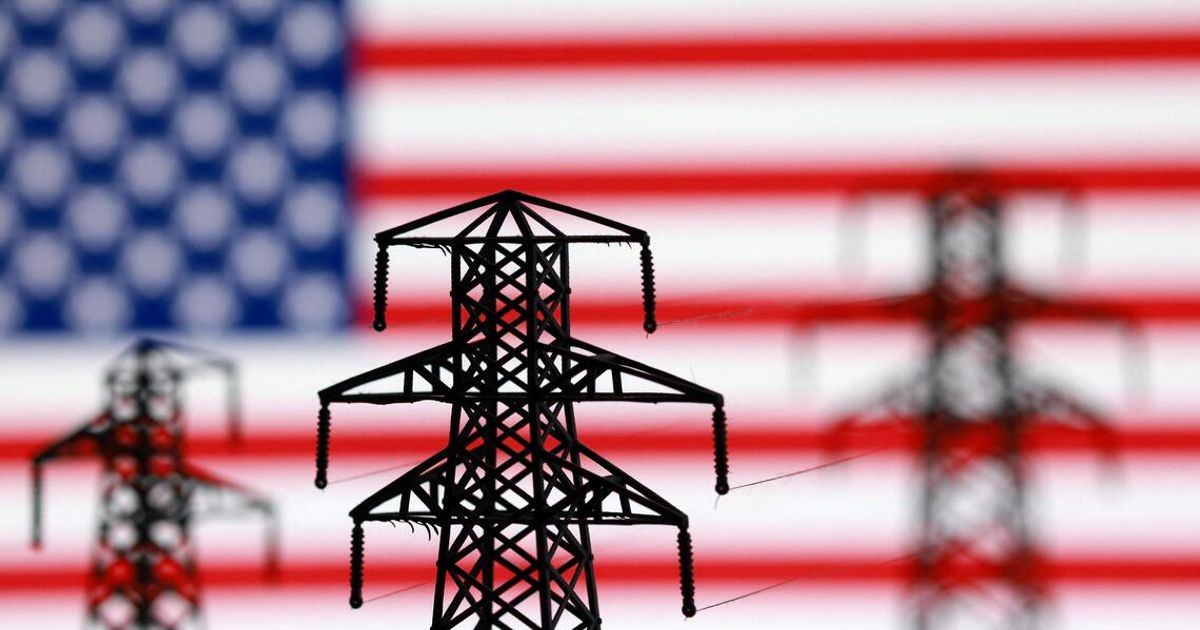
Photo via CBS News

Senate passes bipartisan permitting bill designed to boost energy projects

Read the original at CBS News ↗
Cite

Hubbard, K. (2026, November 20). Senate passes bipartisan permitting bill designed to boost energy projects. CBS News. https://www.cbsnews.com/news/senate-bipartisan-permitting-reform-bill-energy-baaja-trump/

Dated from the outlet's own feed. Check the original for its byline.

CBS News · collected 2026-11-20 · by Kaia Hubbard

Quick Summary

The Senate passed a bipartisan permitting reform bill with a 62 to 33 vote on Thursday, aimed at speeding up infrastructure and energy projects. The bill, known as the Bipartisan American Affordability and Jobs Act (BAAJA), seeks to streamline the permitting process to reduce costs and time delays, an issue that has gained attention due to rising energy prices. Republican Senator Shelley Moore Capito and others emphasize the bill’s bipartisan nature and its potential to facilitate both renewable energy and fossil fuel projects, while also stressing environmental protections.
Written by AI on 2026-11-20, from this article's own text only (the story summary below draws on all the coverage).
See how they differ ↓

AI analysis

Story summary

The U.S. Senate passed the Bipartisan American Affordability and Jobs Act (BAAJA) on November 18, 2026, with a vote of 62-33, aimed at speeding up permitting reviews for energy and infrastructure projects. The bill, dubbed the Bipartisan American Affordability and Jobs Act, received broad bipartisan support but faced opposition from environmental advocates like the Sierra Club and Earthjustice, who argue it would limit public participation and court oversight. Two Republican senators, Josh Hawley of Missouri and Mike Rounds of South Dakota, voted against the bill, while 15 independent and Democratic senators supported it. The legislation, now sent to the House of Representatives, would shorten the timeline for starting large energy projects and ensure data centers pay for their energy usage. Democratic Senator Sheldon Whitehouse claims the bill could save Americans approximately $60 to $80 each month.

Written for “Senate Passes Energy Permitting Bill” on 2026-11-22, grounded in this article and the 20 other(s) covering the same event.

How they differ

17 outlets covered “Senate Passes Energy Permitting Bill”.

What each outlet says

One AI summary per outlet of its latest article on this story, written from that article alone and checked against it. Open the article for the outlet's own words.

CBS NewsThis outlet20 Nov

The Senate passed a bipartisan permitting reform bill with a 62 to 33 vote on Thursday, aimed at speeding up infrastructure and energy projects. The bill, known as the Bipartisan American Affordability and Jobs Act (BAAJA), seeks to streamline the permitting process to reduce costs and time delays, an issue that has gained attention due to rising energy prices. Republican Senator Shelley Moore Capito and others…

Senate passes bipartisan permitting bill designed to boost energy projects (this article)
Washington Examiner20 Nov

Thirty-three senators, including 31 Democrats and two Republicans, voted against a bipartisan bill in the Senate designed to streamline the construction of infrastructure projects such as roads, pipelines, and power lines. The bill, called the Bipartisan American Affordability and Jobs Act, aims to reduce permitting delays, which would allow for quicker approval of major infrastructure developments. The article…

The 31 Democrats and two Republicans who voted against permitting reform in the Senate →2 articles from Washington Examiner on this story
Just the News20 Nov

The Senate passed the Bipartisan American Affordability and Jobs Act, a permitting reform bill aimed at speeding up infrastructure project construction, in a 62-33 vote that included support from over a dozen Democratic senators. The bill faces opposition in the House and requires President Trump's signature to become law. Democrats supporting the bill claim it will have a significant climate impact and save…

Senate passes key permitting reform bill, sends legislation to the House →2 articles from Just the News on this story
NPR21 Nov

The Senate is considering a permitting reform bill that aims to accelerate the development of renewable energy projects. However, the bill is causing division among environmental groups due to provisions that also facilitate the oil and gas industry. The bill seeks to streamline the approval process for renewable energy while including measures that benefit fossil fuel companies, creating a rift within the…

Senate permitting bill speeds up renewables, divides greens over oil and gas →2 articles from NPR on this story
The Guardian20 Nov

The US permitting bill, known as Baaja, aims to streamline the approval process for various infrastructure projects, including oil pipelines, power lines, and data centers. By setting a 150-day limit on legal challenges and weakening key environmental statutes, the bill seeks to accelerate construction. While it includes provisions to connect clean energy to urban areas faster, critics argue that it will also…

What to know about the US permitting bill, from datacenters to Trump’s arch →2 articles from The Guardian on this story
Time19 Nov

On November 18, the Senate advanced the Bipartisan Affordability and American Jobs Act (BAAJA) of 2026, a bill designed to expedite infrastructure and energy project permitting. The bill, supported by over 300 solar and energy storage companies and the American Petroleum Institute, aims to reduce costs and streamline clean energy projects, potentially saving $50-78 per household annually by 2040. However, it faces…

Why the BAAJA Permitting Reform Bill Is Dividing Climate and Energy Advocates →
Show 11 more outlets
Toronto Star20 Nov

The Senate is set to vote on bipartisan legislation aimed at expediting the permitting process for energy infrastructure projects, including power plants and transmission lines, to address rising electricity costs and energy demand. The bill, known as the Bipartisan American Affordability and Jobs Act of 2026, would also require data centers to cover their energy costs. Critics, including environmental groups, argue…

Senate to vote on bill to speed up permitting reviews, force data centers to pay for energy costs →
NBC News20 Nov

The Senate passed the Bipartisan American Affordability and Jobs Act with a vote of 62-33 on Thursday night. The bill aims to streamline permitting processes for energy and infrastructure projects by setting tighter deadlines for environmental reviews and reducing bureaucratic hurdles. Key supporters include Senators Shelley Moore Capito and Sheldon Whitehouse, while opposition comes from some environmental and…

Senate passes bill simplifying permitting rules to build in America, sending it to House →
Fox News20 Nov

Senate Republicans have advanced the Bipartisan American Affordability and Jobs Act of 2026 (BAAJA) through a major bipartisan vote, aiming to streamline infrastructure and energy development by accelerating environmental reviews and limiting legal challenges. The bill includes provisions to protect ratepayers from increased electricity costs due to data centers, requiring these centers to cover additional power…

Senate Republicans break through Washington gridlock with massive American energy, data center overhaul →
The Straits Times20 Nov

The US Senate has passed a landmark Bill designed to streamline the federal permitting process for major energy infrastructure projects, including pipelines and power lines, by a vote of 62 to 33 on November 19. This bipartisan measure, which has been under debate for weeks, aims to expedite approval for large-scale projects such as clean energy development and artificial intelligence data centers, while also…

US Senate passes landmark Bill to overhaul energy permitting →
The Hindu20 Nov

On November 19, 2026, the U.S. Senate passed the Bipartisan American Affordability and Jobs Act of 2026 with a 62-33 vote, aiming to expedite permitting reviews for energy infrastructure projects. The bill seeks to shorten timelines for large-scale projects and mandate data centers to pay for their energy usage. While major industry groups support the legislation, environmental organizations and some Democrats…

U.S. Senate approves bill to speed up permitting reviews, Democrats and environmental groups oppose →
The Bulwark20 Nov

Andrew Egger discusses the weakening of President Trump's influence within the Republican Party as evidenced by the Senate's recent opposition to several of his nominees. Outgoing Republican senators, like John Cornyn and Thom Tillis, are increasingly blocking Trump’s picks, signaling internal fractures within the GOP. This trend is illustrated by the withdrawal of Dr. Heidi Overton’s nomination for the FDA…

The MAGA Crackup Around the Corner →
Times of India20 Nov

The U.S. Senate passed a bipartisan energy bill aimed at accelerating infrastructure development for major energy projects, including power plants and transmission lines. The bill, which passed with a vote of 62-33, also mandates that large AI data centers contribute more to the costs of grid upgrades necessary to meet their increased energy demands. President Donald Trump supported the bill, seeing it as a step…

US Senate passes energy bill requiring AI data centres to pay more for grid upgrades →
Al Jazeera20 Nov

The United States Senate passed a bipartisan bill aimed at expediting approvals for energy projects, including power plants and transmission lines, to address rising electricity costs and meet increased demand driven by AI growth. The vote was 62-33 on Thursday, with significant Democratic support despite concerns from environmental groups. The bill seeks to shorten federal review processes and limit legal…

US Senate passes bill to speed up energy project approvals →
New York Post20 Nov

The Senate approved a bipartisan bill on November 20, 2026, to expedite permitting for energy infrastructure projects and ensure data centers pay for their energy use. The vote was 62-33, with support from some Democrats and opposition from environmental groups concerned about weakened environmental protections. President Trump endorsed the bill, which now moves to the House for further consideration.

Senate approves bipartisan bill to force data centers to pay for energy, speed up permitting reviews →
Los Angeles Times20 Nov

The U.S. Senate has passed the Bipartisan American Affordability and Jobs Act (BAAJA), a permitting reform bill aimed at speeding up approvals for energy and infrastructure projects. This bill, which now moves to the House, would ease the construction of renewable energy transmission lines and fossil fuel pipelines, as well as data centers, potentially altering California's landscape significantly. While proponents…

From transmission lines to pipelines: What the Senate's permitting reform bill could mean for California →
Daily Caller21 Nov

Conservative analysts from the Heritage Foundation warn that a future Democratic administration could use a recently passed Senate bill, the Bipartisan American Affordability and Jobs Act (BAAJA), to revoke permits for approved pipelines based on environmental and health concerns. The bill, passed on November 17 with a vote of 62-33, includes an amendment allowing agencies to intervene if a project poses immediate…

Senate Deal Could Leave Future Administrations A Way To Kill Approved Pipelines, Conservatives Warn →

Where they agree and split

Agreed

Reported by outlets on both sides of the middle

Major environmental groups, including the Sierra Club and National Wildlife Federation, oppose the bill, citing concerns about limits on judicial review and changes to the National Environmental Policy Act and other laws.

5 outlets
Show 3 more

“In America today, it takes too long and costs too much to build,” said Wyoming Sen. John Barrasso, the No. 2 Republican in the Senate.

5 outlets

Cantwell, who met Tuesday with tribal, outdoor recreation and conservation leaders, said the bill would undermine tribal nations and weaken protections for the nation’s bodies of water, land and wildlife.

5 outlets

Republican Senators Shelley Moore Capito of West Virginia and Mike Lee of Utah and Democratic Senators Martin Heinrich of New Mexico and Sheldon Whitehouse of Rhode Island say Americans are tired of paying more in utility bills while projects that could lower costs sit stuck in the planning phase for years.

5 outlets

Framing

How the first headlines put it

Stated as fact13
An achievement1
The headlines (14)

Why the BAAJA Permitting Reform Bill Is Dividing Climate and Energy Advocates Time · stated as fact

Senate to vote on bill to speed up permitting reviews, force data centers to pay for energy costs Toronto Star · stated as fact

Senate passes bipartisan permitting bill designed to boost energy projects CBS News · stated as fact

Senate passes bill simplifying permitting rules to build in America, sending it to House NBC News · stated as fact

Senate Republicans break through Washington gridlock with massive American energy, data center overhaul Fox News · stated as fact

Senate passes key permitting reform bill, sends legislation to the House Just the News · stated as fact

US Senate passes landmark Bill to overhaul energy permitting The Straits Times · stated as fact

U.S. Senate approves bill to speed up permitting reviews, Democrats and environmental groups oppose The Hindu · stated as fact

Senate passes bipartisan energy bill amid environmental concerns NPR · stated as fact

The MAGA Crackup Around the Corner The Bulwark · stated as fact

US Senate passes energy bill requiring AI data centres to pay more for grid upgrades Times of India · stated as fact

US Senate approves bill to speed up permitting reviews for energy projects and datacenters The Guardian · stated as fact

US Senate passes bill to speed up energy project approvals Al Jazeera · stated as fact

Senate passes historic bill to cut environmental red tape on energy projects Washington Examiner · an achievement

The full story: what happened, how it changed, and all 21 articles →

Compared with similar articles

This article reads unscored and hedges 18% of its claims. Each row says how that neighbour differs.
Just The News
Leans right Hedges 0 of 9 claims Outlet record 59/100
Just The News
Leans right Hedges 0 of 9 claims Outlet record 59/100
Washington Examiner
Leans right Hedges 0 of 2 claims Outlet record 67/100
NBC News
Hedges 1 of 24 claims Outlet record 74/100
The Guardian
Leans right Hedges 1 of 39 claims Outlet record 63/100
Fox News
Leans right Hedges 0 of 19 claims Outlet record 66/100
Washington Examiner
Leans right Hedges 0 of 2 claims Outlet record 67/100
The Straits Times
Leans right Hedges 0 of 12 claims Outlet record 64/100
NPR
Leans right Hedges 1 of 20 claims Outlet record 60/100
Al Jazeera
Leans right Hedges 2 of 24 claims Outlet record 60/100

Story

Senate Passes Energy Permitting Bill
Politics · 21 article(s) covering the same event. Compare every outlet's account →
How this article was measured signals, leaning charts, publisher record, byline, topics and claims

Signals How these are calculated →

Claims extracted
34
sentences that state something as happening or true
Uncertain
18%
6 of 34 hedged ("reportedly", "may", "according to")
Leaning
withheld
no quote in the article backed the model's score
Publisher signals
66/100
CBS News's corrections and hedging, across everything collected from it. Not a measure of accuracy.
Outlets on this story
21
Politics
Same framing elsewhere
1
articles that frame the event the way this one does
Analyzed 2026-11-20 · how these are computed

How this is being covered How these are calculated →

Article leaning vs. publisher reliability
Source leaning vs. consistency

Publisher

CBS News · 6008 article(s) · 11 correction(s) detected
Running correction rate · 11 correction(s)

Who wrote this

Kaia Hubbard
81 article(s) here · 1 carrying a prediction
At the same time, top Republicans, including President Trump and Texas Sen. Ted Cruz and sought to tie him to the , and even implied that electing him could be deadly to Americans.
2026-11-20 · assertive framing · Meet the 19 new senators set to be sworn in to Congress
Supporters say the Bipartisan American Affordability and Jobs Act, or BAAJA, will make it easier to build both renewable energy and fossil fuel projects, along with the high-tension power lines that support them.
"A historic repudiation of the party holding onto the White House, with much of that energy driven by Americans' deep dissatisfaction with war, waged unilaterally by a president who said he would not, causing costs to dramatically rise on every American family," Kaine said.
2026-11-19 · assertive framing · Iran war powers measure again falls short in Senate
"We have seen nothing that would indicate that they are related," Mullin said, adding that DHS had contacted private industry while reviewing the outages.
With the Alaska race now decided, Democrats will control 56 Senate seats to Republicans' 44.
There was widespread concern among lawmakers about the problem, but GOP senators questioned the funding figure — and how the money could get approved.
The meeting, which marks the , is expected to center on decreasing the proliferation of nuclear weapons, the White House said, and comes as the wars in Iran and Ukraine remain in focus.
2026-11-16 · assertive framing · Trump heading to Asia ahead of summit with Putin and Xi
If I were president, I would choose someone else because there needs to be accountability for higher health care costs, more measles deaths, losing elimination status, and no progress on processed foods," ."Cassidy, a medical doctor who's leaving the Senate early next year after losing his reelection bid, has been locked in a bitter disagreement with the HHS secretary for months over his vaccine policy and other stances.
These shortfalls, the inspector general said, could "result in OAP beneficiaries unknowingly assuming health and safety risks because clinical and prescribing practices were not monitored." CBS News has learned the Navy is also conducting an inquiry into the Office of the Attending Physician. Monahan has served as the attending physician since 2009.
Democratic Sen. Chris Van Hollen of Maryland announced Thursday that he will challenge Sen. Chuck Schumer for Senate majority leader.
Also by Kaia Hubbard
Nothing else under this byline is closely related to this article, so these are simply their most recent.
All 81 articles by Kaia Hubbard →

Topics

America Republican Senate Washington Wyoming

Subjects

America GPE · 4× Capito PERSON · 3× Trump PERSON · 3× Washington GPE · 3× Merkley PERSON · 2× Oregon GPE · 2× Republican NORP · 2× Senate ORG · 2× Wyoming GPE · 2× House ORG · 1×

Narrative

He argued that by allowing more natural gas and other fossil fuel projects, it will "open another floodgate for carbon that we won't ever be able to reverse." After its passage in the Senate, the bill faces an uncertain future in the House, where opposition on multiple fronts has thrown into question whether the bill can make it through the lower chamber before year's end. While some House Republicans have cited changes to the bill's provisions on transmission related to grid reliability, some House Democrats have also stressed that they would like to see the legislation altered.
framing: assertive · carried by 1 article(s) · first seen 2026-11-20
Supporters say the Bipartisan American Affordability and Jobs Act, or BAAJA, will make it easier to build both renewable energy and fossil fuel projects, along with the high-tension power lines that support them.

Claims (34 extracted, 6 hedged)

The Senate approved a long-sought bipartisan permitting reform bill on Thursday, following a major breakthrough on legislation that aims to cut costs by ramping up the speed of infrastructure and energy projects. asserted
that → approve → projects
In a 62 to 33 vote, the upper chamber passed the measure on a bipartisan basis. asserted
chamber → pass → basis
The bill now heads to the House. asserted
bill → head → House
President Trump has expressed support for the deal. asserted
Trump → express → deal
The vote follows years of on-and-off negotiations over how to speed up major infrastructure projects by streamlining the complicated permitting processes that can snag projects for years — an issue that has drawn more attention amid rising energy prices. asserted
that → follow → prices
"This bill is years in the making," Senate Majority Leader John Thune said Thursday. asserted
Thune → say → making
Supporters say the Bipartisan American Affordability and Jobs Act, or BAAJA, will make it easier to build both renewable energy and fossil fuel projects, along with the high-tension power lines that support them. asserted
that → say → them
Negotiators announced a breakthrough on the legislation in September, touting a "historic, bipartisan agreement to reform America's federal environmental review and permitting processes. asserted
Negotiators → announce → processes
" "This is a major step toward making it faster and more efficient and easier to build infrastructure projects, certainly without giving up any of the strong protections for our environment," Republican Sen. Shelley Moore Capito of West Virginia said at the time. asserted
Capito → make → time
Capito said the agreement represented "something that's become increasingly rare in Washington — Republicans and Democrats, sitting down, identifying a problem, and in this case a problem that has festered for at least a decade and more that impacts all Americans, and for us to sit down and work together to solve it." asserted
us → say → it
She said the American people "sent us here to do big things." asserted
people → say → things
"This is a big thing," Capito said. asserted
Capito → say → ?
"It's monumental, and it's legacy-setting." asserted
it → set → ?
GOP Sen. John Barrasso of Wyoming, who worked alongside Capito on permitting reform efforts for years, stressed the need for the legislation in a floor speech this week, saying, "If we want life to be more affordable in America, we need to make it more affordable to build in America, but also more convenient — more efficient." asserted
it → work → America
The Wyoming Republican said, "In America today, it takes too long, and it costs too much to build," putting the blame on Washington for slowing things down, as projects are put in the "regulatory penalty box — waiting to act, waiting to build, workers sitting on the sidelines." Barrasso lauded the bill for streamlining environmental and judicial reviews and limiting lawsuits, calling them common-sense reforms. He argued that the legislation represented a "responsible path" for producing more energy and protecting the environment, saying, "We can do both. asserted
We → say → both
But some progressives have balked at the legislation, arguing it could erode environmental protections and doubting Mr. Trump will allow renewable projects to be built. uncertain
projects → balk → protections
While the bill does have the backing of some renewable energy leaders and developers, it also faced opposition from environmental groups. asserted
it → have → groups
Democratic Sen. Jeff Merkley of Oregon cited concerns about how it will affect states' rights to protect clean water and air, its implications for fossil fuel over renewable energy sources and how it could make it easier to build and power new data centers, along with its impact on the deficit. uncertain
it → cite → deficit
Sen. Ron Wyden, also of Oregon, opposed the bill as well, and sought a vote on an amendment to ban data centers on public lands. asserted
Wyden → oppose → lands
The two senators have also expressed concern about how the bill could impact tribal rights. uncertain
bill → express → rights
"Embedded in this bill is a fundamental question about the direction we go regarding our responsibilities to this planet," Merkley said ahead of the vote Thursday. asserted
Merkley → embed → vote
Merkley acknowledged the bill could "turn the faucet potentially on" for renewable energy, but he said he's concerned Mr. Trump will continue to block wind energy projects. uncertain
Trump → acknowledge → projects
He argued that by allowing more natural gas and other fossil fuel projects, it will "open another floodgate for carbon that we won't ever be able to reverse." After its passage in the Senate, the bill faces an uncertain future in the House, where opposition on multiple fronts has thrown into question whether the bill can make it through the lower chamber before year's end. While some House Republicans have cited changes to the bill's provisions on transmission related to grid reliability, some House Democrats have also stressed that they would like to see the legislation altered. asserted
legislation → argue → reliability
Rep. Jared Huffman of California, the ranking member on the House Natural Resources Committee, has raised doubts about the bill. asserted
Huffman → rank → bill
In one all-caps X post, he argued the Trump administration could use the bill to approve fossil fuel projects while continuing to slow-walk renewable energy projects. uncertain
administration → argue → projects
A spokesperson for House Minority Leader Hakeem Jeffries said earlier this month that he "supports the need for permitting reform," but argued the Senate's legislation "falls short in several areas. asserted
legislation → say → areas
" "Leader Jeffries will not rubber-stamp legislation that emerges from the Senate without more constructive involvement with our caucus as we fight to make life more affordable for the American people," the spokesperson said. asserted
spokesperson → stamp → people
Some opponents have also suggested that Democrats could have more leverage to negotiate next year, when the party takes control of the House and Senate. uncertain
party → suggest → House
Mr. Trump will ultimately need to sign any bill. asserted
Trump → need → bill
But others believe the push is only possible with a GOP governing trifecta at the helm. asserted
push → believe → helm
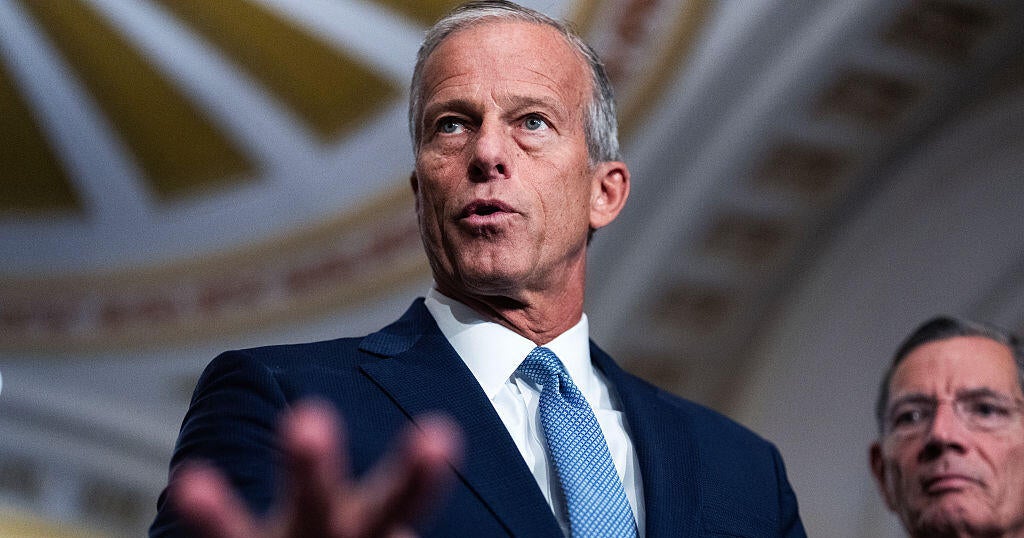
Thune told reporters on Thursday that he didn't know whether the House would be able to pass the bill as is, or need to make changes, noting that it's "been litigated now for months." "The best way to get anything done around here is for them to pick up the bill and pass it," Thune said. asserted
Thune → tell → it
"If it were to go over there and then come back over here, I mean, I don't know what I can't predict what happens. asserted
what → go → ?
I don't know what else you can add to it or detract from it. asserted
you → know → it
I think it's been through the full monty when it comes to the legislating process." asserted
it → think → process
Give feedback · no sign-in needed

No sign-in needed for now. Your note is sent without a name, so it cannot be answered.

History Support