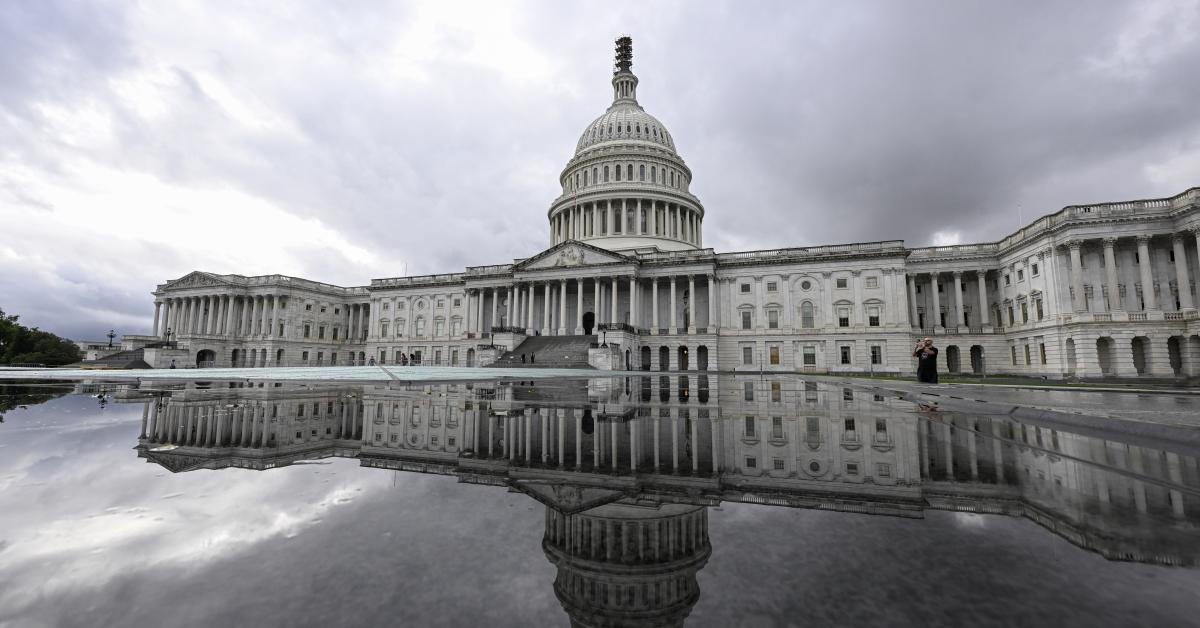
Photo via The Guardian

What to know about the US permitting bill, from datacenters to Trump’s arch

Read the original at The Guardian ↗
Cite

Milman, O. (2026, November 20). What to know about the US permitting bill, from datacenters to Trump’s arch. The Guardian. https://www.theguardian.com/us-news/2026/nov/20/what-to-know-permitting-bill-energy-passed

Dated from the outlet's own feed. Check the original for its byline.

The Guardian · collected 2026-11-20 · by Oliver Milman

Quick Summary

The US permitting bill, known as Baaja, aims to streamline the approval process for various infrastructure projects, including oil pipelines, power lines, and data centers. By setting a 150-day limit on legal challenges and weakening key environmental statutes, the bill seeks to accelerate construction. While it includes provisions to connect clean energy to urban areas faster, critics argue that it will also facilitate more fossil fuel development and limit future administrations' ability to revoke permits issued under the Trump era. Environmentalists like Al Gore and Jeff Merkley warn that the bill undermines efforts to address climate change by accelerating fossil fuel extraction and burning.
Written by AI on 2026-11-20, from this article's own text only (the story summary below draws on all the coverage).
See how they differ ↓

AI analysis

Story summary

The Senate passed the Bipartisan American Affordability and Jobs Act (BAAJA) on November 18, 2026, with a vote of 62-33, sending it to the House. The bill aims to streamline the process for building energy and infrastructure projects, reducing red tape for renewable energy, power lines, highways, data centers, and power plants. Senators Josh Hawley of Missouri and Mike Rounds of South Dakota were among the few Republicans who voted against the bill. Democrats argue it will save Americans approximately $60 to $80 each month and support economic growth, but environmental advocates like the Sierra Club and Earthjustice have criticized it for limiting public participation and judicial oversight. The bill now faces its final Senate vote before moving to the House.

Written for “US Senate Passes Permitting Reform Bill” on 2026-11-21, grounded in this article and the 16 other(s) covering the same event.

How they differ

14 outlets covered “US Senate Passes Permitting Reform Bill”.

What each outlet says

One AI summary per outlet of its latest article on this story, written from that article alone and checked against it. Open the article for the outlet's own words.

The GuardianThis outlet20 Nov

The US permitting bill, known as Baaja, aims to streamline the approval process for various infrastructure projects, including oil pipelines, power lines, and data centers. By setting a 150-day limit on legal challenges and weakening key environmental statutes, the bill seeks to accelerate construction. While it includes provisions to connect clean energy to urban areas faster, critics argue that it will also…

What to know about the US permitting bill, from datacenters to Trump’s arch (this article)2 articles from The Guardian on this story
Washington Examiner20 Nov

Thirty-three senators, including 31 Democrats and two Republicans, voted against a bipartisan bill in the Senate designed to streamline the construction of infrastructure projects such as roads, pipelines, and power lines. The bill, called the Bipartisan American Affordability and Jobs Act, aims to reduce permitting delays, which would allow for quicker approval of major infrastructure developments. The article…

The 31 Democrats and two Republicans who voted against permitting reform in the Senate →2 articles from Washington Examiner on this story
Just the News20 Nov

The Senate passed the Bipartisan American Affordability and Jobs Act, a permitting reform bill aimed at speeding up infrastructure project construction, in a 62-33 vote that included support from over a dozen Democratic senators. The bill faces opposition in the House and requires President Trump's signature to become law. Democrats supporting the bill claim it will have a significant climate impact and save…

Senate passes key permitting reform bill, sends legislation to the House →2 articles from Just the News on this story
Time19 Nov

On November 18, the Senate advanced the Bipartisan Affordability and American Jobs Act (BAAJA) of 2026, a bill designed to expedite infrastructure and energy project permitting. The bill, supported by over 300 solar and energy storage companies and the American Petroleum Institute, aims to reduce costs and streamline clean energy projects, potentially saving $50-78 per household annually by 2040. However, it faces…

Why the BAAJA Permitting Reform Bill Is Dividing Climate and Energy Advocates →
CBS News20 Nov

The Senate passed a bipartisan permitting reform bill with a 62 to 33 vote on Thursday, aimed at speeding up infrastructure and energy projects. The bill, known as the Bipartisan American Affordability and Jobs Act (BAAJA), seeks to streamline the permitting process to reduce costs and time delays, an issue that has gained attention due to rising energy prices. Republican Senator Shelley Moore Capito and others…

Senate passes bipartisan permitting bill designed to boost energy projects →
NBC News20 Nov

The Senate passed the Bipartisan American Affordability and Jobs Act with a vote of 62-33 on Thursday night. The bill aims to streamline permitting processes for energy and infrastructure projects by setting tighter deadlines for environmental reviews and reducing bureaucratic hurdles. Key supporters include Senators Shelley Moore Capito and Sheldon Whitehouse, while opposition comes from some environmental and…

Senate passes bill simplifying permitting rules to build in America, sending it to House →
Show 8 more outlets
Fox News20 Nov

Senate Republicans have advanced the Bipartisan American Affordability and Jobs Act of 2026 (BAAJA) through a major bipartisan vote, aiming to streamline infrastructure and energy development by accelerating environmental reviews and limiting legal challenges. The bill includes provisions to protect ratepayers from increased electricity costs due to data centers, requiring these centers to cover additional power…

Senate Republicans break through Washington gridlock with massive American energy, data center overhaul →
The Straits Times20 Nov

The US Senate has passed a landmark Bill designed to streamline the federal permitting process for major energy infrastructure projects, including pipelines and power lines, by a vote of 62 to 33 on November 19. This bipartisan measure, which has been under debate for weeks, aims to expedite approval for large-scale projects such as clean energy development and artificial intelligence data centers, while also…

US Senate passes landmark Bill to overhaul energy permitting →
The Hindu20 Nov

On November 19, 2026, the U.S. Senate passed the Bipartisan American Affordability and Jobs Act of 2026 with a 62-33 vote, aiming to expedite permitting reviews for energy infrastructure projects. The bill seeks to shorten timelines for large-scale projects and mandate data centers to pay for their energy usage. While major industry groups support the legislation, environmental organizations and some Democrats…

U.S. Senate approves bill to speed up permitting reviews, Democrats and environmental groups oppose →
NPR20 Nov

The Senate passed the Bipartisan American Affordability and Jobs Act on Thursday by a vote of 62-33, with support from fourteen Democrats and one Independent alongside Republicans. The bill aims to expedite the approval process for data centers and power plants to address rising energy costs and demand, particularly from AI. However, major environmental groups and some Democrats oppose the bill, arguing it will…

Senate passes bipartisan energy bill amid environmental concerns →
The Bulwark20 Nov

Andrew Egger discusses the weakening of President Trump's influence within the Republican Party as evidenced by the Senate's recent opposition to several of his nominees. Outgoing Republican senators, like John Cornyn and Thom Tillis, are increasingly blocking Trump’s picks, signaling internal fractures within the GOP. This trend is illustrated by the withdrawal of Dr. Heidi Overton’s nomination for the FDA…

The MAGA Crackup Around the Corner →
Times of India20 Nov

The U.S. Senate passed a bipartisan energy bill aimed at accelerating infrastructure development for major energy projects, including power plants and transmission lines. The bill, which passed with a vote of 62-33, also mandates that large AI data centers contribute more to the costs of grid upgrades necessary to meet their increased energy demands. President Donald Trump supported the bill, seeing it as a step…

US Senate passes energy bill requiring AI data centres to pay more for grid upgrades →
Al Jazeera20 Nov

The United States Senate passed a bipartisan bill aimed at expediting approvals for energy projects, including power plants and transmission lines, to address rising electricity costs and meet increased demand driven by AI growth. The vote was 62-33 on Thursday, with significant Democratic support despite concerns from environmental groups. The bill seeks to shorten federal review processes and limit legal…

US Senate passes bill to speed up energy project approvals →
Los Angeles Times20 Nov

The U.S. Senate has passed the Bipartisan American Affordability and Jobs Act (BAAJA), a permitting reform bill aimed at speeding up approvals for energy and infrastructure projects. This bill, which now moves to the House, would ease the construction of renewable energy transmission lines and fossil fuel pipelines, as well as data centers, potentially altering California's landscape significantly. While proponents…

From transmission lines to pipelines: What the Senate's permitting reform bill could mean for California →

Where they agree and split

Framing

How the first headlines put it

Stated as fact12
An achievement1
The headlines (13)

Why the BAAJA Permitting Reform Bill Is Dividing Climate and Energy Advocates Time · stated as fact

Senate passes bipartisan permitting bill designed to boost energy projects CBS News · stated as fact

Senate passes bill simplifying permitting rules to build in America, sending it to House NBC News · stated as fact

Senate Republicans break through Washington gridlock with massive American energy, data center overhaul Fox News · stated as fact

Senate passes key permitting reform bill, sends legislation to the House Just the News · stated as fact

US Senate passes landmark Bill to overhaul energy permitting The Straits Times · stated as fact

U.S. Senate approves bill to speed up permitting reviews, Democrats and environmental groups oppose The Hindu · stated as fact

Senate passes bipartisan energy bill amid environmental concerns NPR · stated as fact

The MAGA Crackup Around the Corner The Bulwark · stated as fact

US Senate passes energy bill requiring AI data centres to pay more for grid upgrades Times of India · stated as fact

US Senate approves bill to speed up permitting reviews for energy projects and datacenters The Guardian · stated as fact

US Senate passes bill to speed up energy project approvals Al Jazeera · stated as fact

Senate passes historic bill to cut environmental red tape on energy projects Washington Examiner · an achievement

The full story: what happened, how it changed, and all 17 articles →

Compared with similar articles

This article reads leans right and hedges 20% of its claims. Each row says how that neighbour differs.
NBC News
Hedges 1 of 24 claims Outlet record 77/100
Fox News
Leans right Hedges 0 of 19 claims Outlet record 66/100
Just The News
Leans right Hedges 0 of 9 claims Outlet record 58/100
The Straits Times
Leans right Hedges 0 of 12 claims Outlet record 64/100
Just The News
Leans right Hedges 0 of 9 claims Outlet record 58/100
Al Jazeera
Leans right Hedges 2 of 24 claims Outlet record 60/100
CBS News
Hedges 6 of 34 claims Outlet record 66/100
Washington Examiner
Leans right Hedges 0 of 2 claims Outlet record 67/100
The Hindu
Leans right Hedges 1 of 43 claims Outlet record 78/100
The Guardian
Leans right Hedges 1 of 39 claims Outlet record 64/100

Story

US Senate Passes Permitting Reform Bill
Politics · 17 article(s) covering the same event. Compare every outlet's account →
How this article was measured signals, leaning charts, publisher record, byline, topics and claims

Signals How these are calculated →

Claims extracted
59
sentences that state something as happening or true
Uncertain
20%
12 of 59 hedged ("reportedly", "may", "according to")
Leaning
Leans right
of the writing, not the subject · beta estimate
Publisher signals
64/100
The Guardian's corrections and hedging, across everything collected from it. Not a measure of accuracy.
Outlets on this story
17
Politics
Same framing elsewhere
1
articles that frame the event the way this one does
Analyzed 2026-11-20 · how these are computed

How this is being covered How these are calculated →

Article leaning vs. publisher reliability
Source leaning vs. consistency

Publisher

The Guardian · 2645 article(s) · 9 correction(s) detected
Running correction rate · 9 correction(s)

Who wrote this

Oliver Milman
20 article(s) here · 1 carrying a prediction
Energy-hungry datacenters will get their power more quickly, which in the US is mostly being derived from gas, a planet-heating fossil fuel .
“Sadly, it doesn’t surprise me that the majority of hyperscale datacenters rely on fossil fuels for their power generation despite the profound and lasting climate and health impacts that could be, and should be, avoided,” said Gina McCarthy, a former climate adviser to Joe Biden’s administration who said that the study is an “important step” to assessing the impact of datacenters.
Locals in the nearby towns of Waterloo and Seneca Falls, the latter famed as the birthplace of the women’s rights movement in the US, had hoped the bulging landfill would be closed when its permit expired last year.
Hilda Heine, one of a handful of Pacific Island leaders to make an impassioned speech at Cop31 on Wednesday, told other heads of state that overshooting the 1.5C Paris temperature target would mean waves eating away their shores and floods that destroy towns, schools and hospitals.
Climate scientists confirmed this year that global heating would reach at least 1.8C – beyond the 1.5C temperature goal that countries promised to aim for at talks in Paris in 2015.
The high-stakes meeting begins on Monday, as countries around the world grapple with the strongest El Niño weather system on record, supercharged by fossil fuels, which is set to take hundreds of thousands of lives and cause damage costing trillions of dollars.
There has been a surge of early voting for the US midterm elections, with millions more Americans going to the polls compared with the last such election amid a series of tight contests that will determine control of Congress.
In July, the Federal Communications Commission (FCC) approved Reflect Orbital’s proposal to launch an initial demonstration satellite next year, which will orbit the Earth and, via a 59-foot-diameter mirror, reflect sunlight in 3-mile-wide beams in strengths from moonlight up to the brightness of the sun at noon.
In July, the Federal Communications Commission (FCC) approved Reflect Orbital’s proposal to launch an initial demonstration satellite next year, which will orbit the Earth and, via a 59ft-diameter mirror, reflect sunlight in 3-mile-wide beams in strengths from moonlight up to the brightness of the sun at noon.
“We’re restoring sanity in our approach to energy and rejecting the agenda of the radical green zealots,” he said in a post on the X social media platform when making climate a lower state priority in May 2024.
Also by Oliver Milman
Nothing else under this byline is closely related to this article, so these are simply their most recent.
All 20 articles by Oliver Milman →

Topics

Bloomberg Cushing Democrats Oklahoma Senate

Subjects

Democrats NORP · 4× Whitehouse PERSON · 3× Democratic NORP · 2× Jeff Merkley PERSON · 2× Senate ORG · 2× Sheldon Whitehouse PERSON · 2× Trump PERSON · 2× Cushing GPE · 1× Nick Oxford PERSON · 1× Oklahoma GPE · 1×

Narrative

Whitehouse points out that environmental laws have long been used as roadblocks to aid the natural world, from the halting of oil pipelines to stopping the slaughter of whales, but now they are hindering the rapid buildout of clean energy projects required to address the climate crisis. Removing such restraints will allow plenty of new dirty energy, too, but about 85% of all generation stuck waiting to come online in the US is solar, wind and battery storage.
framing: mixed · carried by 1 article(s) · first seen 2026-11-20
Energy-hungry datacenters will get their power more quickly, which in the US is mostly being derived from gas, a planet-heating fossil fuel .

Claims (59 extracted, 12 hedged)

essentially makes it far easier to build things of all descriptions: oil pipelines, power lines, wind farms, datacenters and much more. asserted
it → make → descriptions
It does this by restricting the often lengthy legal challenges to new projects, such as setting a 150-day limit on lawsuits, and weakening the role of key environmental statutes such as the Clean Water Act and the Endangered Species Act in determining the approval of new construction. asserted
It → do → construction
Energy-hungry datacenters will get their power more quickly, which in the US is mostly being derived from gas, a planet-heating fossil fuel . asserted
which → get → gas
Large datacenters will, though, be forced to pay for their own grid and power costs in order to shield nearby communities. asserted
datacenters → force → communities
The permitting of new transmission lines, crucial in connecting clean energy to where it is needed, is streamlined with more regional co-ordination in the process. asserted
it → connect → process
This element of the bill, which could cut the time to build power lines in half, has been roundly praised by Democrats and green groups. uncertain
which → cut → Democrats
But the US will essentially be handcuffed to anything approved by the Trump administration, which has sought to throttle clean energy projects while attempting to boost fossil fuel development wherever possible . asserted
which → handcuff → development
Baaja makes it much harder for future administrations and even judges to revoke or amend permits, even if they were issued in a flawed way, and provides companies, including fossil fuel firms, the right to hefty compensation if they can show they were slowed down in some way by the government. What are environmentalists saying? asserted
environmentalists → make → What
Slashing environmental rules may speed up clean energy projects but will also “accelerate the extraction and burning of fossil fuels”, according to Jeff Merkley, a Democrat set to be the new chair of the Senate environment committee. uncertain
rules → slash → committee
Al Gore, the former US vice-president, told the Guardian the bill was a “serious mistake” as it would be used by Trump to “lock in a lot of new pipelines and fossil fuel facilities”. asserted
it → tell → pipelines
Most environmental groups are aghast, arguing the recent midterm elections show Americans want stronger restrictions on datacenters and other polluting facilities. asserted
Americans → argue → datacenters
“It’s hard to imagine a more tone-deaf rejection of the American people,” said Brett Hartl, government affairs director at the Center for Biological Diversity. asserted
Hartl → ’ → Diversity
“Senate Democrats have decided to approve the largest giveaway in history to big polluters, the datacenter industry and tech oligarchs.” asserted
Democrats → decide → polluters
What are supporters saying? asserted
supporters → say → What
APProponents point out that this could be the best, perhaps only, window to enable the construction of renewable projects currently bogged down in a morass of regulatory delays and objections. uncertain
this → point → delays
Waiting for an “imaginary perfect bill” when Democrats take control of Congress in January will mean nothing if Trump won’t sign it, Sheldon Whitehouse, a Democratic senator and co-sponsor of the bill, pointed out. “I think we’re in a real crisis and I think we have to take what we can while we can and then continue to work,” he said. asserted
he → wait → crisis
Whitehouse added that the urgency of spiraling global heating means “we have to keep going with this, because we are failing right now”. asserted
we → add → this
Why has it divided Democrats and environmentalists? asserted
it → divide → Democrats
Democratic senators, Whitehouse and Martin Heinrich, co-authored the bill with two Republicans – senators Shelley Moore Capito and Mike Lee – and have said they did so to secure a rare compromise to fix the sluggish and costly way that the US builds infrastructure. asserted
US → co → infrastructure
Whitehouse points out that environmental laws have long been used as roadblocks to aid the natural world, from the halting of oil pipelines to stopping the slaughter of whales, but now they are hindering the rapid buildout of clean energy projects required to address the climate crisis. Removing such restraints will allow plenty of new dirty energy, too, but about 85% of all generation stuck waiting to come online in the US is solar, wind and battery storage. asserted
% → point → US
Expediting this should lead to some, albeit modest, reductions in greenhouse gas emissions – cutting up to 1.5bn tons of pollution in total by 2040, according to Rhodium Group . uncertain
Expediting → expedite → Group
“If we can create an open, competitive, level playing field, clean is cheap and cheap wins in the marketplace,” Heinrich said. asserted
Heinrich → create → marketplace
The midterm elections were centered on the cost of living and proponents point out that household electricity bills will drop, by as much as $78 a year by 2040 in Rhodium’s analysis. asserted
bills → center → analysis
Negotiating the bill’s trade-offs “wasn’t easy”, Heinrich conceded, but “we don’t have to wait another year to deliver relief. asserted
we → negotiate → relief
We can act right now.” asserted
We → act → ?
But critics dismiss the cost savings and emissions reductions as meagre in comparison with allowing the fossil fuel industry, which has enthusiastically backed the bill, a permanent pass to push through polluting pipelines and power plants with scant recourse. asserted
which → dismiss → recourse
The emissions trend will depend a lot on what is now approved, with the current administration weighted heavily towards fossil fuels, and the future cost competitiveness of clean energy, both variables that could swing against the effort to do something about the climate crisis. uncertain
that → depend → crisis
In a worst-case scenario, emissions could flatline or even increase . uncertain
emissions → flatline → scenario
“This bill will deliver a mere $5 a month in savings 15 years from now but deliver a huge win for big tech and big oil right now,” said Merkley, who has criticized the pace of the bill, which was voted on without any hearings. asserted
which → deliver → hearings
This lack of consultation has alarmed public lands advocates and Native American groups who fear that previously protected landscapes will now be opened up for oil and gas drilling. asserted
landscapes → alarm → drilling
“The bill was written behind closed doors without consulting tribal nations,” said Ira Matt, executive director of the National Association of Tribal Historic Preservation Officers. asserted
Matt → write → Officers
“It ignores the real causes of permitting delays and weakens requirements for federal agencies to consult with tribal nations and consider how projects could harm places of historic, cultural or spiritual importance to us.” A better option, Merkley, Gore and most environmental groups have argued, is for a stronger bill to be crafted when Democrats take control of Congress in January. uncertain
Democrats → ignore → January
It’s unclear how much support there would be from Republicans, including Trump, for this, however. uncertain
It → ’ → this
“We can make it easier to build good things without selling out our friends and neighbors,” Merkley said. asserted
Merkley → make → friends
“Let’s do that in January with a Democratic majority writing the bill, not fossil fuel companies and their lobbyists.” What has Ezra Klein got to do with this? asserted
Klein → let → this
, Baaja is a legislative expression of the idea that building things in the US has become too slow, onerous and sclerotic. asserted
building → build → US
The US, the argument goes, has crumbling bridges, lacks high-speed rail and can’t erect integrated electrical grids because of a thicket of regulations and legal veto points that have been weaponized by nimbys, well-meaning advocates and special interests. asserted
that → go → nimbys
Such viewpoints were summed up in Abundance, a widely discussed 2025 book by journalists Ezra Klein and Derek Thompson that points to the US’s inability to build and innovate as a major national problem. asserted
that → sum → problem
Klein, the New York Times columnist, has become an advocate of Baaja, opining that it is the most consequential rewriting of permitting laws in recent history and that “leaving the system unchanged is a guarantee of calamity”. asserted
leaving → become → calamity
He did express some concern, however, over how some of the vaguer elements of the bill will be applied by judges and others. asserted
some → express → judges
…and 19 more, not listed.
Give feedback · no sign-in needed

No sign-in needed for now. Your note is sent without a name, so it cannot be answered.

History Support