Photo via The Hindu

West Asia crisis 'largest threat' to energy security ever: IEA

Read the original at The Hindu ↗
Cite

AFP. (2026, November 19). West Asia crisis 'largest threat' to energy security ever: IEA. The Hindu. https://www.thehindu.com/news/international/west-asia-crisis-largest-threat-to-energy-security-ever-iea/article71718854.ece

Dated from the outlet's own feed. Check the original for its byline.

The Hindu · collected 2026-11-19 · by AFP

Quick Summary

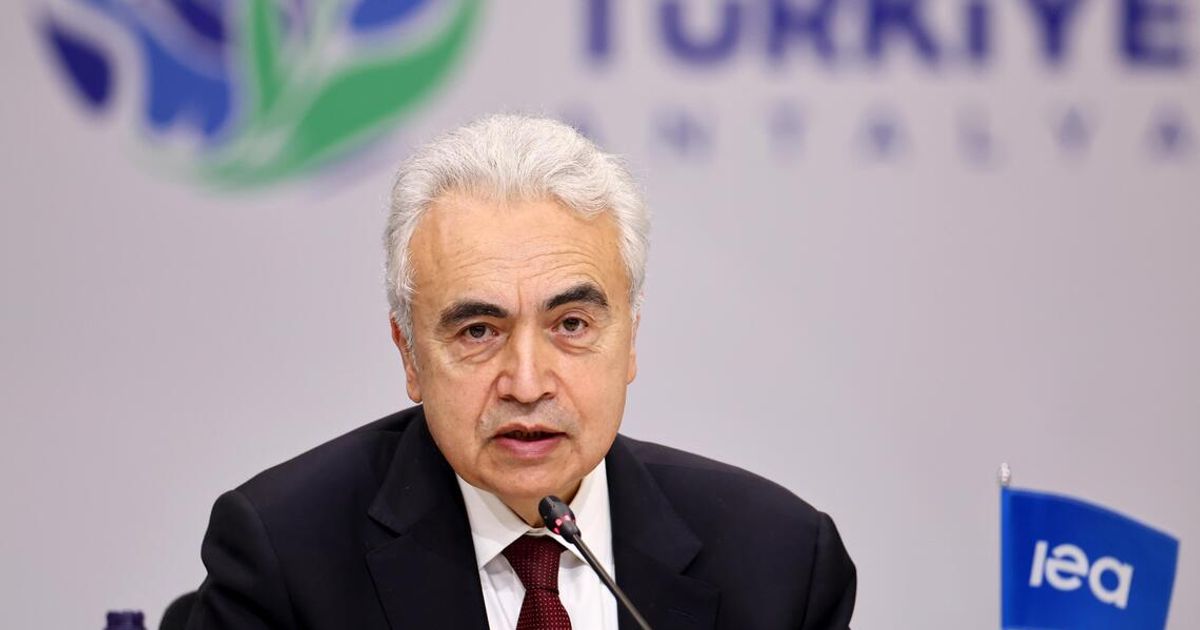
The International Energy Agency (IEA) declared on November 19, 2026, that the crisis in West Asia, initiated by U.S. and Israeli strikes on Iran in February, constitutes the largest threat to global energy security ever recorded. The IEA's annual World Energy Outlook report states that disruptions in oil supply through the Strait of Hormuz have severely impacted energy markets, with Gulf countries struggling to export oil. IEA Executive Director Fatih Birol emphasized that while governments have intervened to protect consumers, higher prices and supply shortages are inevitable.
Written by AI on 2026-11-20, from this article's own text only (the story summary below draws on all the coverage).
See how they differ ↓

AI analysis

Story summary

The International Energy Agency (IEA) has warned that there is no credible pathway back to the energy market as it stood before the Iran war, which began in February. The crisis, triggered by the US and Israeli bombing of Iran, has created the largest threat to global energy security in history, surpassing previous shocks like those of the 1970s. The Strait of Hormuz, which carried about one-fifth of global oil shipments pre-crisis, has seen transits fall to near zero, severely disrupting oil supplies and driving up costs for consumers. IEA Executive Director Fatih Birol emphasized that the longer the crisis continues, the harder it will be for global energy markets to recover, leaving lasting impacts on the energy sector and economy.

Written for “Middle East Conflict Threatens Energy Security” on 2026-11-22, grounded in this article and the 3 other(s) covering the same event.

How they differ

4 outlets covered “Middle East Conflict Threatens Energy Security”.

What each outlet says

One AI summary per outlet of its latest article on this story, written from that article alone and checked against it. Open the article for the outlet's own words.

The HinduThis outlet19 Nov

The International Energy Agency (IEA) declared on November 19, 2026, that the crisis in West Asia, initiated by U.S. and Israeli strikes on Iran in February, constitutes the largest threat to global energy security ever recorded. The IEA's annual World Energy Outlook report states that disruptions in oil supply through the Strait of Hormuz have severely impacted energy markets, with Gulf countries struggling to…

West Asia crisis 'largest threat' to energy security ever: IEA (this article)
City A.M.18 Nov

Fiath Birol, the executive director of the International Energy Agency, warns that there is no credible pathway back to the energy market situation prior to the Iran war, citing severe disruptions in the Strait of Hormuz. Birol states that the uncertainty created by the conflict has led to a significant decrease in shipping traffic through the waterway, with transits dropping to near zero at the war's peak from…

Global energy watchdog warns ‘no credible way’ back to pre-Iran war energy markets →
The Straits Times19 Nov

The International Energy Agency released a report on November 19 stating that the world cannot return to pre-Iran war energy conditions due to significant disruptions. The report highlights that the Iran conflict has significantly altered the global energy landscape, with lasting impacts on how countries secure and afford electricity, potentially favoring renewable technologies and nuclear power while maintaining…

No going back ‘to the way it was’ before the Iran war’s energy shock, IEA says →
Euronews20 Nov

The International Energy Agency (IEA) has warned that the Middle East conflict, exacerbated by recent US and Israeli military actions against Iran, poses the greatest threat to global energy security in history. Disruptions to oil supplies through the Strait of Hormuz have led to significant price increases, affecting consumers worldwide. IEA Executive Director Fatih Birol stated in the agency’s World Energy Outlook…

Middle East conflict poses biggest threat to global energy security in history, IEA warns →

Where they agree and split

The full story: what happened, how it changed, and all 4 articles →

Compared with similar articles

This article reads leans left and hedges 8% of its claims. Each row says how that neighbour differs.
The Straits Times
Centre further right than this Hedges 5 of 40 claims Outlet record 64/100
Toronto Star
Hedges 0 of 3 claims Outlet record 65/100
“The articles describe related but distinct events: one about the IEA's warning on the current West Asia crisis and its impact on energy security, and the other about Japan's proposal for an Asian energy framework to counter oil crises.”
City AM
Hedges 2 of 15 claims Outlet record 95/100
Euronews
Hedges 1 of 20 claims Outlet record 60/100
The Straits Times
Leans strongly right further right than this Hedges 4 of 26 claims Outlet record 64/100
“The articles discuss related consequences of the conflict in Iran but describe different aspects: one focuses on Iranian internal issues and gas shortages, while the other discusses the broader impact on energy security as warned by the IEA.”
Al Jazeera
Leans left Hedges 6 of 42 claims Outlet record 60/100
“The articles discuss related issues but describe different specific events: one about Iran's natural gas shortages and the other about the broader impact of the crisis in West Asia on energy security.”
Dawn
Hedges 5 of 41 claims Outlet record 65/100
“The articles discuss related topics but describe different specific events and timeframes.”

Story

Middle East Conflict Threatens Energy Security
World · 4 article(s) covering the same event. Compare every outlet's account →
How this article was measured signals, leaning charts, publisher record, byline, topics and claims

Signals How these are calculated →

Claims extracted
13
sentences that state something as happening or true
Uncertain
8%
1 of 13 hedged ("reportedly", "may", "according to")
Leaning
Leans left
of the writing, not the subject · beta estimate
Publisher signals
78/100
The Hindu's corrections and hedging, across everything collected from it. Not a measure of accuracy.
Outlets on this story
4
World
Same framing elsewhere
1
articles that frame the event the way this one does
Analyzed 2026-11-20 · how these are computed

How this is being covered How these are calculated →

Article leaning vs. publisher reliability
Source leaning vs. consistency

Publisher

The Hindu · 1476 article(s) · 2 correction(s) detected
Running correction rate · 2 correction(s)

Who wrote this

AFP
1347 article(s) here · 1 carrying a prediction
"We will not endorse a cover decision... that does not even mention fossil fuels, which is the key driver of climate change," said Ireland's Climate Minister, Darragh O'Brien, whose country holds the rotating EU Presidency.
2026-11-22 · assertive framing · COP31 fails to agree on climate deal in chaotic finale
At the same press conference, Wahyu Hidayati, a police disaster victim identification official, said the intensity of the fire had rendered the recovered victims unidentifiable via visual inspection, prompting efforts to collect DNA samples from relatives and the personal belongings of the missing workers, a process that could take two to three weeks.
“We will not endorse a cover decision, or an Antalya Pact, that does not even mention fossil fuels, which is the key driver of climate change,” Mr. O’Brien told a chaotic closing session a record 44 hours after the summit’s official end.
"Further details on casualties from both sides will be shared later on with the media," the officer said.
2026-11-22 · assertive framing · Rebels kill 15 in South Sudan
“Two radars belonging to the US Army’s Patriot air defence systems… were struck,” it said, adding that any violation of Iranian airspace will be met with a “harsh and decisive response”.
One body bag might contain body parts from several people, police said.
“That would have been hard to take him out that close to 50.”
The next edition, initially slated for April 2027, will now take place in October, Beijing-based Koryo Tours, which describes itself as the marathon's exclusive partner, said.
So we could not determine whether the company’s protection system was functioning properly or not,” he said.
2026-11-22 · assertive framing · Three dead, 36 missing after Indonesia factory fire
They "undermine the stability of China-U.S. economic and trade relations", it said, urging Washington to "revoke" the steps and warning China may take its own "necessary measures".
Wire or desk byline, not an individual reporter.
Also by AFP
Nothing else under this byline is closely related to this article, so these are simply their most recent.
All 1347 articles by AFP →

Topics

IEA Iran Israeli U.S. the International Energy Agency

Subjects

IEA ORG · 4× Birol ORG · 3× Iran GPE · 2× Israeli NORP · 2× U.S. GPE · 2× China GPE · 1× Fatih Birol PERSON · 1× Turkiye PERSON · 1× the International Energy Agency ORG · 1× the United States GPE · 1×

Narrative

The agency uses three scenarios for its energy outlook: a cautious one takes into account policies that are currently in place, a middle scenario looks at "stated" government policies including measures that have yet to be adopted, and a third considers a world that reaches net zero emissions by 2050. In its middle scenario, the IEA forecasts that global oil demand will reach a peak around 2030 before a slow decline, while gas demand would increase until around 2035.
framing: assertive · carried by 1 article(s) · first seen 2026-11-20
The crisis, just like previous energy shocks, would certainly leave "lasting marks", the agency warned.
2026-11-20 · The Hindu
West Asia crisis 'largest threat' to energy security ever: IEA · assertive framing

Claims (13 extracted, 1 hedged)

The crisis in West Asia sparked in February by the U.S. and Israeli bombing of Iran has created the "largest threat" to energy security in history, the International Energy Agency (IEA) warned on Thursday (November 19, 2026). asserted
Agency → spark → Thursday
The agency said in its flagship annual World Energy Outlook that consumers were increasingly footing the bill as the world runs out of ways to absorb the impact of the conflict on energy supplies. asserted
world → say → supplies
The crisis, just like previous energy shocks, would certainly leave "lasting marks", the agency warned. asserted
agency → leave → marks
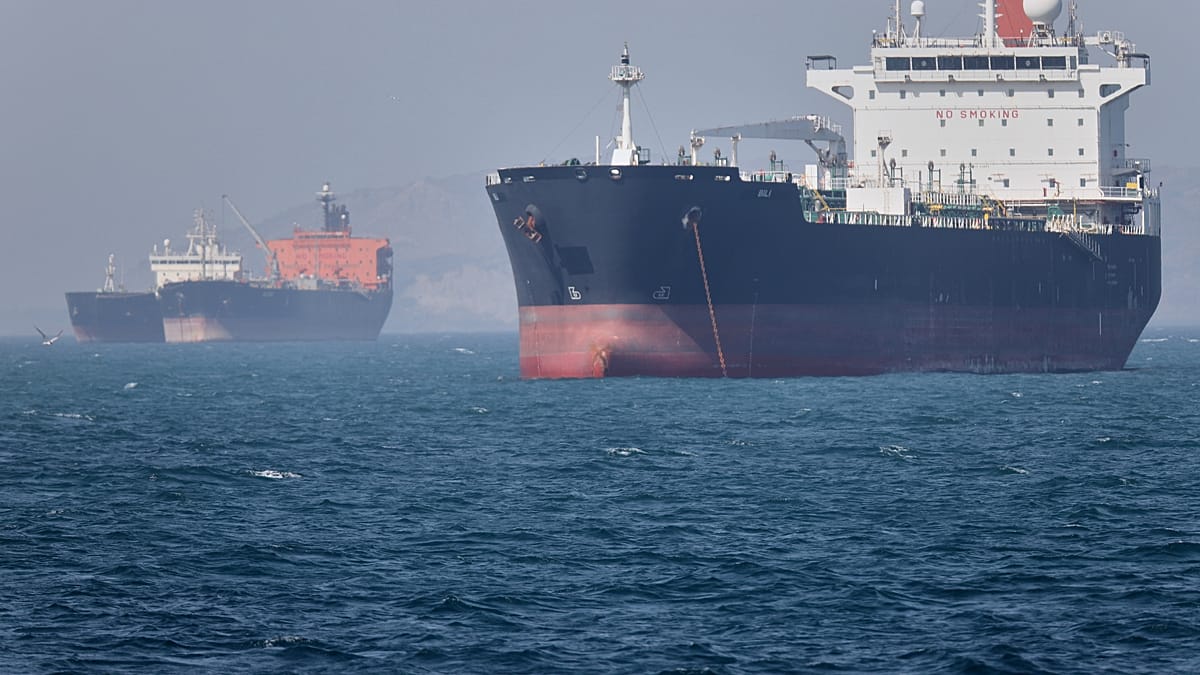
Gulf countries have been struggling to export oil since Iran began blockading the Strait of Hormuz and targeting tankers in the area, following U.S. and Israeli strikes that sparked the crisis in February. asserted
that → struggle → February
Despite attempts by the United States to escort vessels through the channel — which pre-crisis carried about one-fifth of global oil shipments — supply lines remain severely disrupted. "The Strait of Hormuz crisis has created the largest threat to energy security in history, one that dwarfs the scale of the oil shocks of the 1970s," IEA Executive Director Fatih Birol wrote in his foreword to the report. asserted
Birol → escort → report
He highlighted the efforts countries had taken to protect households, with producing nations bringing more supplies into the market and using alternative routes, and China buying less from international markets. "Governments have intervened to try and provide some shelter for consumers, but they have nonetheless faced higher prices and, in some cases, shortfalls of supply," Mr. Birol wrote. asserted
Birol → highlight → supply
The report said elsewhere that "increasingly it is falling to consumers — and high prices — to absorb the impact as other buffers are run down". asserted
buffers → say → impact
Mr. Birol had struck a more hopeful tone in July when he wrote that the oil market was still benefiting from "several cushioning factors". asserted
market → strike → factors
'No pathway' back The IEA's report comes as nations meet for the COP31 climate talks in Turkiye, with governments under pressure to tackle climate change after a year of searing heatwaves and wildfires in Europe, and deadly floods in Nepal. asserted
governments → come → Nepal
The agency uses three scenarios for its energy outlook: a cautious one takes into account policies that are currently in place, a middle scenario looks at "stated" government policies including measures that have yet to be adopted, and a third considers a world that reaches net zero emissions by 2050. In its middle scenario, the IEA forecasts that global oil demand will reach a peak around 2030 before a slow decline, while gas demand would increase until around 2035. asserted
demand → use → 2035
For this report, it also adds two other scenarios based on what might happen if the West Asian crisis persists. uncertain
crisis → add → scenarios
"While the energy sector and the global economy have shown considerable resilience, the longer the crisis lasts, the deeper the effects will be," Mr. Birol said in a press release. asserted
Birol → show → release
"And I don't see any credible pathway for the energy world to return to the way it was before." asserted
it → see → way
Give feedback · no sign-in needed

No sign-in needed for now. Your note is sent without a name, so it cannot be answered.

History Support