- Published
Myanmar has been found guilty of committing genocide against its Rohingya minority by the International Court of Justice (ICJ).
asserted
Myanmar → publish → Justice
The verdict marks the first time a state has ever been found to have committed genocide by an international court.
asserted
state → mark → court
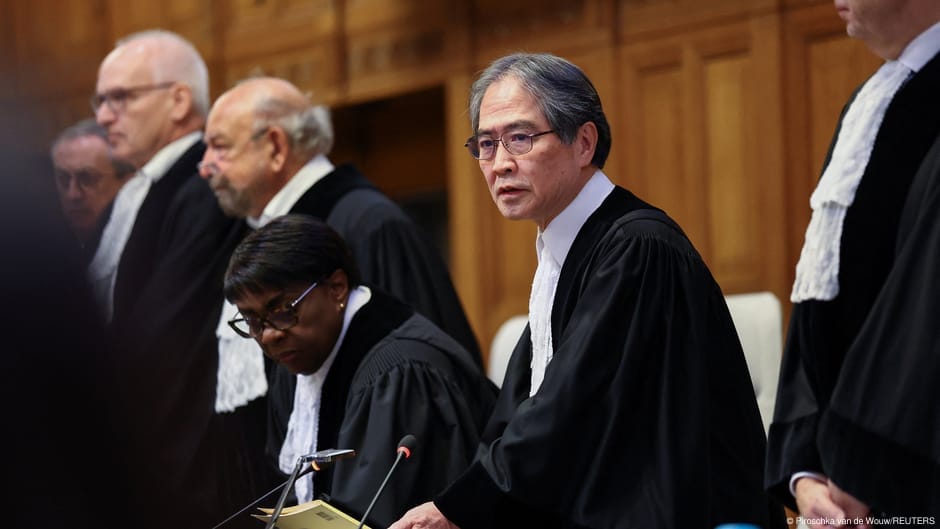
Yuji Iwasawa, president of the UN's top court, said Myanmar had the "intention to destroy" a substantial part of the Rohingya population and engaged in "extensive destruction of evidence" to hide its crimes.
asserted
Myanmar → say → crimes
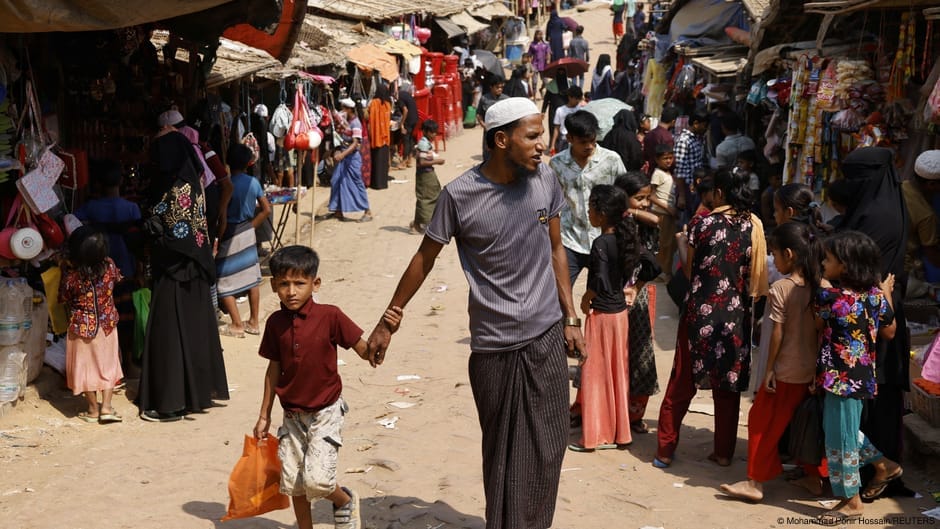
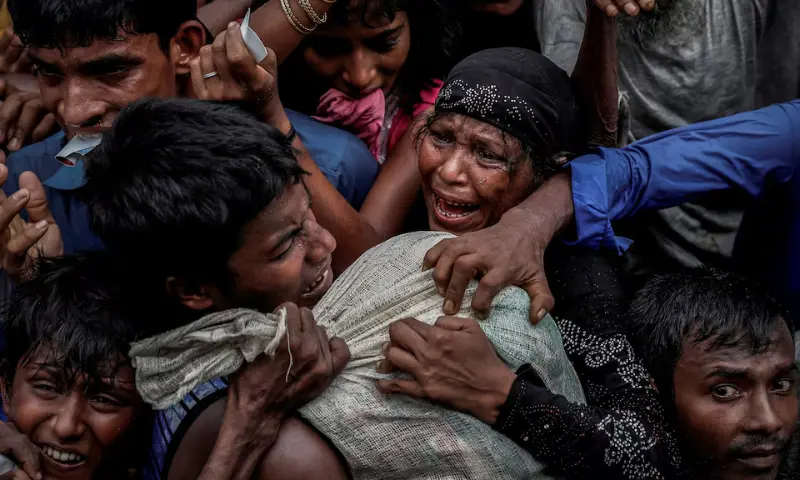
A military crackdown in 2017 killed thousands of Rohingya and forced more than 700,000 to flee Buddhist-majority Myanmar, formerly known as Burma.
asserted
crackdown → kill → Burma
Myanmar denied the claims against it, saying its forces had responded to attacks by armed groups.
uncertain
forces → deny → groups
The court found on Thursday that "genocidal intent is the only reasonable inference that can be drawn from the evidence" it had seen.
asserted
it → find → evidence
The verdict was reached by a majority of nine votes to six among a panel of judges from around the world.
asserted
verdict → reach → world
The ICJ also found in favour by majority that Myanmar had violated several other parts of the 1948 Genocide Convention.
asserted
Myanmar → find → Convention
The case brought by The Gambia centred around so-called "clearance operations" initiated in 2017 in Rakhine State, where many of the Rohingya Muslim minority resided.
asserted
many → bring → minority
After fighters from the Arakan Rohingya Salvation Army (Arsa) launched deadly attacks on more than 30 police posts there, Myanmar troops, backed by local Buddhist mobs, launched a wave of violence, prompting a mass exodus of Rohingya.
asserted
troops → launch → Rohingya
Refugees recounted entire villages being burned down and the mass killing of civilians, while numerous survivors and eyewitnesses provided testimony that the Myanmar military had also raped and abused Rohingya women and girls.
asserted
military → recount → women
The ICJ determined that around 10,000 Rohingya were "violently killed" during the clearance operation, while more than 700,000 are thought to have fled to Bangladesh by foot or by sea.
asserted
700,000 → determine → sea
The court found that approximately 815,000 had been targeted in some way.
asserted
815,000 → find → way
Iwasawa said Myanmar's military engaged in "indiscriminate" killings, the execution of men, "widespread" sexual violence, "extreme violence" against children and the deliberate burning of Rohingya homes.
asserted
military → say → homes
He said the military had also attacked Rohingya as they were fleeing to Bangladesh.
asserted
they → say → Bangladesh
Myanmar, he added, had engaged in "extensive destruction of evidence" by burning or disposing of bodies, burned and bulldozed sites that were cleared and failed to prosecute those who had perpetrated the acts of violence.
asserted
who → add → violence
While the ICJ recognised the role Arsa played, it found there was "overlap" between an "anti-Rohingya hate speech campaign" - which portrayed the Rohingya as "sub-human" and "a violent threat" - and the clearance operations that made violence against the population more likely.
asserted
violence → recognise → population
Myanmar consistently denied genocide against the Rohingya, saying its operations had targeted militant or insurgent threats in response to the Arsa attacks.
asserted
operations → deny → attacks
In January, government representative Ko Ko Hlaing told the ICJ that the country "was not obliged to remain idle and allow terrorists to have free reign".
asserted
terrorists → tell → reign
He said he had "no comment" following Thursday's verdict.
asserted
he → say → verdict
The ICJ also looked at the wider treatment of Rohingya leading up to the clearance operation and found that policies like limiting married couples to two children were discriminatory and aimed to erode their rights.
asserted
policies → look → rights
It said Myanmar had an obligation to pay proportionate reparations, but said an exact figure could be determined at a later date.
uncertain
figure → say → date
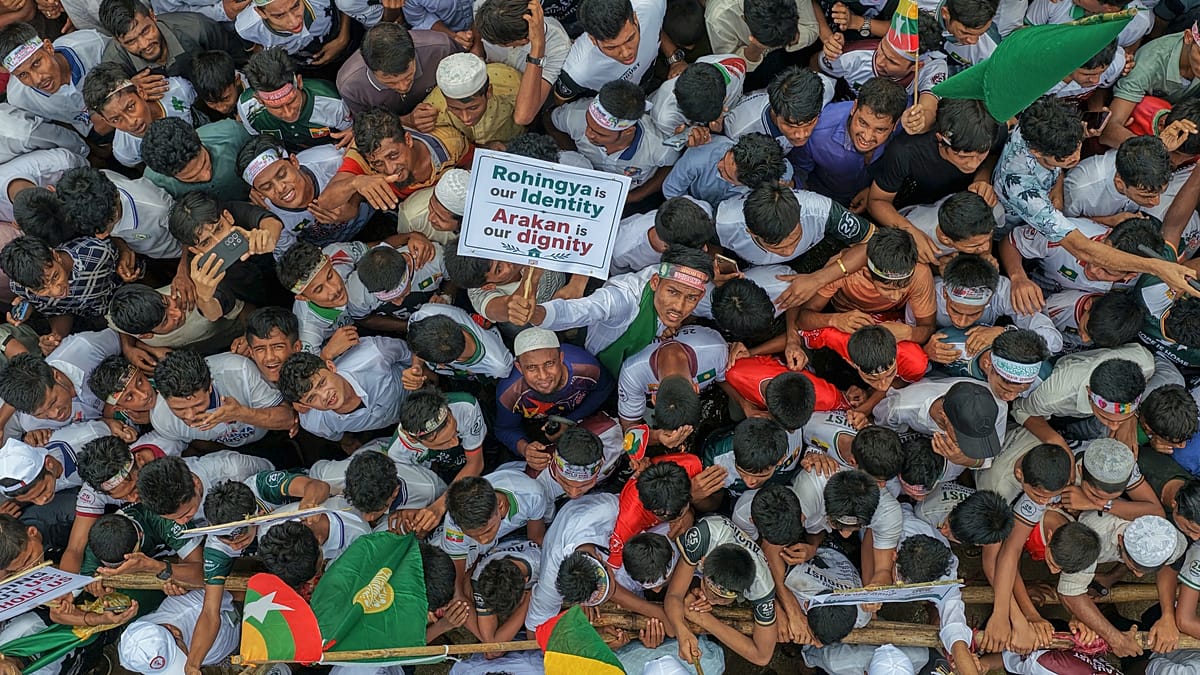
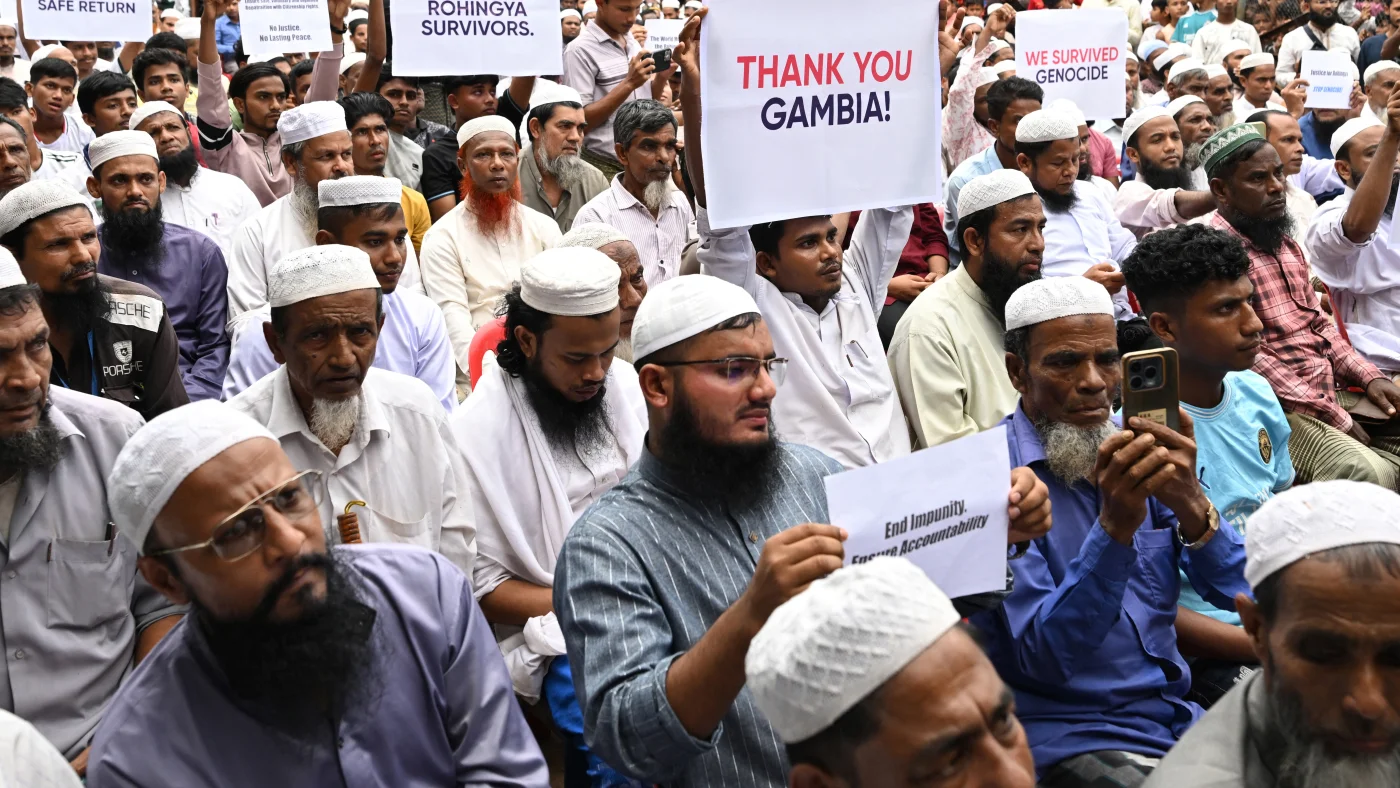
The court's decision was welcomed by Rohingya communities and human rights groups.
asserted
decision → welcome → communities
"This is like formal recognition of our suffering," says Mohammed Nowkim, a Rohingya who was driven out of Rakhine in 2017 and now lives in Canada.
asserted
who → say → Canada
"The Rohingya have been waiting for justice for decades."
asserted
Rohingya → wait → decades
Human Rights Watch said the ruling was "long-awaited recognition of the suffering the Rohingya have endured".
asserted
Rohingya → say → suffering
Meanwhile, UN human rights chief Volker Türk said the "suffering, misery and humiliation" inflicted on the Rohingya people was a "stain on the conscience of humanity".
asserted
suffering → say → humanity
He added that the court's decision "must now translate into real action".
asserted
decision → add → action
To implicate the Myanmar government in genocide, the court had to determine not just that terrible acts had been committed, but that there was an intent on the part of officials or arms of the state to partially or completely destroy the group.
asserted
acts → implicate → group
Myanmar now carries the stain of being the first state to have been found to have violated the 1948 Genocide Convention.
asserted
Myanmar → carry → Convention
The ICJ has only twice before ruled on claims of state-backed genocide in the years since the Genocide Convention was signed in the aftermath of the Holocaust, in both cases finding there was insufficient evidence to attribute the actions to the state.
uncertain
Convention → rule → state
Dozens of individuals have been found guilty of genocide, but finding their actions were at the direct behest of the state requires a higher evidential bar to prove genocide, the gravest of crimes under international law.
asserted
actions → find → law
Philippe Sands KC, a top human rights lawyer who helped bring the case, described it as an "historic judgment".
asserted
who → help → judgment
He told BBC Radio 4's World at One programme that it was "right up there with the great moments of international justice: Nuremberg, Pinochet, and others", referring to the trials of Nazi leaders following World War Two and that of the Chilean dictator, respectively.
However, the ICJ is not a criminal court and its powers of enforcement are limited.
asserted
powers → tell → enforcement
It cannot send military officials to prison, while it relies on the UN Security Council and political pressure to impose its rulings.
asserted
it → send → rulings
The ruling will, though, have implications for other genocide cases pending with the ICJ, including one brought by South Africa against Israel over its war in Gaza.
asserted
ruling → have → Gaza
Sands said that pending case had been the "elephant in the room" during the Myanmar hearings.
asserted
case → say → hearings
He added that, while ruling against Myanmar did not mean the court would find similarly with Gaza, if it had not found Myanmar responsible, the case against Israel "would, in effect, be over".
asserted
case → add → effect
Israel says the case against it is "wholly unfounded".
asserted
case → say → it
Antonia Mulvey, executive director of Legal Action Worldwide, told the BBC that the court had not accepted Myanmar's counter-terrorism defence and had found for the first time that rape and sexual violence was an act of genocide, positions it would bear in mind for future cases.
asserted
it → tell → cases
…and 5 more, not listed.

 The Aporia