Photo via The Straits Times

What is in the EU's planned KIDS Act?

Read the original at The Straits Times ↗
Cite

The Straits Times. (2026, September 17). What is in the EU's planned KIDS Act? The Straits Times. https://www.straitstimes.com/world/europe/what-is-in-the-eus-planned-kids-act

Dated when The Aporia collected the article, usually within hours of publication. Check the original for its exact date and byline.

The Straits Times · collected 2026-09-17 · by The Straits Times

Quick Summary

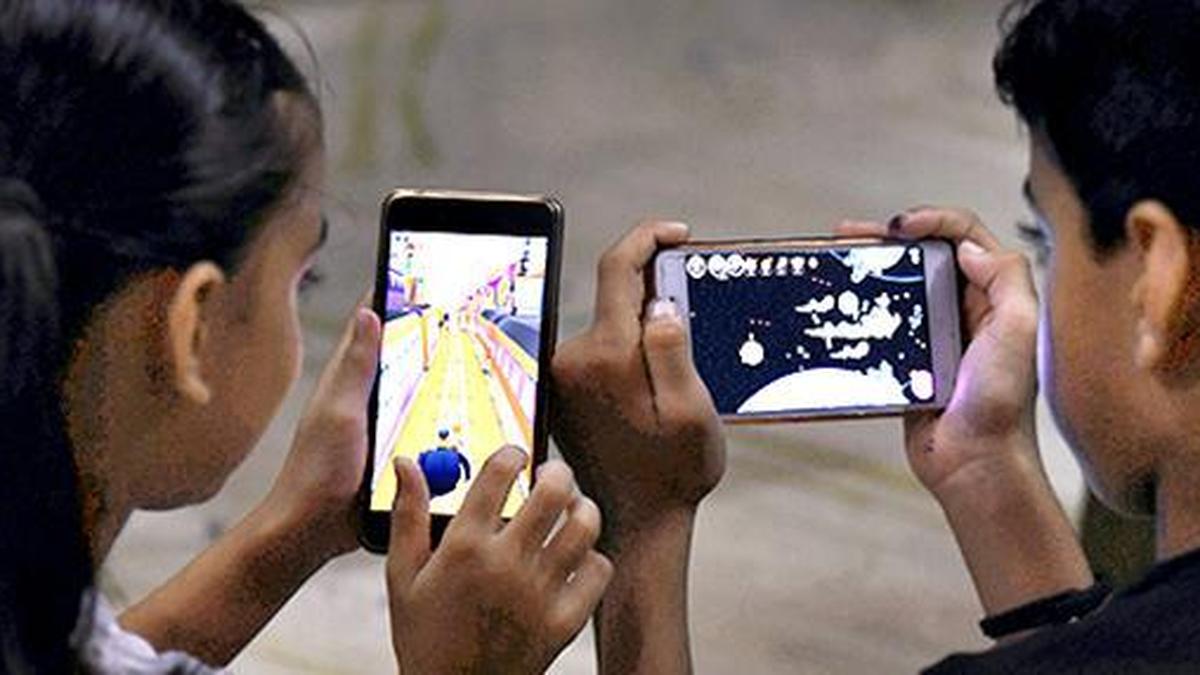
The European Commission has proposed the KIDS Act, which would ban social media use by those under 13 and restrict usage for 13- and 14-year-olds with parent-supervised "mini accounts." The act also mandates that platforms remove addictive features like infinite scrolling and push notifications during sleep hours. For children's profiles, geolocation, camera, and microphone access must be disabled by default. Social media companies with over 45 million EU users would need to present compliance plans. This regulation aims to standardize online protections for children across all EU countries, replacing varying national rules.
Written by AI on 2026-09-17, from this article's own text only (the story summary below draws on all the coverage).
See how they differ ↓

AI analysis

Story summary

The European Commission is set to propose a ban restricting children under 13 from accessing social media, video-sharing platforms, AI chatbots, and online games. The proposal, part of the "EU KIDS Act," aims to protect children's health and safety amid growing concerns over digital platform risks. For those aged 13-14, parents will have to set up limited accounts with strict time limits under parental control, allowing no more than one hour per day of usage. The plan also mandates that tech companies design their platforms "safe by default" for children and remove potentially addictive features like infinite scrolling. While the proposal faces privacy concerns from tech lobbying groups, it is expected to undergo negotiations with EU countries and the European Parliament before becoming law.

Written for “EU Social Media Ban For Minors” on 2026-11-22, grounded in this article and the 6 other(s) covering the same event.

How they differ

5 outlets covered “EU Social Media Ban For Minors”.

What each outlet says

One AI summary per outlet of its latest article on this story, written from that article alone and checked against it. Open the article for the outlet's own words.

The Straits TimesThis outlet17 Sep

The European Commission has proposed the KIDS Act, which would ban social media use by those under 13 and restrict usage for 13- and 14-year-olds with parent-supervised "mini accounts." The act also mandates that platforms remove addictive features like infinite scrolling and push notifications during sleep hours. For children's profiles, geolocation, camera, and microphone access must be disabled by default. Social…

What is in the EU's planned KIDS Act? (this article)3 articles from The Straits Times on this story
South China Morning Post15 Sep

The European Union plans to propose new regulations restricting access to social media, video-sharing platforms, chatbots, and online games for children under 15 years old. The proposed “EU KIDS Act” would ban minors under this age from creating their own accounts and introduce a tiered system of supervised access. Additionally, tech companies would be required to design safer features for children, eliminating…

EU to propose curbing social media, online games for under 15s →
The Hindu15 Sep

The European Union is developing the EU Kids Act, which proposes restricting children under 15 from creating accounts on social media and video-sharing platforms like Instagram and TikTok without parental involvement. The plan also considers banning access for those under three years old and extending regulations to AI chatbots and online gaming platforms. For ages 3 to 12, parents would have full control over…

How EU plans to keep children under 15 off social media →
The Guardian16 Sep

Ursula von der Leyen, head of the European Commission, announced plans during her annual state of the union address for a total ban on social media use by those under 13 years old across the EU. She also proposed "mini accounts" with parental supervision and usage limits for children aged 13 to 15. The draft law will be published on Thursday and must be approved by the European parliament and all member states…

EU moves closer to social media ban for under 13s →
BBC17 Sep

The European Union has proposed a plan called the EU Kids Act to regulate social media access for minors, aiming to enhance online safety and well-being. Under this proposal, children under 13 would be banned from using social media platforms entirely, while those aged 13 to 15 could use them for only one hour per day through accounts linked to their parents or guardians. The plan also mandates that social media…

EU announces plan to restrict social media access for children →

Where they agree and split

Framing

How the first headlines put it

Stated as fact3
The headlines (3)

EU is set to propose ban on social media and AI chatbots for under-15s The Straits Times · stated as fact

EU to propose curbing social media, online games for under 15s South China Morning Post · stated as fact

How EU plans to keep children under 15 off social media The Hindu · stated as fact

The full story: what happened, how it changed, and all 7 articles →

Compared with similar articles

This article reads unscored and hedges 5% of its claims. Each row says how that neighbour differs.
The Hindu
Leans left Hedges 11 of 31 claims Outlet record 60/100
“While both articles discuss similar proposals by the EU regarding age restrictions on social media for children, they describe different phases or updates in the process rather than the exact same incident.”
The Guardian
Hedges 1 of 19 claims Outlet record 64/100
BBC News
Leans left Hedges 1 of 9 claims Outlet record 65/100
The Straits Times
Leans left Hedges 1 of 13 claims Outlet record 64/100
The Straits Times
Hedges 4 of 19 claims Outlet record 64/100
“While both articles discuss proposed regulations by the EU to protect children from online dangers, they describe different aspects of the proposal with distinct details and age restrictions.”
The Hindu
Leans left Hedges 0 of 5 claims Outlet record 60/100
“Article A describes France's new proposal to ban social media for under-15s after their previous attempt was struck down by a constitutional authority, while Article B discusses the EU's proposed KIDS Act regarding age categories and supervision requirements. These are separate legislative initiatives.”
Times of India
Hedges 2 of 22 claims Outlet record 58/100
“The articles discuss related topics but describe different stages or aspects of legislation concerning social media use by children in Europe.”
Global News
Hedges 2 of 26 claims Outlet record 63/100
“The articles discuss different legislative actions: one in Canada involving age assurance technology by tech companies, and another in the EU regarding proposed KIDS Act legislation.”
South China Morning Post
Leans left Hedges 1 of 4 claims Outlet record 62/100
“While both articles discuss proposed EU legislation to restrict minors' access to social media and online platforms, they refer to different phases of the legislative process or different versions of the proposal. The first article focuses on a draft legal document seen by AFP, while the second provides details about what is officially in the planned KIDS Act.”

Story

EU Social Media Ban For Minors
Politics · 7 article(s) covering the same event. Compare every outlet's account →
How this article was measured signals, leaning charts, publisher record, byline, topics and claims

Signals How these are calculated →

Claims extracted
19
sentences that state something as happening or true
Uncertain
5%
1 of 19 hedged ("reportedly", "may", "according to")
Leaning
not political
takes no side on a contested political question
Publisher signals
64/100
The Straits Times's corrections and hedging, across everything collected from it. Not a measure of accuracy.
Outlets on this story
7
Politics
Same framing elsewhere
1
articles that frame the event the way this one does
Analyzed 2026-09-17 · how these are computed

How this is being covered How these are calculated →

Article leaning vs. publisher reliability
Source leaning vs. consistency

Publisher

The Straits Times · 5699 article(s) · 7 correction(s) detected
Running correction rate · 7 correction(s)

Who wrote this

The Straits Times
4005 article(s) here · 1 carrying a prediction
Annual inflation hit 11% in October and prices are expected to rise further this year, economists say, leaving many Ukrainians feeling the pinch and less able to spend on eating out.
While no one obtained everything they might have desired, everyone can find a place for themselves within this text—that is the very essence of consensus.
At least 14 people missing after Russian drone hit building in Kyiv region, Zelenskiy says KYIV, Nov 22 - At least 14 people may still be trapped under the rubble of a residential building that was struck by a Russian drone on Sunday morning in Ukraine's Kyiv region, President Volodymyr Zelenskiy said.
Ferguson said at a news conference that the ICE agents may have broken a state law limiting facial coverings for law enforcement, and that he was looking into how they accessed the jet bridge.
Before departing for his overseas trip, Trump told reporters that he might meet Kim in China.
The latest draft expressed “deep concern” that global warming would cross 1.5 deg C above pre-industrial levels in the next few years.
2026-11-22 · assertive framing · Fossil fuels still missing from latest COP31 draft deal
Mejia had also overstayed her visa, ICE said, adding that she would be charged with assaulting a federal officer.
She will be charged with assaulting a federal officer, according to ICE.
TEHRAN - Iran will impose rolling power cuts from Nov 22 as damage to key infrastructure during the Middle East war deepens an already severe energy crunch, state media reported.
2026-11-22 · assertive framing · Iran to ration electricity as war hits energy network
Party strategists anticipate that the field of 2028 aspirants could be far wider than what was expected at the start of the administration, when Trump joked about seeking a constitutionally-barred third term.
Also by The Straits Times
Nothing else under this byline is closely related to this article, so these are simply their most recent.
All 4005 articles by The Straits Times →

Topics

BRUSSELS France KIDS Act The EU KIDS Act The European Commission

Subjects

France GPE · 2× BRUSSELS GPE · 1× Constitutional Court ORG · 1× European Union ORG · 1× REUTERS ORG · 1× The European Commission ORG · 1× the European Parliament ORG · 1×

Narrative

For teenagers with existing accounts, platforms would have to check — within six months of the rules applying — whether existing account holders will have to disable the accounts of children under 15 or for those whose age cannot be established.
framing: assertive · carried by 1 article(s) · first seen 2026-09-17
Here are the details of the proposed EU KIDS Act, which will require approval from European Union governments and the European Parliament and could be revised before it is enacted.
2026-09-17 · The Straits Times
What is in the EU's planned KIDS Act? · assertive framing

Claims (19 extracted, 1 hedged)

What is in the EU's planned KIDS Act? asserted
What → plan → Act
The European Commission has proposed banning under-13s from social media and requiring platforms to design online services that are safe for all children's accounts. asserted
that → propose → accounts
Here are the details of the proposed EU KIDS Act, which will require approval from European Union governments and the European Parliament and could be revised before it is enacted. uncertain
it → propose → governments
The proposed regulation bans social media accounts for those aged under 13, allows parent-supervised "mini accounts" for children aged 13 and 14, and independent accounts only for those 15 years and older. asserted
regulation → propose → years
For 13- and 14-year-olds, a guardian would be able to set up a limited account that the guardian will control, with a daily limit of up to an hour of age-appropriate social media and video-sharing platforms. asserted
guardian → set → media
For teenagers with existing accounts, platforms would have to check — within six months of the rules applying — whether existing account holders will have to disable the accounts of children under 15 or for those whose age cannot be established. asserted
age → exist → those
Checks would not be required if platforms can tell with high confidence that users are adults. asserted
users → require → confidence
Age will be verified with certified solutions independent of platforms, including a planned European Digital Identity Wallet. asserted
Age → verify → Wallet
WHAT SOCIAL MEDIA COMPANIES MUST DO asserted
COMPANIES → do → ?
The EU KIDS Act sets obligations for all social media, video sharing, online video games, AI companions and chatbots for users below the age of 18. asserted
Act → set → 18
These include bans on addictive features, profiling-based recommender feeds and personalised ads or algorithms based on past activity. asserted
These → include → activity
The Act would prevent infinite scrolling without breaks, reward 'tricks', unsolicited contact from strangers and push notifications during sleeping hours, defined as eight consecutive hours between 10 p.m. and 8 a.m. asserted
Act → prevent → p.m.
companions and chatbots must be turned off by default. asserted
companions → turn → default
Profiles for children must be private by default, with geolocation, camera and microphone access turned off. asserted
access → turn → default
The burden of proof will be on platforms to show they are safe for children. asserted
they → show → children
Platforms with 45 million or more active monthly users in the EU will have to present compliance plans before coming into contact with children. asserted
Platforms → have → children
WHAT WILL HAPPEN TO EXISTING NATIONAL RULES? asserted
WHAT → happen → RULES
The provisions of the EU Kids Act are designed to replace a patchwork of different rules in separate EU countries with the same level of protection across the bloc. asserted
provisions → design → bloc
France has pushed for an EU-wide ban for under-15s after France's Constitutional Court struck down a national bill before it was due to take effect in September, saying it infringed on freedom of expression. asserted
it → push → expression

Give feedback · no sign-in needed

No sign-in needed for now. Your note is sent without a name, so it cannot be answered.

History Support