Photo via The Straits Times

NASA scan discovers new, ‘once in a century’ moon crater

Read the original at The Straits Times ↗
Cite

The Straits Times. (2026, September 17). NASA scan discovers new, ‘once in a century’ moon crater. The Straits Times. https://www.straitstimes.com/world/united-states/nasa-scan-discovers-new-once-in-a-century-moon-crater

Dated when The Aporia collected the article, usually within hours of publication. Check the original for its exact date and byline.

The Straits Times · collected 2026-09-17 · by The Straits Times

Quick Summary

A researcher at NASA discovered a recently formed crater on the Moon named McGetchin, measuring 222 meters wide, believed to have been caused by an asteroid or comet collision in spring 2024. Scientists consider impacts of this scale to be once-in-a-century events. The Lunar Reconnaissance Orbiter (LRO) detected the crater as a bright spot with a dark halo and it is noted as the largest newly discovered crater in the solar system according to a study published on September 16th. This finding aids understanding of lunar geology and prepares future crewed missions to the Moon.
Written by AI on 2026-09-17, from this article's own text only (the story summary below draws on all the coverage).
See how they differ ↓

AI analysis

Story summary

NASA’s Lunar Reconnaissance Orbiter (LRO) discovered a massive crater on the moon's near side, larger than the Roman Colosseum, measuring about 728 feet across and up to 141 feet deep, in May 2024. The impact that formed this crater was caused by an asteroid or comet fragment roughly the size of a three- to six-story building. This event is estimated to occur only once every 132 years, making it a rare opportunity for researchers studying lunar geology and future moon missions. The crater was initially missed by Earth-based telescopes but spotted later in data analysis, providing valuable insights into the moon's surface changes as NASA plans to establish a base there.

Written for “Moon Crater Discovery” on 2026-11-22, grounded in this article and the 4 other(s) covering the same event.

How they differ

5 outlets covered “Moon Crater Discovery”.

What each outlet says

One AI summary per outlet of its latest article on this story, written from that article alone and checked against it. Open the article for the outlet's own words.

The Straits TimesThis outlet17 Sep

A researcher at NASA discovered a recently formed crater on the Moon named McGetchin, measuring 222 meters wide, believed to have been caused by an asteroid or comet collision in spring 2024. Scientists consider impacts of this scale to be once-in-a-century events. The Lunar Reconnaissance Orbiter (LRO) detected the crater as a bright spot with a dark halo and it is noted as the largest newly discovered crater in…

NASA scan discovers new, ‘once in a century’ moon crater (this article)

CBS News16 Sep

NASA's Lunar Reconnaissance Orbiter discovered a massive crater on the moon, larger than the Roman Colosseum, which measures about 728 feet across and up to 141 feet deep. Formed by an asteroid or comet fragment two years ago, it is the largest impact crater created in recent times and occurs once every 132 years on average. The spacecraft first spotted the crater between April 11 and May 22, 2024, though detailed…

NASA spacecraft discovers moon crater bigger than Roman Colosseum →
New York Post17 Sep

Scientists using NASA’s Lunar Reconnaissance Orbiter discovered a massive new crater on the moon in May 2024, which is larger than the Roman Colosseum and estimated to occur only once every 132 years. The crater, named after Thomas McGetchin, measures about 728 feet across and up to 141 feet deep, making it three times bigger than a similar discovery from a decade ago. The impact also ejected dust and rocky soil…

NASA spacecraft discovers huge new crater on the moon →
ABC News (AU)17 Sep

NASA scientist Robert Wagner discovered the largest newly formed crater on the Moon while examining data from the Lunar Reconnaissance Orbiter (LRO) in 2025. The McGetchin crater measures 222 meters across and 43 meters deep, larger than any previously recorded by LRO since its launch in 2009. Researchers believe it was formed between April and May 2024 from a comet or asteroid strike. This rare impact event occurs…

NASA scientist's chance Moon discovery reveals once-in-a-lifetime crater →
CBC17 Sep

NASA scientists have discovered a new crater on the moon larger than Rome’s Colosseum, measuring 222 meters across and up to 43 meters deep, formed by an asteroid or comet impact two years ago. This rare event, which occurs approximately once every 132 years, was spotted by NASA's Lunar Reconnaissance Orbiter (LRO) in May 2024 and confirmed early this year. The crater, named after Thomas McGetchin, reveals that such…

NASA satellite discovers a new crater on the moon that's bigger than the Colosseum →

Where they agree and split

Framing

How the first headlines put it

Stated as fact4
The headlines (4)

NASA spacecraft discovers moon crater bigger than Roman Colosseum CBS News · stated as fact

NASA scan discovers new, ‘once in a century’ moon crater The Straits Times · stated as fact

NASA spacecraft discovers huge new crater on the moon New York Post · stated as fact

NASA scientist's chance Moon discovery reveals once-in-a-lifetime crater ABC News (Australia) · stated as fact

The full story: what happened, how it changed, and all 5 articles →

Compared with similar articles

This article reads unscored and hedges 20% of its claims. Each row says how that neighbour differs.
New York Post
Hedges 3 of 19 claims Outlet record 66/100
CBC News
Hedges 3 of 17 claims Outlet record 70/100
CBS News
Hedges 4 of 21 claims Outlet record 66/100
ABC News (AU)
Hedges 4 of 31 claims Outlet record 67/100

Story

Moon Crater Discovery
Science · 5 article(s) covering the same event. Compare every outlet's account →
How this article was measured signals, leaning charts, publisher record, byline, topics and claims

Signals How these are calculated →

Claims extracted
10
sentences that state something as happening or true
Uncertain
20%
2 of 10 hedged ("reportedly", "may", "according to")
Leaning
not political
takes no side on a contested political question
Publisher signals
64/100
The Straits Times's corrections and hedging, across everything collected from it. Not a measure of accuracy.
Outlets on this story
5
Science
Same framing elsewhere
1
articles that frame the event the way this one does
Analyzed 2026-09-17 · how these are computed

How this is being covered How these are calculated →

Article leaning vs. publisher reliability
Source leaning vs. consistency

Publisher

The Straits Times · 5707 article(s) · 7 correction(s) detected
Running correction rate · 7 correction(s)

Who wrote this

The Straits Times
4026 article(s) here · 1 carrying a prediction
People will do a lot, they will break the law.
Iowa detonation of lead will proceed under emergency powers, Army says, bypassing court order NEW YORK, Nov 22 - The US Army will detonate 68 barrels of toxic lead azide in Iowa by Tuesday under emergency legal powers that allow it to bypass a court order blocking the controversial plan, the Trump administration told a court this weekend.
Trump sees difficulties ahead if Schumer leads Senate WASHINGTON/BOSTON, Nov 22 - US President Donald Trump said on Sunday that it would be difficult for him to work with Senator Chuck Schumer if the Democrat is elected Senate majority leader.
2026-11-22 · assertive framing · Trump sees difficulties ahead if Schumer leads Senate
French far-right leader Marine Le Pen on Nov 22 denied receiving confidential information from a civil servant suspected of leaking details of investigations to her National Rally (RN) party, while acknowledging she could not say whether others in the party had benefited.
Germany's army began its first tactical tests of kamikaze drones during drills on Sunday in Lithuania, where an armoured brigade of 5,000 German troops will be permanently stationed by the end of 2027.
The eastern-based government said port and naval base facilities, including warehouses, were safe and that normal operations would resume once the fire was brought under control and the site secured.
Ben-Gvir replied in an X post that Eisenkot's condemnation amounted to selling out to Arab parties, which could be part of a possible new government.
Ex British PM Theresa May tells successor to ‘move on’ from Brexit AI generated
Its annual summit is seen as an important opportunity to signal that nations are willing to work together to find solutions and help finance the myriad problems caused by rising temperatures.
"If you step aside at the height of a victory you helped secure, you would show voters that the Democratic Party heeded their call for change.
Also by The Straits Times
Nothing else under this byline is closely related to this article, so these are simply their most recent.
All 4026 articles by The Straits Times →

Topics

LRO Lunar Reconnaissance Orbiter NASA Science Advances WASHINGTON

Subjects

NASA ORG · 5× AFP ORG · 1× China GPE · 1× McGetchin PERSON · 1× Robert Wagner PERSON · 1× Science Advances ORG · 1× WASHINGTON GPE · 1× the United States GPE · 1×

Narrative

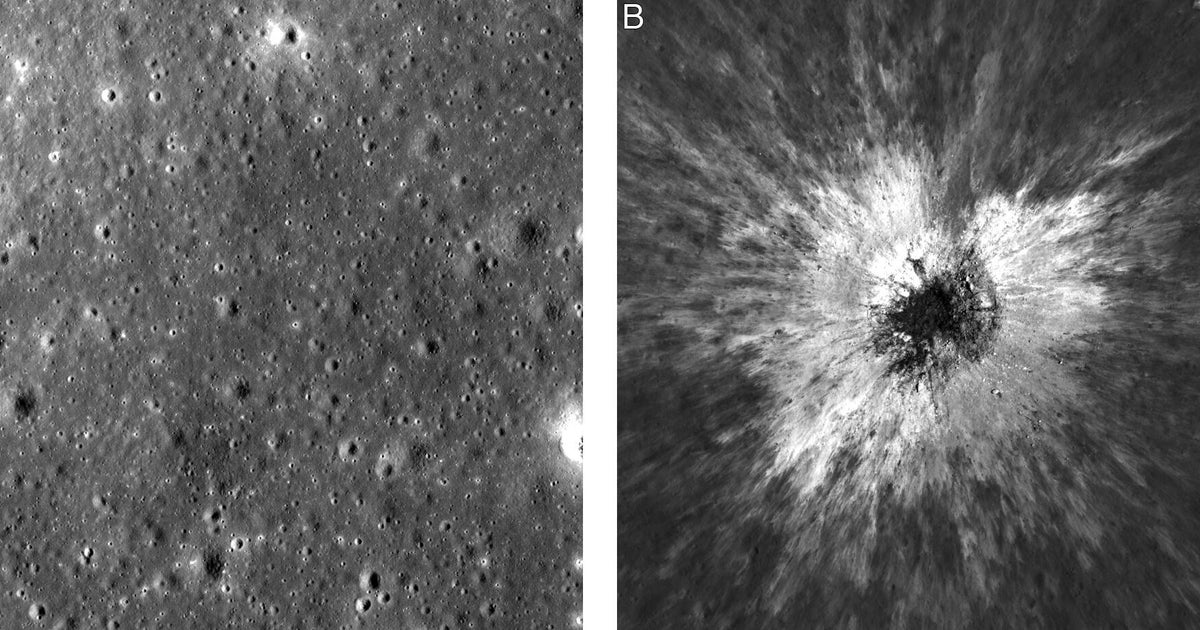
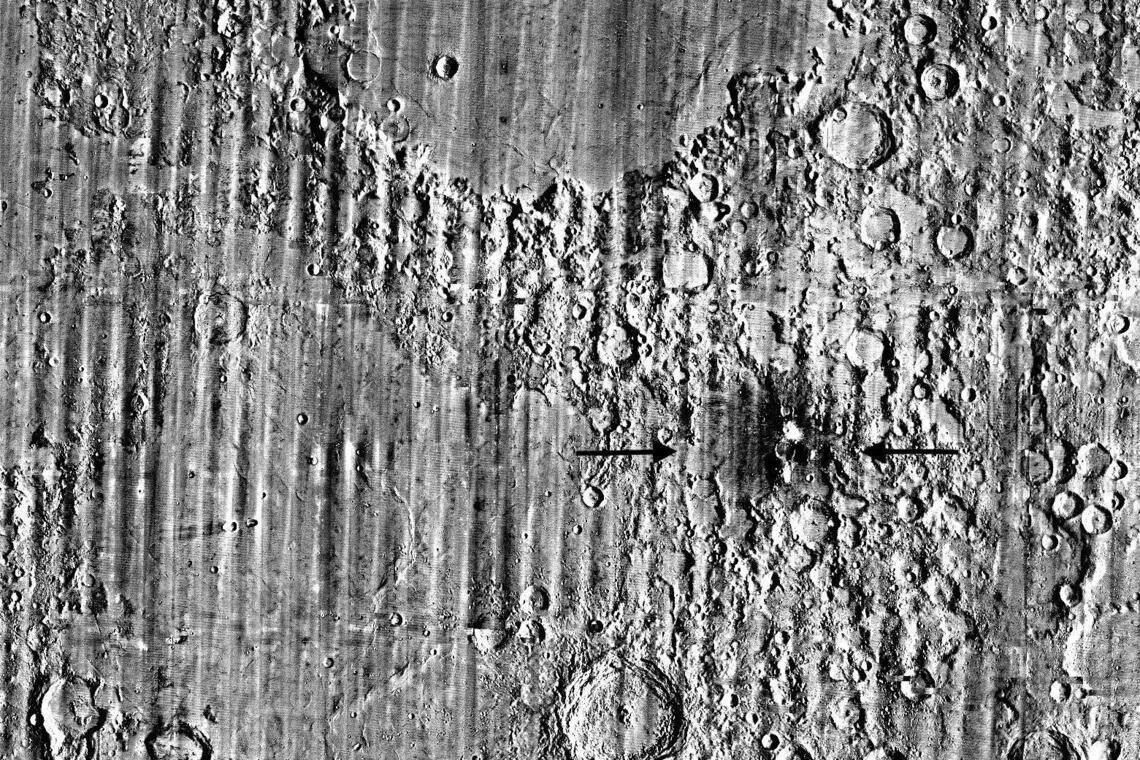
Although the crater had been there for years, it was not discovered until Robert Wagner, a researcher with NASA’s Lunar Reconnaissance Orbiter (LRO), noticed it in a new scan of the Moon’s surface. The crater appeared as a “large bright spot circled by a dark halo” by the LRO probe, which has been studying the Moon since 2009.
framing: assertive · carried by 1 article(s) · first seen 2026-09-17
This in turn could better prepare future crewed missions to the moon, which are currently planned by both the United States and China.
2026-09-17 · The Straits Times
NASA scan discovers new, ‘once in a century’ moon crater · assertive framing

Claims (10 extracted, 2 hedged)

NASA scan discovers new, ‘once in a century’ moon crater AI generated asserted
scan → discover → crater
A researcher at NASA has found a massive, recently-formed crater on the moon, a rare occurrence that only happens “once in a century or even longer,” according to scientists. uncertain
that → find → scientists
The crater, dubbed “McGetchin,” measures 222m wide, NASA said in a blog post. asserted
NASA → dub → post
It is believed to have been created in the spring of 2024 from a comet or asteroid colliding with the Moon, with researchers describing the object that caused it to be the size of a building three-to-six stories high. “ asserted
it → believe → building
Scientists estimate that an impact of this magnitude happens on the Moon about once in a century or even longer,” NASA said in the blog post. asserted
NASA → estimate → post
Although the crater had been there for years, it was not discovered until Robert Wagner, a researcher with NASA’s Lunar Reconnaissance Orbiter (LRO), noticed it in a new scan of the Moon’s surface. The crater appeared as a “large bright spot circled by a dark halo” by the LRO probe, which has been studying the Moon since 2009. asserted
which → discover → 2009
A study published on Sept 16 in the journal Science Advances determined it was the largest new crater ever discovered in the solar system. asserted
it → publish → system
While the moon has numerous craters, many of which are far bigger than McGetchin, researching a crater’s formation in real time can help build understanding of the Moon’s geology. asserted
researching → have → geology
This in turn could better prepare future crewed missions to the moon, which are currently planned by both the United States and China. uncertain
which → prepare → States
Unlike Earth, the moon has virtually no atmospheric layer, so space debris does not slow down or burn up before colliding with the surface. asserted
debris → have → surface
Give feedback · no sign-in needed

No sign-in needed for now. Your note is sent without a name, so it cannot be answered.

History Support