Photo via CBS News

Data centers are unpopular — and a key motor of economic growth

Read the original at CBS News ↗
Cite

Cerullo, M. (2026, November 6). Data centers are unpopular — and a key motor of economic growth. CBS News. https://www.cbsnews.com/news/data-centers-ai-investment-stocks-economy/

Dated from the outlet's own feed. Check the original for its byline.

CBS News · collected 2026-11-06 · by Megan Cerullo

Quick Summary

Wall Street analysts warn that political opposition could slow investment in artificial intelligence and data centers, potentially harming economic growth. Federal Reserve researchers estimate that spending on these technologies accounted for about 20% of U.S. GDP over the past year. Spending by major tech companies like Alphabet, Amazon, Meta, and Microsoft is projected to double to around $800 billion in 2026 and reach $1 trillion in 2027, according to Capital Economics. Economists caution that reducing this investment could have detrimental effects on the economy despite public concerns over data center construction.
Written by AI on 2026-11-09, from this article's own text only (the story summary below draws on all the coverage).

AI analysis

Story summary

In 2026, investment in data centers and artificial intelligence (AI) is expected to double to around $800 billion by companies like Alphabet, Amazon, Meta, and Microsoft, with projections reaching $1 trillion in 2027. This surge has contributed significantly to the U.S. economy, accounting for about 20% of GDP over the past year. However, concerns over public opposition to data centers could slow this growth, potentially impacting financial markets and economic expansion. Despite potential risks, the AI sector continues to be seen as a key driver of wealth and investment in the United States.

Written for “Data Center Unpopularity” on 2026-11-21, grounded in this article and the 0 other(s) covering the same event.

Compared with similar articles

This article reads unscored and hedges 22% of its claims. Each row says how that neighbour differs.
The Straits Times
Hedges 1 of 26 claims Outlet record 64/100
“The articles discuss related topics but describe different aspects and timeframes of the impact of data center opposition on U.S. politics and economy.”
Daily Mail
Leans left Hedges 3 of 13 claims Outlet record 69/100
“The articles discuss different aspects of AI data centers—one focuses on potential negative impacts in Scotland while the other discusses broader economic impacts in the U.S.”
CBS News
Leans left Hedges 2 of 11 claims Outlet record 66/100
“The articles discuss different aspects of data centers and AI's impact on politics and economy, without clearly describing the same specific incident.”
City AM
Leans right Hedges 2 of 33 claims Outlet record 95/100
“The articles discuss different aspects and timelines related to data centers and AI, rather than reporting on a single specific incident.”
AI boom or bubble? Different event
Al Jazeera
Leans left Hedges 0 of 11 claims Outlet record 60/100
“The articles discuss similar topics related to AI and data center investments, but they describe different aspects and timelines.”
CBS News
Hedges 0 of 1 claims Outlet record 66/100
“The articles discuss different aspects of data centers: one focuses on the economic impact of AI and data center investments, while the other highlights the benefits of an older data center in a specific community.”
CBS News
Leans right Hedges 3 of 30 claims Outlet record 66/100
“Article A discusses broader economic impacts and investment trends related to data centers and AI, while Article B focuses on a specific Microsoft data center in Quincy, Washington, and its local impact.”
The Guardian
Leans strongly left Hedges 5 of 32 claims Outlet record 64/100
“The articles discuss different aspects of data centers and AI's impact on the economy and politics but do not describe the same specific incident or occurrence.”
Semafor
Hedges 2 of 16 claims Outlet record 64/100
“The articles discuss similar themes about AI investment trends but describe different aspects and outcomes, not a single specific incident.”
CBC News
Centre Hedges 0 of 2 claims Outlet record 60/100
“The articles discuss data center construction and protests in different contexts and locations.”

Story

Data Center Unpopularity
Economy/Business · 1 article(s) covering the same event.
How this article was measured signals, leaning charts, publisher record, byline, topics and claims

Signals How these are calculated →

Claims extracted
27
sentences that state something as happening or true
Uncertain
22%
6 of 27 hedged ("reportedly", "may", "according to")
Leaning
withheld
no quote in the article backed the model's score
Publisher signals
66/100
CBS News's corrections and hedging, across everything collected from it. Not a measure of accuracy.
Outlets on this story
1
Economy/Business
Same framing elsewhere
1
articles that frame the event the way this one does
Analyzed 2026-11-09 · how these are computed

How this is being covered How these are calculated →

Article leaning vs. publisher reliability
Source leaning vs. consistency

Publisher

CBS News · 6004 article(s) · 11 correction(s) detected
Running correction rate · 11 correction(s)

Who wrote this

Megan Cerullo
50 article(s) here · 1 carrying a prediction
Anthropic co-founder and CEO Dario Amodei said in a post on X in August that he believes "it will actually be possible to cure most human disease in ~5-10 years, as crazy as it may sound to ordinary people and frankly to biologists as well (I used to be one!).
"Things could need to escalate quite a bit for this to go from level one to level three, which would maybe start to move the needle for some companies.
Harvard scientist Gianluca Guidi, the lead author of the paper published in Nature Sustainability this week, told CBS News that it took two years to analyze the electricity use and carbon dioxide emissions of 403 hyperscale data centers between May 2024 and April 2025.
Nvidia reported robust growth on Tuesday, with interim CEO Colette Kress set to host her first earnings call since company founder and former chief executive Jensen Huang after revelations of multiple extramarital affairs.
Nvidia co-founder Jensen Huang broke his silence after from the company following revelations of multiple affairs, saying he'd be willing to return as its CEO."I
Huang's exit has heightened concerns that China and other nations could access Nvidia's advanced chips by renting computing resources through data centers in Southeast Asia.
A proposed order bans Family Dollar from misleading customers on prices and requires the company to adopt what the FTC described as a "pricing accuracy program" that is independently assessed and certified annually. "Today's order will ensure Family Dollar stops deceiving consumers about its prices and returns money to consumers harmed by these practices," Christopher Mufarrige, director of the FTC's Bureau of Consumer Protection, said in a statement on Thursday.
Analysts at TD Securities also predict three straight quarter-point hikes, up from their previous forecast of two, because hotter inflation signals that price pressures across the U.S. are broadening.
"It's very stressful knowing that every time the phone rings, you have to pick it up and talk to someone who says you owe them thousands of dollars for something you couldn't help," Coy, 32, a Cypress, Texas, resident, told CBS News. 40% of Americans The phone is also ringing off the hook for millions of other people facing overdue healthcare bills.
Yet Huang's long-range strategic vision, unique qualities as a leader and deep connections in the tech world will be hard to replace, Ives emphasized.
Also by Megan Cerullo
Nothing else under this byline is closely related to this article, so these are simply their most recent.
All 50 articles by Megan Cerullo →

Topics

Alphabet CBS News Capital Economics Federal Reserve U.S.

Subjects

Capital Economics ORG · 5× U.S. GPE · 4× CBS News ORG · 3× Allison Schrager PERSON · 1× Alphabet ORG · 1× Amazon ORG · 1× Federal Reserve ORG · 1× Meta ORG · 1× Microsoft ORG · 1× the Manhattan Institute ORG · 1×

Narrative

"A big part of the wealth effect is coming from the strong rise in equity prices, and if data center construction slows, the likely weakness we'll see in the equity market is a sign of things to come," said Brown, who estimates that this "wealth effect" is boosting economic growth this year by roughly 0.5%.
framing: mixed · carried by 1 article(s) · first seen 2026-11-09
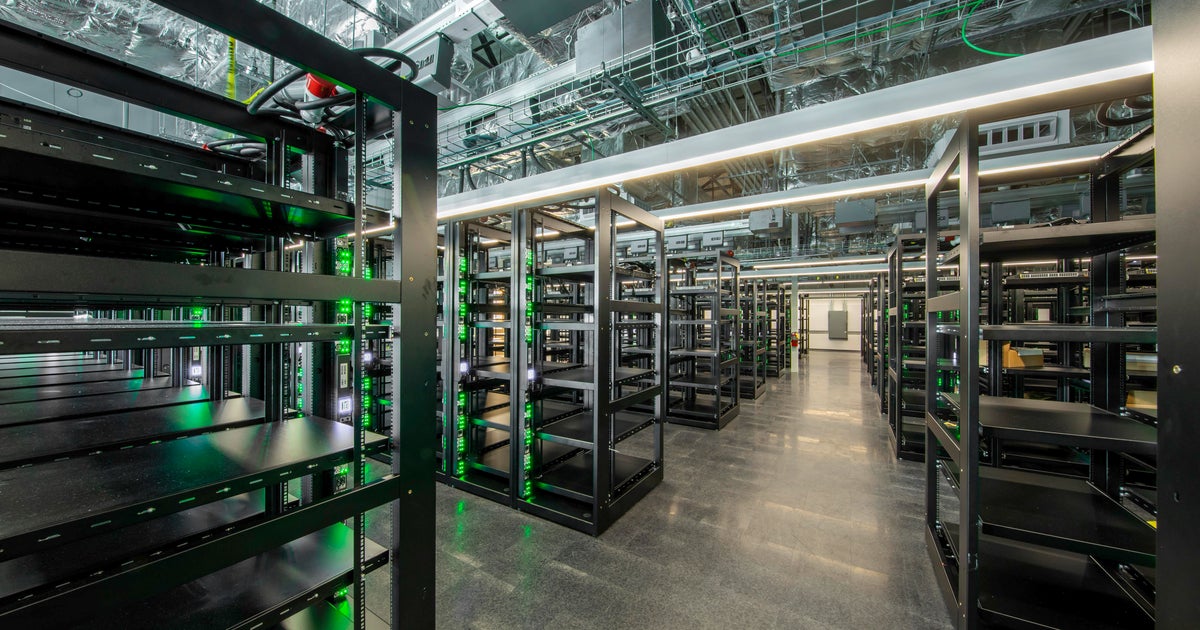
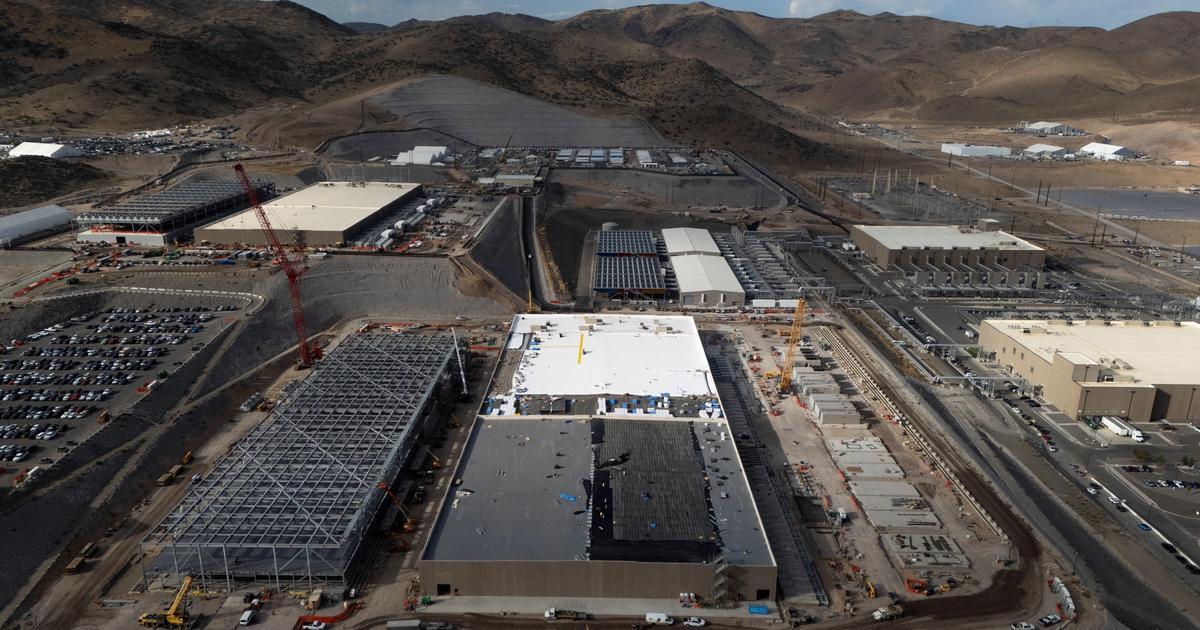
The shifting political winds could buffet the entire U.S. economy, reducing investment in artificial intelligence and slowing growth, according to Wall Street analysts.

Claims (27 extracted, 6 hedged)

The shifting political winds could buffet the entire U.S. economy, reducing investment in artificial intelligence and slowing growth, according to Wall Street analysts. uncertain
winds → shift → analysts
The historic tide of money pouring into AI, from data centers and frontier models to state-of-the-art chips and networking gear, has boosted business investment and financial markets in recent years. asserted
tide → pour → years
Federal Reserve researchers recently estimated that spending on data centers, power facilities and other AI-related tech equipment accounted for roughly 20% of U.S. gross domestic product over the preceding year. asserted
spending → estimate → year
In 2026, spending by "hyperscalers" such as Alphabet, Amazon, Meta and Microsoft — the companies racing to build data centers — is set to double to around $800 billion and is expected to reach $1 trillion in 2027, according to Capital Economics. uncertain
spending → race → Economics
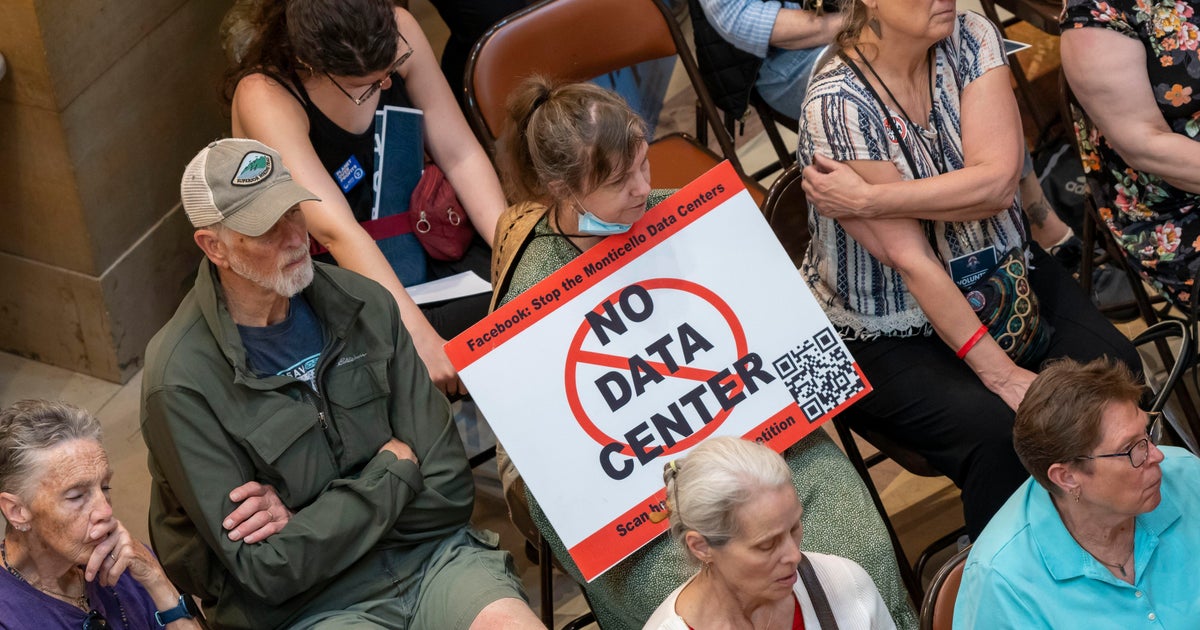
Although slowing that buildout might well serve the public interest, given the widespread opposition to data centers, crimping that flow of dollars will have knock-on economic effects. uncertain
crimping → slow → effects
"Our economy is leveraged on this idea that AI will make us rich," economist Allison Schrager with the Manhattan Institute, a nonpartisan think tank, told CBS News. asserted
Schrager → make → News
"There are risks to making it slower — it will mean slower growth." asserted
it → be → growth
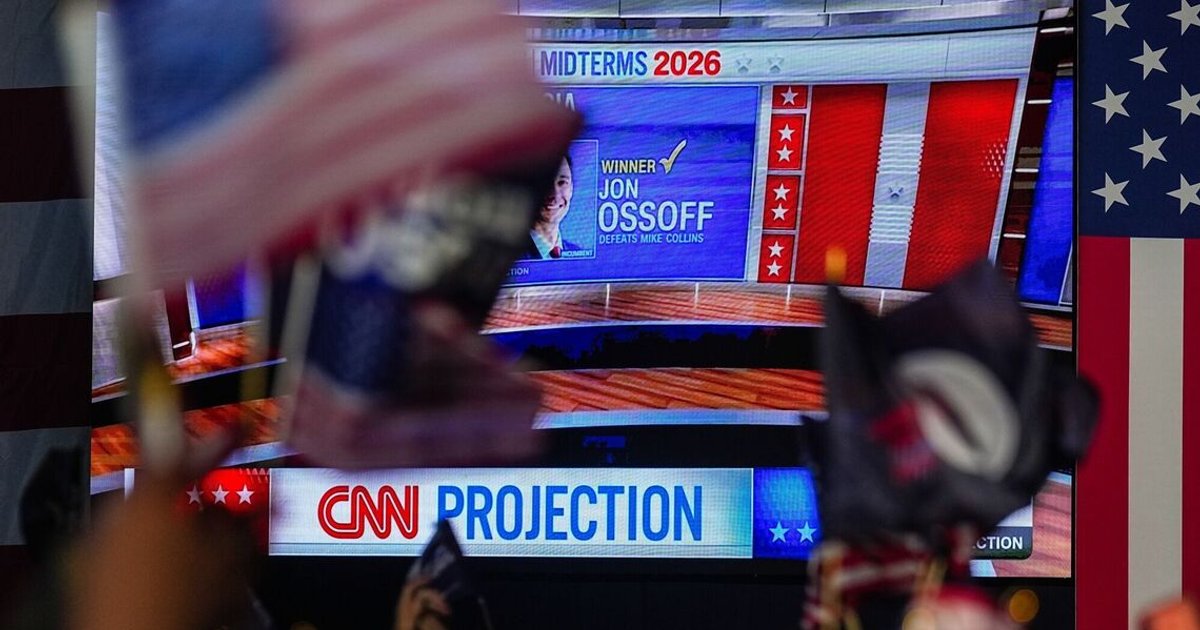
Economists and investors now expect the Democrats' sweeping midterm election wins to both slow and increase the cost of data center development across the U.S. asserted
wins → expect → U.S.
By contrast, those victories are unlikely to completely turn off the spigot, experts said, noting that political opposition to data centers isn't uniform, ranging from support for moratoriums on construction to more moderate proposals. asserted
opposition → turn → proposals
As a result, investment in data centers is likely to continue in the near term, both for projects currently underway and for facilities that have received permits. asserted
that → continue → permits
For companies investing in AI, the bigger issue will be continuing such capital expenditures at the same pace even as the productivity gains and profits AI is expected to deliver remain largely unrealized for now. asserted
AI → invest → pace
"The high-level calculations essential to justify that level of CapEx, if sustained, we are talking $2 trillion in revenue for major AI companies by the early 2030s, which seems very unlikely," Capital Economics chief North America economist Stephen Brown told CBS News. asserted
Brown → justify → News
"Our view is that because of that, there is likely to be some slowdown in data center construction. asserted
view → be → construction
We are not saying it will stop altogether, but the level of investment is likely to ease. asserted
level → say → investment
And that would have some detrimental effects on the U.S. economy. asserted
that → have → economy
Impact on stocks and consumer spending Moody's Analytics chief economist Mark Zandi thinks investors are willing to continue pouring money into AI for the next couple of years, but said the long-term prospects are less clear. " asserted
prospects → think → years
There are a lot of questions about whether that capital will continue to be there to fill that hole and, if not, AI companies will have to raise prices to cover costs. asserted
companies → be → costs
Then you won't see the same kind of investment," he said. asserted
he → see → investment
In 2025, investment in AI added roughly 0.3 percentage points to real GDP growth, according to Capital Economics, which expects investment in the sector to boost growth by roughly the same amount this year. uncertain
investment → add → amount
If AI investment were to fall in 2028, "It could turn into an outright drag on GDP," Capital Economics chief economic advisor Vicky Redwood said in a research note on Friday, estimating that a 10% annual drop in AI spending from current levels would knock around 0.1% off GDP growth. uncertain
drop → fall → growth
If investment in AI slows, the greatest drag on growth could come from reduced consumption, Brown of Capital Economics told CBS News. uncertain
Brown → slow → News
Higher-income Americans who invested in AI stocks have seen their wealth grow sharply. asserted
wealth → invest → stocks
With the S&P 500 up almost 100% over the past three years, such investors have driven increased spending. asserted
investors → drive → spending
"A big part of the wealth effect is coming from the strong rise in equity prices, and if data center construction slows, the likely weakness we'll see in the equity market is a sign of things to come," said Brown, who estimates that this "wealth effect" is boosting economic growth this year by roughly 0.5%. asserted
effect → come → %
If the S&P 500 were to lose 20% of its value, that boost would turn into a 0.5% drag on GDP growth, Brown said. asserted
Brown → lose → growth
"That would be a 1% hit to GDP," he said. asserted
he → say → GDP
"We would be talking about a sharp slowdown in GDP growth versus a recession." asserted
We → talk → recession

Give feedback · no sign-in needed

No sign-in needed for now. Your note is sent without a name, so it cannot be answered.

History Support