Photo via Semafor

California’s billionaire tax is a referendum on the tech industry

Read the original at Semafor ↗
Cite

Albergotti, R. (2026, November 4). California’s billionaire tax is a referendum on the tech industry. Semafor. https://www.semafor.com/article/11/04/2026/californias-billionaire-tax-is-a-referendum-on-the-tech-industry

Dated from the outlet's own feed. Check the original for its byline.

Semafor · collected 2026-11-04 · by Reed Albergotti

Quick Summary

California's proposed billionaire tax ballot measure has emerged as a broader critique of the state’s tech industry, reflecting public concerns over the impacts of technology on everyday life. While the tech sector has historically fueled California’s economic growth, issues like social media's effects on children and anxieties about AI are now drawing significant backlash. This shift is evident in unexpected political outcomes, such as the recent blue turn in Texas. The measure aims to address perceived inequalities by taxing billionaires but raises questions about its long-term impact on technological innovation and broader economic participation.
Written by AI on 2026-11-04, from this article's own text only (the story summary below draws on all the coverage).
See how they differ ↓

AI analysis

Story summary

Voters in California rejected Proposition 40, which proposed a one-time 5% tax on fortunes above $1 billion, by a 53% to 47% margin. The measure, aimed at funding California’s Medicaid program, would have affected about 200 individuals and drawn significant opposition from wealthy residents and sports team owners. The proposal, supported by some Democrats like Vermont Senator Bernie Sanders but opposed by others like California Governor Gavin Newsom, was defeated on November 8, 2026. The ballot initiative's rejection is seen as a victory for economic growth and investment, though it has divided liberal leaders nationally.

Written for “California Voters Reject Billionaire Tax” on 2026-11-21, grounded in this article and the 42 other(s) covering the same event.

How they differ

28 outlets covered “California billionaire tax rejected”.

What each outlet says

One AI summary per outlet of its latest article on this story, written from that article alone and checked against it. Open the article for the outlet's own words.

SemaforThis outlet4 Nov

California's proposed billionaire tax ballot measure has emerged as a broader critique of the state’s tech industry, reflecting public concerns over the impacts of technology on everyday life. While the tech sector has historically fueled California’s economic growth, issues like social media's effects on children and anxieties about AI are now drawing significant backlash. This shift is evident in unexpected…

California’s billionaire tax is a referendum on the tech industry (this article)2 articles from Semafor on this story
Washington Examiner10 Nov

California voters defeated Proposition 40, which aimed to impose a tax on the wealth of billionaires in the state. The proposition received 47.2% support while 53.8% voted against it, according to AP's early results. If approved, this would have been the first such general wealth tax implemented in modern U.S. history.

California billionaire wealth tax fails, dashing liberal dreams →4 articles from Washington Examiner on this story
New York Post11 Nov

California voters have rejected Proposition 40, which aimed to implement a "billionaire tax," by a significant margin. This decision prevents what would have been the first wealth tax in the United States, intended to seize personal savings from billionaires. The proposition's failure is attributed to concerns that it could deter entrepreneurs and investors, leading to an exodus of at least seven billionaires with…

California’s billionaire tax is dead – but the state’s paid a staggering price →4 articles from New York Post on this story
The Independent10 Nov

California voters rejected Proposition 40, which aimed to impose a one-time 5% tax on individuals with over $1 billion in wealth. The measure was designed to address an estimated $100 billion loss in federal healthcare funding over five years and support education and food-assistance programs. Tech billionaires like Sergey Brin opposed the proposition by spending over $333 million, predominantly through his…

Tech billionaires dodge massive wealth tax as California voters decisively reject controversial Proposition →3 articles from The Independent on this story
Los Angeles Times10 Nov

California voters have rejected Proposition 40, which aimed to impose a one-time 5% tax on billionaires' assets to offset federal healthcare funding cuts. With 53% voting against it and 47% in favor, the measure faced strong opposition across most counties despite significant support in Los Angeles and San Francisco. The campaign against the billionaire tax was one of the most expensive in California history, with…

Billionaire tax rejected on concern squeezing California's ultra-rich would harm the economy →2 articles from Los Angeles Times on this story
Daily Mail13 Nov

This opinion piece by Richard Littlejohn argues that British and American voters are resisting wealth taxes despite a perceived shift toward left-wing politics. In California, voters rejected Proposition 40, which would have imposed a 5% tax on assets over $1 billion, by a margin of 53% to 47%. The author highlights that around 16,500 high-net-worth individuals have already left Britain since the current Labour…

RICHARD LITTLEJOHN: When we see Blair and Brown as the good old days, then we're really in trouble... Welcome to Bolshevik Britain →2 articles from Daily Mail on this story
Show 20 more outlets
ABC News (US)10 Nov

California voters rejected Proposition 40, a ballot initiative known as the "billionaires' tax," which aimed to impose a 5% tax on individuals and trusts with assets over $1 billion. The measure was projected to generate around $100 billion over five years but faced significant opposition; the main opposing group, Building a Better California, raised $333.1 million, primarily from billionaires like Sergey Brin…

California's Prop 40 'billionaires' tax' measure is rejected, AP projects →2 articles from ABC News (US) on this story
The Straits Times5 Nov

As California tallies votes, Proposition 40, a proposed wealth tax targeting billionaires, appears to be trailing despite favorable voter registration for Democrats. The measure would impose a one-time 5% levy on assets of California's estimated 250 billionaires, expected to raise around $100 billion. However, it faces significant opposition due to concerns that such a tax could drive wealthy individuals and…

Billionaire tax measure trails as California tallies votes →2 articles from The Straits Times on this story
NPR10 Nov

California's proposed billionaire wealth tax, Proposition 40, was rejected by voters despite expectations of a favorable political climate. Economists Gabriel Zucman and Joshua Rauh disagree on why Prop 40 failed, with Zucman attributing it to extensive opposition spending—nearly $400 million versus negligible support funding—which overwhelmed voter decision-making processes in California's ballot initiative system.

Why did California's billionaire tax fail to surf the blue wave? →2 articles from NPR on this story
The Guardian10 Nov

Tech industry leaders, notably Google co-founder Sergey Brin who contributed at least $132 million, successfully defeated California's Proposition 40, which proposed a one-time 5% tax on billionaires' wealth for healthcare funding. Silicon Valley elites raised nearly $425 million in total to oppose the measure and supported an initiative (Proposition 42) banning taxes on billionaire wealth, ultimately outspending…

Tech’s biggest names sunk a tax on billionaires’ wealth with $425m and a familiar playbook →2 articles from The Guardian on this story
Time29 Oct

The article discusses Proposition 40 in California, which proposes to impose a one-time tax of 5% on fortunes over $1 billion to fund Medicaid. Billionaires like Elon Musk and Sergey Brin have spent over $333 million opposing the measure, arguing it could drive wealthy individuals out of the state. The author supports Proposition 40 but argues that it does not address deeper economic issues, such as the role of…

Taxing Wealth Makes Sense, But It Won’t Fix Our Economy →
The Hindu3 Nov

On November 3, 2026, California proposed a ballot measure called Proposition 40 that would impose a one-time 5% tax on the net worth of Californians with over $1 billion in assets. The initiative aims to address federal healthcare funding cuts and has sparked intense debate among political figures and wealthy individuals; tech moguls like Sergey Brin and Larry Page have already started relocating, while others such…

California could become the first State to tax billionaires' wealth →
Fox News4 Nov

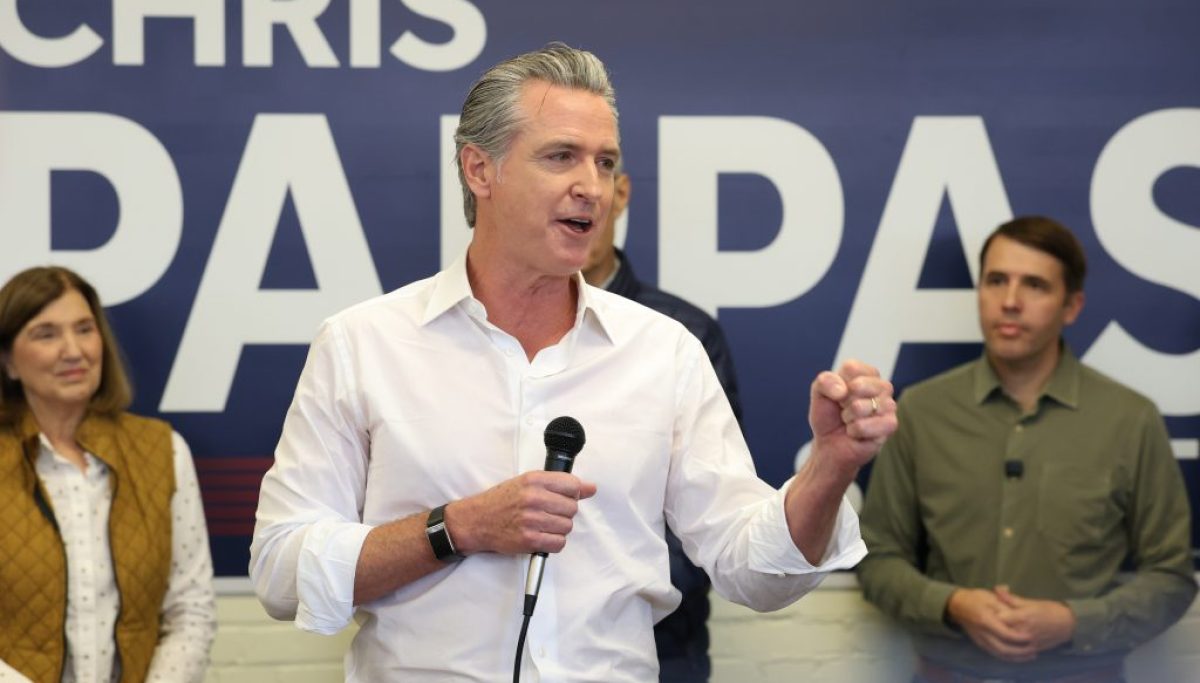
California's Proposition 40, which would impose a one-time 5% tax on billionaires' assets, faces likely defeat as of Wednesday, despite support from the Democratic Socialists of America (DSA). The measure aims to address a $100 billion shortfall in Medi-Cal funding by taxing the state’s wealthiest residents. Governor Gavin Newsom opposes the proposition, highlighting broader debates about socialist policies and…

Newsom breaks with socialists over billionaire tax, and California voters appear poised to reject it →
City A.M.8 Nov

California voters rejected a proposed one-off wealth tax of five percent on net worth above $1 billion through Proposition 40. The 'no' campaign was significantly funded by billionaires like Google co-founder Sergey Brin, who contributed over $100 million, giving them an overwhelming financial advantage over the pro-tax side. While opponents argue that such taxes harm the broader economy, the reliance on billionaire…

California has rejected wealth taxes, but for the wrong reasons →
Toronto Star10 Nov

California voters have rejected Proposition 40, which aimed to impose a one-time 5% tax on the net worth of billionaires, after a high-spending campaign where critics like Google co-founder Sergey Brin raised over $100 million to defeat it. The measure would have generated funds to address federal healthcare funding cuts estimated at $100 billion over five years and support education and food assistance programs…

California voters reject measure to tax the wealth of billionaires →
NBC News10 Nov

California voters rejected Proposition 40, which aimed to impose a one-time 5% tax on the state’s billionaires with assets over $1.1 billion. The measure was projected to raise billions for healthcare but faced strong opposition from Democratic officials like Gov. Gavin Newsom and billionaire-funded campaigns. Critics argued it would lead to wealthier residents leaving California, reducing overall state revenue. The…

California voters reject new tax on billionaires in a blow to the left →
CBS News10 Nov

California voters have rejected a proposed tax on the state's wealthiest residents, according to CBS News projections. Proposition 40 aimed to impose a wealth tax on billionaires excluding real estate and certain retirement assets, with proceeds directed toward healthcare programs (90%) and education, food assistance, and administration (10%). The measure faced strong opposition from Governor Gavin Newsom and…

California voters reject billionaire wealth tax, CBS News projects →
Just the News10 Nov

In California’s midterm elections, voters rejected Proposition 40, which aimed to impose a one-time 5% tax on billionaires. The proposition received 47.2% support compared to 52.8% opposition. Most of the proposed tax revenue was intended to replace federal funding cuts for healthcare. Both supporters and critics from across party lines expressed varying views; opponents argued that it would be insufficient due to…

California voters reject billionaire tax measure →
Reason10 Nov

California voters have rejected Proposition 40, which proposed a one-time 5% tax on billionaires with over $1 billion in net worth. The measure was defeated by a margin of 52.8% to 47.2%. Propositions 41 and 42, competing measures designed to restrict wealth taxes, are also likely to pass, effectively banning such taxes in the state. Proponents argued that the tax could raise about $100 billion over five years for…

California Voters Reject 5% Billionaire Wealth Tax →
BBC10 Nov

California voters rejected Proposition 40, a ballot proposal that would have imposed a one-time wealth tax of 5% on individuals with over $1.1 billion in assets. The tax was intended to raise approximately $100 billion for healthcare funding amid federal cuts. Despite support from some Democrats and labour unions, the measure faced strong opposition from billionaires like Sergey Brin and California Governor Gavin…

Californians reject wealth tax for billionaires →
CBC10 Nov

California voters have rejected Proposition 40, which proposed a one-time five percent tax on the net worth of state billionaires exceeding $1 billion. The measure was heavily opposed by tech leaders such as Sergey Brin and Larry Page, who collectively spent over $333 million to defeat it—more than ten times what supporters raised. Critics argued that the tax would cause wealthy individuals to leave California…

California voters reject proposed billionaire tax →
South China Morning Post10 Nov

California voters rejected Proposition 40, which aimed to implement a new wealth tax targeting billionaires, despite a projected Democratic surge in the midterm elections. Proponents estimated that Prop 40 could raise $100 billion for healthcare programs but failed due to opposition largely centered around recent federal tax breaks favoring wealthy individuals and corporations enacted under President Trump’s…

California billionaire tax measure defeated in contentious vote →
Euronews10 Nov

California voters rejected Proposition 40, which would have imposed a one-time tax of 5% on the net worth of around 200 billionaires in the state. The measure aimed to raise approximately $100 billion for public healthcare but was defeated due to concerns that it could drive wealthy individuals out of California. With about 60% of ballots counted, the "No" side led with 55.6%, and major broadcasters projected its…

California voters reject one-off billionaire wealth tax US media predicts →
Al Jazeera10 Nov

California voters have rejected Proposition 40, which aimed to impose a one-time 5 percent tax on individuals with a net worth exceeding $1 billion, raising an estimated $100 billion for healthcare and other public programs. With about 60% of votes counted, the measure was defeated by a margin of roughly 55.6% against it compared to 44.4% in favor. The proposal faced strong opposition from Governor Gavin Newsom and…

California voters reject billionaire tax →
The Daily Wire10 Nov

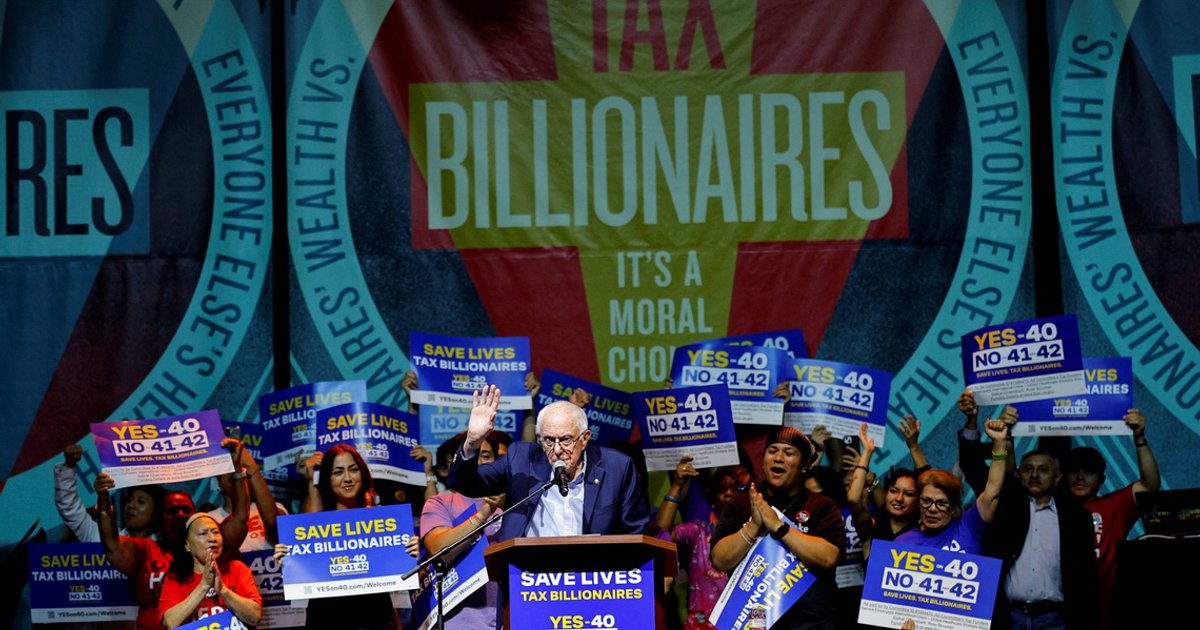
California voters rejected Proposition 40, which aimed to impose a one-time 5% wealth tax on billionaires' net worth, with 53% voting against it and 47% in favor. The measure was backed by Bernie Sanders and aimed to fund government health care programs; however, opponents argued that it would drive businesses out of the state. Governor Gavin Newsom opposed Proposition 40 but supported a national wealth tax instead…

Voters Shoot Down Bernie Sanders-Backed Billionaire Tax →
The Blaze10 Nov

California voters rejected Proposition 40 last Tuesday, which aimed to impose a one-time 5% wealth tax on billionaires residing in the state as of January 1, 2026. Endorsed by politicians like Bernie Sanders and Ro Khanna, the proposition faced strong opposition due to concerns that it would drive wealthy individuals out of California, potentially leading to a loss of tax revenue rather than gain. The proposal's…

Bernie-backed tax on billionaires is TOO extreme even for California →

Where they agree and split

Agreed

Reported by outlets on both sides of the middle

Brin and Larry Page, his fellow Google co-founder, were among the billionaires who began cutting ties with California in anticipation of the possible tax.

5 outlets
Show 3 more

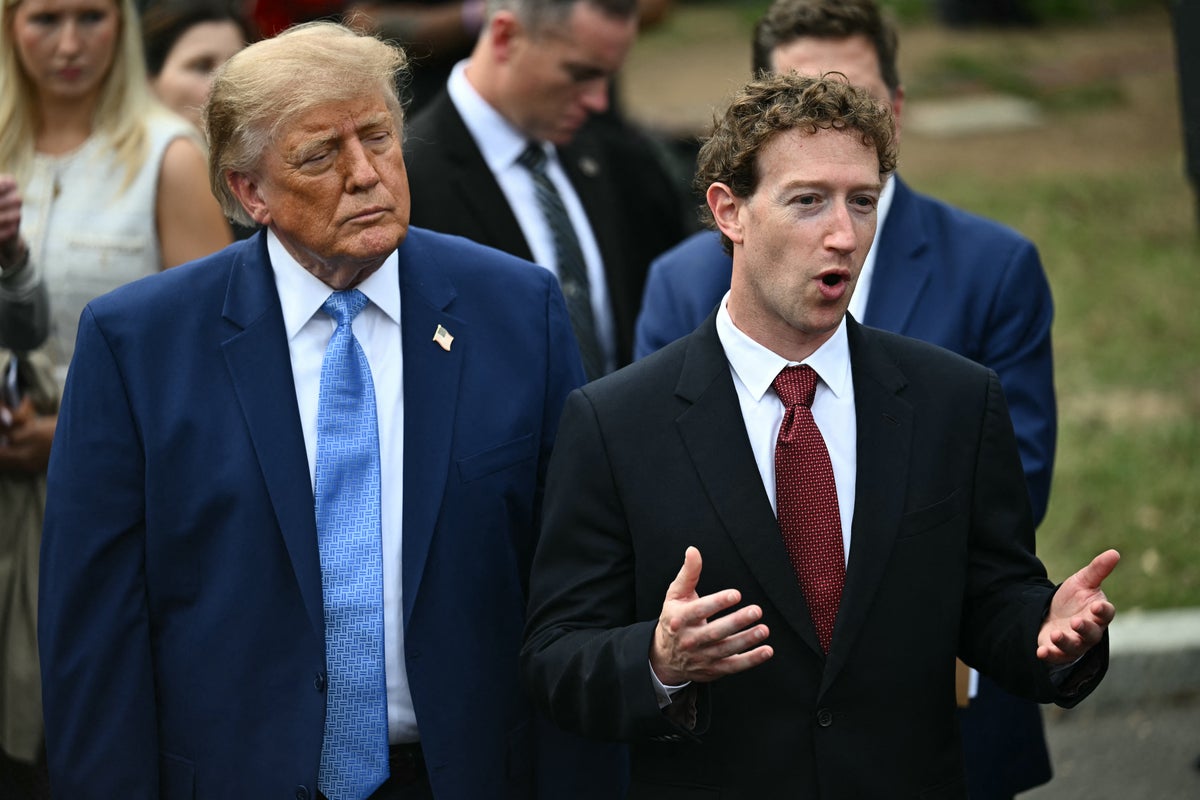
Mark Zuckerberg said he would stay in California for eight years and made a deal with Meta that would help him pay the tax without losing his ownership stake in the company.

4 outlets

California's budget relies heavily on the income tax of the State's richest residents.

4 outlets

The committee has raised more than $333 million, about 30% of it from Brin.

4 outlets

Framing

How the first headlines put it

  • Time frames the debate around whether taxing wealth makes sense economically, while The Hindu highlights California's potential to become the first state to tax billionaires' wealth.12
Words to watch (1)

Sure, California voters overwhelmingly backed Democrats. But they refused to punish success. New York Post

The full story: what happened, how it changed, and all 43 articles →

Compared with similar articles

This article reads leans left and hedges 8% of its claims. Each row says how that neighbour differs.
The Guardian
Leans strongly left further left than this Hedges 3 of 56 claims Outlet record 64/100
“The articles discuss different aspects of the billionaire tax initiative in California; Article A focuses on political opposition and support, while Article B emphasizes its implications for the tech industry.”
New York Post
Leans left Hedges 3 of 12 claims Outlet record 66/100
“The articles discuss different aspects of the California billionaire tax: one focuses on Senator Bernie Sanders' criticism and polling results, while the other provides a broader context about the tech industry's role in the referendum.”
The Guardian
Leans strongly left further left than this Hedges 1 of 33 claims Outlet record 64/100
“The articles discuss different aspects of wealth inequality and taxation but do not describe the same specific incident or occurrence.”
NPR
Hedges 22 of 134 claims Outlet record 60/100
“The articles discuss different aspects of California's billionaire tax proposition without reporting on the exact same incident or analysis.”
The Independent
Leans left Hedges 0 of 28 claims Outlet record 59/100
“The articles discuss different aspects of the same ballot measure but do not describe the same specific incident.”
New York Post
Leans right further right than this Hedges 4 of 22 claims Outlet record 66/100
The Straits Times
Leans left Hedges 3 of 31 claims Outlet record 64/100
New York Post
Leans strongly right further right than this Hedges 0 of 24 claims Outlet record 66/100
The Straits Times
Leans left Hedges 3 of 31 claims Outlet record 64/100
Washington Examiner
Leans left Hedges 0 of 4 claims Outlet record 67/100

Story

California Voters Reject Billionaire Tax
Politics · 43 article(s) covering the same event. Compare every outlet's account →
How this article was measured signals, leaning charts, publisher record, byline, topics and claims

Signals How these are calculated →

Claims extracted
12
sentences that state something as happening or true
Uncertain
8%
1 of 12 hedged ("reportedly", "may", "according to")
Leaning
Leans left
of the writing, not the subject · beta estimate
Publisher signals
64/100
Semafor's corrections and hedging, across everything collected from it. Not a measure of accuracy.
Outlets on this story
43
Politics
Same framing elsewhere
1
articles that frame the event the way this one does
Analyzed 2026-11-04 · how these are computed

How this is being covered How these are calculated →

Article leaning vs. publisher reliability
Source leaning vs. consistency

Publisher

Semafor · 1931 article(s) · 7 correction(s) detected
Running correction rate · 7 correction(s)

Who wrote this

Reed Albergotti
29 article(s) here · 1 carrying a prediction
“Will Jensen Huang be arrested” currently has $153,000 of trading volume on Polymarket.
Anthropic’s IPO went on as well as anyone could have reasonably hoped.
2026-11-20 · mixed framing · The case for an AI downturn
There’s no evidence we’re on the verge of a handover or anything remotely like it, so tech leaders would be wise to find a more optimistic talking point.
The conversation with the director took place before the company’s earnings report and before Huang issued a public statement Tuesday that he’d be willing to return to the company if the board decides it is in the “best interest of our shareholders, our employees, the company, and America.”
2026-11-18 · assertive framing · Some Nvidia directors continue push to bring Huang back
Political people understood this would never last, and it would end in hearings, investigations, and prosecutions.
The Huang hangover might still be a problem even after he’s gone.
The good news for American companies is that tech exports that were going to China are now expected to be redirected to US firms, one person told me.
Nvidia has been battered over the past couple of days, but it could get worse.
2026-11-11 · assertive framing · Nvidia is more than a chip company
Zhang doesn’t think AI will get so good that it can entirely replace humans, at least not in his field.
2026-11-11 · assertive framing · Airwallex’s CEO isn't worried about AI
Sayers re-upped his year-old X post again on Nov. 2, days before Huang admitted to having an affair with an alleged Chinese spy, on the back of weeks of media coverage digging into Megaspeed, an AI data center company based in Singapore that US government officials allege might be smuggling Nvidia chips into China.
Also by Reed Albergotti
The case for an AI downturn
2026-11-20 · Semafor
Nothing else under this byline is closely related to this article, so these are simply their most recent.
All 29 articles by Reed Albergotti →

Topics

American Americans California Japan Texas

Subjects

Americans NORP · 3× California GPE · 3× American NORP · 2× Texas GPE · 2× Anthropic ORG · 1× Californians NORP · 1× Japan GPE · 1× OpenAI ORG · 1× Reed ORG · 1× SpaceX ORG · 1×

Narrative

But despite cool gadgets like smartphones and GPS systems, many Americans are now focused on social media’s impacts on children, anxiety over AI, and the political backlash toward data centers, which ran deep enough this election cycle to turn even the reliably red Texas statehouse blue.
framing: assertive · carried by 1 article(s) · first seen 2026-11-04
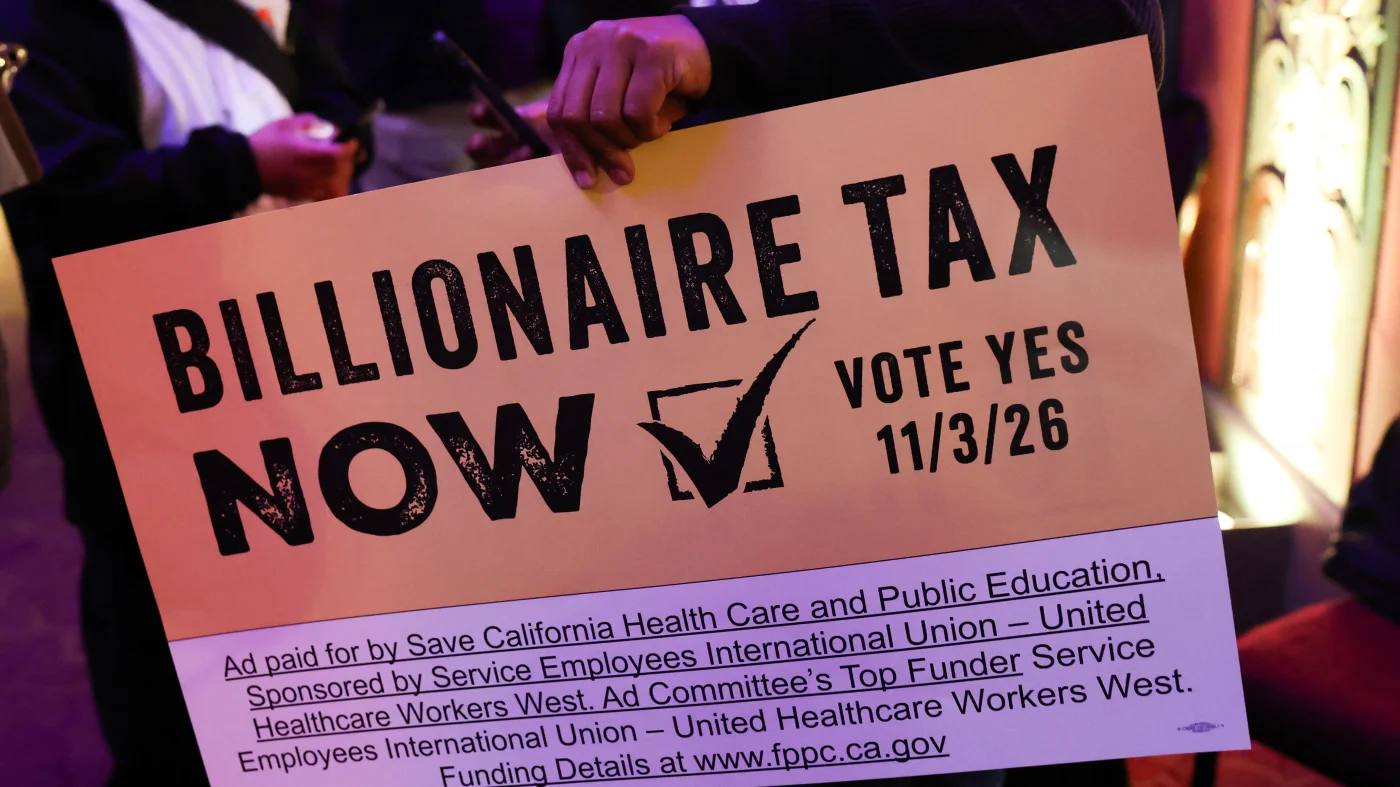
Putting California’s billionaire tax on the ballot, which was trailing in early results but remained too close to call Wednesday, may have felt like a crusade against the rich and powerful.
2026-11-04 · Semafor
California’s billionaire tax is a referendum on the tech industry · assertive framing

Claims (12 extracted, 1 hedged)

Putting California’s billionaire tax on the ballot, which was trailing in early results but remained too close to call Wednesday, may have felt like a crusade against the rich and powerful. uncertain
which → put → rich
But the measure is also a referendum on the state’s homegrown tech industry, which is confronting an American public who no longer feels that technological advancement is always making their lives better. asserted
lives → confront → public
For decades, tech has been the great forcing function in the American economy: creating competition, spurring growth, and propagating a talent base that drew the top workers from around the world. asserted
that → force → world
It benefited no economy more than California’s, which surpassed Japan to become the world’s fourth-largest economy. asserted
which → benefit → Japan
But despite cool gadgets like smartphones and GPS systems, many Americans are now focused on social media’s impacts on children, anxiety over AI, and the political backlash toward data centers, which ran deep enough this election cycle to turn even the reliably red Texas statehouse blue. asserted
which → focus → statehouse
If that’s the way Texas went, you can only imagine how Californians are feeling as they see a gigantic transfer of wealth to billionaires behind the Anthropic, OpenAI, and SpaceX IPOs, and question why the rest of the state isn’t sharing in the AI boom’s windfalls. asserted
rest → ’ → windfalls
Dinging California’s billionaires with a wealth tax feels pretty good to almost everyone. asserted
Dinging → ding → everyone
But catharsis doesn’t necessarily improve people’s lives. asserted
catharsis → improve → lives
And slowing down technological progress isn’t the answer, either. asserted
slowing → slow → progress
The only answer I can see is ensuring more Americans take part in the massive wealth gains that are going to happen in the coming decades. asserted
that → see → decades
If the majority of Americans don’t share in the upside, they will see only downside. asserted
they → share → downside
As we learned Tuesday, an angry populace will stand in the way of tech’s grand plans. asserted
populace → learn → plans
Give feedback · no sign-in needed

No sign-in needed for now. Your note is sent without a name, so it cannot be answered.

History Support