Photo via NPR

Two economists studied California's billionaire tax. They reached wildly different conclusions

Read the original at NPR ↗
Cite

Rosalsky, G. (2026, November 2). Two economists studied California's billionaire tax. They reached wildly different conclusions. NPR. https://www.npr.org/sections/planet-money/2026/11/02/g-s1-151009/two-economists-studied-californias-billionaire-tax-they-reached-wildly-different-conclusions

Dated from the outlet's own feed. Check the original for its byline.

NPR · collected 2026-11-02 · by Greg Rosalsky

Quick Summary

Economists Gabriel Zucman and Joshua Rauh offer opposing views on California's proposed billionaire tax, Proposition 40. Zucman, an advocate for taxing the wealthy, estimates the tax could generate about $100 billion over a decade, potentially setting a national precedent. In contrast, Rauh predicts the measure would cost California $39 billion due to potential outmigration of billionaires, undermining state revenues from income taxes. The debate highlights the broader implications of wealth taxation on economic policies both nationally and internationally.
Written by AI on 2026-11-02, from this article's own text only (the story summary below draws on all the coverage).

AI analysis

Story summary

Californians are voting on Proposition 40, which would introduce America's first-ever wealth tax targeted at billionaires. Economists have conflicting views: Gabriel Zucman, an advocate for taxing the superrich, supports it, arguing that California’s top 0.001% richest households' real wealth has multiplied by 25 since 1982, while average family incomes have only doubled. Opponents claim the tax could lead to billionaires fleeing the state. This debate reflects a broader national discussion on tackling income inequality and taxation of the wealthy.

Written for “California Billionaire Tax Study” on 2026-11-21, grounded in this article and the 0 other(s) covering the same event.

Compared with similar articles

This article reads unscored and hedges 16% of its claims. Each row says how that neighbour differs.
Washington Examiner
Leans right Hedges 0 of 3 claims Outlet record 67/100
“The articles discuss different initiatives related to taxes in California, one focusing on economists' differing views of a proposed billionaire wealth tax and the other on Governor Newsom's proposal for tax breaks for Hollywood billionaires.”
National Post
Hedges 8 of 49 claims Outlet record 60/100
“The articles discuss different aspects of the economic debate around California's billionaire tax proposal but do not describe the same specific incident or occurrence.”
New York Post
Hedges 0 of 12 claims Outlet record 66/100
“The articles discuss different aspects of California's billionaire tax: one focuses on prediction markets and voter expectations, while the other highlights contrasting economist opinions.”
New York Post
Leans left Hedges 3 of 12 claims Outlet record 66/100
“Article A reports on an interview where Bernie Sanders criticizes support for the California billionaire tax, while Article B discusses contrasting economic analyses of Proposition 40 by economists.”
New York Post
Leans left Hedges 3 of 23 claims Outlet record 66/100
“The articles discuss different propositions: Proposition 40 (wealth tax on billionaires) and Proposition 3 (permanent tax on high earners for schools).”
Semafor
Leans left Hedges 1 of 12 claims Outlet record 64/100
“The articles discuss different aspects of California's billionaire tax proposition without reporting on the exact same incident or analysis.”
The Dispatch
Leans left Hedges 11 of 148 claims Outlet record 61/100
“The articles discuss different aspects of California's billionaire tax; Article A focuses on economists' differing conclusions about the tax, while Article B discusses a stock split announcement by Meta and economic dispatches.”
The Guardian
Leans left Hedges 19 of 153 claims Outlet record 64/100
“The articles discuss different aspects related to California's billionaire tax but do not describe the same specific incident or occurrence.”
New York Post
Hedges 6 of 22 claims Outlet record 66/100
“The articles discuss different aspects of opposition to Proposition 40, with Article A focusing on a letter signed by over 100 economists and Article B highlighting contrasting studies by two economists.”
ABC News (US)
Leans left Hedges 5 of 31 claims Outlet record 66/100
“The articles discuss different aspects of Proposition 40; one focuses on economists' differing opinions about it, while the other explains what the proposition entails.”

Story

California Billionaire Tax Study
Economy/Business · 1 article(s) covering the same event.
How this article was measured signals, leaning charts, publisher record, byline, topics and claims

Signals How these are calculated →

Claims extracted
134
sentences that state something as happening or true
Uncertain
16%
22 of 134 hedged ("reportedly", "may", "according to")
Leaning
withheld
no quote in the article backed the model's score
Publisher signals
60/100
NPR's corrections and hedging, across everything collected from it. Not a measure of accuracy.
Outlets on this story
1
Economy/Business
Same framing elsewhere
1
articles that frame the event the way this one does
Analyzed 2026-11-02 · how these are computed

How this is being covered How these are calculated →

Article leaning vs. publisher reliability
Source leaning vs. consistency

Publisher

NPR · 1384 article(s) · 5 correction(s) detected
Running correction rate · 5 correction(s)

Who wrote this

Greg Rosalsky
6 article(s) here · 1 carrying a prediction
Former Google executive Marissa Mayer remembers when the company was just a scrappy startup, working out of a small office above a bike shop in Palo Alto, Calif.
Last week, they disagreed on what this wealth tax on billionaires would do to California's economy and tax revenue.
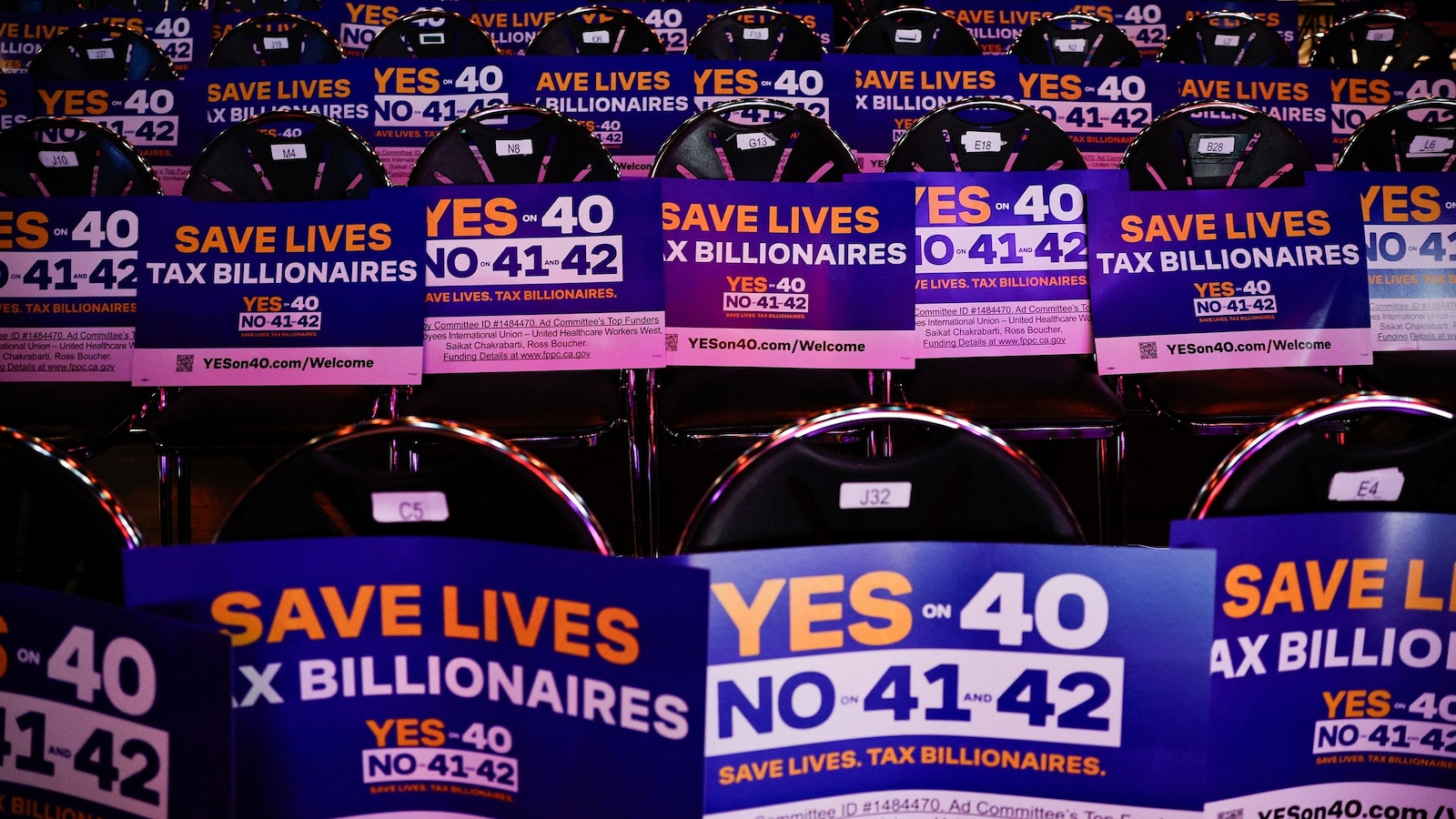
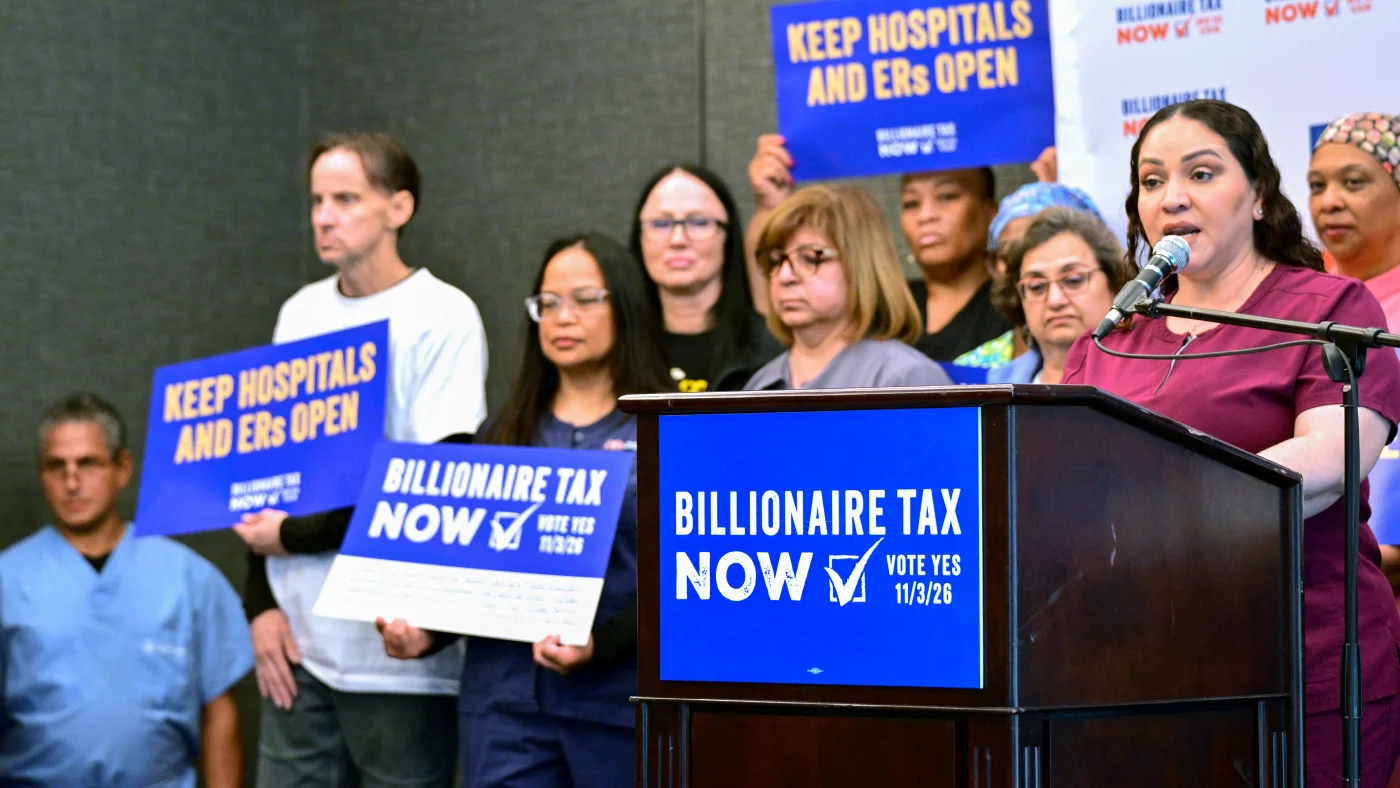
Now, Californians are voting on Proposition 40, which could prove to be just as revolutionary — but in the opposite direction: it would create America's first-ever wealth tax targeted at billionaires.
Who will win the 2026 Nobel Prize in economics?
2026-10-07 · assertive framing · Who will win the 2026 Nobel Prize in economics?
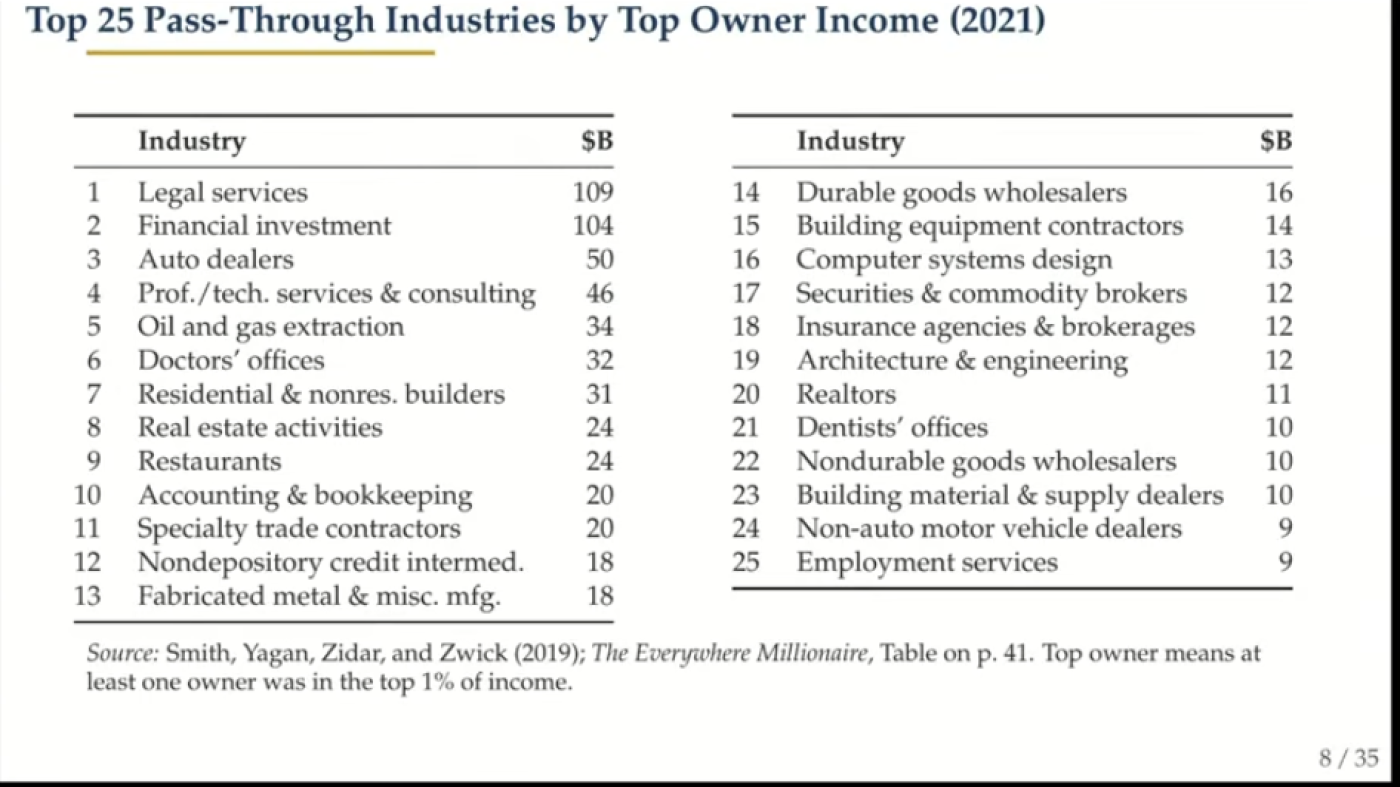
Economists, tax analysts, and policymakers couldn't get a complete picture of how the rich were making their money.
2026-09-14 · assertive framing · The powerful millionaires hiding in plain sight
In other, more extreme cases, these products may not even include the healthier ingredients they're charging you a premium for.
2026-08-04 · assertive framing · The sneaky economics of healthwashing
Also by Greg Rosalsky
Nothing else under this byline is closely related to this article, so these are simply their most recent.
All 6 articles by Greg Rosalsky →

Topics

California Californians Planet Money Proposition 13 Proposition 40

Subjects

California GPE · 11× Californians NORP · 2× Planet Money ORG · 2× Zucman PERSON · 2× America GPE · 1× Elizabeth Warren PERSON · 1× Gabriel Zucman PERSON · 1× Reagan PERSON · 1× UC Berkeley ORG · 1× the Paris School of Economics ORG · 1×

Narrative

"Over the longer run, the real wealth of California's billionaire class — the top 0.001% richest households — has been multiplied by 25 from 1982 to 2026, while average real family income in California has only doubled." Zucman says a crucial problem with the existing tax system in California, America, and beyond is that the superrich have been seeing their wealth snowball bigger and bigger while paying relatively little in income taxes.
framing: assertive · carried by 1 article(s) · first seen 2026-11-02
Now, Californians are voting on Proposition 40, which could prove to be just as revolutionary — but in the opposite direction: it would create America's first-ever wealth tax targeted at billionaires.

Claims (134 extracted, 22 hedged)

Two economists studied California's billionaire tax. asserted
economists → study → tax
They reached wildly different conclusions asserted
They → reach → conclusions
In 1978, California voters approved Proposition 13, a historic tax revolt that became an opening salvo in the Reagan revolution and its national movement to slash taxes. asserted
that → approve → taxes
Now, Californians are voting on Proposition 40, which could prove to be just as revolutionary — but in the opposite direction: it would create America's first-ever wealth tax targeted at billionaires. uncertain
it → vote → billionaires
As Election Day approaches, economists have been duking it out over this proposed wealth tax. asserted
economists → approach → tax
It could provide a sort of nerdy preview of a coming national fight over taxing the superrich. uncertain
It → provide → superrich
Will this wealth tax help rein in runaway inequality and fill the state's coffers — or will it convince billionaires to fire up their private jets and set up residence in mansions outside the state? asserted
it → help → state
Some megabillionaires have already fled California since the tax was proposed. asserted
tax → flee → California
On one side of this debate is economist Gabriel Zucman, a leading advocate for taxing the superrich who splits his time between UC Berkeley and the Paris School of Economics. asserted
who → lead → Economics
Zucman helped design the national wealth tax proposals of Senators Elizabeth Warren and Bernie Sanders when they were running for president (which I covered back then in the Planet Money newsletter and podcast). asserted
I → design → newsletter
He is the author of a new book with a blunt title: We Need To Tax Billionaires. asserted
We → need → Billionaires
Naturally, he supports California's wealth tax, and he co-authored an influential analysis estimating it could raise about $100 billion in revenue. uncertain
it → support → revenue
"If California says, 'We can tax billionaires. asserted
We → say → billionaires
We can tax the wealthiest, most powerful people in the world,' it will be the beginning of not only a broader U.S.-wide movement, ultimately paving the way for a federal wealth tax — but I think it will be the beginning of an international movement," Zucman tells Planet Money. asserted
Zucman → tax → Money
His analysis, co-authored with Benjamin Jaros, comes to a wildly different conclusion: the tax could lead to an exodus of billionaires out of California, damaging the state's economy and blowing a hole in the income tax revenue the state already collects from billionaires. uncertain
state → co → billionaires
It would not raise $100 billion for the state," Rauh argues. asserted
Rauh → raise → state
Instead, he estimates, this tax could actually end up draining California's state coffers. uncertain
tax → estimate → coffers
We calculate that Proposition 40 would cost the state of California $39 billion." asserted
Proposition → calculate → billion
California voters are deciding whether to pursue a historic wealth tax experiment, which could influence tax policy around the nation, even the world. uncertain
which → decide → nation
Indeed, the superrich, fearing that this wealth tax could spark a widespread movement, have poured a staggering $333 million into a group trying to defeat this proposition, according to a recent report in The New York Times. uncertain
tax → fear → Times
The wealth tax Prop 40 proposes is pretty straightforward: a one-time, 5% tax on the net worth of billionaires, with some assets exempted. asserted
assets → propose → billionaires
It would apply retroactively to any billionaire who was a resident of California on January 1, 2026. asserted
who → apply → January
The money would be earmarked mostly for the health care of low-income Californians, to help offset federal cuts to Medicaid. asserted
money → earmark → Medicaid
A wealth tax is sort of like a property tax, except it extends beyond real estate and taxes a whole range of assets: stocks, superyachts, Basquiat paintings, dinosaur skeletons, Mercedes G Wagons, samurai swords, basically everything a rich person owns. asserted
person → extend → assets
Of course, figuring out what all a billionaire's stuff is worth — especially assets that rarely change hands — asserted
that → figure → hands
Do you value a Picasso or a yacht by the price originally paid, what it might sell for today, by how much they've insured it for? uncertain
they → value → it
That said, most of the wealth held by California billionaires is in publicly traded stocks, whose value is easy to determine. asserted
value → say → stocks
Zucman, together with Jasper Boll and Emmanuel Saez, released an analysis of the California billionaire class and this proposed wealth tax. asserted
Zucman → release → class
"California billionaires' wealth has reached $2.3 trillion by mid-2026, as large as all the annual income reported on income tax returns of all Californians," they wrote. asserted
they → reach → Californians
They found that California billionaire wealth had exploded by 144% between 2023 and 2025, thanks largely to the AI boom. asserted
wealth → find → boom
"Over the longer run, the real wealth of California's billionaire class — the top 0.001% richest households — has been multiplied by 25 from 1982 to 2026, while average real family income in California has only doubled." Zucman says a crucial problem with the existing tax system in California, America, and beyond is that the superrich have been seeing their wealth snowball bigger and bigger while paying relatively little in income taxes. asserted
wealth → multiply → taxes
Billionaires can structure their finances to generate little or no taxable income, making the income tax rate "totally irrelevant," he argues. asserted
he → structure → income
Zucman believes a wealth tax will help address this, thereby helping to fight rising inequality, counteract the political power of "the oligarchs," and raise much-needed funds for everyone else. asserted
tax → believe → everyone
Zucman, Boll, and Saez estimated that the state wealth tax proposed by Prop 40 could raise "about $100 billion, with comparatively minor impacts on income tax revenue." uncertain
tax → estimate → revenue
They arrive at that figure by taking 5% of their $2.3 trillion estimate of billionaire wealth, then reducing the projected revenue by 10% to account for avoidance, evasion, and the possibility that some billionaires ended their California residency before January 1, 2026. asserted
billionaires → arrive → January
Rauh argues that this 10% reduction to account for billionaires avoiding the tax is too optimistic. asserted
billionaires → argue → tax
As we've previously reported in the Planet Money newsletter, wealth taxes have been tried before around the world and they have had a dismal track record. asserted
they → report → record
Even Zucman, a wealth tax champion, writes in his new book that past wealth taxes "by and large, have been abject failures." asserted
taxes → write → book
Zucman and his coterie of other (typically French) economists have spent a lot of time studying why past wealth taxes failed and have sought to design new ones that address those failures. asserted
that → spend → failures
One crucial problem was that wealth taxes tended to have loopholes that allowed the rich to shelter their assets, making these taxes a leaky bucket. asserted
taxes → tend → assets
…and 94 more, not listed.

Give feedback · no sign-in needed

No sign-in needed for now. Your note is sent without a name, so it cannot be answered.

History Support