Photo via Times of India

Not used since the Korean War; US Army practices digging mass battlefield graves, 'If we went to war tomorrow...'

Read the original at Times of India ↗
Cite

Ghosh, P. (2026, October 31). Not used since the Korean War; US Army practices digging mass battlefield graves, 'If we went to war tomorrow...'. Times of India. https://timesofindia.indiatimes.com/world/us/not-used-since-the-korean-war-us-army-practices-digging-mass-battlefield-graves-if-we-went-to-war-tomorrow-/articleshow/135403286.cms

Dated from the outlet's own feed. Check the original for its byline.

Times of India · collected 2026-10-31 · by Poulomi Ghosh

Quick Summary

The US Army recently conducted an exercise in North Carolina involving the digging of mass battlefield graves, a practice not used since the Korean War. Soldiers from Fort Bragg tested methods for quickly and respectfully burying up to 100 casualties using heavy machinery like D6 bulldozers, aiming to improve efficiency compared to standard backhoes which take three hours per trench. Adjustments were made during the exercise to ensure proper spacing between trenches to prevent damage to remains, expanding the corridor width from seven feet to fifteen feet.
Written by AI on 2026-10-31, from this article's own text only (the story summary below draws on all the coverage).
See how they differ ↓

AI analysis

Story summary

On October 30, 2026, the U.S. Army conducted a rare large-scale exercise at Fort Bragg in North Carolina to test its ability to carry out mass burials, a practice not used since the Korean War. This was part of Phase II of Operation Dragon Covenant, aimed at preparing for potential high-intensity conflicts with significant casualties. Soldiers from the 3rd Corps Sustainment Command and the 20th Engineer Brigade used diggers and excavators to assess their effectiveness in managing large-scale battlefield interments. The exercise, near the St. Mere Eglise Drop Zone, included religious support personnel like military chaplains to ensure respectful handling of remains until they could be identified and repatriated to the U.S. Sgt. 1st Class Delbert Ruede emphasized that such preparation was essential, stating, "If we went to war tomorrow, we would be making this up as we went along." The Army stressed the importance of systematically managing fallen soldiers in high-intensity conflicts.

Written for “US Army Practices Mass Burial Capacities” on 2026-11-22, grounded in this article and the 1 other(s) covering the same event.

How they differ

2 outlets covered “US Army Practices Mass Burial Capacities”.

What each outlet says

One AI summary per outlet of its latest article on this story, written from that article alone and checked against it. Open the article for the outlet's own words.

Times of IndiaThis outlet31 Oct

The US Army recently conducted an exercise in North Carolina involving the digging of mass battlefield graves, a practice not used since the Korean War. Soldiers from Fort Bragg tested methods for quickly and respectfully burying up to 100 casualties using heavy machinery like D6 bulldozers, aiming to improve efficiency compared to standard backhoes which take three hours per trench. Adjustments were made during the…

Not used since the Korean War; US Army practices digging mass battlefield graves, 'If we went to war tomorrow...' (this article)
Washington Examiner30 Oct

The U.S. Army recently conducted a rare mass burial drill at Fort Bragg, the first such test since the Korean War. This exercise, part of Phase II of Operation Dragon Covenant, simulates scenarios involving large-scale casualties typical in major combat operations. The drill reflects the military's shift towards preparing for potential conflicts that could result in significant numbers of fatalities, a scenario not…

US Army conducted rare test of mass burial capabilities, not used since Korean War, at Fort Bragg →

Compared with similar articles

This article reads unscored and hedges 13% of its claims. Each row says how that neighbour differs.
Washington Examiner
Hedges 0 of 4 claims Outlet record 67/100

Story

US Army Practices Mass Burial Capacities
Politics · 2 article(s) covering the same event. See how they differ ↑
How this article was measured signals, leaning charts, publisher record, byline, topics and claims

Signals How these are calculated →

Claims extracted
15
sentences that state something as happening or true
Uncertain
13%
2 of 15 hedged ("reportedly", "may", "according to")
Leaning
not political
takes no side on a contested political question
Publisher signals
58/100
Times of India's corrections and hedging, across everything collected from it. Not a measure of accuracy.
Outlets on this story
2
Politics
Same framing elsewhere
1
articles that frame the event the way this one does
Analyzed 2026-10-31 · how these are computed

How this is being covered How these are calculated →

Article leaning vs. publisher reliability
Source leaning vs. consistency

Publisher

Times of India · 5552 article(s) · 7 correction(s) detected
Running correction rate · 7 correction(s)

Who wrote this

Poulomi Ghosh
159 article(s) here · 1 carrying a prediction
First Lady Melania Trump has expressed hope that Russia and Ukraine could agree to another ceasefire before Christmas, saying she wants to see more pauses in fighting even as Ukrainian President Volodymyr Zelenskyy accused Russian President Vladimir Putin of repeatedly rejecting proposals to de-escalate the war.
"Xie will receive due process and remain in ICE custody pending her removal proceedings," the department said.
Prince Harry and Meghan Markle's decision to move back to the United Kingdom after spending nearly six years in California may have been prompted by an unexpected immigration issue involving the Duke of Sussex's US visa, according to a new report.
She urged community members to remember that even small gestures of support could make a difference.
The teenager tried to get out of the vehicle but could not open the door from inside, believing that the child safety lock had been activated.
Texas governor-elect Gina Hinojosa has said she will reverse outgoing Governor Greg Abbott's order freezing the hiring of H-1B visa holders at state agencies and public universities, arguing that the state cannot afford to lose access to foreign workers, particularly teachers, even as she acknowledged widespread abuses of the visa programme.
Scholt suggested that her daughter's frequent travel and hotel stays could have contributed to her missing the notification.
However, CNN meteorologist Brandon Miller said thunderstorms were present over the Turks and Caicos and the southern Bahamas on Tuesday morning, areas the aircraft would likely have been navigating.
Vance's comments came after Ingraham asked whether Americans should be preparing for emergencies, pointing to recent technology outages and reports that several countries, including the UK and France, were encouraging citizens to maintain emergency supplies. JD Vance on Pentagon's 90-day preparedness plans Ingraham also raised reports about Pentagon preparations to ensure military installations could operate independently of the civilian power grid for up to 90 days. Vance described the preparations as an example of responsible government planning rather than evidence that a major disaster was approaching.
“What I would say to the White House is transparency is key.
Also by Poulomi Ghosh
Nothing else under this byline is closely related to this article, so these are simply their most recent.
All 159 articles by Poulomi Ghosh →

Topics

Army North Carolina The US Army the 3rd CSC the Korean War

Subjects

Delbert Ruede PERSON · 2× North Carolina GPE · 2× the 3rd CSC ORG · 2× 20th Engineer Brigade ORG · 1× Army ORG · 1× Fort Bragg GPE · 1× The US Army ORG · 1× the 20th Engineer Brigade ORG · 1× the 27th Engineer Battalion ORG · 1× the 3rd Corps Sustainment Command ORG · 1×

Narrative

“This exercise allowed us to take a critical look at how we respect, honor, and systematically manage our fallen in a high-intensity conflict,” said Sgt. 1st Class Delbert Ruede, the senior fatality management NCO for the 3rd CSC, in a statement.
framing: assertive · carried by 1 article(s) · first seen 2026-10-31
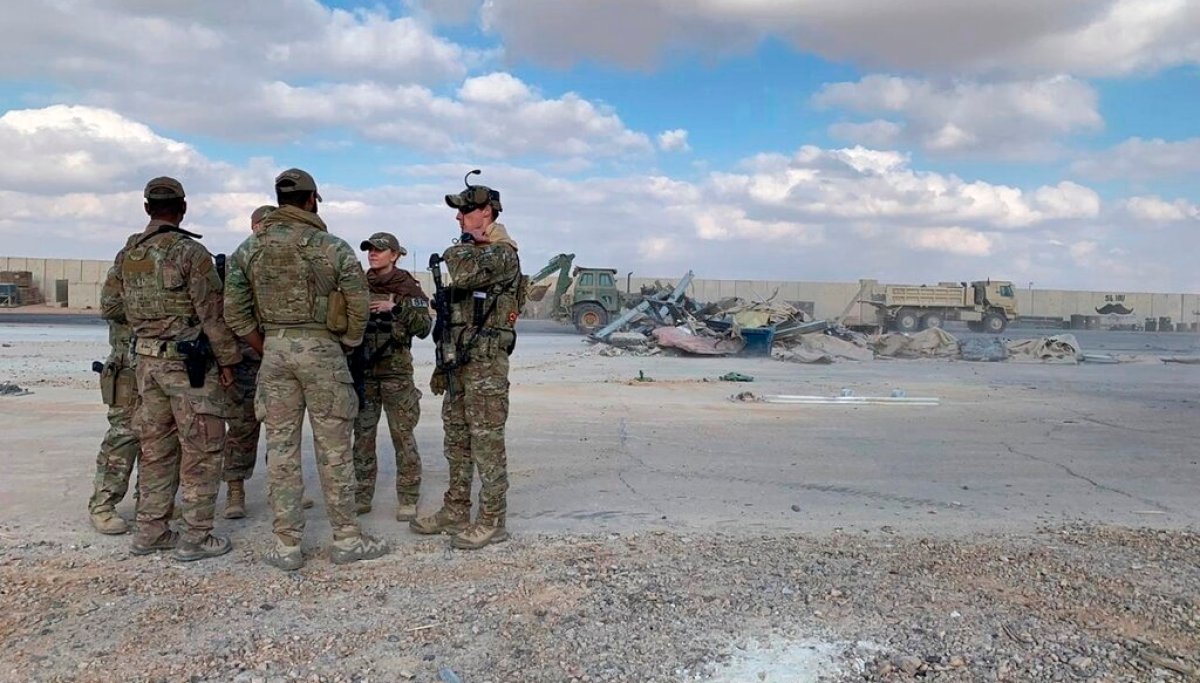
Soldiers with the 3rd Corps Sustainment Command and the 20th Engineer Brigade, based in Fort Bragg, North Carolina, as well as religious support personnel like military chaplains, used diggers and excavators to see how effectively they could be used to help preserve bodies intact until they could be identified and repatriated to the US.

Claims (15 extracted, 2 hedged)

The US Army conducted a rare test practice of digging mass battlefield graves that have not been needed since the Korean War. asserted
that → conduct → War
The Army reported that soldiers in North Carolina completed a “test-of-concept” exercise for large-scale battlefield temporary interment. asserted
soldiers → report → interment
Soldiers with the 3rd Corps Sustainment Command and the 20th Engineer Brigade, based in Fort Bragg, North Carolina, as well as religious support personnel like military chaplains, used diggers and excavators to see how effectively they could be used to help preserve bodies intact until they could be identified and repatriated to the US. uncertain
they → base → US
“This exercise allowed us to take a critical look at how we respect, honor, and systematically manage our fallen in a high-intensity conflict,” said Sgt. 1st Class Delbert Ruede, the senior fatality management NCO for the 3rd CSC, in a statement. asserted
Ruede → allow → statement
"If we went to war tomorrow, we would be making this up as we went along. asserted
we → go → this
What we are doing here is taking a scientific, field-tested approach so that we can maintain positive control and respectfully care for our fallen. asserted
we → do → fallen
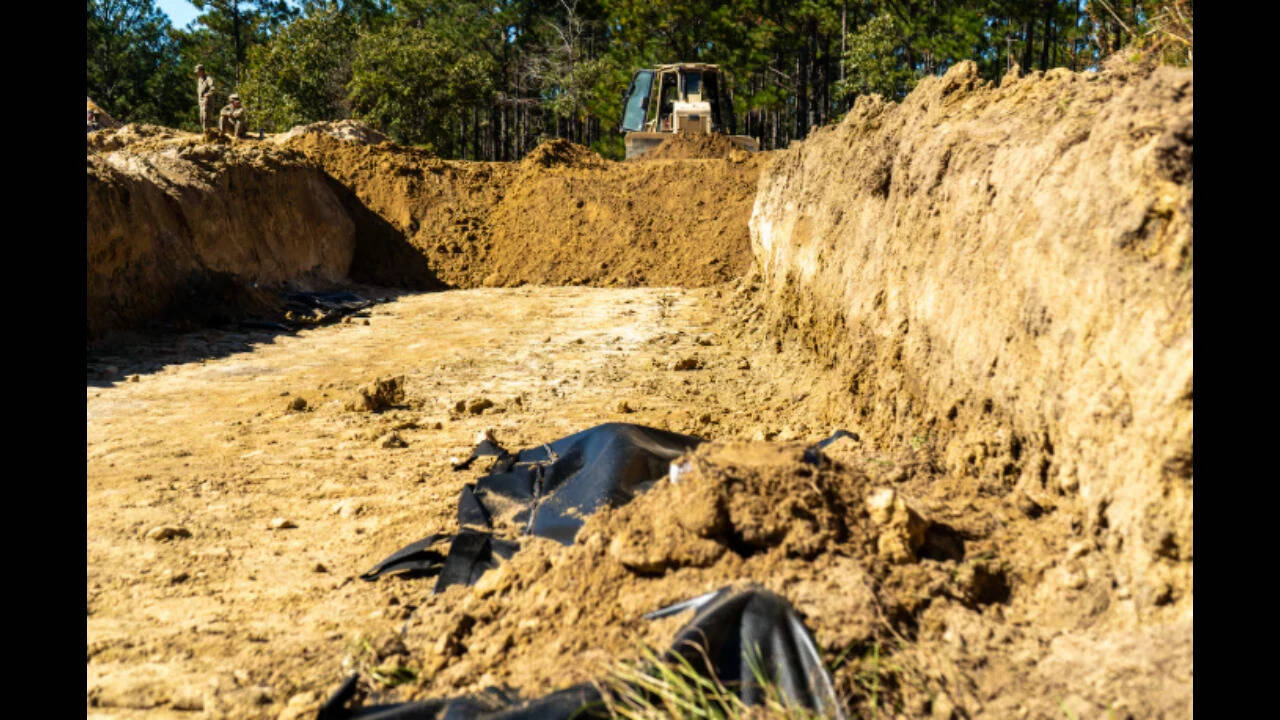
The core of the exercise, conducted near the St. Mere Eglise Drop Zone, evaluated whether heavy earthmoving equipment could excavate and backfill temporary plots rapidly without causing structural collapse or damage to remains. uncertain
equipment → conduct → remains
In theory, a standard temporary interment plot consists of five parallel trenches designed to hold 100 casualties -- ten laid on each side of a trench. asserted
plot → consist → trench
In previous exploratory trials, units attempted excavation using standard backhoes, averaging three hours per trench for only ten remains. asserted
units → attempt → remains
During Dragon Covenant, operators from the 27th Engineer Battalion, 20th Engineer Brigade, utilized D6 bulldozers, completing a full 20-remains trench in an average time of one hour and 15 minutes. asserted
operators → utilize → hour
During the dig, the team realized they needed to adjust from published spatial standards. asserted
they → realize → standards
Doctrine originally called for a seven-foot corridor between rows, which proved two feet too narrow for a dozer's tracks to navigate without disturbing the burial area. asserted
tracks → call → area
“We realized quickly that the existing measurements in the book didn’t accommodate the physical reality of the equipment,” Sgt 1st Class Delbert Ruede, the senior fatality management NCO for the 3rd CSC, said. asserted
Ruede → realize → CSC
“To prevent running over the remains, we expanded the trench to a 15-foot width and maintained a nine-foot pillar of undisturbed soil between each trench. asserted
we → prevent → trench
That undisturbed pillar allows the dozer to drive along the center corridor and cast dirt inward to backfill without exerting direct downward pressure on the remains.” asserted
dozer → allow → remains
Give feedback · no sign-in needed

No sign-in needed for now. Your note is sent without a name, so it cannot be answered.

History Support