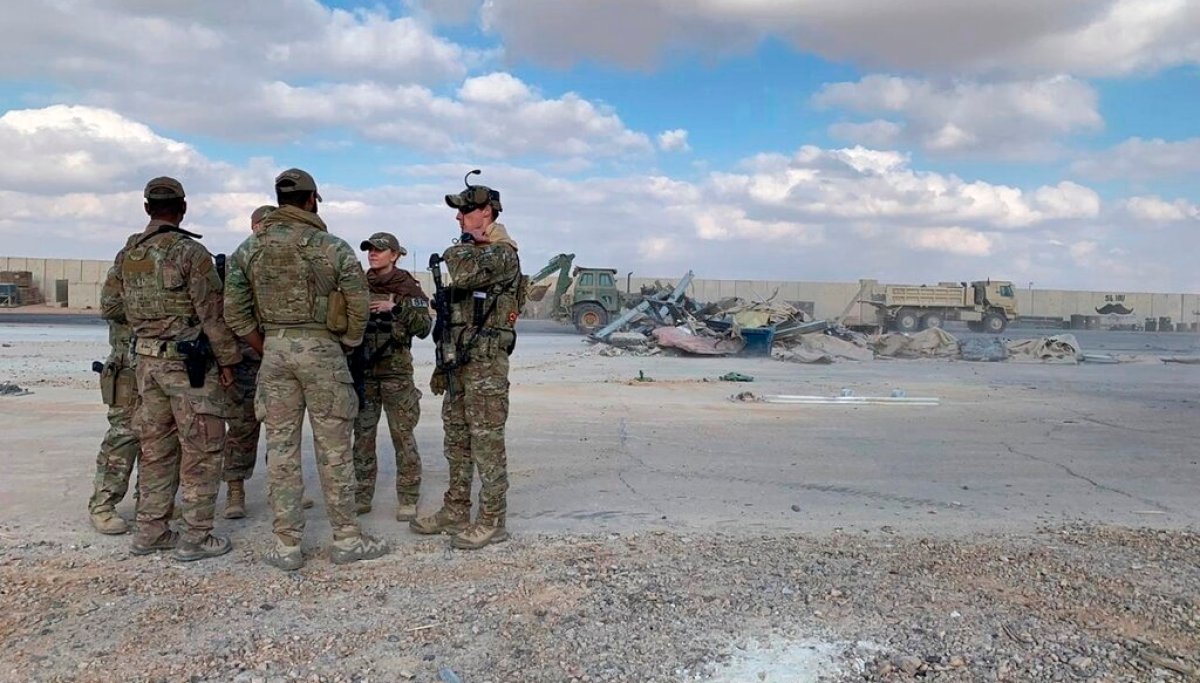
Photo via Washington Examiner

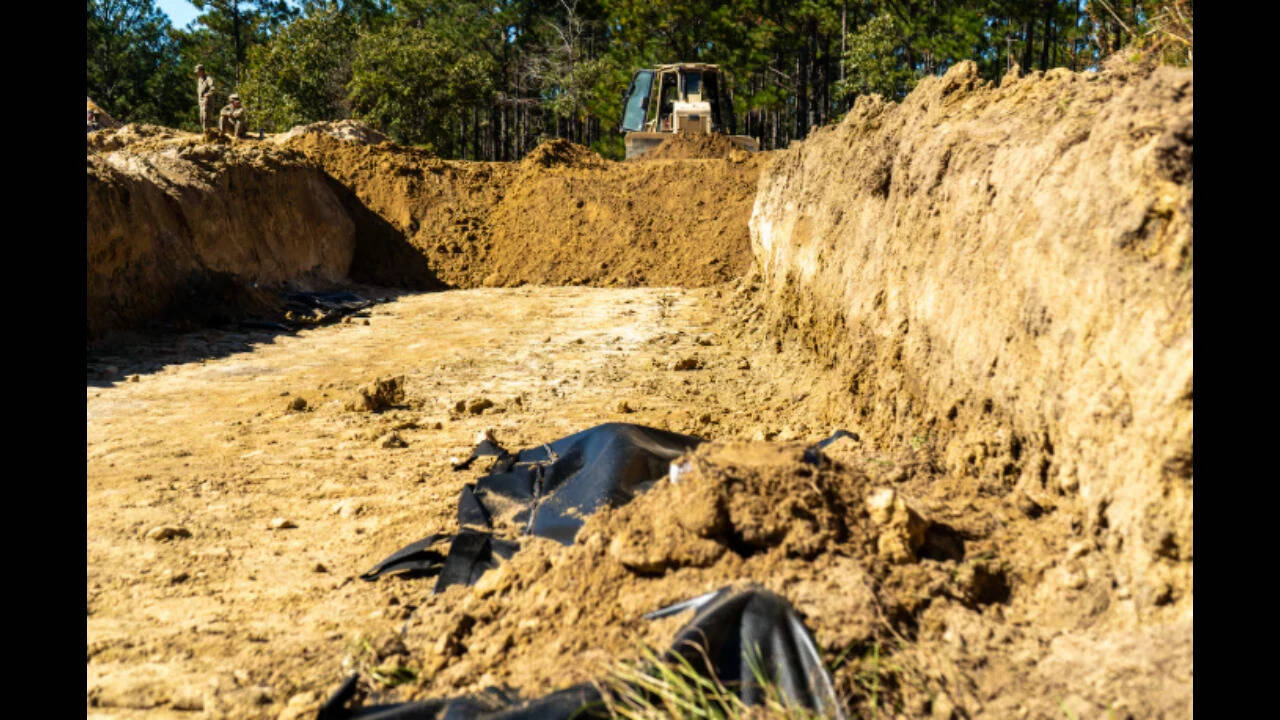
US Army conducted rare test of mass burial capabilities, not used since Korean War, at Fort Bragg

Read the original at Washington Examiner ↗
Cite

Knox, B. (2026, October 30). US Army conducted rare test of mass burial capabilities, not used since Korean War, at Fort Bragg. Washington Examiner. https://www.washingtonexaminer.com/policy/defense/4785920/us-army-conduct-test-mass-burial/

Dated from the outlet's own feed. Check the original for its byline.

Washington Examiner · collected 2026-10-30 · by Brady Knox

Quick Summary

The U.S. Army recently conducted a rare mass burial drill at Fort Bragg, the first such test since the Korean War. This exercise, part of Phase II of Operation Dragon Covenant, simulates scenarios involving large-scale casualties typical in major combat operations. The drill reflects the military's shift towards preparing for potential conflicts that could result in significant numbers of fatalities, a scenario not encountered due to recent technological and logistical advancements.
Written by AI on 2026-11-01, from this article's own text only (the story summary below draws on all the coverage).
See how they differ ↓

AI analysis

Story summary

On October 30, 2026, the U.S. Army conducted a rare large-scale exercise at Fort Bragg in North Carolina to test its ability to carry out mass burials, a practice not used since the Korean War. This was part of Phase II of Operation Dragon Covenant, aimed at preparing for potential high-intensity conflicts with significant casualties. Soldiers from the 3rd Corps Sustainment Command and the 20th Engineer Brigade used diggers and excavators to assess their effectiveness in managing large-scale battlefield interments. The exercise, near the St. Mere Eglise Drop Zone, included religious support personnel like military chaplains to ensure respectful handling of remains until they could be identified and repatriated to the U.S. Sgt. 1st Class Delbert Ruede emphasized that such preparation was essential, stating, "If we went to war tomorrow, we would be making this up as we went along." The Army stressed the importance of systematically managing fallen soldiers in high-intensity conflicts.

Written for “US Army Practices Mass Burial Capacities” on 2026-11-22, grounded in this article and the 1 other(s) covering the same event.

How they differ

2 outlets covered “US Army Practices Mass Burial Capacities”.

What each outlet says

One AI summary per outlet of its latest article on this story, written from that article alone and checked against it. Open the article for the outlet's own words.

Washington ExaminerThis outlet30 Oct

The U.S. Army recently conducted a rare mass burial drill at Fort Bragg, the first such test since the Korean War. This exercise, part of Phase II of Operation Dragon Covenant, simulates scenarios involving large-scale casualties typical in major combat operations. The drill reflects the military's shift towards preparing for potential conflicts that could result in significant numbers of fatalities, a scenario not…

US Army conducted rare test of mass burial capabilities, not used since Korean War, at Fort Bragg (this article)

Times of India31 Oct

The US Army recently conducted an exercise in North Carolina involving the digging of mass battlefield graves, a practice not used since the Korean War. Soldiers from Fort Bragg tested methods for quickly and respectfully burying up to 100 casualties using heavy machinery like D6 bulldozers, aiming to improve efficiency compared to standard backhoes which take three hours per trench. Adjustments were made during the…

Not used since the Korean War; US Army practices digging mass battlefield graves, 'If we went to war tomorrow...' →

Compared with similar articles

This article reads unscored and hedges 0% of its claims. Each row says how that neighbour differs.

Story

US Army Practices Mass Burial Capacities
Politics · 2 article(s) covering the same event. See how they differ ↑
How this article was measured signals, leaning charts, publisher record, byline, topics and claims

Signals How these are calculated →

Claims extracted
4
sentences that state something as happening or true
Uncertain
0%
0 of 4 hedged ("reportedly", "may", "according to")
Leaning
not political
takes no side on a contested political question
Publisher signals
67/100
Washington Examiner's corrections and hedging, across everything collected from it. Not a measure of accuracy.
Outlets on this story
2
Politics
Same framing elsewhere
1
articles that frame the event the way this one does
Analyzed 2026-11-01 · how these are computed

How this is being covered How these are calculated →

Article leaning vs. publisher reliability
Source leaning vs. consistency

Publisher

Washington Examiner · 5289 article(s) · 11 correction(s) detected
Running correction rate · 11 correction(s)

Who wrote this

Brady Knox
115 article(s) here · 0 carrying a prediction
The Congressional Budget Office warned that supplying nuclear submarines to Australia through the AUKUS deal could lead to the United States’s own fleet being depleted for “many years.”
President Donald Trump announced that he wouldn’t allow the construction of data centers outside of the United States, in a blow to several countries hoping for deeper artificial intelligence cooperation.
The United States and Israel are negotiating annual $3.3 billion military aid payments through 2033, despite President Donald Trump’s announcement that aid to Israel would end this year.
It long relied on bases in Venezuela, to which it would retreat after launching attacks on Colombian security forces.
When Riyadh and its Yemeni allies launched airstrikes on Sanaa airport on July 13, reigniting the Yemeni civil war, the anti-Houthi coalition could hardly have envisioned the conflict going worse than it did.
GasBuddy now puts the national average at $3.98 as of Tuesday, a number expected to continue falling through November.
Secretary of War Pete Hegseth’s pending impeachment would make him the third U.S. Cabinet official to be impeached in the nation’s history, though the distance between the first and second was nearly 150 years.
2026-11-10 · assertive framing · When have Cabinet members been impeached in US history?
He’s set to begin speaking at 6 p.m.
Denys Sienik, Ukraine’s charge d’affaires to the United States, pushed back against some Ukrainian officials’ predictions of an apocalyptic winter for the country, saying Kyiv and other cities wouldn’t depopulate.
President Donald Trump’s global foes found ample reason to celebrate Tuesday’s punishing midterm results, with the Democratic victory set to benefit them in different ways.
Also by Brady Knox
Nothing else under this byline is closely related to this article, so these are simply their most recent.
All 115 articles by Brady Knox →

Topics

Operation Dragon Covenant The U.S. Army U.S. the Korean War

Subjects

U.S. GPE · 3× The U.S. Army ORG · 1×

Narrative

The U.S.’s air supremacy, logistical advancements, and relatively low casualties scattered across a longer time period have spared the U.S. from having to carry out mass burials, instead being able to take bodies home individually for proper burial.
framing: assertive · carried by 1 article(s) · first seen 2026-11-01

Claims (4 extracted, 0 hedged)

The U.S. Army ran a rare large-scale exercise at Fort Bragg testing its ability to carry out mass burials, a practice it hasn’t used since the Korean War, in preparation for a hypothetical war involving mass casualties. asserted
it → run → casualties
The U.S.’s air supremacy, logistical advancements, and relatively low casualties scattered across a longer time period have spared the U.S. from having to carry out mass burials, instead being able to take bodies home individually for proper burial. asserted
supremacy → scatter → burial
As the U.S. military changes its focus towards large-scale combat operations, it has begun likewise preparing for large-scale casualties and its ability to bury a large number of corpses at once. asserted
it → change → corpses
It carried out its first openly disclosed exercise testing this ability at scale, Phase II of Operation Dragon Covenant, earlier this month. asserted
It → carry → Covenant
Give feedback · no sign-in needed

No sign-in needed for now. Your note is sent without a name, so it cannot be answered.

History Support