
Moon Crater Discovery
5 outlets
Each outlet's article on this story, most articles first
3 reporters
- The Straits TimesThe Straits Times
- Associated PressNew York Post
- Luke CooperABC News (AU)
By day
Articles per day
Cite
Moon Crater Discovery. (2026, October 13). The Aporia. https://the-aporia.com/event/14700
“Moon Crater Discovery.” The Aporia, 13 Oct. 2026, https://the-aporia.com/event/14700.
“Moon Crater Discovery.” The Aporia, October 13, 2026. https://the-aporia.com/event/14700.
Dated the day this page was built. The link always leads to this event, even after the stories are regrouped.
Scientists have discovered a crater on the moon that's bigger than the Roman Colosseum and is the result of a powerful impact two years ago that initially went undetected.
What happened
The outlets' own sentences, most widely reported first. Hover or tap one to see who reported it.
"This event constitutes a statistically rare, effectively once-in-a-lifetime observation," the scientists wrote in one of two studies appearing on the subject Wednesday in the journal Science Advances.
The crater is named for the late Thomas McGetchin, a former director of Houston's Lunar and Planetary Institute.
Such a large-scale event is estimated to occur only once every 132 years, researchers said, making this a treasure trove of information as NASA prepares to build a base for astronauts on the moon.
The moon strike escaped real-time detection by telescopes on Earth and in space.
What each outlet says
One AI summary per outlet of its latest article on this story, written from that article alone and checked against it. Open the article for the outlet's own words.
NASA's Lunar Reconnaissance Orbiter discovered a massive crater on the moon, larger than the Roman Colosseum, which measures about 728 feet across and up to 141 feet deep. Formed by an asteroid or comet fragment two years ago, it is the largest impact crater created in recent times and occurs once every 132 years on average. The spacecraft first spotted the crater between April 11 and May 22, 2024, though detailed…
NASA spacecraft discovers moon crater bigger than Roman Colosseum →A researcher at NASA discovered a recently formed crater on the Moon named McGetchin, measuring 222 meters wide, believed to have been caused by an asteroid or comet collision in spring 2024. Scientists consider impacts of this scale to be once-in-a-century events. The Lunar Reconnaissance Orbiter (LRO) detected the crater as a bright spot with a dark halo and it is noted as the largest newly discovered crater in…
NASA scan discovers new, ‘once in a century’ moon crater →Scientists using NASA’s Lunar Reconnaissance Orbiter discovered a massive new crater on the moon in May 2024, which is larger than the Roman Colosseum and estimated to occur only once every 132 years. The crater, named after Thomas McGetchin, measures about 728 feet across and up to 141 feet deep, making it three times bigger than a similar discovery from a decade ago. The impact also ejected dust and rocky soil…
NASA spacecraft discovers huge new crater on the moon →NASA scientist Robert Wagner discovered the largest newly formed crater on the Moon while examining data from the Lunar Reconnaissance Orbiter (LRO) in 2025. The McGetchin crater measures 222 meters across and 43 meters deep, larger than any previously recorded by LRO since its launch in 2009. Researchers believe it was formed between April and May 2024 from a comet or asteroid strike. This rare impact event occurs…
NASA scientist's chance Moon discovery reveals once-in-a-lifetime crater →NASA scientists have discovered a new crater on the moon larger than Rome’s Colosseum, measuring 222 meters across and up to 43 meters deep, formed by an asteroid or comet impact two years ago. This rare event, which occurs approximately once every 132 years, was spotted by NASA's Lunar Reconnaissance Orbiter (LRO) in May 2024 and confirmed early this year. The crater, named after Thomas McGetchin, reveals that such…
NASA satellite discovers a new crater on the moon that's bigger than the Colosseum →Analysis
Agreed
Reported by outlets on both sides of the middle
No sentence was reported across the range.
Disputed
Picked by our model, which is sometimes wrong
No disagreement the check could confirm. That does not prove there is none.
Framing
How the first headlines put it
How it changed
- 16 Sep
Scientists have discovered a crater on the moon that's bigger than the Roman Colosseum and is the result of a powerful impact two years ago that initially went undetected.
- 17 Sep
The LRO’s numerous crater discoveries since its launch in 2009 show that the moon’s top inch of soil is being overturned by ejected material every 80,000 years, faster than previously thought, according to Robinson.
Coverage 5 articles
Suggested from 5 outlets: the fullest account of the event, no political position was found in its wording and its publisher is declared as reporting rather than commentary.
- 17 Sep NASA satellite discovers a new crater on the moon that's bigger than the ColosseumNASA scientists have discovered a new crater on the moon larger than Rome’s Colosseum, measuring 222 meters across and up to 43 meters deep, formed by an asteroid or comet impact two years ago. This rare event, which occurs approximately once every 132 years, was spotted by NASA's Lunar Reconnaissance Orbiter (LRO) in May 2024 and confirmed early this year. The crater, named after Thomas McGetchin, reveals that such…CBC
17 Sep NASA scientist's chance Moon discovery reveals once-in-a-lifetime craterNASA scientist Robert Wagner discovered the largest newly formed crater on the Moon while examining data from the Lunar Reconnaissance Orbiter (LRO) in 2025. The McGetchin crater measures 222 meters across and 43 meters deep, larger than any previously recorded by LRO since its launch in 2009. Researchers believe it was formed between April and May 2024 from a comet or asteroid strike. This rare impact event occurs…ABC News (AU)
 17 Sep NASA spacecraft discovers huge new crater on the moonScientists using NASA’s Lunar Reconnaissance Orbiter discovered a massive new crater on the moon in May 2024, which is larger than the Roman Colosseum and estimated to occur only once every 132 years. The crater, named after Thomas McGetchin, measures about 728 feet across and up to 141 feet deep, making it three times bigger than a similar discovery from a decade ago. The impact also ejected dust and rocky soil…New York Post
17 Sep NASA scan discovers new, ‘once in a century’ moon craterA researcher at NASA discovered a recently formed crater on the Moon named McGetchin, measuring 222 meters wide, believed to have been caused by an asteroid or comet collision in spring 2024. Scientists consider impacts of this scale to be once-in-a-century events. The Lunar Reconnaissance Orbiter (LRO) detected the crater as a bright spot with a dark halo and it is noted as the largest newly discovered crater in…The Straits Times
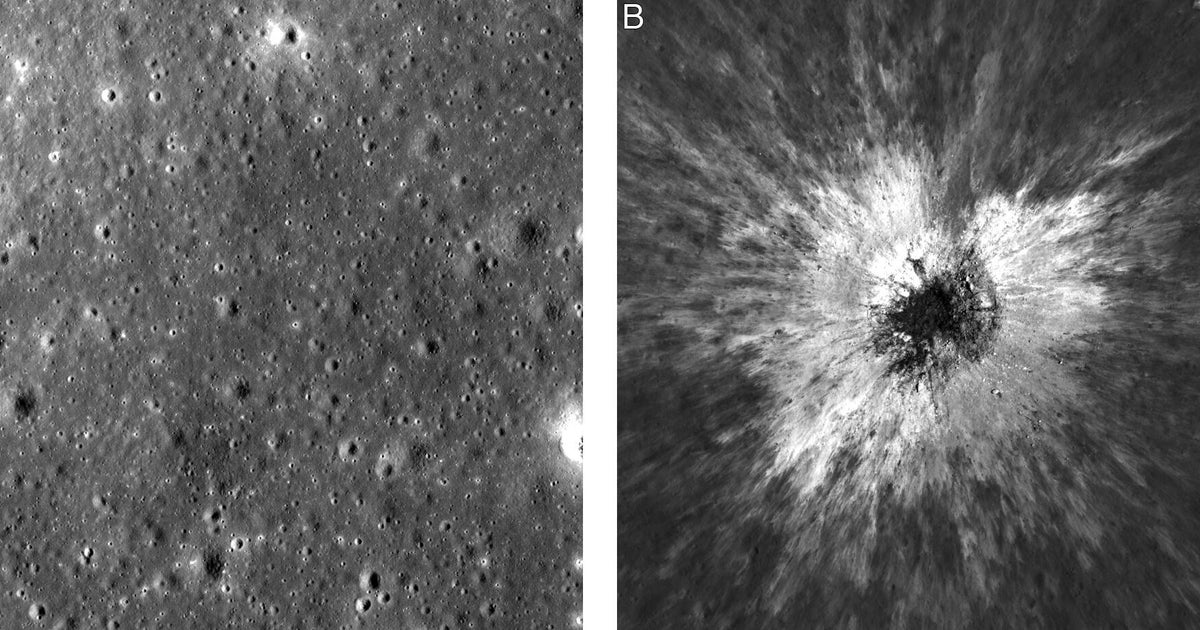 16 Sep NASA spacecraft discovers moon crater bigger than Roman ColosseumNASA's Lunar Reconnaissance Orbiter discovered a massive crater on the moon, larger than the Roman Colosseum, which measures about 728 feet across and up to 141 feet deep. Formed by an asteroid or comet fragment two years ago, it is the largest impact crater created in recent times and occurs once every 132 years on average. The spacecraft first spotted the crater between April 11 and May 22, 2024, though detailed…CBS News
Keep exploring
 Similar coverageSpaceX Rocket Hits Moon
 Similar coverageMoon Samples Magnetic Findings
 RecentGerman Cost Of Living Protests Turn Violent
 RecentArrests at Pro-Palestine Action Demos
 RecentThousands Rally Against Election Chief
 RecentBulgarian Presidential Run-off Vote
 RecentRussian Oil Refinery Attacks Continue
 RecentUS-Iran Negotiations Continue
 RecentUS Warns Russia Of Moscow Attack Plot
 RecentSpanish Train Crash Investigation Continues
Built 2026-10-13 from 5 articles. Every sentence on this page is quoted from the linked article; nothing was written by a model except the Summary and the items marked AI, which cite their sources, and the questions and labels under "Disputed". Photos are from the outlets that covered the story, never from articles our check marks sensitive.