Once again, a member of President Donald Trump's administration is threatening to punish private citizens for their speech using the power of the government.
asserted
member → threaten → government
Specifically, the chairman of the Federal Communications Commission (FCC) threatened broadcasters who dare to report on polls the president doesn't approve of.
asserted
president → threaten → polls
Even if the complaint were valid, it would be difficult to enforce without violating the First Amendment.
asserted
it → enforce → Amendment
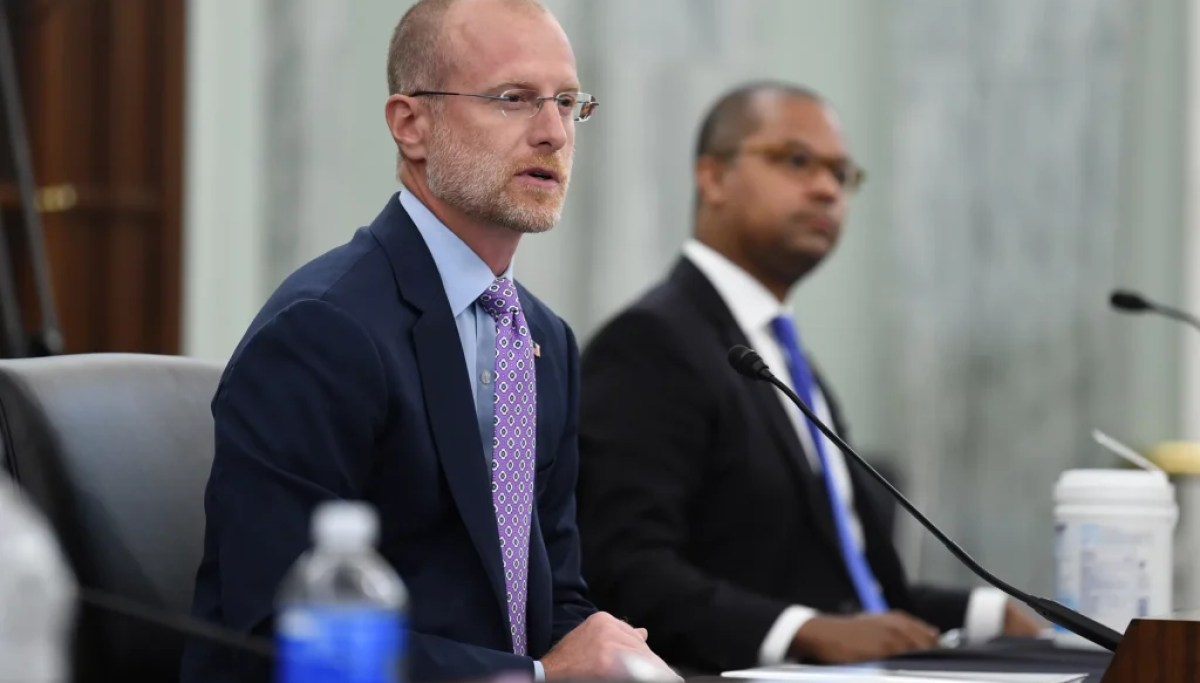
"During this election season, there has been a significant surge in entirely Fake Polls and Suppression Polls designed to do nothing more than interfere with the regular functioning of the electoral process and alter the normal patterns of voter turnout and enthusiasm," FCC Chairman Brendan Carr wrote on X. "Many journalists and broadcasters have been amplifying or airing these Polls without regard to basic journalistic ethics and without informing the public that those Polls lack a scientific, accurate, or even real basis."
Carr is directly adopting Trump's terminology, in addition to his erratic capitalization: The president often uses the term suppression polls to describe surveys that don't reflect in his favor.
asserted
that → design → favor
The implication is that these polls are manufactured to conceal or downplay enthusiasm for Trump or his preferred candidates, making it less likely that his supporters will turn out if they think it's a lost cause.
asserted
it → manufacture → Trump
Carr doesn't single out any offenders, though there are some likely examples.
asserted
Carr → single → offenders
This week, purported pollster Wedgewood Polls revealed that as part of an "experimental project," it had released surveys with "fabricated numbers" that were printed by outlets like FiftyPlusOne (which sussed out the fraud) and The New York Times.
asserted
which → reveal → fraud
Similarly, in August, Median Strategies withdrew two polls, then revealed that it had fabricated the results for a "social experiment."
asserted
it → withdraw → experiment
And depending on what promises were made, it's possible one firm or the other could face legal consequences.
uncertain
firm → depend → consequences
But it's hard to see how a news outlet could face legal reprisal for just reporting the results of a survey it thought was conducted accurately.
uncertain
it → see → survey
"The FCC takes these issues seriously," Carr added.
asserted
FCC → take → issues
"Broadcasters are prohibited by the terms of their federal licenses from engaging in News Distortion or promoting Broadcast Hoaxes.
asserted
Broadcasters → prohibit → Hoaxes
It is important that broadcasters comply with their public interest obligations."
There are indeed rules against news distortion and broadcast hoaxes, but they're narrowly tailored to avoid conflicting with the First Amendment.
"
asserted
they → comply → Amendment
News distortion 'must involve a significant event and not merely a minor or incidental aspect of the news report,'" according to the FCC.
uncertain
distortion → involve → FCC
In addition, "broadcasters are only subject to enforcement if it can be proven that they have deliberately distorted a factual news report.
asserted
they → prove → report
Expressions of opinion or errors stemming from mistakes are not actionable."
asserted
Expressions → stem → mistakes
The hoax rule, on the other hand, is even less applicable: It involves "broadcasting false information concerning a crime or a catastrophe," where the broadcaster "knows this information is false" and can foreseeably "cause substantial public harm" but airs it anyway, and the broadcast then "does in fact directly cause substantial public harm."
In other words, neither standard applies to a broadcaster that covered an inaccurate poll, especially without knowing at the time that it was wrong.
asserted
it → involve → time
"Pollsters who intentionally mislead the public should answer for it, but broadcasters who report publicly available polling data should never be punished when a poll is wrong," Anna Gomez, the lone Democratic FCC commissioner, wrote on X.
asserted
Gomez → mislead → X.
"FCC rules on news distortion or hoaxes do not apply to a station that reports this data in good faith.
asserted
that → apply → faith
Carr doesn't specify what he thinks should happen to any offenders, though since he tends to define "public interest" as whatever Trump says, we can make an educated guess.
asserted
we → specify → guess
Right before the 2024 presidential election, The Des Moines Register published a poll that found then–Vice President Kamala Harris leading Trump in Iowa by three percentage points.
asserted
Harris → publish → points
Trump ended up winning the state by 13 percentage points, but he was apparently so upset by the poll that he sued both the Register and pollster Ann Selzer, claiming the inaccurate survey constituted "brazen election interference" that violated the Iowa Consumer Fraud Act.
asserted
that → end → Act
Just as Carr suggested this week in his social media post, Trump was trying to create an exception to the First Amendment for "fake news.
uncertain
Trump → suggest → news
"In the United States there is no such thing as a claim for 'fraudulent news,'" Robert Corn-Revere, chief counsel at the Foundation for Individual Rights and Expression, wrote in a motion on the defendants' behalf.
uncertain
Revere → be → behalf
"No court in any jurisdiction has ever held such a cause of action might be valid, and few plaintiffs have ever attempted to bring such outlandish claims."
uncertain
plaintiffs → hold → claims
A judge agreed and dismissed the lawsuit last month.
"
asserted
judge → agree → lawsuit
If someone is accurately reporting the results of a poll, that wouldn't be a false statement," UCLA law professor Rick Hasen told The Washington Post at the time.
asserted
Hasen → report → time
"The poll might have errors in it, but that wouldn't be a false statement.
uncertain
that → have → it
Unless he can somehow prove that a broadcaster knew a pollster had faked a survey, there's no way Carr can punish someone for reporting on the results without running afoul of the First Amendment.
asserted
Carr → prove → Amendment
And he is just about the least qualified person in the country to lecture the press about journalistic ethics," Seth Stern, chief of advocacy at the Freedom of the Press Foundation, said in an emailed statement.
asserted
Stern → lecture → statement
"News broadcasters have a First Amendment right to report polling data, even if it proves to be inaccurate, just like they have a First Amendment right to report on Carr and Trump's own countless lies and distortions, even when they turn out to be inaccurate.
asserted
they → have → Carr
FCC policies about hoaxes and distortions must be applied narrowly to avoid clashing with the Constitution, if they can be constitutionally applied at all."
asserted
they → apply → Constitution
 The Aporia