The One Question AI Could Not Answer

Read the original at South China Morning Post ↗
Cite

partner, A. (2026, October 22). The One Question AI Could Not Answer. South China Morning Post. https://www.scmp.com/presented/news/hong-kong/education/topics/garden-house-waldorf-school/article/3371650/one-question-ai-could-not-answer

Dated from the outlet's own feed. Check the original for its byline.

South China Morning Post · collected 2026-10-22 · by Advertising partner

Quick Summary

Hong Kong's government is investing heavily in artificial intelligence tools for education, advocating that children need to master technology. However, an advertisement by Garden House Waldorf School argues that true mastery of AI requires more than just screen time; it necessitates physical activity and sensory engagement. The school emphasizes the detrimental effects of excessive screen usage on children’s emotional stability, curiosity, and risk of myopia, citing studies showing increased risks of anxiety and depression with higher screen exposure.
Written locally by qwen2.5:14b on 2026-10-22, using this article's own text rather than the other coverage of the same event (that is the story summary below).

AI analysis runs on qwen2.5:14b, locally

Story summary

Hong Kong's government has committed significant funding to integrate artificial intelligence into educational settings, supporting schools like Garden House Waldorf School in purchasing AI tools and digital resources. However, the school emphasizes that mastering technology requires more than just screen time; it necessitates fostering qualities such as groundedness, confidence, imagination, and humanity through non-digital means. The school argues that while AI can support learning by calculating, translating, summarizing, generating images, and simulating conversation at an astonishing speed, it cannot replace the experiences that help children develop into fully rounded individuals. This approach underscores a broader debate about the role of technology in education and the need for balance between digital tools and traditional teaching methods to ensure holistic development.

Written for “AI Limitations Revealed” on 2026-10-22, grounded in this article and the 0 other(s) covering the same event.
Why this leaning score
The article's own words the score was based on. Each is quoted verbatim and was checked against the article text before being stored, so you can find it in the original.
Reading Leans left (beta estimate) Confidence high
Leaning: leans left for article 99485 (high confidence, 4 verified quotes) · logged 2026-10-22

Story

📰 AI Limitations Revealed
Education · 1 article(s) covering the same event.

Compared with similar articles

Nothing to compare against. No article is close enough to this one for the pipeline to have linked or judged the pair.
How this article was measured signals, leaning charts, publisher record, byline, topics and claims

Signals How these are calculated →

Claims extracted
37
sentences that state something as happening or true
Uncertain
5%
2 of 37 hedged ("reportedly", "may", "according to")
Leaning
Leans left
of the writing, not the subject · beta estimate
Publisher signals
64/100
South China Morning Post's corrections and hedging, across everything collected from it. Not a measure of accuracy.
Outlets on this story
1
Education
Same framing elsewhere
1
articles that frame the event the way this one does
Analyzed 2026-10-22 · how these are computed

How this is being covered How these are calculated →

Article leaning vs. publisher reliability
Source leaning vs. consistency

Publisher

South China Morning Post · 2870 article(s) · 6 correction(s) detected
Running correction rate · 6 correction(s)

Who wrote this

Advertising partner
13 article(s) here · 1 carrying a prediction
🔮 The One Question AI Could Not Answer [The content of this article has been produced by our advertising partner.
2026-10-22 · assertive framing · The One Question AI Could Not Answer
🔮 Fresh from winning the largest Chess Olympiad in history on home soil, Uzbekistan is sending 20-year-old Javokhir Sindarov to Geneva, where he will challenge Gukesh Dommaraju for the world title in the youngest World Championship match the game has ever seen.
🔮 That relationship is expressed in its latest campaign, “A Tale of Two Cities, For Your Wealth and Beyond”, which presents the two financial centres as complementary bases for serving clients whose business, wealth and families may increasingly cross borders.
2026-10-21 · assertive framing · A Tale of Two Cities, retold in style
🔮 "Shaping the Future: Sport, Health and Education 2026", which will be held in November.
🔮 Companies from the competition’s mainland regional contests will also gain access to Hong Kong’s industry, investment and business networks.
2026-10-21 · assertive framing · From ideas to impact
🔮 Taking place in Hong Kong late this month, the International Gas Union (IGU) Council 2026 and the “Empowering a Sustainable Future” Summit will offer an essential platform for cross-sector leaders to exchange perspectives on these pressing challenges.
🔮 Before Shanghai, Tse had identified pipework and X-ray inspection as areas where marks could be lost.
🔮 During their meeting in Beijing in May, Xi and US President Donald Trump agreed that the two countries should expand exchanges and co-operation in areas including tourism and people-to-people ties.
🔮 As Hong Kong prepares for a much larger EV population, a new Gold Coast pilot shows where ultra-fast charging could fit into the city’s expanding network [The content of this article has been produced by our advertising partner.
2026-09-18 · assertive framing · The need for speed as Hong Kong plugs in
🔮 The global healthcare and diagnostics leaders are set to convene Asia Pacific’s foremost healthcare voices for a landmark conference spotlighting healthcare innovation breakthroughs reshaping care worldwide.
Also by Advertising partner
A Tale of Two Cities, retold in style
2026-10-21 · South China Morning Post
From ideas to impact
2026-10-21 · South China Morning Post
Nothing else under this byline is closely related to this article, so these are simply their most recent.
All 13 articles by Advertising partner →

Topics

Garden House Waldorf School Hong Kong

Subjects

Garden House Waldorf School ORG · 1× Hong Kong GPE · 1×

Narrative

But it operates on a dangerous assumption: that understanding words is equivalent to understanding thought, and that understanding thought is equivalent to understanding another human being.
framing: assertive · carried by 1 article(s) · first seen 2026-10-22
🔮 The One Question AI Could Not Answer [The content of this article has been produced by our advertising partner.
2026-10-22 · South China Morning Post
The One Question AI Could Not Answer · assertive framing

Claims (37 extracted, 2 hedged)

The One Question AI Could Not Answer [The content of this article has been produced by our advertising partner. uncertain
content → answer → partner
] Why Children Need More Than Screens to Master the Future Hong Kong is moving decisively into the age of artificial intelligence in education. asserted
Kong → need → education
The government has committed significant funding to digital education, supporting schools in purchasing AI tools, digital resources and related training. asserted
government → commit → tools
The message from policymakers is clear: our children must learn to master technology. asserted
children → learn → technology
But true mastery requires much more than screen time. asserted
mastery → require → time
To master AI, children must first master something far older, subtler and more profound themselves. asserted
children → master → something
Artificial intelligence can calculate, translate, summarise, generate images and simulate conversation at astonishing speed. asserted
intelligence → calculate → speed
Used well, it can support learning and open new possibilities. asserted
it → use → possibilities
But AI cannot replace the experiences through which children become grounded, confident, imaginative and fully human. asserted
children → replace → which
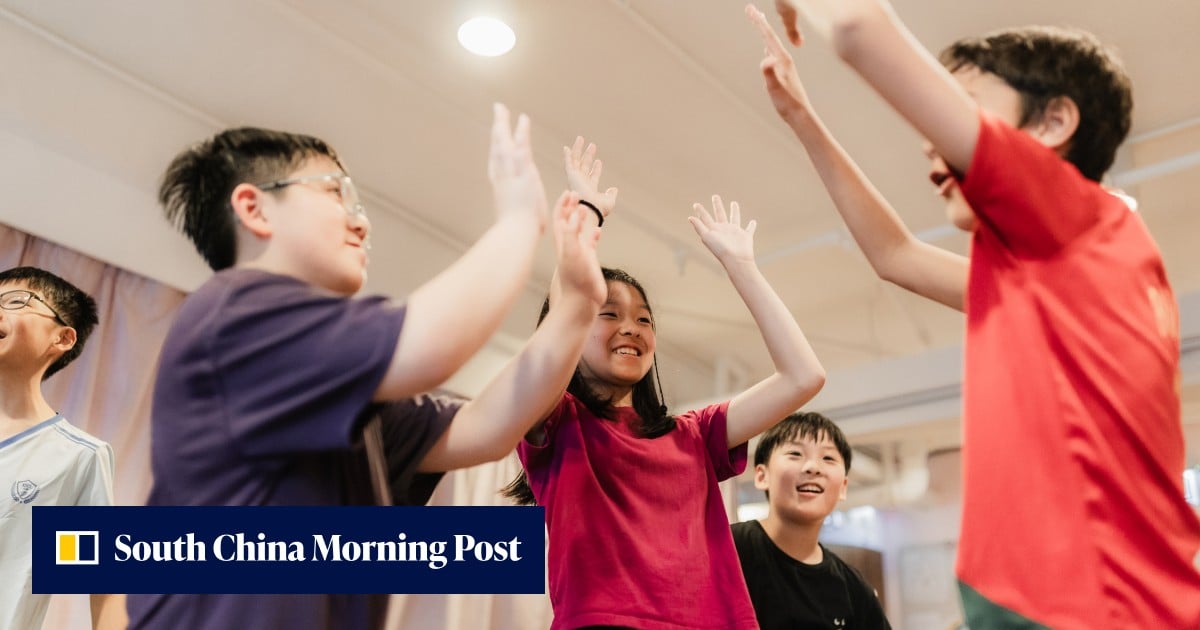
This is why, at Garden House Waldorf School, our approach to education begins not with the screen, but with the child. asserted
approach → begin → child
Studies tracking children aged two to five have found that as screen time increases, so does emotional fragility, irritability, difficulty calming down, and an inability to complete tasks. asserted
fragility → track → tasks
These patterns persist across age groups from six to seventeen. asserted
patterns → persist → seventeen
Children with high screen exposure struggle to remain calm when faced with challenges. asserted
Children → struggle → challenges
Their curiosity declines. asserted
curiosity → decline → ?
The risks of anxiety and depression escalate. asserted
risks → escalate → anxiety
They are signals of confusion — of a child who has lost their internal compass. asserted
who → lose → compass
It is everything that screen time displaces: physical activity, imaginative play, face-to-face interaction, and the rich sensory engagement that builds resilience. asserted
that → displace → resilience
A landmark study involving over 300,000 children found that for every additional hour of daily screen time, the risk of myopia increases. asserted
risk → involve → myopia
At four hours per day, the risk roughly doubles. asserted

risk → double → day
In parts of Asia, myopia rates have surged from modest levels in the 1970s to 80 or even 90 percent today. asserted
rates → surge → percent
The eye is designed for flexibility — alternating between distant horizons and nearby objects. asserted
eye → design → horizons
Locked onto screens for hours, it loses that adaptability. asserted
it → lock → adaptability
The Sensory Imbalance of the Digital Age Consider the online meetings that have become part of our daily lives. asserted
that → consider → lives
They engage at most two senses: vision and hearing. asserted
They → engage → senses
A mode of perception dominated by vision and hearing will only intensify, leaving the lower senses — touch, smell, taste, life sense, balance and movement — chronically underdeveloped. asserted
mode → dominate → senses
AI excels at recognising words. asserted
AI → excel → words
But it operates on a dangerous assumption: that understanding words is equivalent to understanding thought, and that understanding thought is equivalent to understanding another human being. asserted
understanding → operate → being
Everything becomes confined to the literal, with no warmth to complete the circuit. asserted
Everything → confine → circuit
There are people who "know" each other through social media, yet find themselves completely lost when meeting in real life. asserted
themselves → be → life
They possess information about one another, but they lack the sensory experience of one another. asserted
they → possess → one
Wisdom Cannot Be Downloaded asserted
Wisdom → download → ?
None of this means that technology is bad, nor that AI should be kept out of education forever. asserted
AI → mean → education
Children must eventually learn to understand it, question it and use it wisely. asserted
Children → learn → it
The question for our age is not whether children will use AI. asserted
children → use → AI
The question is whether they will bring to it a fully developed humanity — bodies that are awake, senses that are alive, hearts that can feel, and minds that can judge. asserted
that → bring → humanity
That is the one question AI could not answer. uncertain
AI → answer → ?
It can only be answered by how we choose to educate our children. asserted
we → answer → children
💬Give feedback
🕘History 🎫Support