Faster reforms could triple Pakistan’s incomes by 2050, says World Bank

Read the original at Dawn ↗
Cite

Ahmed, A. (2026, October 22). Faster reforms could triple Pakistan’s incomes by 2050, says World Bank. Dawn. https://www.dawn.com/news/2038999/faster-reforms-could-triple-pakistans-incomes-by-2050-says-world-bank

Dated from the outlet's own feed. Check the original for its byline.

Dawn · collected 2026-10-22 · by Amin Ahmed

Quick Summary

The World Bank Group's latest report suggests that Pakistan’s incomes could triple by 2050 if structural reforms are implemented more swiftly. The report, titled "Attaining Escape Velocity," highlights how recent macroeconomic stabilisation efforts have laid a foundation for further growth, with real GDP growing to 3.7% in fiscal year 26 from 3.2% the previous year. It emphasizes that achieving sustained annual growth of 6.2% to 6.9%, akin to what other successful countries have accomplished through reforms, is crucial for Pakistan's future prosperity.
Written locally by qwen2.5:14b on 2026-10-22, using this article's own text rather than the other coverage of the same event (that is the story summary below).

AI analysis runs on qwen2.5:14b, locally

Story summary

The World Bank Group's latest report, titled "Attaining Escape Velocity," predicts that Pakistan’s incomes could triple by 2050 if the country implements structural reforms more quickly. According to the report, timely adjustments to power-sector tariffs have already reduced energy subsidies from 1.1% of GDP in FY25 to 0.8% in FY26, contributing to macroeconomic stability. Real gross domestic product (GDP) growth increased to 3.7% in FY26 from 3.2% in FY25, with revenue growth and expenditure restraint supporting primary fiscal surpluses of 2.9% of GDP. Strong remittances helped rebuild foreign exchange reserves, leading two major international rating agencies—S&P and Moody’s—to upgrade Pakistan's ratings. These improvements allowed the country to return to international debt markets by issuing a $3 billion Eurobond.

Written for “Pakistan Economic Reforms Prospects” on 2026-10-22, grounded in this article and the 0 other(s) covering the same event.
Why this leaning score
This article does not take a side on a contested political question, so it has no leaning score. That is an answer rather than a gap: a match report or a rescue can be warmly or critically written without being left or right, and scoring it anyway is how approval of a subject gets recorded as a political position.
No political leaning scored for article 98933 · logged 2026-10-22

Story

📰 Pakistan Economic Reforms Prospects
Economy/Business · 1 article(s) covering the same event.

Compared with similar articles

This article reads unscored and hedges 18% of its claims. Each row says how that neighbour differs.
Spurring economic growth different event · 95%
Dawn
⚖️ Leans right 🔴 3% hedged 2 of 66 📰 publisher trust 71
“The articles discuss different reports and updates by the World Bank with distinct focuses and timeframes.”
How this article was measured signals, leaning charts, publisher record, byline, topics and claims

Signals How these are calculated →

Claims extracted
17
sentences that state something as happening or true
Uncertain
18%
3 of 17 hedged ("reportedly", "may", "according to")
Leaning
not political
takes no side on a contested political question
Publisher signals
71/100
Dawn's corrections and hedging, across everything collected from it. Not a measure of accuracy.
Outlets on this story
1
Economy/Business
Same framing elsewhere
1
articles that frame the event the way this one does
Analyzed 2026-10-22 · how these are computed

How this is being covered How these are calculated →

Article leaning vs. publisher reliability
Source leaning vs. consistency

Publisher

Dawn · 2060 article(s) · 3 correction(s) detected
Running correction rate · 3 correction(s)

Who wrote this

Amin Ahmed
8 article(s) here · 1 carrying a prediction
🔮 Pakistan’s incomes could triple by 2050 if the country ensures faster implementation of structural reforms, according to the World Bank Group’s latest Pakistan Development Update, titled Attaining Escape Velocity.
🔮 The report, Ten Largest Global Food Crises, released on Friday in connection with World Food Day, warns that an estimated 10.6 million people in Pakistan will require humanitarian assistance in 2026, despite ongoing recovery efforts and improvements in some macroeconomic indicators.
🔮 The report warned that high levels of acute food insecurity will persist across the region.
2026-10-15 · assertive framing · Pakistan worst hit by hunger in South Asia
🔮 Referring the matter back to the CCI at this stage could cause significant delays, affect investor confidence and adversely impact the financial position of power distribution companies, he argued.
🔮 However, it adds that when populations grow faster than institutions, governments must be willing to redesign them so that decisions, resources and accountability are brought closer to the people affected by them.
🔮 The mission will carry out assessments and management of environmental and social risks and impacts, labour and working conditions, resource conservation and pollution prevention, land acquisition and land-use restrictions, biodiversity and sustainable natural resources management, cultural heritage, and climate change.
2026-10-01 · assertive framing · Asian Development Bank backs ML-1 modernisation
Also by Amin Ahmed
Nothing else under this byline is closely related to this article, so these are simply their most recent.
All 8 articles by Amin Ahmed →

Topics

ISLAMABAD Pakistan Pakistan Development Update the Middle East conflict the World Bank Group’s

Subjects

Pakistan GPE · 7× Bolormaa Amgaabazar PERSON · 1× ISLAMABAD GPE · 1× Moody’s ORG · 1× Pakistan Development Update ORG · 1× Pakistani NORP · 1× S&P ORG · 1× Vietnam GPE · 1× World Bank ORG · 1× the World Bank Group’s ORG · 1×

Narrative

These include timely adjustments to power-sector tariffs, which helped reduce energy subsidies from 1.1pc of GDP in FY25 to 0.8pc in FY26, continued trade liberalisation under the National Tariff Policy and the recent privatisation of Pakistan International Airlines (PIA).
framing: assertive · carried by 1 article(s) · first seen 2026-10-22
🔮 Pakistan’s incomes could triple by 2050 if the country ensures faster implementation of structural reforms, according to the World Bank Group’s latest Pakistan Development Update, titled Attaining Escape Velocity.

Claims (17 extracted, 3 hedged)

Pakistan’s incomes could triple by 2050 if the country ensures faster implementation of structural reforms, according to the World Bank Group’s latest Pakistan Development Update, titled Attaining Escape Velocity. uncertain
country → triple → Velocity
The report says that following progress on macroeconomic stabilisation, Pakistan has an opportunity to achieve faster and sustained economic growth and create more jobs. asserted
Pakistan → say → jobs
Sound macroeconomic policies in recent years have helped stabilise the economy and preserve growth despite the impact of the Middle East conflict. asserted
policies → help → conflict
Real gross domestic product (GDP) growth increased to 3.7 per cent in FY26 from 3.2pc in FY25. asserted
growth → increase → FY25
Revenue growth and expenditure restraint supported record primary fiscal surpluses, which reached 2.9pc of GDP in FY26, while strong remittances enabled the country to rebuild its foreign exchange reserves. asserted
remittances → support → reserves
These improvements were recognised through upgrades by two major international rating agencies, S&P and Moody’s, and enabled Pakistan to return to international debt markets with the issuance of a $3 billion Eurobond. asserted
improvements → recognise → Eurobond
“Pakistan has made real progress in restoring stability, and markets have taken notice,” World Bank Country Director Bolormaa Amgaabazar said. asserted
Amgaabazar → make → notice
“But real per capita growth — the rate at which the income of the average Pakistani increases — remains stuck at around 1.6pc. asserted
income → increase → 1.6pc
Reforms to drive faster growth are now urgently needed,” she added. asserted
she → drive → growth
The report finds that higher growth is possible if Pakistan follows the path taken by other successful countries in pursuing ambitious economic reforms. asserted
Pakistan → find → reforms
Upgrading policies and institutions to the standards of the average middle-income country could drive sustained annual growth of 6.2pc to 6.9pc, allowing Pakistan to reach Vietnam’s current income level by 2050. uncertain
Pakistan → upgrade → 2050
“With macro stabilisation achieved but fiscal resources and foreign exchange still tightly constrained, structural reform to encourage private investment is the necessary next step towards higher living standards,” said Sebastian Essl, the report’s lead author. asserted
Essl → achieve → standards
“Achieving this kind of private-sector-led growth requires a plan, coordination, and committed reform implementation,” he added. asserted
he → achieve → plan
The report outlines an ambitious set of reforms that could enable Pakistan to attain by 2050 the per capita income levels of countries currently at the upper-middle-income threshold. uncertain
that → outline → threshold
Many of the proposed measures build on reforms already underway. asserted
Many → propose → reforms
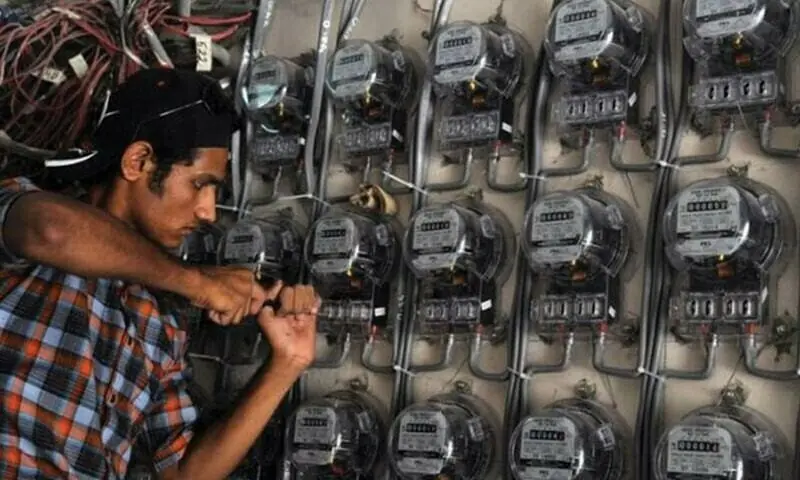
These include timely adjustments to power-sector tariffs, which helped reduce energy subsidies from 1.1pc of GDP in FY25 to 0.8pc in FY26, continued trade liberalisation under the National Tariff Policy and the recent privatisation of Pakistan International Airlines (PIA). asserted
which → include → Airlines
Building on these measures, sustained progress will depend on further reforms to improve the business environment, overhaul the tax system, reduce the state’s presence in the economy and expand access to finance. asserted
progress → build → finance

💬Give feedback
🕘History 🎫Support