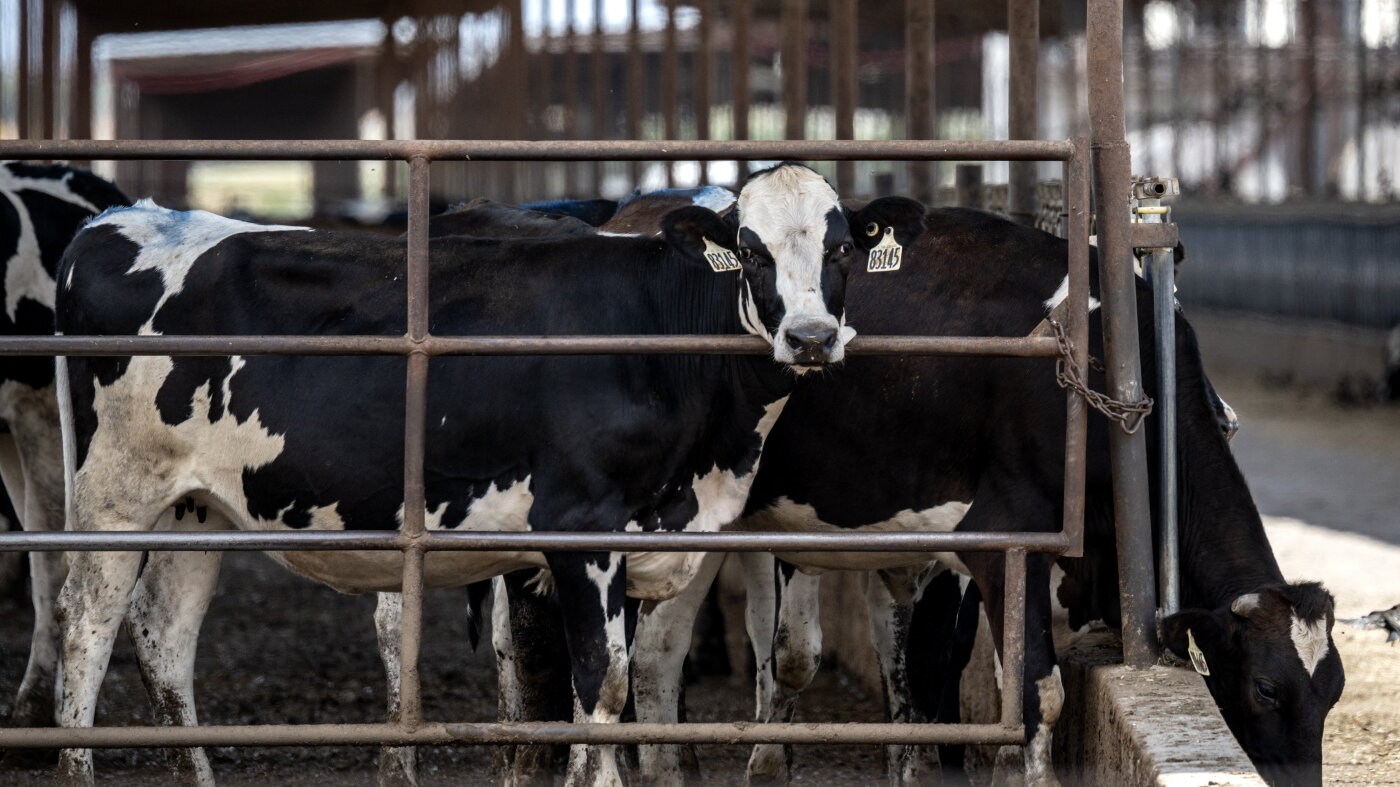
Farm country has beef with Trump as midterms approach
Driving around his farm in a four-wheeler, Scott Birker warned that his cattle were in a bad mood.
asserted
cattle → have → mood
"They're a little grumpy with me right now," he said.
asserted
he → say → me
When asked why, he said matter-of-factly: "We just got done weaning."
asserted
We → ask → ?
Birker should know his herd well, given that he's been raising beef cattle outside the Eastern Iowa town of Garrison since 2001.
asserted
he → know → 2001
His operation has about 150 "mama cows" and sells feeder calves, as well as some cattle for meat.
asserted
operation → have → meat
All of which is to say that since August, when Trump announced that his administration would raise the quota on beef imported under lower tariffs – temporarily suspending tariffs on up to 300,000 metric tons of imported beef – Birker knows it when he says: that hurt people.
asserted
that → say → people
"That surprise, with a very volatile market already, with a tight supply, hurts us really, really fast and really, really hard," Birker said.
asserted
Birker → hurt → us
It's not that raising beef cattle was easy before that new import policy.
asserted
raising → raise → policy
Margins are always tight, says Zach Raff, incoming livestock economist at Iowa State University.
asserted
Raff → say → University
But there have also been other challenges – for example, drought in much of the western U.S. made hay much more expensive and shrank the nation's beef herd.
asserted
hay → make → herd
"The beef herd size is at an all time low – a 75-year-low," said Raff.
asserted
Raff → say → low
"So you couple that with very strong demand.
asserted
you → couple → demand
And that's going to make prices what you see at the store right now."
asserted
you → go → store
Ground beef currently costs around $6.80 a pound – a fact of which the Trump administration is keenly aware.
asserted
administration → cost → which
But the administration's attempts to bring those prices down have backfired politically and possibly economically..
uncertain
attempts → bring → prices
Multiple Trump administration policies have made life tougher for beef producers.
asserted
life → make → producers
Last year, amid the trade war between the two countries, China cut its US beef purchases.
asserted
China → cut → purchases
In February, Trump signed an executive order to subject some Argentinian beef to fewer tariffs.
asserted
Trump → sign → tariffs
And in August, he signed the executive order to suspend tariffs on 300,000 metric tons of beef imports – specifically, lean beef trimmings, with the goal of lowering the price of ground beef.
asserted
he → sign → beef
The order added that the imported beef was to be sold at 25% below market prices.
asserted
beef → add → prices
That helped push U.S. cattle prices lower, but the far bigger challenge, according to Raff, was the amount of uncertainty it introduced.
uncertain
it → push → uncertainty
"If I'm a producer, I think, well, look what's happening – perhaps next year they're going to import even more.
asserted
they → think → more
The year after, there's going to be a different policy," said Raff.
asserted
Raff → be → ?
"And I'm going to say, 'Well, these prices for my cattle right now are at record highs and projected to be high.
asserted
prices → go → highs
So I'm just going to send my heifers to be processed.'
asserted
I → go → heifers
I'm not going to decide to replace the beef herd when I know that there's a lot of uncertainty."
asserted
I → go → uncertainty
This means the beef imports can have an added downside, disincentivizing producers from keeping breeding stock around that could grow the beef herd, which would lower beef prices in the long run.
uncertain
which → mean → run
From an economics 101 perspective, the Trump decision to import more beef does make sense as a way of bringing down consumer prices.
asserted
decision → import → prices
But the 300,000 metric tons that could be exempted from tariffs is equivalent to around 2% of total US beef consumption.
uncertain
that → exempt → consumption
That made for a lose-lose situation: the policy was enough to rattle beef producers, but not enough to help consumers.
asserted
policy → make → consumers
All of this looms over the 2026 midterm elections, especially in farm states such as Iowa.
asserted
All → loom → Iowa
Iowa Republican Rep. Ashley Hinson, who's running for the state's open Senate seat, made news when she publicly broke with the Trump administration on its decision to lower tariffs on beef imports.
asserted
she → run → imports
"We need to focus on affordability, but I think this isn't the way to do that," she said on Fox News.
asserted
she → need → News
"I think we need to focus on helping our cattlemen grow their herd."
asserted
cattlemen → think → herd
Her opponent, Democratic state legislator Josh Turek, has in turn been stressing that Hinson has supported some Trump policies that have hurt farmers writ large.
asserted
that → stress → farmers
"She's been in favor of all this five times in favor of the tariffs," he said in an interview with NPR.
asserted
he → say → NPR
"Farmers rely on markets, on free trade, more than any other group."
asserted
Farmers → rely → group
In the governor's race, similarly, Democratic state auditor Rob Sand has sharply criticized Trump's trade policies, while Republican businessman Zach Lahn has avoided that kind of criticism.
asserted
Lahn → criticize → criticism
Iowa Republican strategist David Oman says that in either race, the beef policy could be a deciding factor.
uncertain
policy → say → race
"Both of them will be two- or three-, four-point races in my view," he said.
asserted
he → say → view
…and 19 more, not listed.
 The Aporia