How long does it take to save up for a starter home?
asserted
it → take → home
Twice as long as it did in 2019
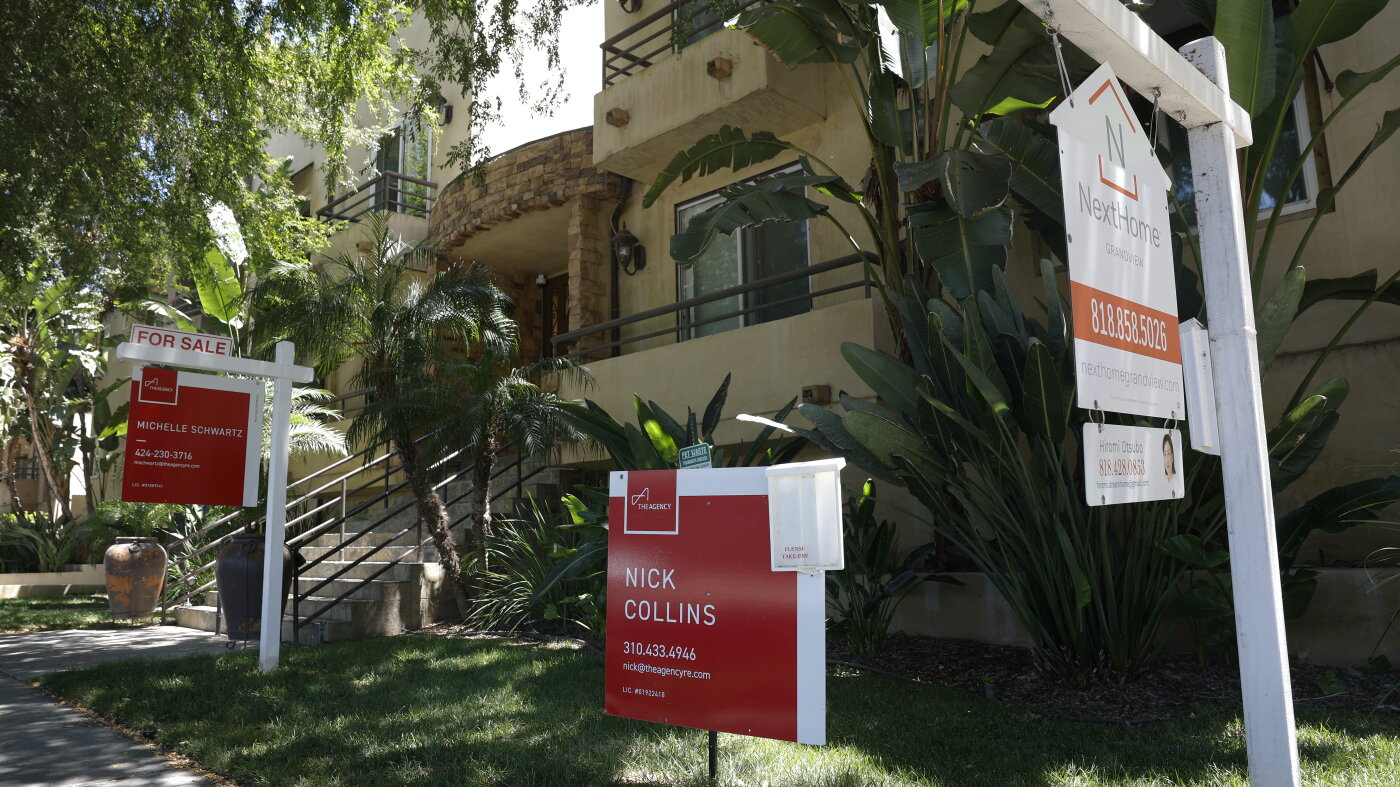
Mortgage rates topping 7% is the latest sign of how hard it has gotten to buy a first house, with aspiring owners already facing sky-high prices.
asserted
owners → do → prices
A new analysis out Thursday shines a light on yet another growing obstacle: the amount needed to close a home loan.
asserted
analysis → shin → loan
"Over the last seven years, the time to save up that down payment and closing costs has doubled," said Mike Calhoun, president of the Center for Responsible Lending, a research nonprofit that promotes economic opportunity.
asserted
that → save → opportunity
The report was released by the center's Julian Bond Institute.
asserted
report → release → Institute
Since 2019, the last time the center made the same calculation, home prices have shot up, inflation spiked and has remained stubbornly high, and the rising cost of food, gas, healthcare and more has strained family budgets.
asserted
cost → make → budgets
Closing costs on a home loan have also ticked up, driven in part by rising homeowners insurance.
asserted
costs → tick → insurance
Amid all this, renters' incomes have not kept pace, and personal savings rates have dropped.
Today, the center calculates that for a median-income renter household, it would take a "staggering 16 years" to save up a down payment and closing costs for a starter home.
asserted
it → keep → home
And it would take even more time — 21 years — for a median-income Black renter household.
asserted
it → take → household
That kind of time frame upends a main reason that many look to buy in the first place.
asserted
many → upend → place
As the analysis notes, "young children at the time the family starts saving may have left the household — for higher education or the workforce — before the family will have saved enough to purchase their first home."
uncertain
family → note → home
The report also narrows its calculations to middle-income households — making roughly $50,000 to $120,000 — whose members are more likely to be viable homeowners.
asserted
members → narrow → 120,000
For them, the savings time has also doubled, to 12 years.
asserted
time → double → years
For front-line workers, such as police officers, firefighters, EMTs, nurses and teachers, the researchers find that "the years to save has at least doubled and now ranges from 10 to 13 years."
asserted
years → find → years
As stark as those numbers are, Calhoun said they're likely an undercount.
asserted
they → say → ?
The center's calculations are for a 3.5% down payment, since that's what the Federal Housing Administration requires for first-time buyers.
asserted
Administration → require → buyers
The median first-time buyer actually puts down about 10%.
asserted
buyer → put → %
The report also assumes families are really "stretching their savings," he said, even though many can't save at all, are forced to eat into savings or take on debt.
asserted
many → assume → debt
The divide in the housing economy has widened
asserted
divide → widen → economy
The Center for Responsible Lending's report highlights a sharp divide in the housing economy, exacerbated when the COVID-19 pandemic triggered a spike in inflation, mortgage rates and home prices.
asserted
pandemic → highlight → inflation
"If you look at the last seven years, they have been extraordinarily good to homeowners," Calhoun said.
asserted
Calhoun → look → homeowners
Those who bought when prices were far lower have accumulated enormous equity as home values have shot up.
asserted
values → buy → equity
Some were also able to lower their monthly payments by refinancing, as mortgage rates hit historic lows of around 2% or 3% before they spiked.
asserted
they → lower → 2
Many homeowners with low rates have decided they can't afford to move and see their mortgage payments double.
asserted
payments → decide → rates
That has meant fewer older adults downsizing and fewer overall putting their homes on the market, intensifying a national housing shortage.
asserted
fewer → mean → shortage
Meanwhile, rising rents have consumed an increasing share of family incomes, according to a recent report by the Harvard Joint Center for Housing Studies.
uncertain
rents → rise → Studies
"From 2001 to 2024, renter incomes rose by 9 percent in real terms while rents rose by 30 percent," it says.
asserted
it → rise → percent
This has left a quarter of renters paying more than half their income on rent and utilities.
asserted
This → leave → rent
Despite a recent softening in rental markets, a record number of renters are still considered cost burdened.
asserted
number → consider → renters
Lower-income households are also hit harder by inflation, since basic goods and services make up a larger portion of their budgets.
asserted
goods → hit → budgets
The center calculates a starter home cost of $335,574, which is 80% of the median sales price of existing homes.
asserted
which → calculate → homes
And the center finds that it takes less time to save a down payment and closing costs for that in some major metropolitan areas than others — from 11 years in Houston to 24 in Los Angeles.
asserted
it → find → Angeles
The report also notes that housing costs have outstripped incomes pretty much everywhere and that "the problem is even more acute in the fastest-growing rural areas than in urban areas."
asserted
problem → note → areas
A recent analysis by center-left think tank Third Way found that housing construction has been unable to keep up with rural growth, creating severe pressure on affordability.
asserted
construction → find → affordability
Many buyers rely on help from family
The widening housing wealth gap leaves a more privileged share of Americans who are able to buy a home.
asserted
who → rely → home
"Cash purchases are way up," Calhoun said.
asserted
Calhoun → say → ?
For younger buyers, "the overwhelming way people come up with the money is from assistance from family, the 'bank of mom and dad' and friends.
asserted
people → come → mom
"
Far fewer buyers get help from down payment assistance programs, even though there are thousands of them.
asserted
buyers → get → them
"The programs often run out of money," Calhoun said.
asserted
Calhoun → run → money
He'd like to see more assistance programs "to reach a broader array of people who don't have intergenerational wealth."
asserted
who → like → wealth
…and 5 more, not listed.
 The Aporia