That is 0 articles you have read today.
The Aporia is free and carries no advertising, so readers are the only
thing paying for it. If you are getting this much out of it, a small
donation is what keeps it independent.
Daily limit reached
You have read 0 articles today.
That is more than the 15 a day The Aporia gives away,
and well past what it can carry on nothing. Your allowance resets at
midnight.
There is no advertising here and nothing about you is sold, so readers
are the only thing paying for it. If the site is worth this much of
your day, it is worth a few dollars.
Everything else stays open: the
maps, the
directory and
search do
not count against this, and neither does re-opening something you have
already read today.
South China Morning Post
· collected 2026-09-15 · by Resty Woro Yuniar
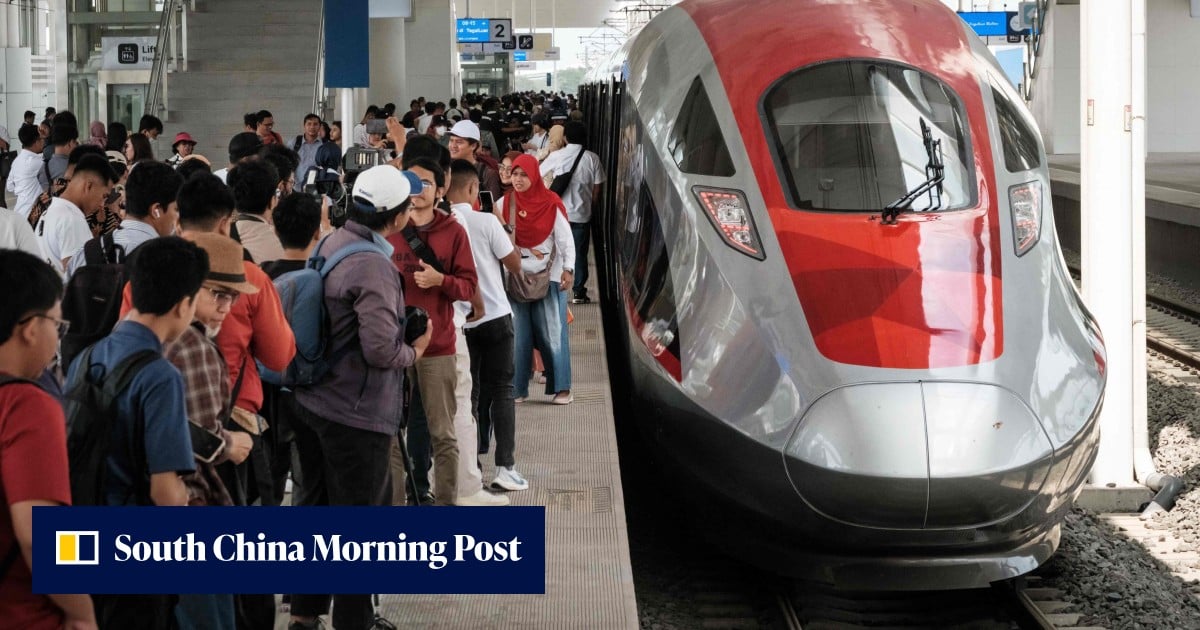
Jakarta plans to transfer the annual US$56.5 million debt of the China-backed Whoosh railway into state accounts over 80 years, which critics warn will force taxpayers to subsidize project losses. The railway, operated by a joint venture between Chinese and Indonesian firms, connects Jakarta to West Java's capital in 45 minutes but has faced budget issues, increasing from US$6.02 billion to about US$7.3 billion.
Written by the local model on 2026-09-15,
using this article's own text rather than the other coverage of the
same event (that is the story summary below).
Claims extracted
5
claim-shaped sentences
Uncertain
0%
0 of 5 hedged
Leaning
Leans right
of the writing, not the subject
Correction & hedging signals
93.6
corrections and hedging in what we collected;
not a measure of accuracy
Outlets on this story
1
Economy/Business
Narrative spread
1
articles carrying this framing
Story summary
The Indonesian government plans to transfer the annual debt of about 1 trillion rupiah ($56.5 million) for China-backed Whoosh railway into state accounts, a move that has raised concerns among critics who warn taxpayers will subsidize the losses. The project, which connects Jakarta to West Java’s provincial capital in just 45 minutes, was initially budgeted at $6.02 billion but has now ballooned to about $7.3 billion. Operated by Kereta Cepat Indonesia-China (KCIC), a joint venture between Chinese and Indonesian state-owned companies, the railway aims to reduce travel time significantly compared to driving, which can take up to three hours. Despite government assurances that the debt burden is manageable over 80 years, critics argue that taxpayers will bear the brunt of financing this costly infrastructure project.
Written for “Indonesian China Backed Railway Debt” on 2026-09-17,
grounded in this article and the 0 other(s) covering the same event.
Why this leaning score
The article's own words the score was based on. Each is quoted
verbatim and was checked against the article text before being
stored, so you can find it in the original.
Leaning score +0.30 for article 9846 (high confidence, 2 verified quotes) · logged 2026-09-15
Who will shoulder the debts behind Indonesia’s China-backed Whoosh railway?
asserted
Who → shoulder → railway
Jakarta plans to transfer the US$56.5 million annual debt into state accounts as critics warn taxpayers will subsidise the losses
The government has argued that the burden is manageable after the debt was restructured over 80 years, requiring annual instalments of about 1 trillion rupiah (US$56.5 million).
asserted
debt → plan → rupiah
But the plan has also raised concerns that taxpayers are being left to subsidise a project that has strained state firms after its budget ballooned from an initial US$6.02 billion to about US$7.3 billion.
asserted
budget → raise → billion
The railway connects the Indonesian capital to West Java’s provincial capital in 45 minutes, far faster than driving, which can take up to three hours.
asserted
which → connect → hours
Whoosh is operated by Kereta Cepat Indonesia-China (KCIC), a joint venture between a Chinese consortium and an Indonesian state-owned consortium led by national rail operator Kereta Api Indonesia (KAI).
asserted
Whoosh → operate → Indonesia
 The Aporia