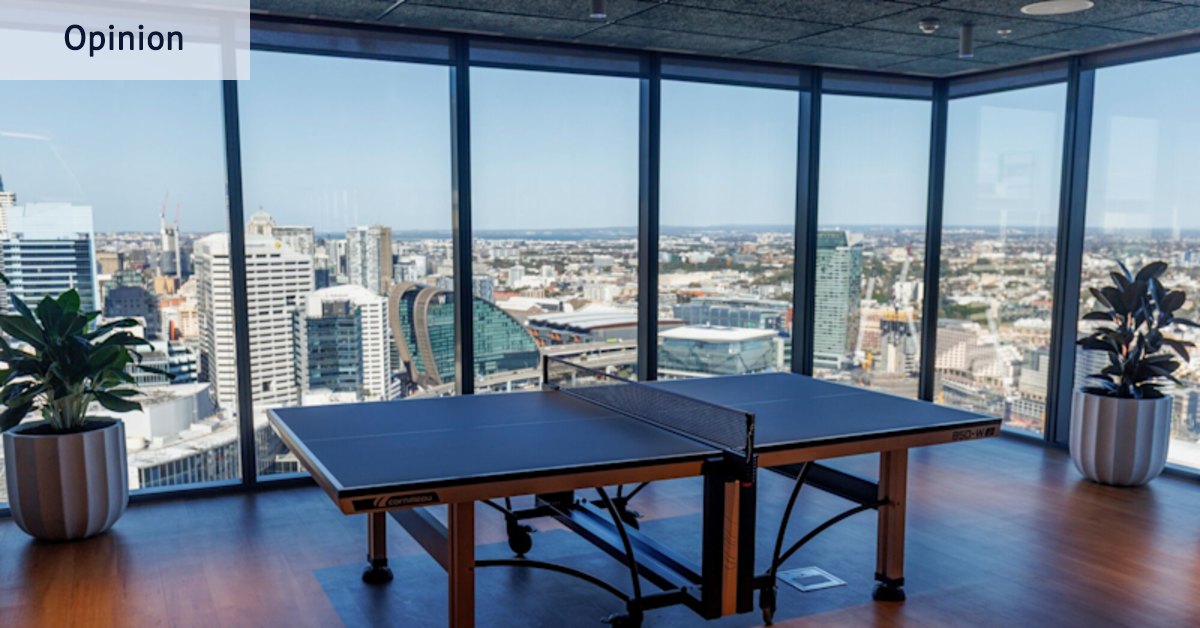
Ping-pong tables won’t save your office – but these 10 things will

Read the original at The Sydney Morning Herald ↗
Cite

Duggan, T. (2026, October 22). Ping-pong tables won’t save your office – but these 10 things will. The Sydney Morning Herald. https://www.smh.com.au/business/workplace/ping-pong-tables-won-t-save-your-office-but-these-10-things-will-20261022-p617s2.html?ref=rss&utm_medium=rss&utm_source=rss_feed

Dated from the outlet's own feed. Check the original for its byline.

The Sydney Morning Herald · collected 2026-10-22 · by Tim Duggan

Quick Summary

This article argues that modern workplace perks like ping-pong tables are less effective than simple behavioral changes for improving office dynamics. It lists ten small, actionable steps to enhance work environments, such as taking walking meetings, publicly acknowledging good work, treating mistakes as learning opportunities, setting clear expectations, over-communicating when necessary, and respecting employees' time off. The article emphasizes the importance of fostering a healthy workplace culture through consistent and thoughtful practices rather than costly perks.
Written locally by qwen2.5:14b on 2026-10-22, using this article's own text rather than the other coverage of the same event (that is the story summary below).

AI analysis runs on qwen2.5:14b, locally

Story summary

Tim Duggan from the Sydney Morning Herald argues that traditional perks like ping-pong tables are outdated and ineffective for creating a healthy work environment. Instead of spending money on such amenities, he suggests ten practical behaviors to improve workplace dynamics immediately. One key suggestion is swapping meetings for walks, encouraging colleagues to discuss issues outdoors rather than in an office setting. Another recommendation involves publicly acknowledging the efforts of employees to boost morale. Duggan emphasizes that fostering a positive work culture requires more than just material incentives; it needs meaningful interactions and recognition.

Written for “Office Productivity Tips” on 2026-10-22, grounded in this article and the 0 other(s) covering the same event.
Why this leaning score
This article does not take a side on a contested political question, so it has no leaning score. That is an answer rather than a gap: a match report or a rescue can be warmly or critically written without being left or right, and scoring it anyway is how approval of a subject gets recorded as a political position.
No political leaning scored for article 98245 · logged 2026-10-22

Story

📰 Office Productivity Tips
Other · 1 article(s) covering the same event.

Compared with similar articles

Nothing to compare against. No article is close enough to this one for the pipeline to have linked or judged the pair.
How this article was measured signals, leaning charts, publisher record, byline, topics and claims

Signals How these are calculated →

Claims extracted
36
sentences that state something as happening or true
Uncertain
3%
1 of 36 hedged ("reportedly", "may", "according to")
Leaning
not political
takes no side on a contested political question
Publisher signals
61/100
The Sydney Morning Herald's corrections and hedging, across everything collected from it. Not a measure of accuracy.
Outlets on this story
1
Other
Same framing elsewhere
1
articles that frame the event the way this one does
Analyzed 2026-10-22 · how these are computed

How this is being covered How these are calculated →

Article leaning vs. publisher reliability
Source leaning vs. consistency

Publisher

The Sydney Morning Herald · 4627 article(s) · 11 correction(s) detected
Running correction rate · 11 correction(s)

Who wrote this

Tim Duggan
4 article(s) here · 1 carrying a prediction
🔮 Of course, you can be wary of other people’s motivations, but what might happen if you made “generous assumptions” instead?
🔮 In this telling, goods and services will be dramatically cheaper, everyone will have access to high-quality healthcare and there will be little need to slave over much of the boring and time-consuming tasks that make up many people’s experience of work.
🔮 And with every new year come questions about where you might go on holidays and how much time you should take off.
🔮 “You could have ChatGPT write your essay for you, but is the point to have the essay?
Also by Tim Duggan
Why it’s time for you to ditch taking long annual holidays
2026-10-08 · The Sydney Morning Herald
Nothing else under this byline is closely related to this article, so these are simply their most recent.

Topics

No topics tagged.

Subjects

No subjects extracted.

Narrative

It now feels like a quaint inclusion, especially when modern workplaces spend big dollars on ways to engage their staff, from overseas meet-ups to long lunches, on-site wellness centres to ergonomic workstations.
framing: assertive · carried by 1 article(s) · first seen 2026-10-22
🔮 Of course, you can be wary of other people’s motivations, but what might happen if you made “generous assumptions” instead?
2026-10-22 · The Sydney Morning Herald
Ping-pong tables won’t save your office – but these 10 things will · assertive framing

Claims (36 extracted, 1 hedged)

Many years ago, we had a ping-pong table in our office. asserted
we → have → office
At the time we thought it was the coolest perk in the world – a way for employees to play and let off steam most afternoons. asserted
employees → think → steam
It now feels like a quaint inclusion, especially when modern workplaces spend big dollars on ways to engage their staff, from overseas meet-ups to long lunches, on-site wellness centres to ergonomic workstations. asserted
workplaces → feel → workstations
However, none of that matters if you don’t have a healthy work environment in the first place. asserted
you → matter → place
Instead of throwing money at the problem, here are 10 small, repeatable behaviours that anyone can do to improve their workplace right now, without waiting for the ping pong table to arrive. asserted
table → throw → workplace
The next time you have a one-on-one meeting with a colleague that doesn’t require a screen, suggest that you take it outside. asserted
you → have → it
Walk around the block, or to the closest park, and you’ll have better conversations and get more exercise than spending yet another meeting staring at the blank office wall. asserted
you → walk → wall
2. Give credit where it’s due. asserted
it → give → credit
The simplest way of showing appreciation is by acknowledging it in public. asserted
way → show → public
When someone does something that’s worth praising, say it out loud, on the spot, ideally to their face. asserted
that → do → face
Extra points if you also voice it in an all-staff meeting, or on a group email, so everyone can see. asserted
everyone → voice → email
Ask more questions than you answer. asserted
you → ask → questions
When you ask questions with an open mind, you’re ensuring you properly understand what’s going on. asserted
what → ask → mind
You never want to be the person who just talks over everyone, so listen more than you speak. asserted
you → want → everyone
Any one of these can save you money, time, pain and heartache if you incorporate them into your everyday working life. asserted
you → save → life
Everyone stuffs up, but it’s what you do next that sets the cultural tone. asserted
that → stuff → tone
When you weaponise mistakes so that people are too scared to fail, you’re creating a toxic work environment. asserted
you → weaponise → environment
Think of every error as a way of improving the process so that it’s even better the next time. asserted
it → think → process
The simplest definition of trust is what happens when you set clear expectations and meet them. asserted
you → happen → them
In the workplace, tell your colleagues what you’re going to do, and then do it. asserted
you → tell → it
That builds trust over the long term, one of the key components of a healthy working environment. asserted
That → build → environment
Work is a team sport, and you should include as many people as possible in the successes that you can. asserted
you → include → successes
One way to do that is to over-communicate – not by CCing the world on every email, but by bringing people along so they understand the why behind your actions. asserted
they → do → actions
When someone’s out of the office, let them be out of the office. asserted
them → ’ → office
It doesn’t matter whether it’s sickness, bereavement, maternity or annual leave, give people the mental space to not think about work when they’re not there. asserted
they → matter → work
We’ve all been in meetings that last forever and then end with nothing much to show for it. asserted
that → last → it
Close out every single meeting with at least one action item, then write it down to ensure it’s followed up on. asserted
it → close → it
Of course, you can be wary of other people’s motivations, but what might happen if you made “generous assumptions” instead? uncertain
you → happen → assumptions
These are the beliefs that someone is acting with good intentions instead of automatically assuming they are not. asserted
they → act → intentions
It can really change how you think about everyone around you. asserted
you → change → you
This means fully explaining the progress of where things are at – both good and bad – every time you move roles, go on leave, or finish up at a job. asserted
you → mean → job
Any one of these can save you money, time, pain and heartache if you incorporate them into your everyday working life. asserted
you → save → life
Recognition, feedback and productive workplaces are linked with higher engagement, retention, and healthier teams. asserted
Recognition → link → engagement
These simple habits don’t cost a cent, but they are really worth their weight in gold. asserted
they → cost → gold
Tim Duggan’s new book, Clear in Tension: How to get better at conflict, is out now from www.clearintension.com.au. asserted
book → get → www.clearintension.com.au
The Business Briefing newsletter delivers major stories, exclusive coverage and expert opinion. asserted
newsletter → deliver → stories

💬Give feedback
🕘History 🎫Support