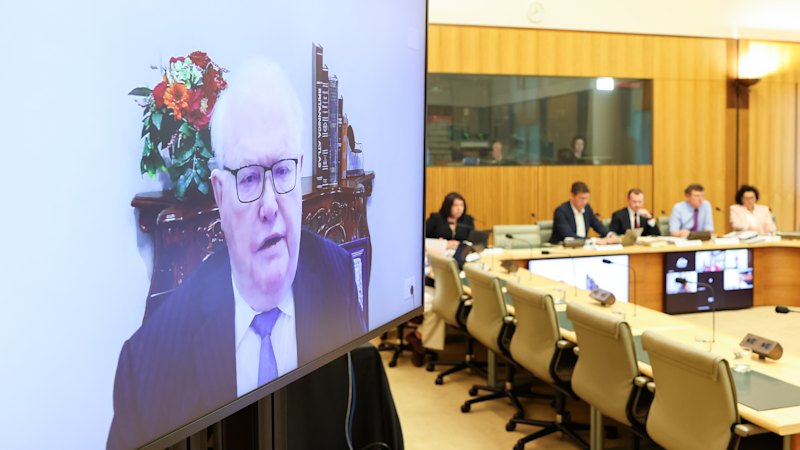
Radio host Ben Fordham put a lot of questions to alleged war criminal and former SAS soldier Ben Roberts-Smith during his interview on radio 2GB on Thursday, but he did not challenge any of the answers over the 2½ hours.
asserted
he → put → hours
On the murder allegations
Roberts-Smith: “One of the things that the media really did well, unfortunately, was try and convince them that civilians had been killed ... that has actually, in no way, ever been proven.”
asserted
that → do → way
The judge in the defamation case, Justice Anthony Besanko, did find that one victim in particular, Ali Jan, was a civilian.
asserted
victim → find → case
Ali Jan, the judge found, cultivated crops.
asserted
judge → find → crops
He had some cattle and also sold wood.
asserted
He → have → wood
He was not connected to the Taliban.
asserted
He → connect → Taliban
The evidence of Afghan witness Mohammed Hanifa on this was accepted by the judge.
asserted
evidence → accept → judge
Besanko’s findings explicitly state that Roberts-Smith “murdered an unarmed and defenceless Afghan civilian by kicking him off a cliff and procuring the soldiers under his command to shoot him”.
asserted
Smith → state → him
The other three people Roberts-Smith was found to have murdered were very likely members of the Taliban – a fact acknowledged in the original reporting.
asserted
Smith → find → reporting
The key question was always whether they were unarmed, under control and out of action at the time they were killed, or still posing a threat.
asserted
they → kill → threat
Besanko’s finding, which backed the media reporting, was that three of Roberts-Smith’s victims were what the Australian military called “PUCs”, or Persons Under Control.
asserted
military → back → Control
Common Article 3 of the Geneva Convention “explicitly prohibits violence to life and person, cruel treatment, torture, and murder of persons who are taking no active part in hostilities, including those placed under detention or control”.
asserted
who → prohibit → detention
Asked about this during his evidence at the defamation case, Roberts-Smith acknowledged this was a crime.
asserted
this → ask → case
In the 2GB interview, he reiterated it.
asserted
he → reiterate → it
“Do you accept that shooting a prisoner is a war crime?” he was asked by Fordham.
asserted
he → accept → Fordham
“Yes,” he replied.
asserted
he → reply → ?
On the practice of using “throw downs” to frame victims as combatants.
“We were told to put weapons on the bodies for the photographs because they wanted it all in one photo, so we could send it back.
uncertain
we → use → it
So moving things around … it was actually a directive from the leadership.”
asserted
it → move → leadership
Fact: Roberts-Smith is portraying the practice as simply rearranging the scene to put everything in one photo frame.
asserted
Smith → portray → frame
This was the order from above to make sure they could get their reports right, he said.
uncertain
he → make → ?
The actual allegation, made in the Inspector-General of the Australian Defence Force investigation, in the media, and by many SAS witnesses during the defamation case, is much more sinister.
asserted
allegation → make → case
They gave evidence that some soldiers carried items in their packs so they could posthumously frame dead civilians as soldiers.
uncertain
they → give → soldiers
This carries the implication of premeditated murder, and a posthumous cover-up.
asserted
This → carry → murder
As for being orders from “leadership”, two witnesses at the defamation trial testified that it was Roberts-Smith himself who instructed people in the practice.
asserted
who → testify → practice
During 2012 pre-deployment rehearsal, they say, the towering lance corporal explained how to put a throw-down weapon or equipment on a body to photograph to make the action appear legitimate when it actually was not.
asserted
it → say → body
On the defamation case
“The stories that I sued on were not the stories that I ended up having to defend in court … the same basic story, but we’re talking about things that would evolve to meet what needed to be proved.”
asserted
what → sue → things
Fact: The implication from Ben Roberts-Smith here is that whenever he successfully defended an allegation in the reporting, the story would just morph to fit a new narrative.
asserted
story → defend → narrative
The stories he sued over, and a number of the accusations in the court case, were the same.
asserted
he → sue → case
All the original allegations in the reporting were successfully defended by the newspapers, and particularly the murders at Darwan and Whiskey 108.
asserted
allegations → defend → Darwan
It was only because Roberts-Smith sued for defamation that journalists from this masthead were able to use the legal process he’d initiated to subpoena new information, including new witnesses.
asserted
he → sue → witnesses
That allowed them to introduce additional evidence and ultimately allege Roberts-Smith had been involved in seven murders, six of which they proceeded with in the case itself.
asserted
they → allow → case
Without him taking the legal action, a number of those allegations would likely never have emerged.
asserted
number → take → allegations
In the end, Justice Anthony Besanko found four murders substantially true, including those included in the original reporting.
asserted
murders → find → reporting
On legal procedure
“You don’t have to prove that it’s true”.
asserted
it → have → procedure
It was enough “to prove that they believe it, or that it might have happened.”
uncertain
it → prove → it
Fact: This gives the impression the defamation judgment was based on thin evidence.
asserted
judgment → give → evidence
Defamation is a civil procedure, and the threshold for proof is on the “balance of probabilities”, which essentially means it’s more likely than not that something happened.
asserted
something → mean → probabilities
But in cases of this seriousness – where murder is being alleged – the “Briginshaw principle” applies.
asserted
principle → allege → seriousness
This means “inexact proofs, indefinite testimony, or indirect inferences” are not enough, and that, for grave findings – such as murder or criminal conduct – the court requires clear, cogent, and strict proof, actual persuasion, and proper weight given to the presumption of innocence.
asserted
court → mean → innocence
In his judgment, Besanko applied the principle vigorously to find the murders at Whiskey 108, Darwan and Chinartu, as well as Roberts-Smith’s campaign of bullying and unlawful assaults, were proven.
asserted
murders → apply → bullying
…and 17 more, not listed.
 The Aporia