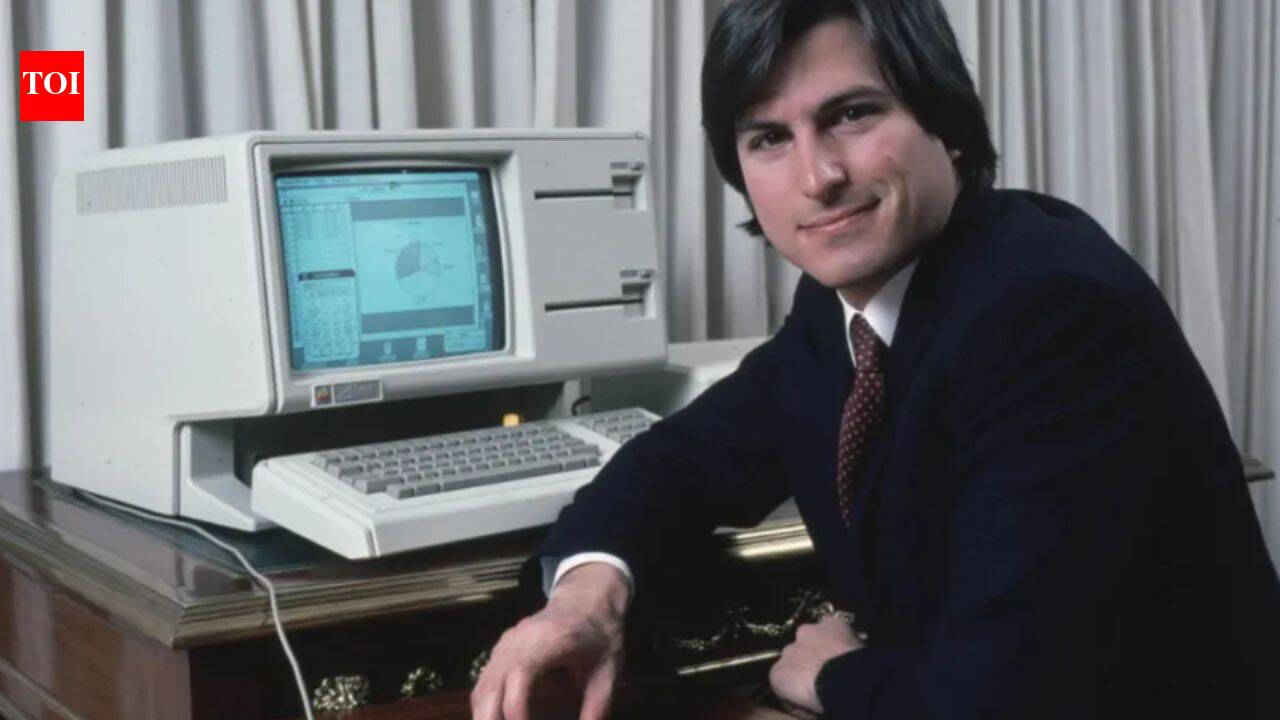
Before the Macintosh became one of Apple's defining products, the company had another computer that failed in the market.
asserted
that → become → market
In September 1989, Apple took an unusual step with thousands of unsold Lisa computers.
asserted
Apple → take → computers
About 2,700 machines were buried at a landfill in Logan, Utah, bringing an end to the story of one of the company's most ambitious but unsuccessful computers.
asserted
machines → bury → computers
The Lisa had been launched in 1983 as Apple's first attempt at a modern computer built around a graphical interface.
asserted
Lisa → launch → interface
According to The Verge, it had a mouse, windows, icons and menus, features that later became standard on desktop computers.
uncertain
that → accord → computers
The Lisa had them a year before the Macintosh was released.
asserted
Macintosh → have → them
But the computer struggled in the market.
asserted
computer → struggle → market
It carried a price tag of about $10,000 and had hardware problems.
asserted
It → carry → problems
It was also overshadowed by the cheaper Macintosh that Apple was preparing to introduce.
asserted
Apple → overshadow → that
Even after being discounted, upgraded and renamed the Macintosh XL, the Lisa lasted only about two years before Apple dropped it in 1985.
asserted
Apple → discount → 1985
After being discontinued, thousands of Lisa machines were still left over.
asserted
thousands → discontinue → machines
A computer salesman named Bob Cook saw an opportunity in the unwanted stock.
asserted
salesman → name → stock
He had been selling older computers at discounted prices and had previously taken about 3,500 Apple III computers from Apple in 1985.
asserted
He → sell → 1985
A year later, he took on the last 7,000 Lisas.
asserted
he → take → Lisas
A Lisa, dumped and destroyed (Picture: Hackaday)
Attempt to save Lisa failed
Cook was an Apple reseller who believed older computers could still find buyers.
uncertain
computers → dump → buyers
“Computers were supposed to be leading edge, so nobody was thinking about selling the trailing edge of high technology,” Cook told The Verge.
asserted
Cook → suppose → Verge
Rather than simply selling Lisa, Cook worked on improving the machines so they could compete with newer Mac models.
uncertain
they → sell → models
He estimated that he spent $200,000 on research and development, upgrading the hardware and operating system.
asserted
he → estimate → hardware
Cook gave the upgraded computer a new name.
asserted
Cook → give → name
So we called it the ‘Lisa Professional,’” he said.
asserted
he → call → it
But the effort eventually came to an end, and the remaining Lisas faced a very different fate.
asserted
Lisas → come → fate
Soonafter, Apple buried about 2,700 unsold Lisa computers at the Logan landfill in September 1989.
asserted
Apple → bury → September
Landfill workers drove bulldozers over the computers before they were buried.
asserted
they → drive → computers
Brochure showing Lisa 1 screen and Twiggy floppy drives (Picture source: Medium.com)
Lisa failed, but changed computing
The Lisa's failure was closely linked to its price and its timing.
asserted
failure → show → price
Its hardware problems also worked against it, while the Macintosh offered a cheaper alternative.
Yet the Lisa had introduced ideas that would become central to personal computing.
asserted
that → work → computing
Veteran technology journalist Steven Levy described its ease of use in an interview with The Verge.
asserted
Levy → describe → Verge
“The Lisa was the first computer out there that you didn’t have to struggle with a big computer manual or even hire a consultant to use,” Levy said.
asserted
Levy → have → consultant
“You could understand it out of the box and start using it.”
uncertain
You → understand → it
The Lisa therefore occupied an unusual place in Apple's history.
asserted
Lisa → occupy → history
It failed to become a successful mass-market product, but its graphical approach helped shape the kind of computers consumers would later expect.
asserted
consumers → fail → computers
The Computer History Museum says Lisa had 1MB RAM, a 12-inch black-and-white display, two 5.25-inch floppy drives and a 5MB hard drive.
asserted
Lisa → say → RAM
An archived 1983 technical article says the project representedmore than 200 person-years of work and $50 million in development.
asserted
project → say → development
Lisa project started in 1978, several years before its launch.
asserted
project → start → launch
Steve Jobs initially led the project but was removed from it in 1982.
asserted
Jobs → lead → 1982
After that, he moved his attention to the Macintosh project.
asserted
he → move → project
 The Aporia