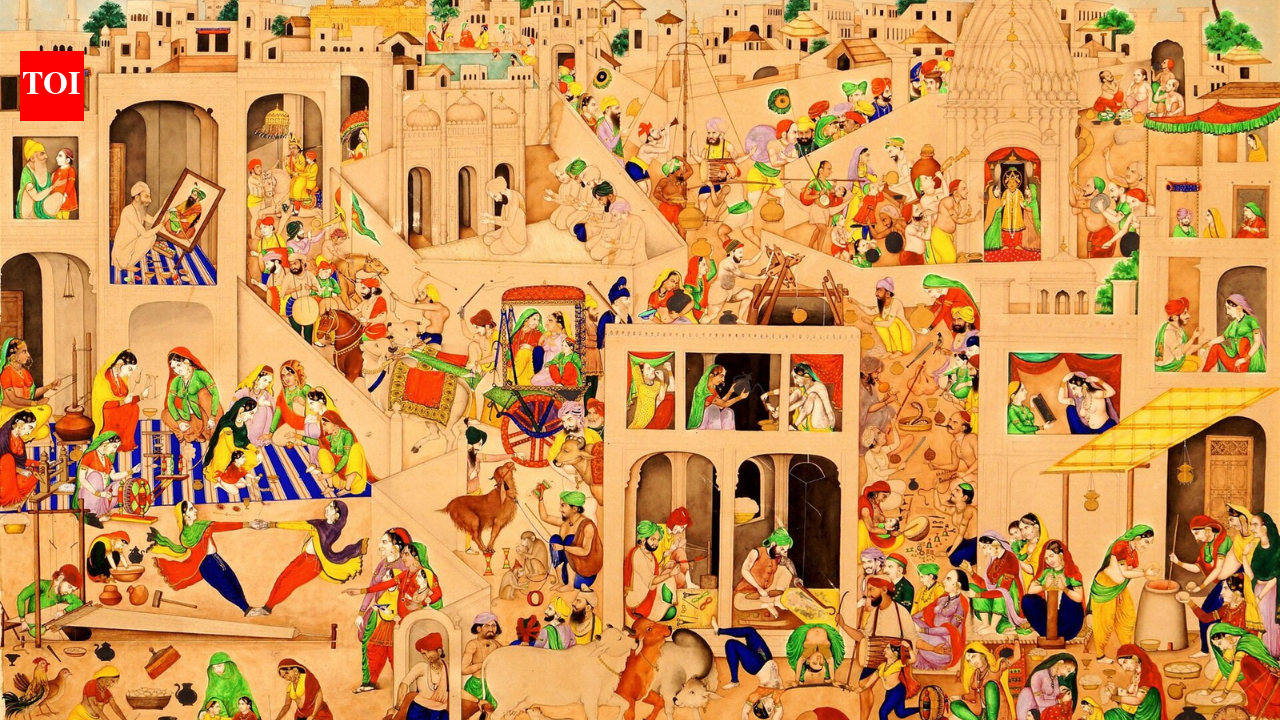
A painting bought for just £40 at a car boot sale in Britain turned out to be a remarkable piece of Indian art nearly three decades later.
asserted
painting → buy → art
According to Antiques Trade Gazette, which documented the discovery in its 50 Great Objects collection, the painting sold for £75,000, excluding the buyer’s premium, at Roseberys in London on April 15, 2016.
uncertain
painting → accord → April
Initially catalogued with a modest estimate of £500 to £1,000, the work attracted intense bidding after specialists identified its subject as the historic walled city of Amritsar, with the Golden Temple in the background.
asserted
specialists → catalogue → background
Its possible artist was also linked to the city’s 19th-century artistic tradition.
asserted
artist → link → tradition
A £40 purchase that remained unnoticed for decades
The painting belonged to a London taxi driver who had purchased it at a car boot sale around 30 years before the auction.
asserted
who → remain → auction
The seller had initially asked £60, but the driver negotiated the price down to £40.
asserted
driver → ask → 40
For years, the painting remained an ordinary second-hand purchase rather than a recognised work of historical importance.
asserted
painting → remain → importance
Its significance only became apparent when it was brought to the attention of the art market and examined by specialists.
asserted
it → become → specialists
Roseberys offered the work in a specialist sale of Islamic and Indian art, giving it an estimate of £500 to £1,000.
asserted
Roseberys → offer → 1,000
Despite the modest valuation, the painting attracted multiple bidders, with competition eventually pushing the price to £75,000, excluding the buyer’s premium of 23%.
asserted
competition → attract → %
The result was far beyond the original estimate and transformed the driver’s inexpensive purchase into a valuable auction discovery.
asserted
result → transform → discovery
Painting depicted the historic city of Amritsar
The painting was a large Indian gouache miniature on paper, measuring approximately 59 by 85 centimetres.
asserted
painting → paint → centimetres
Its crowded composition depicted the walled old city of Amritsar, with the Golden Temple, also known as Harmandir Sahib, visible in the background.
asserted
Temple → depict → background
The Golden Temple is the holiest religious complex in Sikhism, making the painting’s subject particularly significant.
asserted
subject → make → Sikhism
Rather than presenting only a single building or a formal religious scene, the work captured a bustling urban setting filled with people and architectural details.
asserted
work → present → people
One of its most intriguing features was a small self-portrait believed to show the artist at work.
asserted
One → believe → work
In the upper-left portion of the composition, a figure can be seen painting a portrait inside an architectural alcove.
asserted
figure → see → alcove
This detail added another layer of interest to the painting, connecting its creator directly with the scene being depicted.
asserted
detail → add → scene
The combination of the cityscape, religious landmark and numerous human figures offered a glimpse into the artistic representation of 19th-century Amritsar.
asserted
combination → offer → Amritsar
Specialists attributed the painting tentatively to Baba Bishan Singh, an artist who lived from 1836 to around 1900.
asserted
who → attribute → 1900
He belonged to a family of painters working in Lahore and Amritsar during the second half of the 19th century.
asserted
He → belong → century
According to Antiques Trade Gazette, the family was involved in maintaining the murals and decorative motifs on the walls of the Golden Temple.
uncertain
family → accord → Temple
This connection made the possible attribution especially relevant to the painting’s subject.
asserted
attribution → make → subject
According to Antiques Trade Gazette, Bishan Singh participated in the 1864 exhibition of arts and crafts in Lahore, where he displayed 10 pictures.
uncertain
he → accord → pictures
These included depictions of the courts of Maharaja Ranjit Singh and Sher Singh, as well as the Municipal Committee of Amritsar.
asserted
These → include → Amritsar
The exhibition attracted the attention of Robert Baden-Powell, who later commented on Bishan Singh’s work in his Handbook of the Manufactures and Arts of the Punjab.
asserted
who → attract → Punjab
He noted weaknesses in the perspective of the buildings but praised the quality of the figure drawing.
asserted
He → note → drawing
The possibility that the newly discovered painting was among the works shown in Lahore in 1864 adds historical interest, although the connection has not been established conclusively.
asserted
connection → discover → interest
Auction specialist delivered unexpected news
asserted
specialist → deliver → news
The £75,000 result was an extraordinary outcome for the vendor, who had paid only £40 for the painting decades earlier.
asserted
who → pay → painting
According to Antiques Trade Gazette, specialist Peter Greenway contacted the taxi driver after the sale to tell him the result.
uncertain
Greenway → accord → result
The driver reportedly told Greenway that he had been having a difficult day because his taxi had suffered a flat tyre, preventing him from going to work.
uncertain
taxi → tell → work
After hearing the auction news, he decided to give himself the weekend off.
asserted
he → hear → weekend
The story became a memorable example of how an overlooked object bought second-hand can turn out to have considerable artistic and historical importance.
asserted
object → become → importance
The painting’s journey from a car boot sale to a specialist auction also illustrates the role of expert research in identifying works that have been miscatalogued or remained unrecognised for years.
asserted
that → illustrate → years
Its final price reflected not simply the difference between £40 and £75,000, but the discovery of a potentially important record of Amritsar’s artistic and urban history.
asserted
price → reflect → history
 The Aporia