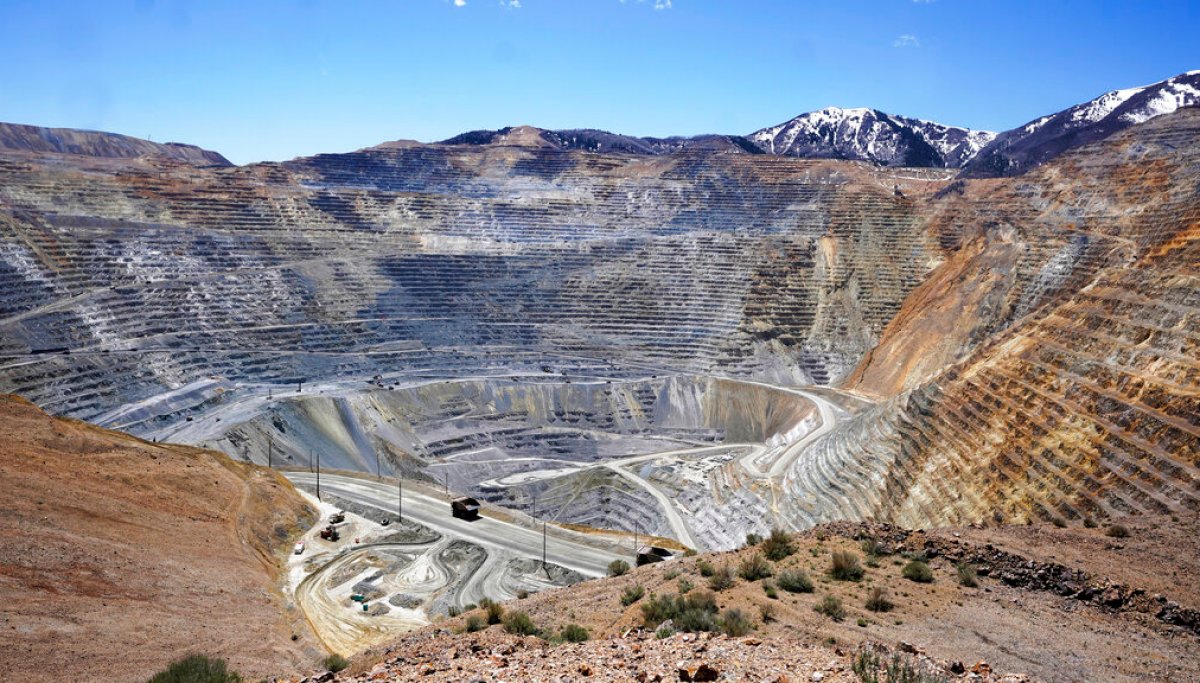
China played the long game in Latin America. Africa is America’s next strategic test

Read the original at Washington Examiner ↗
Cite

Ejah, J. S. (2026, October 21). China played the long game in Latin America. Africa is America’s next strategic test. Washington Examiner. https://www.washingtonexaminer.com/op-eds/4772518/us-economic-strategy-country-specific-african-markets-partnership/

Dated from the outlet's own feed. Check the original for its byline.

Washington Examiner · collected 2026-10-21 · by Jessy Samuel Ejah

Quick Summary

The article argues that the United States must adopt a long-term economic strategy to compete with China's growing influence in Africa, rather than relying on sporadic diplomatic efforts or short-term deals. Using China’s success in Latin America as an example, it emphasizes the importance of sustained engagement through trade, infrastructure development, financial support, and technological partnerships to build strategic influence over time.
Written locally by qwen2.5:14b on 2026-10-21, using this article's own text rather than the other coverage of the same event (that is the story summary below).

AI analysis runs on qwen2.5:14b, locally

Story summary

The Washington Examiner argues that the United States needs to rethink its strategy towards Africa after China's successful expansion in Latin America. Jessy Samuel Ejah suggests on October 21, 2026, that the U.S. cannot effectively compete with China in Africa merely through sporadic diplomatic efforts and mineral deals. Instead, the U.S. must adopt a long-term economic approach that fosters genuine partnerships rather than treating African nations as mere prizes to be won.

China’s influence in Latin America has grown steadily over years through comprehensive engagement including trade, infrastructure projects, financial investments, technology transfers, and building deep relationships with local governments and businesses. The article emphasizes that strategic influence is rarely achieved quickly but develops gradually over time.

Written for “China's Influence In Africa” on 2026-10-21, grounded in this article and the 0 other(s) covering the same event.
Why this leaning score
The article's own words the score was based on. Each is quoted verbatim and was checked against the article text before being stored, so you can find it in the original.
Reading Leans left (beta estimate) Confidence high
Leaning: leans left for article 96206 (high confidence, 2 verified quotes) · logged 2026-10-21

Story

📰 China's Influence In Africa
Politics · 1 article(s) covering the same event.

Compared with similar articles

Nothing to compare against. No article is close enough to this one for the pipeline to have linked or judged the pair.
How this article was measured signals, leaning charts, publisher record, byline, topics and claims

Signals How these are calculated →

Claims extracted
4
sentences that state something as happening or true
Uncertain
0%
0 of 4 hedged ("reportedly", "may", "according to")
Leaning
Leans left
of the writing, not the subject · beta estimate
Publisher signals
66/100
Washington Examiner's corrections and hedging, across everything collected from it. Not a measure of accuracy.
Outlets on this story
1
Politics
Same framing elsewhere
1
articles that frame the event the way this one does
Analyzed 2026-10-21 · how these are computed

How this is being covered How these are calculated →

Article leaning vs. publisher reliability
Source leaning vs. consistency

Publisher

Washington Examiner · 3192 article(s) · 6 correction(s) detected
Running correction rate · 6 correction(s)

Who wrote this

Jessy Samuel Ejah
2 article(s) here · 0 carrying a prediction
🔮 Latin America will not simply choose sides Washington should avoid a fundamental mistake: assuming Latin American governments are waiting to choose between America and China.
Also by Jessy Samuel Ejah
Nothing else under this byline is closely related to this article, so these are simply their most recent.

Topics

African China The United States Washington

Subjects

China GPE · 2× African NORP · 1× The United States GPE · 1× Washington GPE · 1×

Narrative

China’s rise in Latin America should have taught Washington a lesson that extends far beyond the Western Hemisphere: strategic influence is rarely built in a single dramatic move.
framing: assertive · carried by 1 article(s) · first seen 2026-10-21

Claims (4 extracted, 0 hedged)

The United States cannot compete with China in Africa through occasional diplomatic visits and mineral deals alone. asserted
States → compete → visits
It needs a durable economic strategy that treats African countries as partners, not prizes. asserted
that → need → partners
China’s rise in Latin America should have taught Washington a lesson that extends far beyond the Western Hemisphere: strategic influence is rarely built in a single dramatic move. asserted
influence → teach → move
It accumulates through trade, infrastructure, finance, technology, and relationships that deepen over years. asserted
that → accumulate → years
💬Give feedback
🕘History 🎫Support