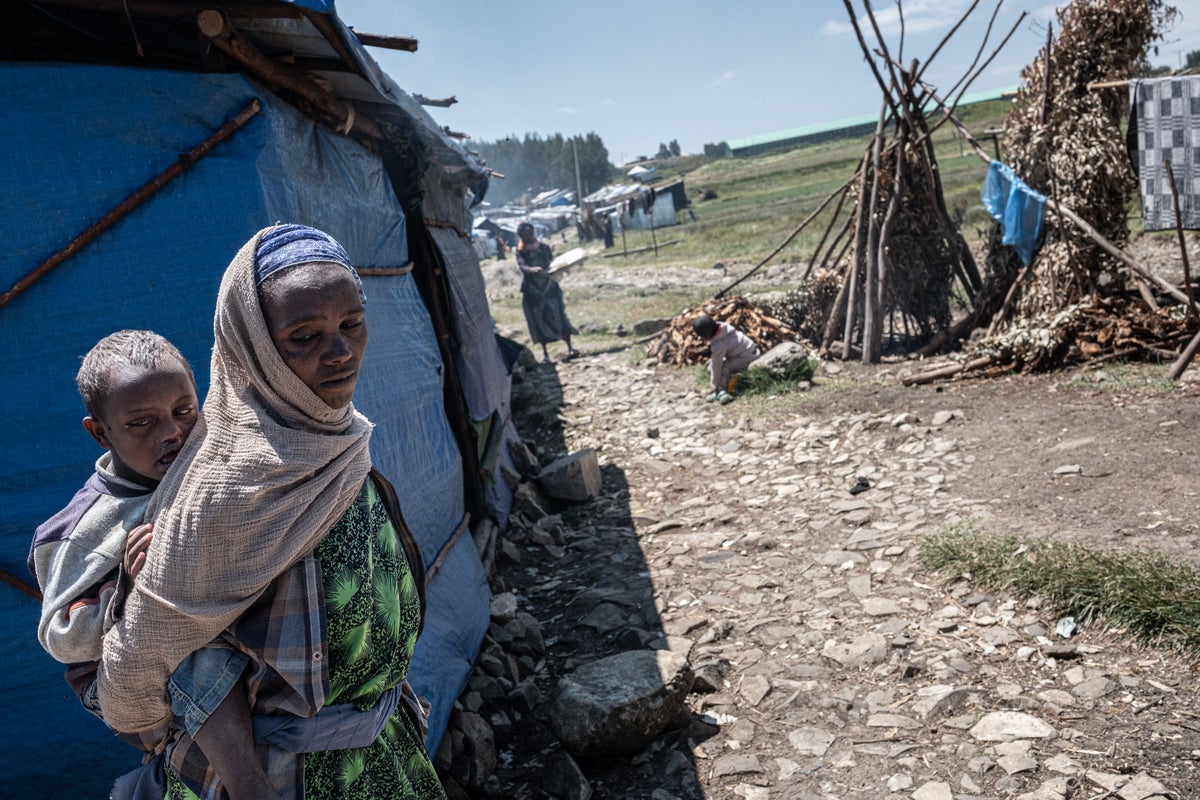
Millions of mothers still don’t have clean water to give birth. It’s time to end this shame

Read the original at The Independent ↗
Cite

Gebrewold, F. (2026, October 21). Millions of mothers still don’t have clean water to give birth. It’s time to end this shame. The Independent. https://www.independent.co.uk/news/world/africa/mother-baby-birth-water-ethiopia-aid-b3070715.html

Dated from the outlet's own feed. Check the original for its byline.

The Independent · collected 2026-10-21 · by Frehiwot Gebrewold

Quick Summary

Campaigners in Manchester delivered letters to Prime Minister Andy Burnham, urging an end to childbirth without clean water and basic sanitation facilities worldwide. Every two seconds, a woman gives birth under such dangerous conditions, affecting over 16 million mothers and newborns globally. The article highlights the stark contrast between Lloyid Aklilu from Addis Ababa, who prepares for hospital delivery with essential hygiene items, and Anshiya Hussien from an Ethiopian displacement camp, who faces childbirth without guaranteed access to clean water or basic sanitation, reflecting systemic issues in sub-Saharan Africa where 45% of healthcare facilities lack a water supply.
Written locally by qwen2.5:14b on 2026-10-21, using this article's own text rather than the other coverage of the same event (that is the story summary below).

AI analysis runs on qwen2.5:14b, locally

Story summary

Campaigners from across the UK recently gathered in Manchester to deliver letters to Prime Minister Andy Burnham, urging him to ensure that all women have access to clean water, decent toilets, and soap during childbirth. The campaigners highlighted that every two seconds globally, a woman gives birth without these essential resources, putting both her life and her newborn's at risk. In Ethiopia alone, 16 million mothers face childbirth in unsafe conditions due to the lack of clean water, as reported by Frehiwot Gebrewold from WaterAid. This issue disproportionately affects women in displacement camps like those in the Oromia district, where expectant mothers such as Anshiya Hussien are at high risk during delivery.

Written for “Clean Water Access For Birth” on 2026-10-21, grounded in this article and the 0 other(s) covering the same event.
Why this leaning score
The article's own words the score was based on. Each is quoted verbatim and was checked against the article text before being stored, so you can find it in the original.
Reading Leans left (beta estimate) Confidence high
Leaning: leans left for article 96200 (high confidence, 3 verified quotes) · logged 2026-10-21

Story

📰 Clean Water Access For Birth
Health · 1 article(s) covering the same event.

Compared with similar articles

Nothing to compare against. No article is close enough to this one for the pipeline to have linked or judged the pair.
How this article was measured signals, leaning charts, publisher record, byline, topics and claims

Signals How these are calculated →

Claims extracted
28
sentences that state something as happening or true
Uncertain
7%
2 of 28 hedged ("reportedly", "may", "according to")
Leaning
Leans left
of the writing, not the subject · beta estimate
Publisher signals
59/100
The Independent's corrections and hedging, across everything collected from it. Not a measure of accuracy.
Outlets on this story
1
Health
Same framing elsewhere
1
articles that frame the event the way this one does
Analyzed 2026-10-21 · how these are computed

How this is being covered How these are calculated →

Article leaning vs. publisher reliability
Source leaning vs. consistency

Publisher

The Independent · 2777 article(s) · 6 correction(s) detected
Running correction rate · 6 correction(s)

Who wrote this

Frehiwot Gebrewold
1 article(s) here · 1 carrying a prediction
🔮 Yet what they packed for hospital told two very different stories, exposing the inequalities that would shape their experience of childbirth.
The only article under this byline in the corpus.

Topics

Ethiopia Independent Independent Membership Manchester WaterAid

Subjects

Ethiopia GPE · 4× Anshiya PERSON · 2× Independent NORP · 2× WaterAid ORG · 2× Andy Burnham PERSON · 1× Anshiya Hussien PERSON · 1× Independent Membership ORG · 1× Lloyid Aklilu PERSON · 1× Manchester GPE · 1× Oromia GPE · 1×

Narrative

Log in Earlier this month, campaigners from across the UK arrived in Manchester to deliver letters to the prime minister, Andy Burnham, with a simple message: no woman, no matter where she lives in the world, should have to risk her life, giving birth without clean water, decent toilets and soap to wash with.
framing: assertive · carried by 1 article(s) · first seen 2026-10-21
🔮 Yet what they packed for hospital told two very different stories, exposing the inequalities that would shape their experience of childbirth.

Claims (28 extracted, 2 hedged)

Log in Earlier this month, campaigners from across the UK arrived in Manchester to deliver letters to the prime minister, Andy Burnham, with a simple message: no woman, no matter where she lives in the world, should have to risk her life, giving birth without clean water, decent toilets and soap to wash with. asserted
she → log → water
Every two seconds around the world, a woman gives birth in a healthcare facility without these basics. asserted
woman → give → basics
For more than 16 million mothers and their newborn babies, that can mean the difference between life and death. asserted
that → mean → life
I joined them, carrying with me the stories of two mothers I met through my work with WaterAid in my home country of Ethiopia. asserted
I → join → Ethiopia
Their stories reveal a stark injustice. asserted
stories → reveal → injustice
While childbirth should be a moment of hope too many women are forced to give birth in unsafe conditions simply because clean water is unavailable. asserted
water → force → conditions
This injustice was brought to vivid reality when I met expectant mums, Anshiya Hussien, from an displacement camp in the Oromia district of Ethiopia and Lloyid Aklilu from the country’s capital, Addis Ababa. asserted
I → bring → capital
Both women were nearing the end of their pregnancies, eagerly awaiting the arrival of their babies. asserted
women → near → babies
Yet what they packed for hospital told two very different stories, exposing the inequalities that would shape their experience of childbirth. asserted
that → pack → childbirth
Like so many of us, Lloyid carefully prepared neatly folded baby clothes, sanitary pads, soaps and creams, towels and items chosen with care to take with her to the hospital. asserted
Lloyid → prepare → hospital
Some items were bought in advance, others gifted by family. asserted
others → buy → family
They reflected the quiet reassurance that clean water and good hygiene - fundamentals every mother deserves - were already waiting at the hospital. asserted
mother → reflect → hospital
With limited resources, Anshiya made practical, thoughtful choices by replacing sanitary pads and diapers with worn pieces of her older children’s clothing. asserted
Anshiya → limit → clothing
In place of baby creams and oils, she prepared a water bucket; an informed, deliberate choice made in anticipation of a delivery where clean running water could not be guaranteed. uncertain
water → prepare → delivery
What one mother considered basic was a luxury for another. asserted
considered → consider → another
Systematic failings in prioritising water, sanitation and hygiene across the public health sector have meant many births in sub-Saharan Africa are occurring in unsafe delivery rooms. asserted
births → prioritise → rooms
In Ethiopia, 45 per cent of healthcare facilities function without a water supply, and 60 per cent have either no or a limited level of sanitation. asserted
cent → function → sanitation
Anshiya’s worries stretched to things no maternity bag could hold; the need for a safe place to give birth. uncertain
bag → stretch → birth
That was when the imbalance truly landed and the question stopped being about a bag. asserted
question → land → bag
Both pregnant, hopeful, deserving of a dignified birth – standing at completely different starting lines, simply because of where they live and what their local hospitals can provide. asserted
hospitals → stand → what
These are the realities I wanted Mr Burnham to hear when we delivered our letters to No. 10 North. asserted
we → want → North
Because no woman should fear losing her life in childbirth because clean water is missing. asserted
water → fear → childbirth
No midwife should watch a joyful moment become a tragedy triggered by an infection spread by unwashed hands. asserted
moment → watch → hands
The mothers I met back home in Ethiopia are not asking for the impossible. asserted
I → meet → impossible
The are asking for the chance to give birth safely. asserted
The → ask → birth
That is why I am standing with mothers and midwives around the world who are calling on governments globally to deliver clean water in every health facility everywhere - for every birth, every woman, every future. asserted
who → stand → birth
I hope you will join me. asserted
you → hope → me
This article has been produced as part of The Independent’s Rethinking Global Aid project asserted
article → produce → project

💬Give feedback
🕘History 🎫Support