United Nations report highlights significant increase in U.S. climate pollution
Countries are not doing enough to cut emissions that cause climate change, according to a new report from United Nations scientists.
uncertain
that → highlight → scientists
The U.S. sticks out as the only major economy where planet-warming pollution increased dramatically last year, the report notes.
asserted
report → stick → economy
It finds that last year, the U.S. was tied with Russia as the G20 countries with the most per capita emissions of carbon dioxide and other planet-warning gases.
asserted
U.S. → find → dioxide
China emits significantly more total greenhouse gases each year than the U.S., but has more than four times the population.
asserted
China → emit → population
U.S. emissions grew because of increased electricity demand, as well as Trump administration policies that support the burning of fossil fuels.
asserted
that → grow → fuels
The Trump administration has ordered coal-fired power plants in the U.S. to stay open longer than planned, rolled back fuel-efficiency standards for vehicles and ended tax credits for solar and wind projects.
asserted
administration → order → projects
Those policies have made the U.S. an outlier when it comes to escalating greenhouse gas emissions, says Inger Andersen, the executive director of the U.N. Environment Programme.
asserted
Andersen → make → Programme
"Right now, everybody is scrambling a little bit regarding energy security," Andersen says, pointing to global oil and gas disruptions stemming from the wars in Ukraine and Iran.
asserted
Andersen → scramble → Ukraine
Despite the geopolitical upheaval, "several G20 members have shown sustained emissions reduction," she notes.
asserted
she → show → reduction
That includes the European Union, which has invested heavily in energy-efficient appliances and renewable electricity sources such as wind and solar, partly in reaction to Russia's invasion of Ukraine.
asserted
which → include → Ukraine
The U.S. is pulling out of U.N. climate work
The Trump administration has withdrawn from the 2015 Paris Climate Agreement, and is working to remove the U.S. from all U.N. climate work, arguing the international system imposes unfair burdens on Americans.
asserted
system → pull → Americans
The U.S. Environmental Protection Agency now says greenhouse gases do not pose a threat to human health and welfare, reversing its previous position.
asserted
gases → say → position
The new report includes a statement from the U.S. government, saying the U.S. "does not endorse or agree with its analysis or conclusions, and has not provided comments to this report."
asserted
U.S. → include → report
The U.S. State Department did not respond to NPR's questions.
asserted
Department → respond → questions
The new report, which is compiled annually by an international group of scientists, comes less than a month before global climate talks kick off in Turkey.
asserted
talks → compile → Turkey
World leaders will gather to discuss how to speed investments in clean energy and how to pay for the costs of dealing with climate change.
asserted
leaders → gather → change
The Trump administration will not participate in those talks.
asserted
administration → participate → talks
Still, whether or not American leaders formally participate in international climate efforts, the effects of America's reliance on oil, gas and coal are being felt around the world, the U.N. warns.
asserted
U.N. → participate → world
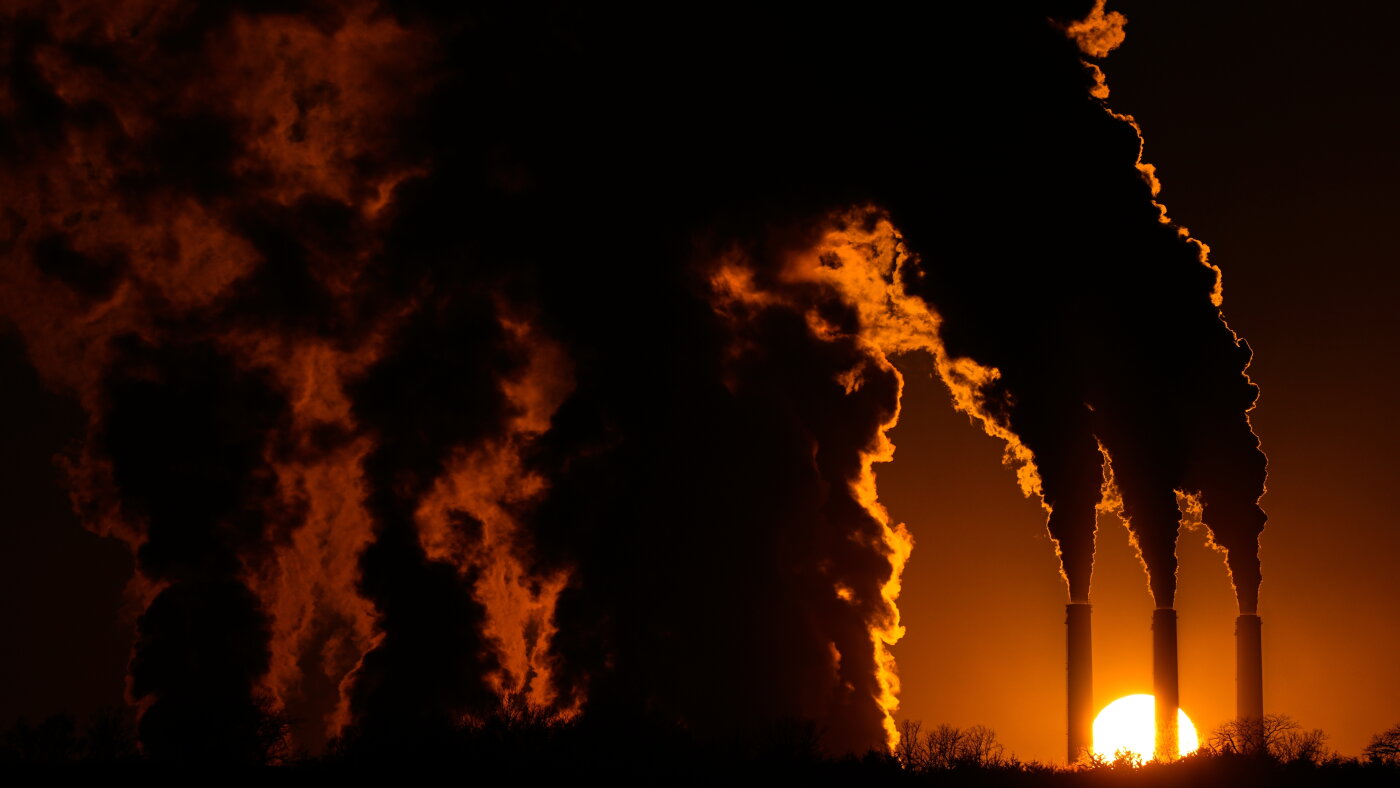
Burning fossil fuels releases carbon dioxide and other greenhouse gases into the atmosphere, trapping extra heat that warms the entire planet.
asserted
that → burn → planet
The effects of all that pollution are felt globally.
asserted
effects → feel → pollution
The Earth is about 2.7 degrees Fahrenheit (1.5 degrees Celsius) warmer on average than it was in the mid-1800s, according to the World Meteorological Organization.
uncertain
it → accord → Organization
That warming is driving widespread disasters, from deadly heat waves and floods to more intense storms and wildfires.
asserted
warming → warm → storms
"All countries, especially the big emitters, must do more," says U.N. Secretary-General Antonio Guterres.
asserted
Guterres → do → more
"Every fraction of a degree matters.
asserted
fraction → matter → degree
The Earth is on track for 5 degrees Fahrenheit of warming this century
Right now, the planet is on track for upwards of 5 degrees Fahrenheit (2.8 degrees Celsius) of warming this century, which would cause catastrophic impacts, such as massive sea level rise and the mass extinction of plants and animals, the report warns.
asserted
report → cause → plants
The U.N. Paris Climate agreement sets a goal of limiting warming to well below 3.6 degrees Fahrenheit (2 degrees Celsius), in the hopes of avoiding such cataclysms.
asserted
agreement → set → cataclysms
This is the first year the annual report has acknowledged that even lower targets are now out of reach.
asserted
targets → acknowledge → reach
However, it finds it is still possible to keep warming below 3.6 degrees Fahrenheit, if global greenhouse gas emissions fall by about 25% in the next decade.
asserted
emissions → find → decade
But countries are currently lagging far behind that goal.
asserted
countries → lag → goal
Under the Paris agreement, about two thirds of countries have submitted formal, up-to-date plans for cutting their greenhouse gas emissions.
asserted
thirds → submit → emissions
If they all follow through on those plans, it would reduce emissions by about 15% in the next decade — far less than the 25% needed.
asserted
it → follow → %
 The Aporia