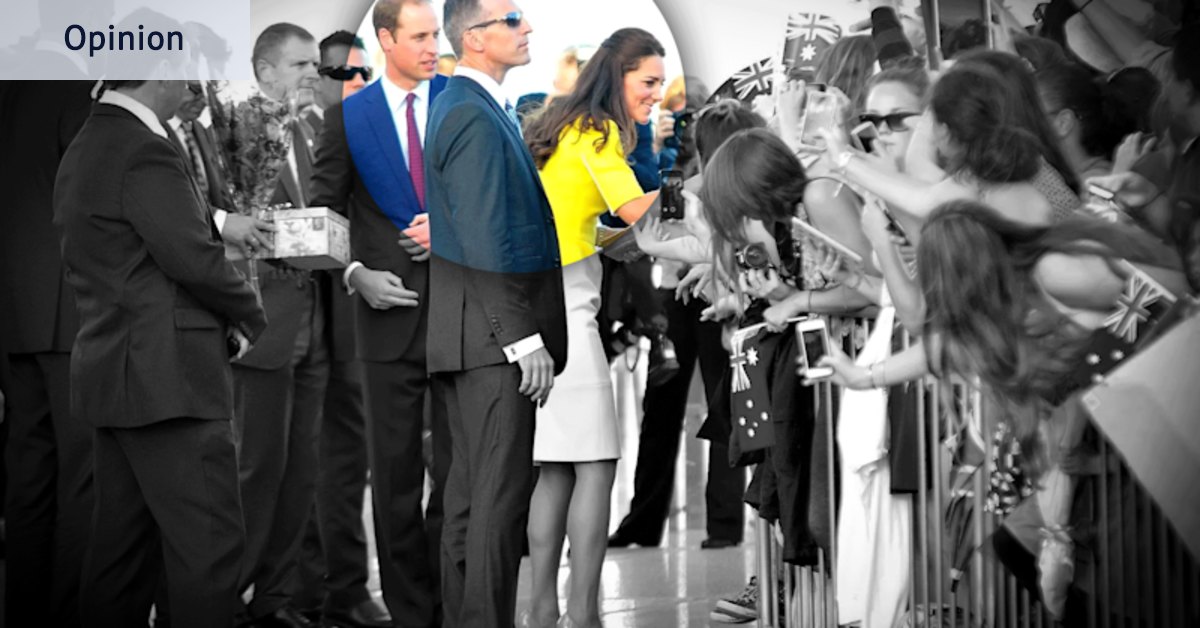
I protected politicians and presidents. It used to be easier to tell who the bad guy was

Read the original at The Sydney Morning Herald ↗
Cite

Albert, R. (2026, October 21). I protected politicians and presidents. It used to be easier to tell who the bad guy was. The Sydney Morning Herald. https://www.smh.com.au/politics/federal/i-protected-politicians-and-presidents-it-used-to-be-easier-to-tell-who-the-bad-guy-was-20261021-p6177y.html?ref=rss&utm_medium=rss&utm_source=rss_feed

Dated from the outlet's own feed. Check the original for its byline.

The Sydney Morning Herald · collected 2026-10-21 · by Rob Albert

Quick Summary

A former member of Australia’s Counter Terrorism Command reflects on changes in political security over two decades, highlighting a shift from minor incidents like a middle finger salute to more severe attacks, such as the recent assault on independent MP Helen Haines. The writer notes increased polarization and stress among citizens, leading to higher risks for politicians, with everyday objects now potentially becoming weapons. This transformation has made the job of protecting political figures significantly harder, raising questions about societal attitudes towards disagreement and violence.
Written locally by qwen2.5:14b on 2026-10-21, using this article's own text rather than the other coverage of the same event (that is the story summary below).

AI analysis runs on qwen2.5:14b, locally

Story summary

In 2026, Rob Albert, a former member of the NSW Police Protection Operations Unit, reflects on his experiences protecting politicians in Australia. He recounts a minor incident from 2005 when he escorted then Prime Minister John Howard through Sydney's CBD and a young man insulted the prime minister by raising his middle finger at the car. Albert notes that such behavior is typical of Australians' "larrikin" tendency to express opinions freely, even towards elected officials.

However, Albert expresses concern about the current political climate in Australia, noting increased polarization and anger among citizens. This sentiment is highlighted by recent events like the attack on Helen Haines, a member of parliament, which has left him questioning how individuals can fully recover—both physically and psychologically—from such incidents. He worries that the political environment has become more volatile, with people feeling stressed due to personal and financial pressures, sometimes leading to extreme actions against politicians.

Written for “Whistleblower's Memoir Revelations” on 2026-10-21, grounded in this article and the 0 other(s) covering the same event.
Why this leaning score
The article's own words the score was based on. Each is quoted verbatim and was checked against the article text before being stored, so you can find it in the original.
Reading Leans right (beta estimate) Confidence medium
Leaning: leans right for article 95041 (medium confidence, 3 verified quotes) · logged 2026-10-21

Story

📰 Whistleblower's Memoir Revelations
Crime & Law · 1 article(s) covering the same event.

Compared with similar articles

Nothing to compare against. No article is close enough to this one for the pipeline to have linked or judged the pair.
How this article was measured signals, leaning charts, publisher record, byline, topics and claims

Signals How these are calculated →

Claims extracted
37
sentences that state something as happening or true
Uncertain
8%
3 of 37 hedged ("reportedly", "may", "according to")
Leaning
Leans right
of the writing, not the subject · beta estimate
Publisher signals
61/100
The Sydney Morning Herald's corrections and hedging, across everything collected from it. Not a measure of accuracy.
Outlets on this story
1
Crime & Law
Same framing elsewhere
1
articles that frame the event the way this one does
Analyzed 2026-10-21 · how these are computed

How this is being covered How these are calculated →

Article leaning vs. publisher reliability
Source leaning vs. consistency

Publisher

The Sydney Morning Herald · 4337 article(s) · 11 correction(s) detected
Running correction rate · 11 correction(s)

Who wrote this

Rob Albert
1 article(s) here · 1 carrying a prediction
🔮 At Counter Terrorism Command we always figured an attack could come at any time, from anywhere and from anyone.
The only article under this byline in the corpus.

Topics

Australia Australian Australians Counter Terrorism Command the NSW Police Protection Operations Unit

Subjects

Australia GPE · 3× Haines PERSON · 2× Australian NORP · 1× Australians NORP · 1× Counter Terrorism Command ORG · 1× Helen Haines PERSON · 1× Howard PERSON · 1× John Howard PERSON · 1× Sydney GPE · 1× the NSW Police Protection Operations Unit ORG · 1×

Narrative

A very minor incident, but I point it out because Australians have always had the larrikin tendency to feel they have the right not only to tell their mates what they think of them and where to go but also their elected representatives – in this case Australia’s 25th prime minister in 2005.
framing: assertive · carried by 1 article(s) · first seen 2026-10-21
🔮 At Counter Terrorism Command we always figured an attack could come at any time, from anywhere and from anyone.
2026-10-21 · The Sydney Morning Herald
I protected politicians and presidents. It used to be easier to tell who the bad guy was · assertive framing

Claims (37 extracted, 3 hedged)

One of my first jobs when I joined the NSW Police Protection Operations Unit was to provide a security escort to then prime minister John Howard through the Sydney CBD. asserted
I → join → CBD
A young man spotted the “C1” number plates and the little Australian flag fluttering as the PM’s white saloon car rolled by. asserted
car → spot → plates
So he ran up to the window, stuck up his middle finger, shouted a few expletives and stood down. asserted
he → run → expletives
A very minor incident, but I point it out because Australians have always had the larrikin tendency to feel they have the right not only to tell their mates what they think of them and where to go but also their elected representatives – in this case Australia’s 25th prime minister in 2005. asserted
they → point → 2005
Fast-forward two decades and things are radically different. asserted
things → forward → ?
I am deeply saddened by the attack on Helen Haines and wish her a full recovery, although I wonder if it’s possible to fully recover from an attack such as this – physically or psychologically. asserted
it → sadden → this
People are polarised. asserted
People → polarise → ?
Many are stressed personally, financially and, regrettably, sometimes those with strong emotional connections to an ideology react violently towards those who don’t agree with them. asserted
who → stress → them
Keeping our politicians safe has never been harder for police. asserted
Keeping → keep → police
At Counter Terrorism Command we always figured an attack could come at any time, from anywhere and from anyone. uncertain
attack → figure → anyone
What’s changed is that anything is a weapon now. asserted
anything → change → ?
We used to think of weapons as firearms we had a register for, but now a Toyota Land Cruiser or any vehicle can inflict as much if not more damage than a gun. asserted
Cruiser → use → gun
And in a rural area on a suburban street where politicians like Haines would have prided themselves on informal links to the communities they served, well, the basic security measures are fewer and further between. asserted
measures → pride → communities
I’ve provided close personal protection over the years to presidents, kings and queens, prime ministers, premiers, as well as various members of the military or spy agencies from Australia and abroad. asserted
I → provide → Australia
Many of those people I admired and respected, and would willingly have risked my life to protect them in the office they held. asserted
they → admire → office
I also looked after people for whom I had, let’s just say, less respect for and with whom I strongly disagreed politically, but I still would have risked my life to protect them. asserted
I → look → them
That was the job I signed up for. asserted
I → sign → ?
The question I ask myself and I ask the nation is how have we become a country where an everyday person would seek to attack, maim or kill another person they disagree with when I was willing to lay down my life for someone I disliked? asserted
I → ask → someone
When I escorted that car carrying Howard through Sydney in 2005, sure, people were divided on many topics. asserted
people → escort → topics
People disagreed. asserted
People → disagree → ?
But the right and the left didn’t seem as deeply entrenched and diametrically opposed as they are now and any attack we anticipated came more from organised terror or crime groups rather than “Joe Citizen” who’d been blowing up on social media. asserted
who → seem → media
The indoctrination or radicalisation of people, whether it be through educational institutions, clubs, online through the dark web or through social media platforms has generated a subculture of people who are unable to live peacefully with others who might disagree with them or think differently. uncertain
who → generate → them
Their response to this conditioning is too often violent or hostile, heightening the threat and risk to high office holders. asserted
response → heighten → holders
It used to be easier to tell who the bad guy was. asserted
guy → use → ?
Crime wore a balaclava and carried a gun, it didn’t dress in civvies in broad daylight while driving down the main street of Wangaratta. asserted
it → wear → Wangaratta
It would be impossible and impractical to provide protection for every politician. asserted
It → provide → politician
Whatever else is happening or about to happen in Australia, how do we stop it from happening or, worse still, becoming a common occurrence? asserted
we → happen → it
It must start from the top, so my first appeal is to those leaders I would have “taken a bullet for”. asserted
I → start → bullet
Everyone I talk to has one common complaint – people no longer feel heard. asserted
people → talk → complaint
People no longer feel cared about. asserted
People → feel → ?
People no longer feel safe, and it’s driving many of them to more radical solutions, radical politics and radical actions. asserted
it → feel → solutions
So don’t play politics like a game because its consequences flow on to us. asserted
consequences → play → us
Bipartisan approaches may be required on some occasions. uncertain
approaches → require → occasions
If all we see is you disagreeing, all we will do is disagree. asserted
we → see → ?
Its consequences are catastrophic and rather than changing what you want it to change asserted
it → change → what
, history shows it usually has the opposite effect. asserted
it → show → effect
Get a weekly wrap of views that will challenge, champion and inform your own. asserted
that → get → own
💬Give feedback
🕘History 🎫Support