That is 0 articles you have read today.
The Aporia is free and carries no advertising, so readers are the only
thing paying for it. If you are getting this much out of it, a small
donation is what keeps it independent.
Daily limit reached
You have read 0 articles today.
That is more than the 15 a day The Aporia gives away,
and well past what it can carry on nothing. Your allowance resets at
midnight.
There is no advertising here and nothing about you is sold, so readers
are the only thing paying for it. If the site is worth this much of
your day, it is worth a few dollars.
Everything else stays open: the
maps, the
directory and
search do
not count against this, and neither does re-opening something you have
already read today.
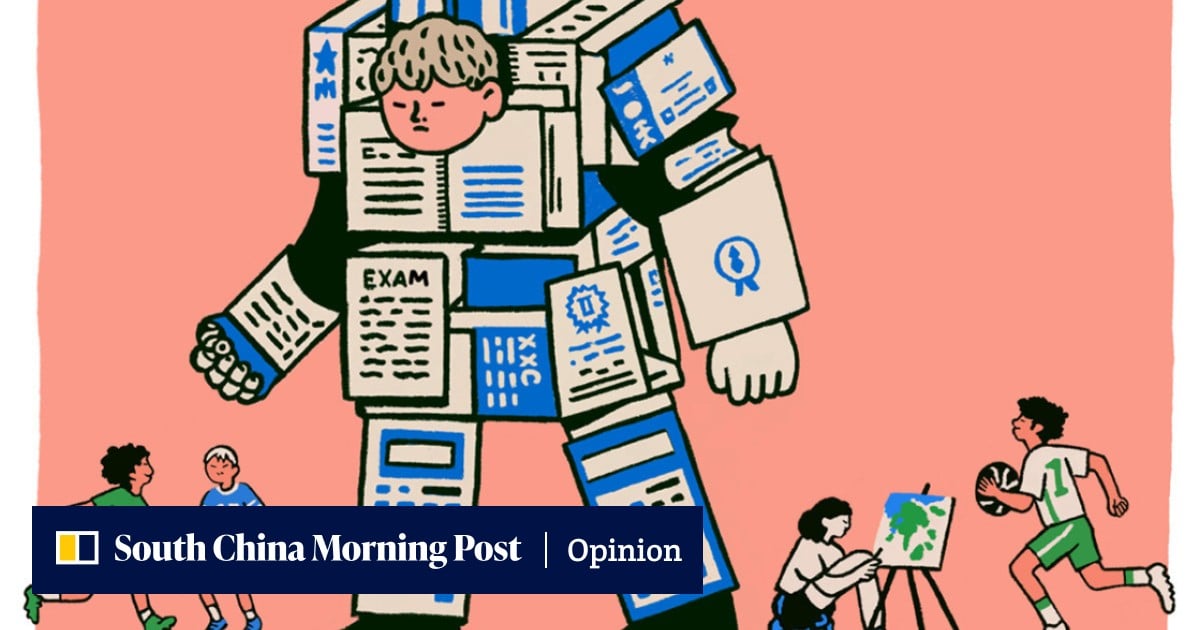
The article discusses how traditional Chinese parenting methods focused on control and academic achievement may become obsolete due to the rise of artificial intelligence (AI). These conventional practices often involve parents like Ms Ng in Hong Kong, who spend weekends taking their children to various tutoring classes. The piece argues that while such efforts are intended to enhance academic performance, they can actually hinder the development of creativity, autonomy, and critical thinking—qualities increasingly important in an AI-dominated future. Psychologist David Geary’s distinction between biologically primary abilities (which develop naturally) and secondary abilities (requiring formal education) is cited to illustrate why overly rigid parenting might be counterproductive.
Written by the local model on 2026-09-14,
using this article's own text rather than the other coverage of the
same event (that is the story summary below).
Claims extracted
7
claim-shaped sentences
Uncertain
14%
1 of 7 hedged
Leaning
Leans left
of the writing, not the subject
Correction & hedging signals
93.7
corrections and hedging in what we collected;
not a measure of accuracy
Outlets on this story
1
Education
Narrative spread
1
articles carrying this framing
Story summary
In the age of artificial intelligence, traditional Chinese parenting methods focused on strict control and academic achievement are becoming less effective. Lu Huijing highlights how parents like Ms Ng shuttle their children to various tutoring classes on weekends, hoping to boost academic performance. This trend is widespread across Chinese communities globally, with significant investments in time, money, and effort. However, psychologist David Geary argues that there are two types of cognitive abilities: biologically primary skills like speaking and counting, which develop naturally, and biologically secondary skills such as reading and writing, which require structured learning. The article suggests that fostering creativity, autonomy, and critical thinking—qualities stifled by overemphasis on achievement—will be crucial in the AI era.
Written for “Chinese Parenting in AI Age” on 2026-09-15,
grounded in this article and the 0 other(s) covering the same event.
Why this leaning score
The article's own words the score was based on. Each is quoted
verbatim and was checked against the article text before being
stored, so you can find it in the original.
Leaning score -0.35 for article 9474 (high confidence, 1 verified quote) · logged 2026-09-14
The classic Chinese parenting playbook won’t survive the AI age
Controlling and achievement-oriented parenting stifles creativity, autonomy and critical thinking – qualities that will be needed more than ever
asserted
that → survive → qualities
Like many Hong Kong parents, Ms Ng spends her weekend shuttling her eight-year-old son from one tutoring class to another across the city, hoping to strengthen his academic performance.
asserted
Ng → spend → performance
Across Chinese communities worldwide, parents travel the same journey, investing time, money and energy.
asserted
parents → travel → time
The reasons for this may not be what you think.
uncertain
you → think → what
Psychologist David Geary distinguished between two classes of cognitive ability.
asserted
Geary → distinguish → ability
Biologically primary abilities such as speaking, counting and basic social understanding develop in all human children with minimal formal instruction.
asserted
abilities → speak → instruction
Biologically secondary abilities such as reading, writing and formal mathematics require sustained learning and only develop in specific cultural contexts.
asserted
abilities → require → contexts
 The Aporia