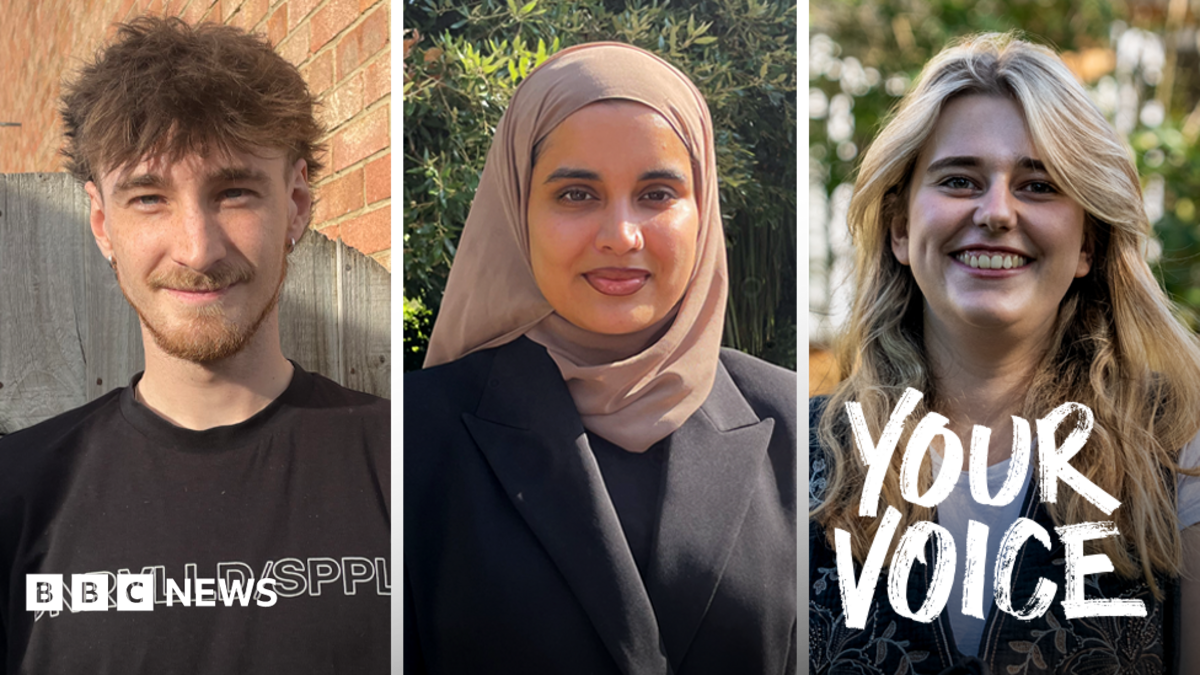
Joel has finally landed his first graduate engineering job after several years of lower‑paid roles.
asserted
Joel → land → roles
He's in his early 20s, lives with his parents and works in London.
asserted
He → live → London
But instead of splashing the extra cash, or saving up for holidays or a house deposit, he's decided to squirrel more of it away into his workplace pension.
asserted
he → splash → pension
He doesn't think he'll get any kind of state pension.
asserted
he → think → pension
Like Joel, around half of Gen Z (those born from 1997–2012) say they don't expect the state pension to exist by the time they retire.
asserted
they → bear → time
It's pretty stark to hear, but growing up with constant headlines about an ageing population, a proportionally smaller working-age population, and the pressure that government finances are under, Joel thinks it's his generation that will suffer.
asserted
that → hear → that
"I don't believe that I'll be a recipient of a state pension.
asserted
I → believe → pension
I know a lot of people my age don't think they're going to be...
asserted
they → know → people
There just won't be enough money," he says.
asserted
he → say → ?
Retirement has always felt distant when you're in your 20s - something to think about later.
asserted
you → feel → 20s
But what's emerging among today's under‑30s is something different: not just distance, but doubt.
asserted
emerging → emerge → under‑30s
"It just mathematically doesn't make sense…
asserted
It → make → sense
There has to get to a point where that state pension is taking up too much of the budget and can't exist in the way that it exists right now," Joel says.
asserted
Joel → have → way
The state pension age is shifting.
asserted
age → shift → ?
At the start of April, the age at which you receive it began to gradually creep up, rising from 66 years to 67 years by March 2028.
asserted
you → receive → March
It's due to go up again in 20 years' time to 68, though that might happen earlier as the government has an ongoing independent review.
uncertain
government → go → review
That's a frustration for 27-year-old retail manager Connor, who got in touch via BBC Your Voice, because he says "the goalpost keeps moving".
asserted
goalpost → get → BBC
"At the minute I'll be 68 by the time I can retire, but I do think I'll be probably closer to 75, if I'm honest."
asserted
I → retire → 75
By 2050, even with the state pension age rising to 68, that group is projected to exceed 15 million people, nearly a quarter of the population, with numbers projected to climb towards 17 million by the 2070s.
asserted
numbers → rise → 2070s
At the same time, almost half of working‑age adults are not paying into a private pension pot.
asserted
half → pay → pot
That means many will be relying solely on the state pension for their retirement income - and with relative poverty rates among pensioners now at 14%, we can already see how difficult that can be.
asserted
that → mean → %
Experts warn that if a whole generation stops believing the state pension will be there, it could push people towards more risky investments, prompt overly restrictive behaviour, or lead others not to save at all.
uncertain
it → warn → others
So, are we heading towards a major pension crisis for many in Gen Z?
asserted
we → head → Z
And if we are, might the Gen Z generation end up redefining what retirement looks like?
uncertain
retirement → end → what
Scrapping the triple lock
For those hitting the state pension milestone today, as long as they've made 35 years of National Insurance contributions, they're entitled to £241.30 a week.
asserted
they → scrap → 241.30
That amount rises each year to help people keep pace with rising living costs.
asserted
people → rise → costs
Since 2011, pension increases have been guaranteed by the triple lock - which means the rise will either match the rate of inflation, average earnings or 2.5% - whichever is higher.
asserted
whichever → guarantee → inflation
But in recent weeks, several organisations have called for the rules to be rewritten.
asserted
rules → call → weeks
The centre-left Resolution Foundation think tank has argued for scrapping the triple lock, saying that continuing to prioritise the incomes of pensioners over working-age adults and children would be unfair.
asserted
continuing → argue → adults
Meanwhile, the Tony Blair Institute (TBI), a think tank set up by the former prime minister, takes things a step further and has called for the whole state pension to be scrapped and replaced with a new "Lifespan Fund".
asserted
pension → set → Fund
Thomas Smith, director of economic policy at the TBI, argued: "Britain's state pension system was built for a different era.
asserted
system → argue → era
We can't keep pouring money into a system that is increasingly unaffordable."
asserted
that → keep → system
It suggests scrapping the triple lock and allowing people to access some of their state pension early if they need it because of redundancy and frequent job changes.
uncertain
they → suggest → redundancy
That's an idea that might appeal to Connor in Chesterfield.
uncertain
that → appeal → Chesterfield
He's facing redundancy from his job at a global cosmetics firm, and the ability to draw down a small amount - effectively a withdrawal from his future state pension - might tide him through.
uncertain
ability → face → him
I still live at home with my parents luckily, but I pay board to them.
asserted
I → live → them
I still have a car payment, I still have my insurance to pay."
asserted
I → have → insurance
But former pensions minister Steve Webb argues those changes would be "a huge backward step".
asserted
changes → argue → ?
He says the benefit of the current system is its simplicity which shouldn't be replaced with "something fiendishly complex and highly intrusive, which would take many decades to implement in full."
asserted
which → say → decades
The government says it has committed to the triple lock for the rest of this parliament, and that the Pensions Commission, an independent body set up to review the regime for UK private pensions, is examining "how we can ensure secure retirements for tomorrow's pensioners".
asserted
we → say → pensioners
…and 44 more, not listed.
 The Aporia