A data centre quietly produces heat every second it is operating.
asserted
it → produce → heat
Behind the walls, rows of servers process data continuously, turning large amounts of electricity into computing power and, inevitably, excess heat.
asserted
rows → process → power
That heat has to be removed to keep the equipment within safe operating temperatures, adding significantly to the facility’s energy demand.
asserted
heat → have → demand
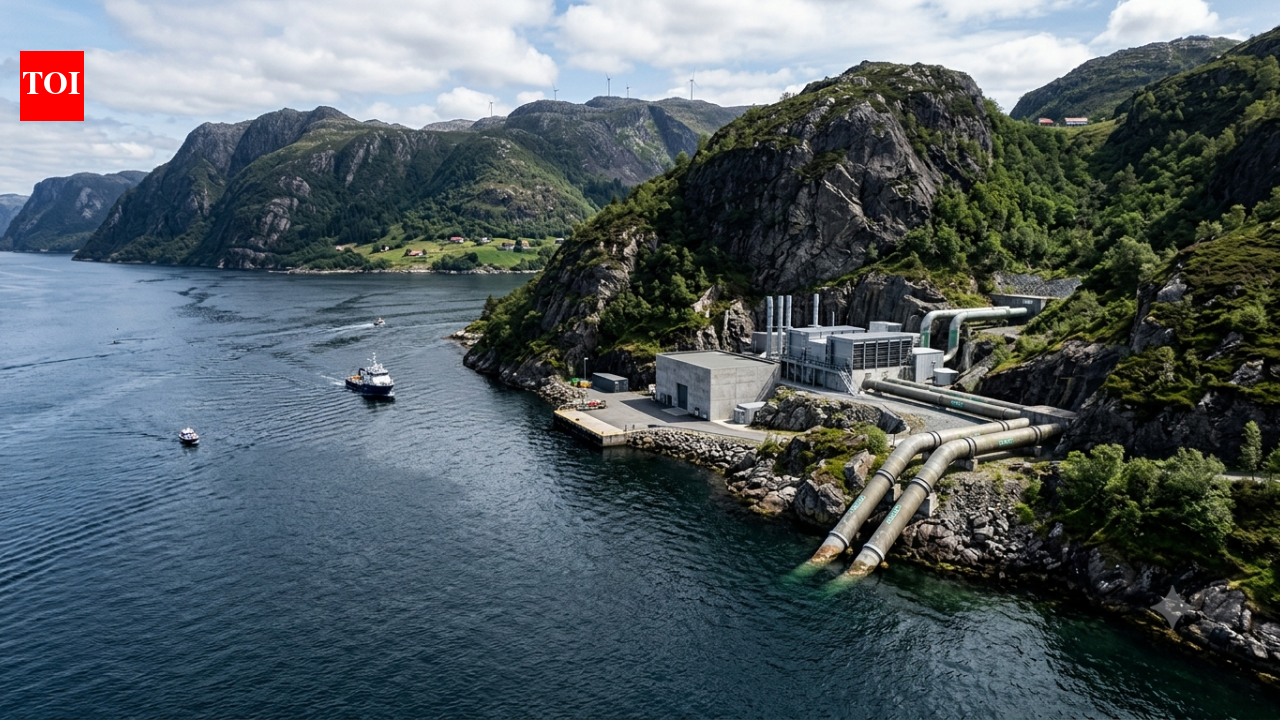
Green Mountain has approached the problem differently at its Norwegian sites, using the country's naturally cool conditions as part of the cooling infrastructure.
asserted
Mountain → approach → infrastructure
At one facility, water drawn from a nearby fjord remains at about 8°C at depth.
asserted
water → draw → depth
Instead of making cold mechanically, engineers use this naturally chilled water to carry heat away.
asserted
engineers → make → heat
How data centre cooling keeps servers running safely
Servers turn electricity into computing power, but a large share of that energy eventually becomes heat.
asserted
share → keep → energy
Keeping temperatures within operating limits therefore becomes a permanent requirement, with cooling systems running alongside the IT equipment.
asserted
systems → keep → equipment
Green Mountain says conventional data centre cooling can require an additional 40 to 80% of the electricity used to power the servers.
asserted
cooling → say → servers
That makes the cooling system an important part of a facility's total energy performance, particularly at sites operating continuously.
asserted
system → make → sites
The company uses what is commonly called free cooling, or natural cooling.
asserted
what → use → ?
The basic idea is straightforward: instead of producing cold through energy-intensive mechanical refrigeration, the facility makes use of naturally cold air or water already available outside.
asserted
facility → produce → air
How 8°C fjord water cools the data centre
asserted
water → cool → centre
At Green Mountain's SVG-Rennesøy site, the cooling source is the fjord immediately beside the data centre.
asserted
source → cool → centre
The location has a particular underwater structure.
asserted
location → have → structure
The entrance to the fjord is relatively shallow, while the central section reaches considerable depth.
asserted
section → reach → depth
Reportedly, at depths below roughly 75 metres, the water stays at about 8°C.
uncertain
water → stay → C
Green Mountain installed intake pipes reaching down to around 100 metres, allowing the facility to access that cold water throughout the year.
asserted
facility → instal → year
The water does not simply flow through the server rooms.
asserted
water → flow → rooms
Instead, it enters a cold-water basin and passes through a titanium heat exchanger.
asserted
it → enter → exchanger
Heat from the data centre's separate chilled-water circuit is transferred to the cold seawater, which is then returned to the fjord.
asserted
which → chill → fjord
That arrangement keeps the two water systems separate.
asserted
arrangement → keep → systems
PC: Green Mountain
How the cooling system uses gravity and recycled water
asserted
system → cool → gravity
There is an unusual simplicity to the way the cold fjord water reaches the facility.
asserted
water → be → facility
The intake is designed so that water can enter the cold-water basin through gravity rather than being pumped up from the seabed.
asserted
water → design → seabed
Inside the facility, a closed-loop freshwater system circulates through the cooling infrastructure.
asserted
system → circulate → infrastructure
The same chilled water can continue moving around the data centre without being consumed as part of the cooling process.
asserted
water → continue → process
Once it has absorbed heat through the heat exchanger, the seawater is discharged back into the fjord.
asserted
seawater → absorb → fjord
Green Mountain says the warmed discharge does not create a negative environmental impact.
asserted
discharge → say → impact
The company also lists an energy figure for the system of 3 kW of power for 1,000 kW of cooling, illustrating how little electrical energy is needed for the cooling process itself compared with conventional refrigeration.
asserted
energy → list → refrigeration
What PUE reveals about data centre energy use
Data centre operators commonly use Power Usage Effectiveness, or PUE, to assess how much energy a facility consumes beyond the electricity delivered directly to its IT equipment.
asserted
facility → reveal → equipment
A PUE of 1.0 would mean all the facility's electricity went to computing equipment.
asserted
electricity → mean → equipment
Real data centres are higher because they also need power for cooling, lighting, electrical infrastructure, security systems and other supporting equipment.
asserted
they → need → cooling
Green Mountain designed its facilities to reach a PUE of 1.2 or lower and says it frequently records values close to 1.10.
asserted
it → design → 1.10
The company attributes much of this performance to its cooling approach.
asserted
company → attribute → approach
For comparison, it cites an Uptime Institute average PUE of 1.56 for 2019.
asserted
it → cite → 2019
Even the electrical infrastructure itself contributes to the figure.
asserted
infrastructure → contribute → figure
UPS systems, which protect servers against power interruptions, lose some energy when converting electricity between forms.
asserted
which → protect → forms
Green Mountain estimates that a typical redundant UPS arrangement can add a partial PUE of about 1.06 to 1.10 before transformer losses and other requirements are considered.
asserted
losses → estimate → 1.10
How Green Mountain keeps its cooling system protected
The fjord water never becomes the air circulating through the server rooms.
asserted
water → keep → rooms
…and 29 more, not listed.