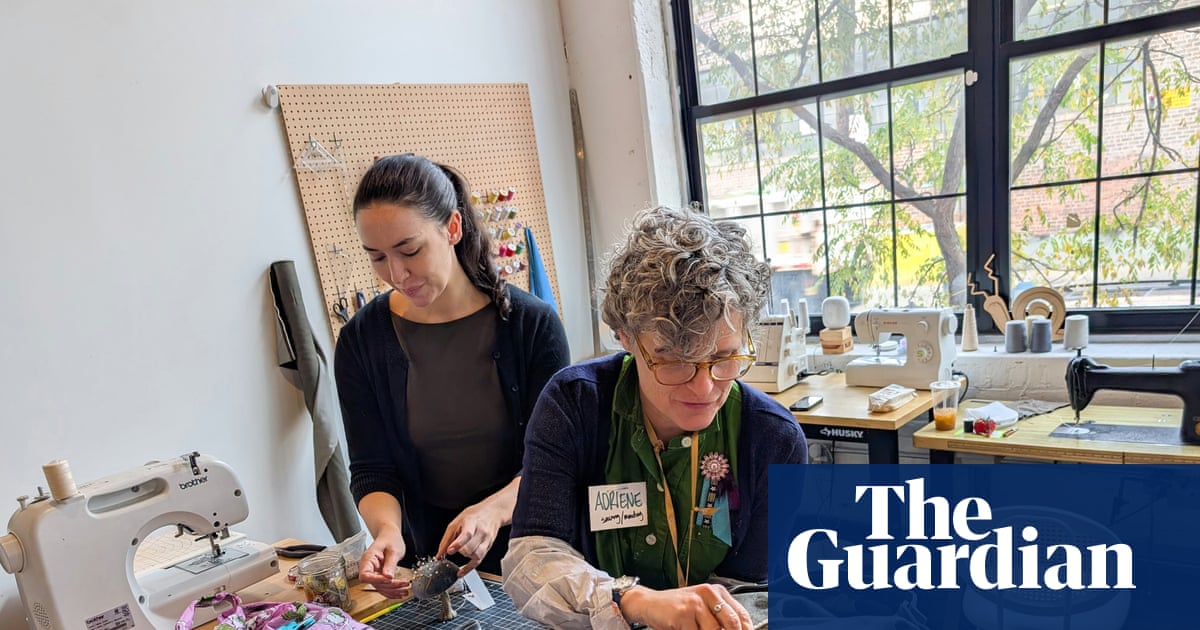
On a recent Monday night, a volunteer-run workspace in Brooklyn, New York, bustled with dozens of fixers.
asserted
workspace → run → fixers
Some tinkered with sewing machines while others soldered circuit boards at a workbench.
asserted
others → tinker → workbench
Caleb Young, co-founder of the Brooklyn Spark space, fit a DIY suction device on to the handle of a Dyson vacuum cleaner.
asserted
Young → fit → cleaner
“It’s in our culture to throw things away, but sometimes the fix is easier than you’d think,” Young said.
asserted
Young → ’ → things
Anyone with a broken item they’d like to fix – from torn clothes to malfunctioning electronic devices – can drop by during open hours and get the repair help and tools they need.
asserted
they → like → help
It’s a way for people to push back against tech companies, making their phones and gadgets deliberately unrepairable so they buy newer devices while creating massive amounts of e-waste.
asserted
they → ’ → waste
The clinics also foster community: Once people learn to repair their possessions, many get addicted and like helping others, Young said.
asserted
Young → foster → others
“We like to tell them, ‘Why not take a few seconds to try and open something up?’” he said.
asserted
he → like → something
“It’s broken anyway.”
asserted
It → ’ → ?
The Brooklyn clinic is part of a nationwide network offering community repair.
asserted
clinic → offer → repair
Peter Mui, who founded the first Fixit Clinic in Berkeley, California, in 2009, said that he’s seen the number of clinics explode during the past few years; at least 2,000 have been hosted across the country.
asserted
2,000 → found → country
“We’re offering these workshops in libraries, at colleges and in public spaces where fixers and community members can come together,” Mui said.
asserted
Mui → offer → spaces
Similar, unaffiliated clinics have seen success, too.
asserted
clinics → see → success
The community-run Repair cafe, originally founded in Amsterdam, now has approximately 250 US locations.
asserted
cafe → run → locations
Neighborhood repair events at local community centers are also popping up around the country.
asserted
events → pop → country
Policy proposals have even matched this grassroots demand.
asserted
proposals → match → demand
Since 2012, 24 states have successfully passed some form of right-to-repair legislation, mandating that manufacturers make their products repair-friendly instead of destined for the landfill.
asserted
products → pass → landfill
This year, 57 right-to-repair bills have been introduced in 22 states that would make machines like phones, wheelchairs and construction equipment easier to repair.
asserted
machines → repair → phones
Members of Congress have also introduced a bipartisan federal automotive right-to-repair bill, called the Repair Act, but it has yet to be brought to a full House vote.
asserted
it → introduce → vote
Mui attributes the growing interest to people questioning the environmental and economic costs of our consumer culture.
asserted
Mui → attribute → culture
“So much of our capitalist system is tied up in our endless consumption,” he said.
asserted
he → tie → consumption
“But if we come together to take agency and empowerment over the things we own, we can build a more sustainable future.”
Starting a bottom-up repair culture
The first modern right-to-repair state law was passed in 2012, when Massachusetts granted car owners the right to fix their cars at independent service shops.
asserted
Massachusetts → come → shops
In 2014, Congress passed a bill that legalized “phone unlocking”, which allowed consumers to change their cell service carrier without buying a new phone.
asserted
consumers → pass → phone
Farmers and states have also filed multiple lawsuits against agricultural equipment manufacturer John Deere over repair restrictions to their equipment, resulting in settlements with the company.
asserted
Farmers → file → company
In 2024, right to repair reached a new level of public consciousness when customers across the country were upset over broken McFlurry machines.
asserted
customers → repair → machines
The Digital Millennium Copyright Act (DMCA) protected the software on these machines, meaning only their manufacturer, Taylor, could fix them.
uncertain
manufacturer → protect → them
After petitions from consumers and consumer advocacy groups, the US Copyright Office granted a copyright exemption that would allow third-party repairs on McFlurry machines.
asserted
that → grant → machines
Nathan Proctor, senior director of the Right to Repair campaign at the Public Interest Research Group, said that corporations’ responses to right-to-repair laws have ranged from compliance to active resistance.
asserted
responses → repair → resistance
For example, Apple has gradually made some parts and manuals available for repair, while the automotive industry has fought back against right-to-repair laws.
asserted
industry → make → laws
“Some companies are hostile and refuse to provide repair materials, while others have made national policies to sell spare parts,” he said.
asserted
he → refuse → parts
But the growing grassroots movement of community repair brings Proctor hope.
asserted
movement → grow → hope
“We need to both change the law and build out a culture of repair,” Proctor said.
asserted
Proctor → need → repair
“To see these community events start up with no institutional backing – that’s a signal that something about repair is clicking with people.”
asserted
something → see → people
Educating the next generation of fixers
At San Jose State University in California, the Fixit Clinic student organization was recently voted the most influential club on campus.
asserted
organization → educate → campus
The student-led group holds monthly clinics for fellow students and community members at libraries around the city.
asserted
group → lead → city
“We like to tell people, ‘If you can get it through the door, we can fix it for you,’” said club president Lily Andrews.
asserted
Andrews → like → you
Since the chapter was founded in 2024, the club has hosted on-campus and off-campus workshops to teach middle schoolers, college students and community members skills like sewing and soldering metals.
asserted
club → found → metals
Andrews, a junior studying mechanical engineering, said that hosting these clinics has offered her hands-on practice that goes beyond the theories she’s learning in the classroom.
asserted
she → study → classroom
“When I open things up, I get to really see how they’re made, and see how the machinery components interact,” she said.
asserted
she → open → things
Andrews said she’s learned how many of our products are made to discourage repair.
asserted
many → say → repair
…and 6 more, not listed.
 The Aporia