For 2000-odd years, philosophers have been arguing about a boat.
asserted
philosophers → argue → boat
The story comes to us most famously through the ancient Greek writer Plutarch and concerns the ship in which the legendary Theseus returned to Athens from Crete after killing the Minotaur.
asserted
Theseus → come → Minotaur
The Athenians preserved the vessel as a piece of their history, replacing old, decaying timbers with new ones whenever necessary.
asserted
Athenians → preserve → ones
However, a problem arose, particularly with maintenance.
asserted
problem → arise → maintenance
As the years passed, more timbers on the boat needed replacing and eventually the story produced one of philosophy’s great thought experiments: if every original plank of Theseus’s ship had been replaced, was it still the same ship – or worse still, what if most but not all of the planks had been replaced – what then?
asserted
most → pass → planks
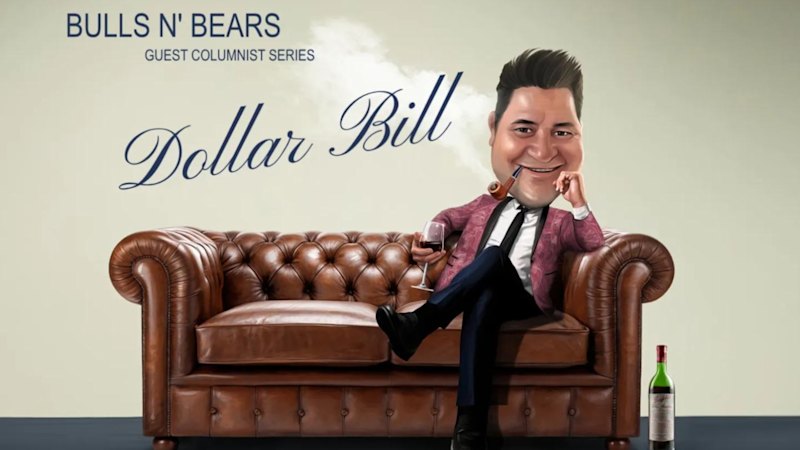
Dollar Bill likes to draw a sharp comparison between the problems faced by those philosophers of old and small cap investors on the ASX who are regularly presented with companies and projects that purport to have been fully re-planked - but are they really?
asserted
they → like → companies
At the speculative end of the market boards change, managing directors get replaced, projects are bought and sold, commodities come and go, shareholders turn over and occasionally even the company name gets swapped for something more fashionable.
asserted
name → change → something
Sometimes just about the only thing left from the company an investor originally bought into is its ASX listing, which raises a considerably less philosophical question: when almost everything underneath a stock has changed, how much of its past should an investor still use to value its future?
asserted
investor → leave → future
Small-cap investors confront versions of the Ship of Theseus more often than they might realise, and exploration companies are particularly good at it.
uncertain
companies → confront → it
A gold explorer sells its gold project and buys lithium.
asserted
explorer → sell → lithium
Lithium falls out of favour and copper starts looking interesting.
asserted
copper → fall → favour
A new managing director arrives, the board changes, capital is raised, another acquisition is made and three years later the annual report describes a business bearing only a passing resemblance to the one the shareholders originally bought.
asserted
shareholders → manage → one
And sometimes it is exactly what management should do.
asserted
management → do → what
After all, there is nothing particularly noble about continuing to drill a lousy project merely because it appeared in the prospectus.
asserted
it → be → prospectus
The interesting question for investors isn’t whether companies should change.
asserted
companies → change → investors
Rather, it’s which parts of the company actually matter when they do.
asserted
they → ’ → company
NOVONIX offers a useful example.
asserted
NOVONIX → offer → example
The company that listed on the ASX in December 2015 was Graphitecorp and its principal story was the Mt Dromedary natural graphite project in Queensland.
asserted
story → list → Queensland
Then the planks started moving.
asserted
planks → start → ?
In 2017, Graphitecorp acquired the NOVONIX battery-testing business, established the PUREgraphite synthetic-anode-material joint venture in the United States and changed its own name to NOVONIX.
asserted
Graphitecorp → acquire → NOVONIX
The company itself said the transactions had transformed the business.
asserted
transactions → say → business
It wasn’t exaggerating.
asserted
It → exaggerate → ?
Today’s NOVONIX is a battery materials and technology company heavily focused on North America, developing high-performance synthetic graphite for applications including electric vehicles and energy storage.
asserted
NOVONIX → focus → vehicles
Its origins remain visible, but the investment proposition has changed enormously.
asserted
proposition → remain → ?
So when did Graphitecorp stop being Graphitecorp?
asserted
Graphitecorp → stop → ?
When it acquired NOVONIX?
asserted
it → acquire → NOVONIX
When it moved downstream into battery technology?
asserted
it → move → technology
When the new business became more important than the old one?
asserted
business → become → one
Or on the morning somebody changed the letters on the trading screen?
asserted
somebody → change → screen
But investors make judgements about it constantly, particularly when deciding how much of a company’s history still deserves to influence its valuation.
asserted
much → make → valuation
Olympio Metals provides an unusually vivid Australian example of just how complete a corporate transformation can become.
asserted
transformation → provide → example
Its listed predecessor was CropLogic, an agricultural technology business principally involved in soil monitoring and reporting technology.
asserted
predecessor → list → technology
CropLogic, listed on the ASX in 2017, was suspended from trading in November 2019 and subsequently entered voluntary administration.
asserted
CropLogic → list → administration
Then came a very different proposition.
asserted
proposition → come → ?
CropLogic agreed in late 2021 to acquire Rocktivity Gold, giving it exposure to a suite of Western Australian mineral exploration assets.
asserted
CropLogic → agree → assets
The company recapitalised, installed new leadership, changed its name to Olympio Metals and returned to quotation in May 2022 as a mineral explorer.
uncertain
company → recapitalise → explorer
Today its portfolio extends into North America, led in Canada by the high-grade Bousquet gold project on Quebec’s prolific Cadillac Break.
asserted
portfolio → extend → Break
Agricultural technology became mineral exploration.
asserted
technology → become → ?
Somebody had changed the whole bloody ocean.
asserted
Somebody → change → ocean
The distinction sounds obvious when the transformation is that dramatic.
asserted
transformation → sound → ?
…and 62 more, not listed.
 The Aporia