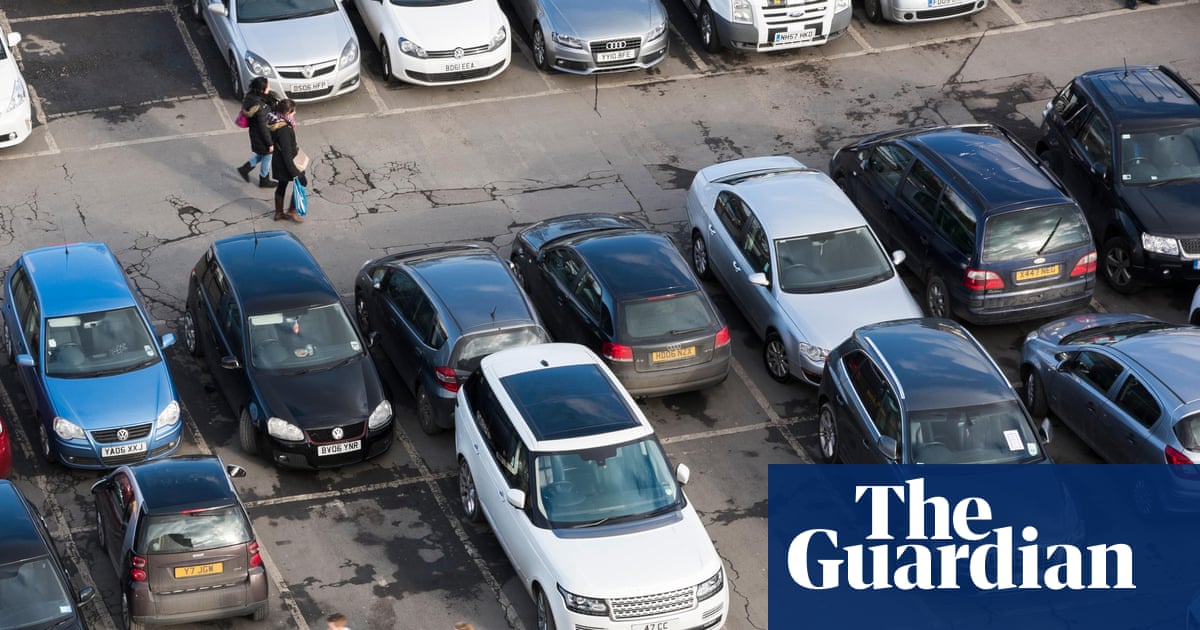
Andy Burnham outlines new rules to outlaw ‘rip-off’ private parking fines

Read the original at The Guardian ↗
Cite

Jones, R. (2026, October 19). Andy Burnham outlines new rules to outlaw ‘rip-off’ private parking fines. The Guardian. https://www.theguardian.com/money/2026/oct/19/andy-burnham-new-rules-private-parking-fines-code-of-practice

Dated from the outlet's own feed. Check the original for its byline.

The Guardian · collected 2026-10-19 · by Rupert Jones

Quick Summary

Prime Minister Andy Burnham is proposing new rules for private car parks in England, Scotland, and Wales that would give drivers five minutes before being fined for entering the lot and ten minutes after their session ends to vacate. This move aims to address what he calls "rip-off" charges by private parking companies; however, consumer group Which? argues these measures are insufficient compared to previous withdrawn regulations. Each year in the UK, around 16.9 million parking tickets are issued by private firms, a number that has increased significantly over recent years. The government plans to introduce a new code of practice but faces criticism for maintaining a £100 maximum fine and not implementing an independent appeals body, despite calls from Which? for these changes.
Written locally by qwen2.5:14b on 2026-10-19, using this article's own text rather than the other coverage of the same event (that is the story summary below).

AI analysis runs on qwen2.5:14b, locally

Story summary

Andy Burnham, the Prime Minister, announced new rules aimed at curbing "rip-off" private parking fines in England, Scotland, and Wales. The measures include a guaranteed 5-minute period to decide whether to park and a 10-minute grace period after parking sessions end before penalties are imposed. Drivers will also have charges canceled for uncontrollable circumstances like vehicle breakdowns or medical emergencies, as well as honest mistakes such as forgetting permits or entering incorrect registration details. Maximum appeal charges will be capped at £20, with the overall cap on maximum charges frozen at £100. Operators who do not comply risk losing access to DVLA data, hindering their ability to pursue car owners for charges. These changes follow rising complaints and a 17% increase in parking tickets issued by private firms over the past year to 16.9 million in 2025-26.

Written for “New Rules Against Parking Fines” on 2026-10-19, grounded in this article and the 2 other(s) covering the same event.
Why this leaning score
The model judged this article politically coded and scored it -0.35, but all 2 of its quote(s) are attributed speech - words the article quotes from someone, not the article's own narration, so the score is not published.
Written under an earlier scoring contract, which gave a paragraph rather than checkable quotes. Re-analysing this article replaces it.
Leaning score withheld for article 91951: attributed speech only · logged 2026-10-19

Story

📰 New Rules Against Parking Fines
Politics · 3 article(s) covering the same event. Compare every outlet's account →

Compared with similar articles

This article reads unscored and hedges 9% of its claims. Each row says how that neighbour differs.
BBC News · 0.91 cosine similarity
⚖️ leaning not scored 🔴 15% hedged 3 of 20 📰 publisher trust 69
“Both articles describe Andy Burnham announcing new rules to address 'rip-off' private parking charges, indicating they refer to the same announcement and timing.”
Evening Standard
⚖️ leaning not scored 🔴 0% hedged 0 of 24 📰 publisher trust 66
“Both articles report on Prime Minister Andy Burnham's announcement of new rights for London drivers regarding parking fines, made at the same date and time.”
How this article was measured signals, leaning charts, publisher record, byline, topics and claims

Signals How these are calculated →

Claims extracted
22
sentences that state something as happening or true
Uncertain
9%
2 of 22 hedged ("reportedly", "may", "according to")
Leaning
withheld
no quote in the article backed the model's score
Publisher signals
66/100
The Guardian's corrections and hedging, across everything collected from it. Not a measure of accuracy.
Outlets on this story
3
Politics
Same framing elsewhere
1
articles that frame the event the way this one does
Analyzed 2026-10-19 · how these are computed

How this is being covered How these are calculated →

Article leaning vs. publisher reliability
Source leaning vs. consistency

Publisher

The Guardian · 2106 article(s) · 6 correction(s) detected
Running correction rate · 6 correction(s)

Who wrote this

Rupert Jones
4 article(s) here · 1 carrying a prediction
🔮 Drivers will get a guaranteed five minutes to decide whether to park and 10 minutes to leave after their parking session ends before they face a fine under new rules for private car parks that Andy Burnham said were designed to outlaw “rip-off” charges.
🔮 If a provider attracts enough savings cash it will pull a product from sale.
🔮 However, the true total may be much higher as many scam victims do not report the crime, often because they feel embarrassed, and sometimes because the individual amount of money involved was relatively small.
🔮 However, some savers will recall that as recently as late 2023 there were fixed bonds paying 6%, and if and when the Bank of England base rate goes up, that could push returns on savings higher than they are now.
Also by Rupert Jones
Nothing else under this byline is closely related to this article, so these are simply their most recent.

Topics

England RAC Scotland Wales Which

Subjects

Which ORG · 2× Andy Burnham PERSON · 1× Burnham PERSON · 1× England GPE · 1× RAC ORG · 1× Scotland GPE · 1× Wales GPE · 1× Which? PERSON · 1×

Narrative

In the latest in a series of “everyday fixes” to ease the cost of living and give consumers a “fairer” deal, the prime minister said a new official code of practice for the industry meant motorists in England, Scotland and Wales would enjoy a range of new rights.
framing: assertive · carried by 1 article(s) · first seen 2026-10-19
🔮 Drivers will get a guaranteed five minutes to decide whether to park and 10 minutes to leave after their parking session ends before they face a fine under new rules for private car parks that Andy Burnham said were designed to outlaw “rip-off” charges.

Claims (22 extracted, 2 hedged)

Drivers will get a guaranteed five minutes to decide whether to park and 10 minutes to leave after their parking session ends before they face a fine under new rules for private car parks that Andy Burnham said were designed to outlaw “rip-off” charges. asserted
Burnham → get → charges
In the latest in a series of “everyday fixes” to ease the cost of living and give consumers a “fairer” deal, the prime minister said a new official code of practice for the industry meant motorists in England, Scotland and Wales would enjoy a range of new rights. asserted
motorists → ease → rights
The consumer body Which? said the “long overdue” rules appeared to fall well short of what was needed to help drivers fight back against private parking “cowboys”, however. asserted
drivers → say → cowboys
Each year in the UK, private firms dish out millions of parking tickets, and the number has been climbing. asserted
number → dish → tickets
In August, the RAC said the number issued rose 17% in a year to reach a record 16.9m in 2025-26. asserted
number → say → 2025
Complaints about poor behaviour by some operators are rife, and campaigners say reform is years overdue. asserted
reform → say → operators
Legislation was passed in early 2019, and an official code of practice was unveiled by the then government in early 2022 – but lasted less than six months after legal challenges by several parking firms forced it to be withdrawn. asserted
challenges → pass → it
In a fresh push, a new private parking code of practice is due to be laid in parliament on Tuesday, though it is unclear when this will take effect. uncertain
this → lay → effect
Ministers said they would look to bring the code into force “as soon as possible”. asserted
they → say → force
New rights for drivers include “a guaranteed five minutes to decide whether to park, and 10 minutes to leave once their session ends”. asserted
session → include → minutes
The government is sticking with the existing industry maximum parking charge of £100 despite calls to halve it. asserted
government → stick → it
said: “It is particularly concerning that the government has shied away from a £50 price cap.” asserted
government → say → cap
The consumer body had called for a maximum £50 fine, and this was also the amount at which some charges were capped under the withdrawn code. asserted
charges → call → code
Meanwhile, fines will be scrapped on appeal for “honest mistakes”, such as stopping briefly to check directions, and for situations such as a medical emergency, vehicle breakdown or broken ticket machine. asserted
fines → scrap → emergency
For “smaller slip-ups”, such as forgetting to display a parking permit or entering the wrong vehicle’s registration, the government said drivers would face a maximum charge of £20 on appeal. asserted
drivers → forget → appeal
This appears to be a less generous system than under the original rules: the code that was withdrawn required the cancellation of a parking charge “in all mitigating circumstances”. asserted
that → appear → circumstances
Which? said the government had also shied away from an independent appeals body “that could rein in the industry’s worst practices” and had failed to take action on private parking debt recovery fees, which it said were regularly added without motorists’ knowledge and pushed unfair charges even higher. uncertain
it → say → charges
On the latter point, the government has promised to consult on these fees – which are added when a fine becomes overdue – “as soon as possible next year”. asserted
fine → promise → fees
These fees are currently capped at £70, and the consultation will look at whether they should be cut or scrapped altogether. asserted
they → cap → 70
Burnham said: “Being a few minutes late back to your car or typing one digit of your number plate wrong shouldn’t end with a hefty fine landing on your doormat. asserted
fine → say → doormat
“These charges leave people feeling ripped off and out of pocket, so I’m putting a stop to them. asserted
I → leave → them
We are introducing clearer rules, longer grace periods and lower charges for genuine mistakes.” asserted
We → introduce → mistakes

💬Give feedback
🕘History 🎫Support