The near-universal chorus of condemnation that greeted Emmanuel Macron’s address to the nation on Sunday, after one of the most violent days of rioting and looting in France’s recent history, was a stark reflection of just how weakened he now is.
asserted
he → greet → history
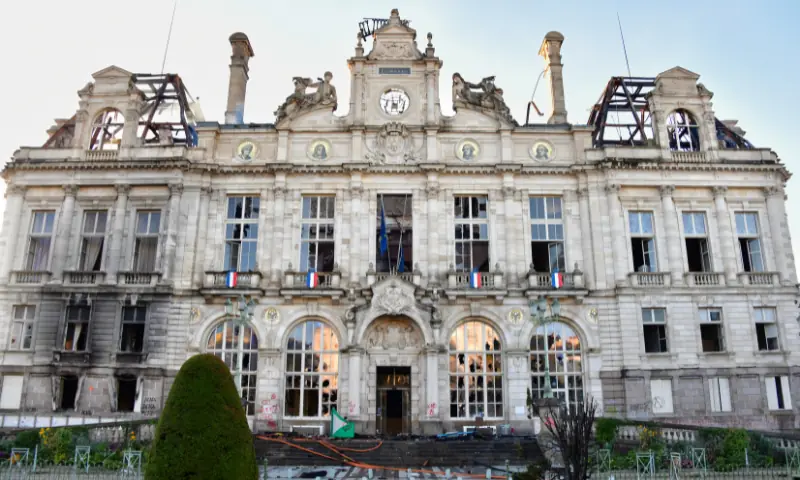
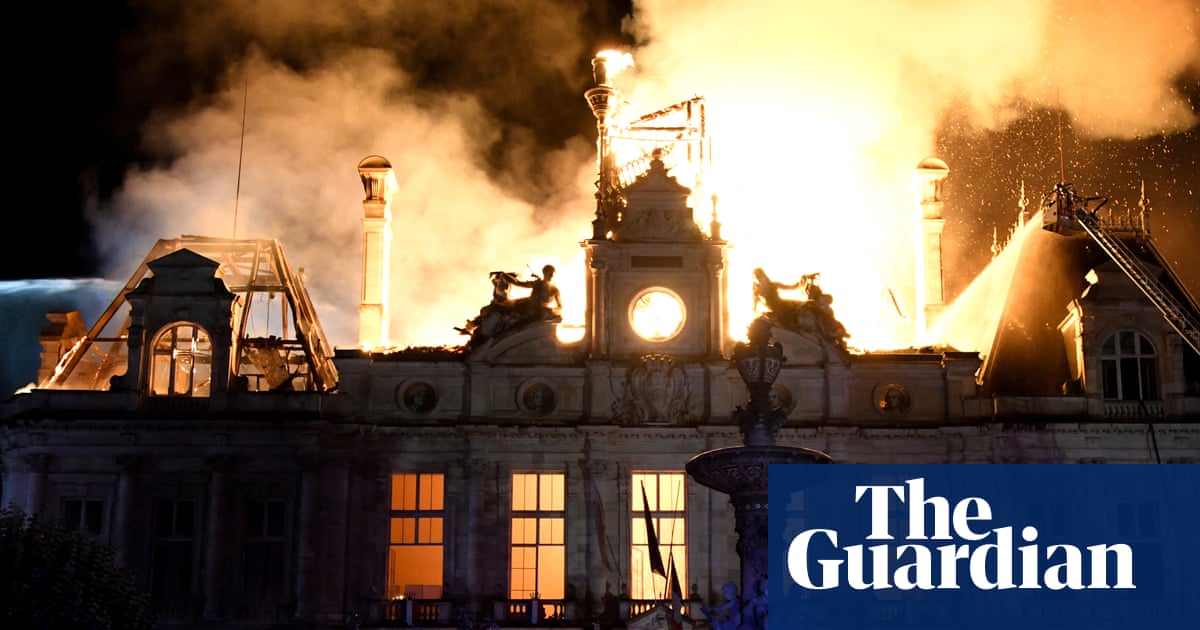
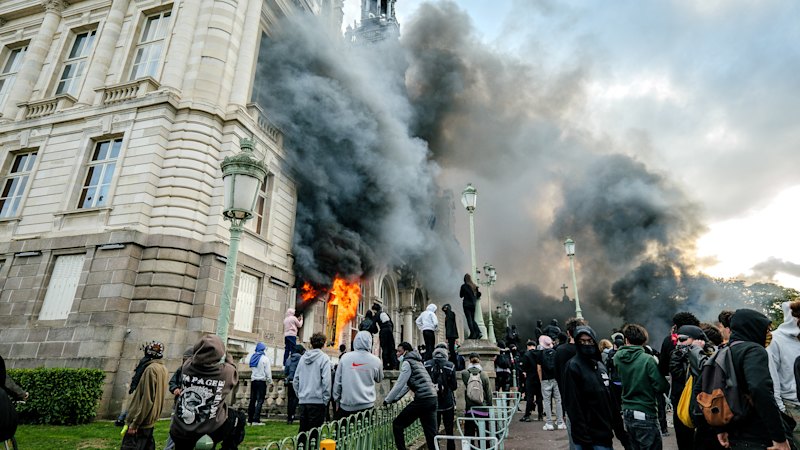
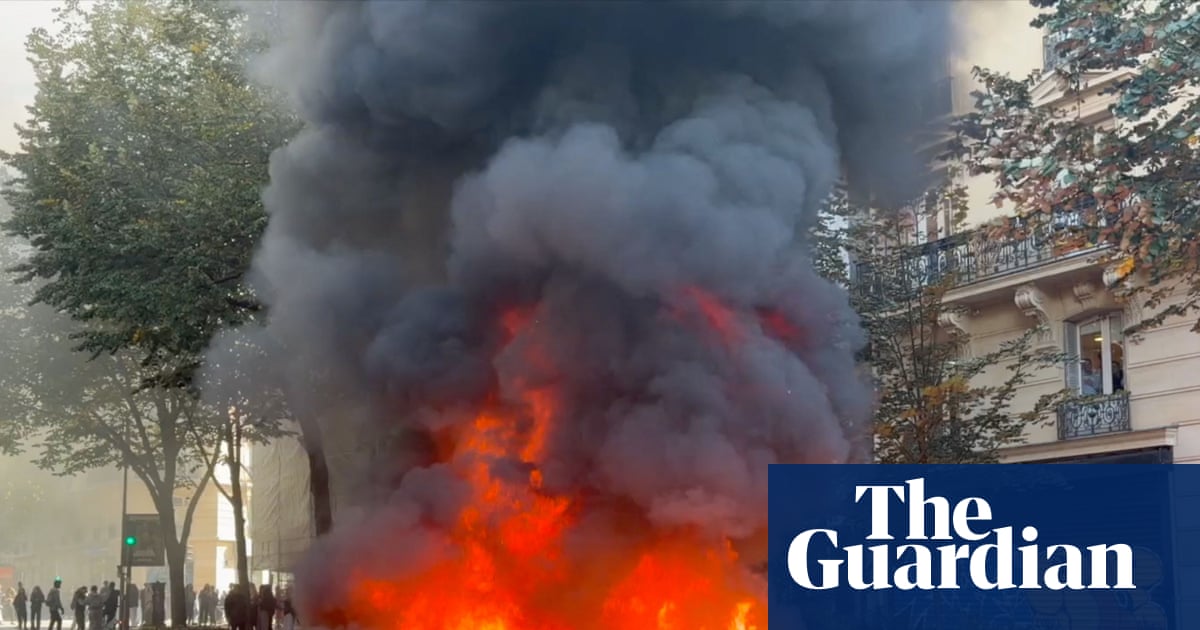
Speaking from his office at the Élysée Palace, the president delivered an eight-minute speech expressing “anger and shame” after a weekend in which a town hall was set ablaze, 2,000-plus shops were looted, 2,300 people were arrested and 1,000 police injured.
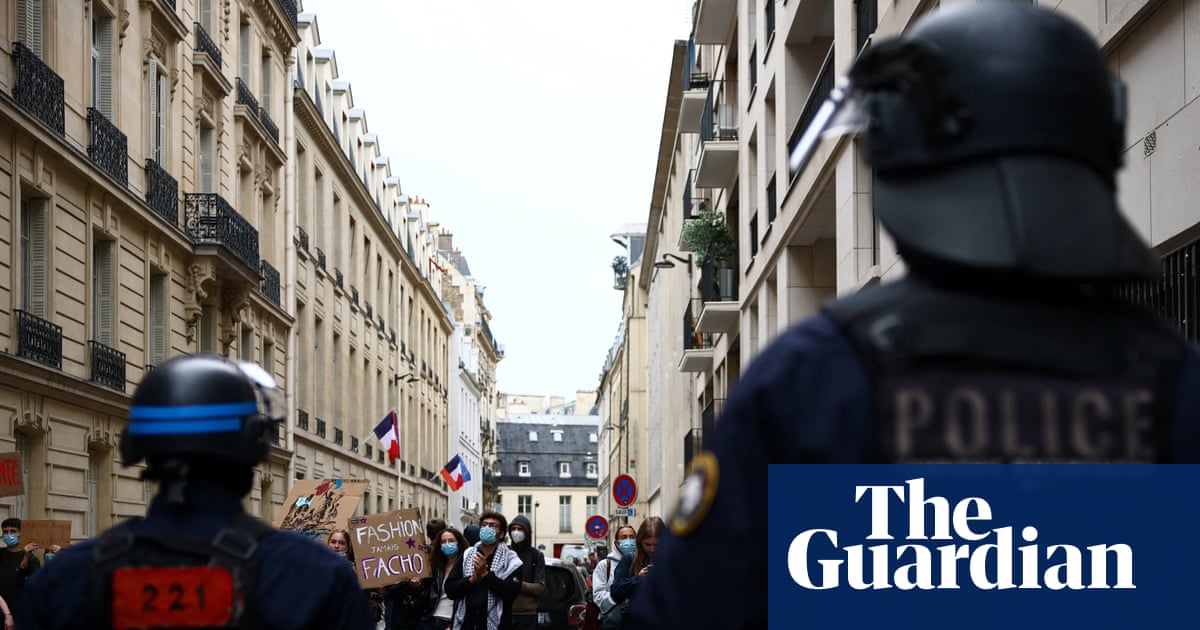
A month-long protest by high school pupils over crumbling and crowded classrooms converged with broader frustrations over soaring living costs, rapidly widening inequality and falling public spending, bringing together students, teachers, trade unionists and a resurrected gilets jaunes movement.
asserted
protest → speak → students
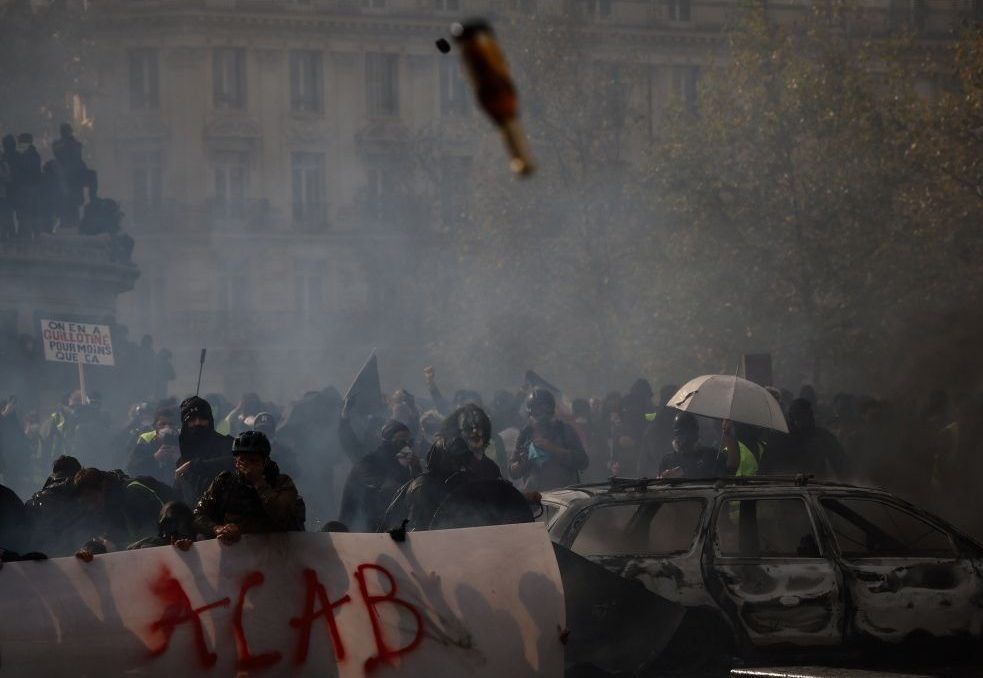
Those largely peaceful protests were swiftly hijacked by masked groups who torched vehicles, ransacked businesses and severely damaged public infrastructure, including setting fire to Limoges’ city hall and invading that of Marseille.
asserted
who → hijack → Marseille
Macron acknowledged the “deep anxiety” of young people but offered no concrete policy initiatives, no cabinet reshuffle and no new public spending, merely telling his prime minister to organise consultations and asking opposition politicians to take a stand.
asserted
Macron → acknowledge → stand
The Greens leader, Marine Tondelier, said that rather than “even beginning to make any kind of mea culpa”, Macron was “summoning us to the PM’s office like pupils to the blackboard”.
asserted
Macron → say → blackboard
On the far right, the National Rally’s Jordan Bardella called the speech “lamentable” and said Macron had “nothing left to say” to the French.
asserted
Macron → call → French
The party’s figurehead, Marine Le Pen, said the country was “caught in a vice between violence and impotence”.
asserted
country → say → violence
The centre-right’s Bruno Retailleau said Macron was “totally overwhelmed”, while on the radical left, Jean-Luc Mélenchon accused the president of relying on “inaction and police brutality” in doomed hopes that the protests would simply fizzle out.
asserted
protests → say → hopes
Perhaps most damagingly, even Macron’s former prime minister Édouard Philippe said he would have preferred “decisions and initiatives that might lead to a return to order and the restoration of state authority …
uncertain
that → say → authority
Our country needs to be governed.”
asserted
country → need → ?
Criticism is only normal from rivals positioning themselves six months before a presidential election to choose Macron’s successor.
asserted
Criticism → position → successor
But its sheer ferocity underlines his isolation, the disdain in which he is held, and the anger he inspires.
asserted
he → underline → which
It is a structural trap that he has largely set for himself.
asserted
he → set → himself
Macron came to power in 2017 as a “Jupiterian” president – a deliberate strategy aimed at elevating the head of state above daily politics, projecting distant authority and technocratic brilliance.
asserted
Macron → come → authority
But over nine years in the Élysée, that high-handed style – partly born, his critics say, of Macron’s complete lack of basic political experience as an elected official in a town hall or as a constituency MP – has morphed into perceived arrogance and detachment.
asserted
critics → bear → arrogance
It has been compounded by catastrophic strategic errors, and France’s spiralling economic problems.
asserted
It → compound → errors
Macron lost a functional parliamentary majority by refusing to meaningfully campaign between the presidential and legislative elections of 2022.
asserted
Macron → lose → 2022
Two years later he dissolved the national assembly.
asserted
he → dissolve → assembly
That gamble backfired spectacularly, with voters returning an even more deadlocked parliament split between a divided left, a much-diminished centrist bloc and Le Pen’s far right.
asserted
voters → backfire → left
Without a working majority, the government repeatedly resorted to controversial constitutional manoeuvres to force through laws without a parliamentary vote, laying it – and Macron – open to further accusations of democratic illegitimacy.
asserted
government → work → illegitimacy
Compounding that institutional deadlock is a looming fiscal crisis.
asserted
crisis → compound → deadlock
In decades gone by, French presidents facing mass protests on the streets could in effect buy a degree of social tranquility with targeted spending packages or public sector concessions.
uncertain
presidents → go → packages
There is just no money in the bank to ease the cost of living squeeze that brought 550,000 people on to the streets on Saturday.
asserted
that → be → Saturday
The markets are worried: France’s borrowing costs are higher than Greece’s.
asserted
costs → worry → Greece
And with few fiscal options, the government’s clearest response – in time-honoured French tradition – has been teargas and baton charges, sometimes against schoolchildren, further aggravating tensions.
asserted
response → honour → tensions
The centrist coalition built around Macron’s brand has all but collapsed.
asserted
coalition → build → brand
If the protests and violence persist, the main beneficiary will be the law-and-order champions of the far right.
asserted
beneficiary → persist → right
Jean-Baptiste Moreau, an influential former MP from Macron’s party with whom the largely lame-duck president still occasionally speaks, reportedly went so far this weekend as to suggest he should resign and call early presidential elections.
uncertain
he → speak → elections
“Macron still thinks he can change things,” he told Le Monde.
asserted
he → think → Monde
 The Aporia